Turkey’s central bank has cut its official gold holdings by nearly 59 tonnes in two weeks, confirming that at least some recent gold selling pressure came from reserve monetisation as the U.S.-Israel war with Iran strains global markets.
For Indian investors, the move matters because central bank gold sales and gold-backed swap deals can weigh on global bullion prices in the short term, even when geopolitical risk would normally support safe-haven demand. That can affect domestic gold rates in rupees, especially when global XAUUSD prices and the USD/INR exchange rate move in opposite directions.
Why did Turkey sell gold from its reserves?
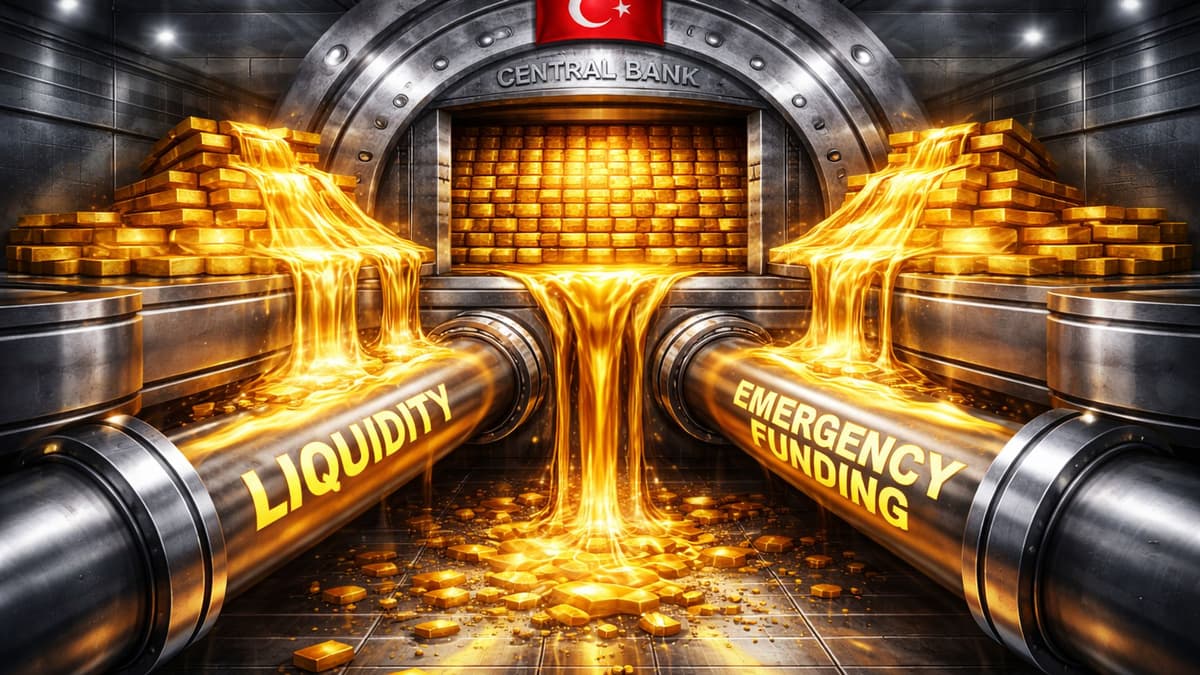
Turkey sold or pledged part of its official gold reserves to raise liquidity. Bloomberg, citing central bank data and people familiar with the country’s foreign reserves, reported that Turkey’s official gold reserves declined by nearly 59 tonnes in the last two weeks.
Some of that gold was sold outright. Most of it was used to secure foreign exchange or Turkish liras through swap agreements, according to people familiar with the reserves data.
Under these swap agreements, a central bank exchanges gold for currency and agrees to reverse the trade later. In practice, that allows a central bank to turn bullion into immediate liquidity without necessarily making a permanent disposal of every troy ounce involved.
This development supports analyst speculation that recent pressure on the gold price may have been intensified by central banks monetising bullion holdings for emergency funding as the U.S.-Israel war with Iran hits the global economy and financial markets.
How large is the decline in Turkey’s gold reserves?
The decline is significant. Turkey’s official gold reserves fell by nearly 59 tonnes in just two weeks, and the original report quantified the drawdown at 58.4 tonnes.
According to World Gold Council data, Turkey’s central bank held 603 tonnes of gold at the end of January, valued at $135 billion. That means the latest reduction represents a notable short-term draw on one of the world’s larger official bullion stockpiles.
How did Turkey use gold swaps and outright sales?
Turkey used both direct gold sales and gold-backed liquidity operations. Bloomberg reported that some of the reserve gold was sold outright, while most of it was used as collateral in swaps to obtain foreign exchange or liras.
That distinction matters for the gold market. An outright sale can add immediate supply pressure to bullion markets, while a swap can still signal funding stress because the central bank is using gold to access cash or currency.
For gold traders tracking XAUUSD, these actions can create temporary headwinds even when safe-haven demand remains strong. In periods of stress, emergency liquidity needs can override the usual bullish case for precious metals.
What is a gold-for-currency swap?
A gold-for-currency swap is a liquidity transaction in which a central bank exchanges gold for cash or foreign currency and agrees to buy the gold back later. It is a way to monetise gold reserves without necessarily committing to a final sale.
This is important for Indian investors because reserve swaps can still influence short-term bullion sentiment. Even if the gold returns to official reserves later, the transaction shows that liquidity demand is strong enough to pull gold into the funding chain.
Is this the first time Turkey has monetised its gold reserves?
No, Turkey has done this before. In 2023, Turkey sold 159 tonnes of gold between March and May.
At that time, the country was facing unprecedented inflation. Domestic demand for gold had surged so sharply that it was pushing the government’s current account deficit to record levels.
Turkey’s central bank sold gold to citizens in an attempt to lower that deficit. The move was aimed at easing pressure from heavy local bullion demand rather than responding to the current geopolitical shock.
Did Turkey rebuild its reserves after the 2023 sales?
Yes, Turkey rebuilt the gold it had sold. Once the inflation crisis cooled, the central bank started replenishing its reserves and had recovered what it sold by the middle of last year.
That history suggests the current drawdown may not automatically signal a long-term bearish view on gold by Turkey’s central bank. Instead, it points to a tactical use of bullion during periods of economic or market stress.
Could other central banks also sell or monetise gold?
Yes, other central banks could follow if liquidity pressures intensify. The article points to Poland as an example of a country that has already signalled openness to monetising gold reserves.
The National Bank of Poland has been the world’s biggest central bank gold buyer over the last two years. Even so, it has indicated that gold could be used to support national priorities.
In early March, Adam Glapinski, Governor of Poland’s central bank, outlined a proposal to raise as much as $13 billion from the sale of the country’s gold reserves to finance a doubling of the defense budget.
That is a key market signal. When even major central bank buyers consider using bullion to fund fiscal or military needs, investors must account for the possibility that official-sector demand for gold may slow while reserve monetisation rises.
Why would central banks sell gold during a crisis?
Central banks sell or pledge gold when they need assets that are more immediately usable than bullion. In a crisis, they may need foreign currency, domestic currency liquidity, or budget support faster than they need an unchanged gold allocation.
Rob Haworth, Senior Investment Strategist at U.S. Bank Wealth Management, told Kitco News that there is a near-term risk that central banks will monetise gold to meet emergency liquidity needs. He also said central banks are unlikely to keep buying gold in the current environment as they focus on containing rising inflation.
Haworth explained that central banks are not typically price-sensitive in the way hedge funds are. In his words, “It’s not that central banks are price sensitive. They're not a hedge fund that marks to market the value of their gold reserves. But right now, because of society’s needs, they have a call for other assets that are more important and scarcer at this time.”
What does Turkey’s gold sale mean for gold prices?
Turkey’s reserve drawdown adds to short-term selling pressure on gold prices. When official institutions sell bullion outright or use it in swaps, the market reads that as a sign that emergency liquidity demand is competing with safe-haven buying.
This helps explain why gold can struggle even during geopolitical stress. Normally, a conflict such as the U.S.-Israel war with Iran would support bullion, but forced monetisation by central banks can offset part of that safe-haven demand.
For investors, this means the gold price can react to two opposing forces at the same time: geopolitical risk that supports precious metals and liquidity stress that triggers reserve sales or reduced official buying.
Are central banks likely to keep buying gold now?
The near-term answer is probably no, or at least less aggressively. Haworth said central banks are unlikely to buy gold in the current environment as they try to tamp down rising inflation and meet more urgent funding needs.
That matters because central bank buying has been a major structural pillar for the gold market in recent years. If that support weakens, bullion could face more volatility even if long-term demand remains intact.
How could this affect Indian gold buyers and investors?
Indian investors should watch both global bullion flows and the rupee. If central bank sales pressure XAUUSD lower, international gold prices could soften, but domestic gold rates may not fall by the same extent if the Indian rupee weakens against the U.S. dollar.
This creates a mixed setup for India’s physical gold market. Jewellers, bullion dealers, and retail buyers may see global price dips as buying opportunities, while import costs and currency moves can keep local prices elevated.
For long-term Indian investors, Turkey’s move is a reminder that gold does not only trade on inflation and geopolitical fear. It also trades on liquidity conditions, official-sector behaviour, and reserve management decisions.
If more central banks choose to monetise reserves instead of adding to them, the global gold price could remain volatile. The key watchpoint now is whether Turkey remains an isolated case or becomes the first sign of a wider central-bank liquidity squeeze that reshapes bullion demand in the months ahead.