# Gold Price Outlook Boosted as Kosovo Central Bank Buys Gold
The Central Bank of the Republic of Kosovo has started buying gold for the first time in its history, widening official-sector demand at a time when central bank purchases remain a major pillar for the global gold price. For Indian investors, the move matters because steady central bank buying supports bullion at elevated levels, which can influence domestic gold rates in rupee terms alongside USD/INR moves.
Why is Kosovo’s central bank buying gold for the first time?
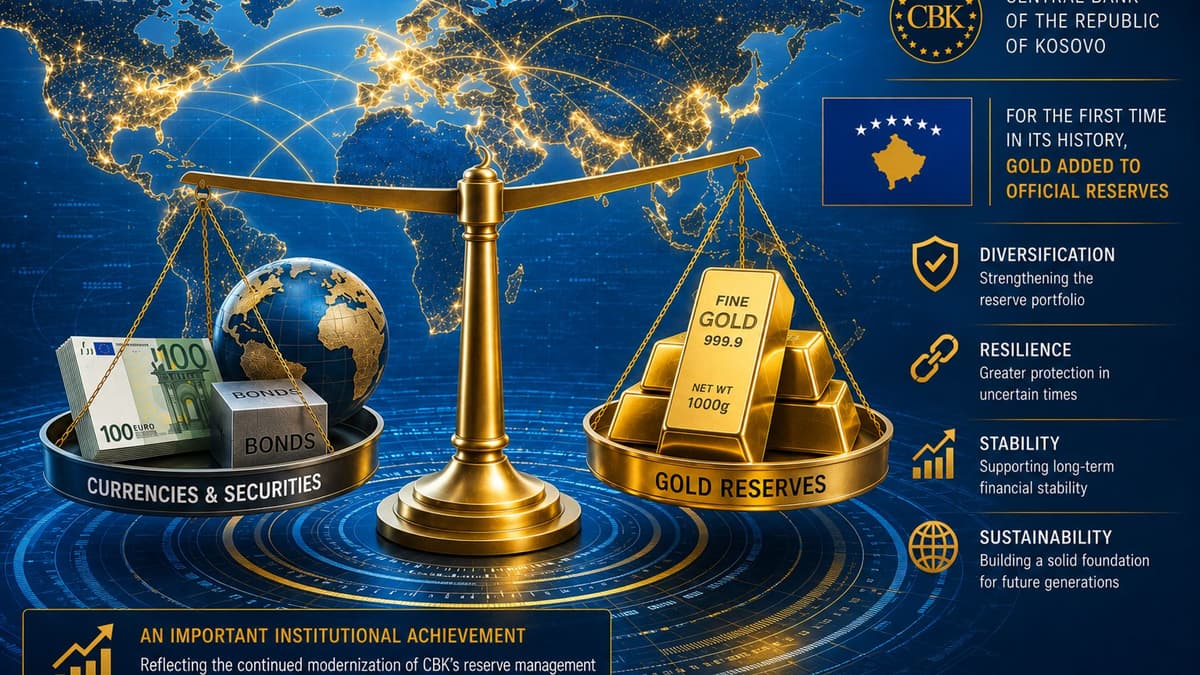
Kosovo’s central bank says it is buying gold to diversify reserves and strengthen long-term financial stability. The Central Bank of the Republic of Kosovo announced on Wednesday that it had added gold to its official reserves for the first time in its history.
In a press release, the Eastern European central bank said the move marks an institutional milestone in the modernization of its reserve management framework. The bank said adding gold improves diversification, resilience, and the long-term sustainability of its reserve portfolio while bringing its investment practices in line with contemporary international standards and sound central banking practices.
What did the Central Bank of the Republic of Kosovo say?
The Central Bank of the Republic of Kosovo said: “This development represents an important institutional achievement and reflects the continued modernization of CBK’s reserve management framework. The inclusion of gold further strengthens the diversification, resilience, and long-term sustainability of the reserve portfolio, while aligning CBK’s investment practices with contemporary international standards and sound central banking practices.”
The central bank did not disclose how much gold it bought. However, it said the inclusion of gold in official reserves is an initial step in a longer-term strategic allocation process.
Why does gold matter in reserve management?
Gold matters because central banks use it as a long-term store of value and a diversification asset. The Central Bank of the Republic of Kosovo said gold helps strengthen reserve resilience, mitigate risks, and support long-term financial stability.
The bank added: “Gold has traditionally played an important role in central bank reserve management as a long-term store of value and an instrument of diversification. For CBK, its inclusion represents a strategic step toward further strengthening the resilience of the reserve portfolio, mitigating risks, and supporting long-term financial stability.”
How strong is central bank gold demand in 2025?
Central bank gold demand remains strong in 2025 even after cooling from the record pace seen in the previous three years. According to the World Gold Council, central banks increased their gold reserves by 863 tonnes in 2025.
That marked a slowdown from the historic accumulation phase over the prior three years, when global reserves increased by more than 1,000 tonnes annually. Analysts said demand slowed last year as gold entered a parabolic rally and prices moved sharply higher.
What happened in the first quarter of this year?
Central bank buying accelerated again in the first quarter of this year despite elevated gold prices. The World Gold Council said central bank demand totaled 244 tonnes in the first three months of the year.
That rebound suggests official-sector buyers still see value in bullion as a strategic reserve asset, even with XAUUSD trading at historically high levels.
What does the World Gold Council expect next?
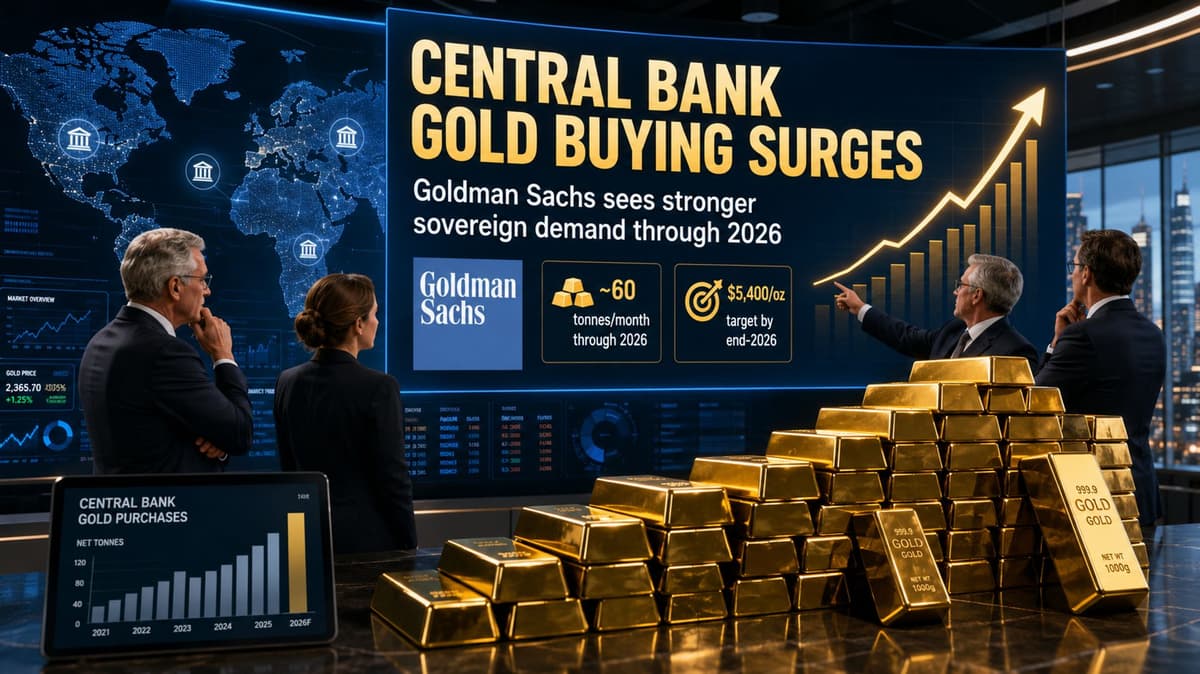
The World Gold Council expects central banks to buy between 700 and 900 tonnes of gold this year. That forecast signals that official demand should remain a meaningful support for the gold price, even if it stays below the 1,000-tonne-plus annual pace recorded in the previous three years.
Why are central banks still buying gold at high prices?
Central banks are still buying gold because they want protection against geopolitical fragmentation, sanctions risk, and overreliance on the U.S. dollar. Analysts say the motivation is strategic, not speculative.
Ole Hansen, Head of Commodity Strategy, said in a report published Friday that the freezing of Russian reserves changed how many central banks think about reserve safety and control.
What did Ole Hansen say about deglobalization and gold?
According to Ole Hansen, “The freezing of Russian reserves was a watershed moment. Gold held domestically carries no counterparty risk and remains beyond the reach of foreign sanctions or financial restrictions.”
He added: “As the global economy becomes increasingly divided into competing blocs, gold remains one of the few reserve assets that is universally accepted, politically neutral and controlled by no single government. In short, central bank buying is not about chasing price, but about reducing strategic vulnerability.”
This view helps explain why central banks continue to accumulate bullion even after a multi-year rally in precious metals.
What does Kosovo’s gold purchase mean for gold prices and Indian investors?
Kosovo’s entry into the gold market reinforces the broader trend of expanding central bank demand, which is supportive for gold prices globally. Even though the Central Bank of the Republic of Kosovo did not disclose the size of its purchase, the symbolic importance is notable because it shows official buying is broadening beyond the largest reserve managers.
For Indian investors, persistent central bank demand can help keep international gold prices firm in U.S. dollar terms, especially in XAUUSD. Domestic gold rates in India will also depend on the rupee’s movement against the U.S. dollar, import costs, and local demand during wedding and festival seasons.
Why should Indian gold buyers track central bank purchases?
Indian investors should track central bank purchases because official buying can create a strong floor under bullion prices. When central banks keep adding gold, they reduce available supply in the market and strengthen the long-term investment case for precious metals as a safe-haven asset.
That matters in India, where investors often use gold as a hedge against inflation, currency volatility, and global uncertainty. If central bank demand remains within the World Gold Council’s projected 700 to 900 tonnes this year, it could continue to support sentiment across global and domestic bullion markets.
The key watchpoint now is whether broader central bank demand stays resilient through the rest of the year after the 244-tonne first quarter. For Indian investors, that trend could remain an important driver of gold price direction alongside the U.S. dollar, bond yields, and the rupee.