# Tokenized Gold Growth Could Accelerate on New WGC Standards
Tokenized gold is expanding rapidly, and the next phase of growth may depend less on investor demand and more on fixing market structure. That is the core message from Kurt Hemecker, CEO of Gold Token SA, the tokenization arm of MKS PAMP, as the World Gold Council (WGC) pushes a new framework to standardize the market.
According to the source article, blockchain-based gold tokens grew 2.6 times faster than their physical counterparts, and the market capitalization of tokenized gold surpassed $5 billion in the first quarter of the year. For Indian investors tracking gold price trends, bullion innovation, and digital access to precious metals, that signals a potentially important shift in how gold exposure could evolve beyond bars, coins, ETFs, and sovereign gold products.
What is driving tokenized gold growth right now?
Tokenized gold is growing quickly because investor demand for gold remains strong and institutions are showing rising interest in digitized real-world assets. Kurt Hemecker told Kitco News that the issue is not weak demand for gold, but inefficient market structure.
Hemecker said, “I don't think gold in general… has a demand problem. It's more about market structure.” His point is that gold already has established global demand as a safe-haven asset, but tokenized gold still faces operational and legal friction that limits broader adoption.
A recent analysis cited in the article showed that blockchain-based gold tokens grew 2.6 times faster than physical gold counterparts. The same analysis said the tokenized gold market cap moved above $5 billion in the first quarter of the year.
Hemecker also said MKS PAMP has seen notable appetite since it relaunched its Gold Token in November. He added that even recent market volatility has not reduced interest in digital gold.
Why are institutions still interested in digital gold?
Institutions remain interested because tokenized gold combines traditional bullion exposure with digital transferability. Hemecker said the market still feels broadly bullish from the institutional side.
“In general, we're still feeling a pretty bullish attitude from institutions, as they're diving into this market,” he said. That matters because institutional participation often shapes liquidity, product credibility, and the pace of financial innovation.
For Indian investors, this trend is relevant because global institutional adoption can eventually influence how gold products are distributed, traded, and priced across markets, including platforms accessible in India. If tokenized bullion becomes more liquid and standardized, it could create an alternative channel for gaining exposure to XAUUSD-linked assets in digital form.
What is holding back tokenized gold from wider adoption?
The main obstacle is fragmentation. Hemecker said tokenized gold products operate under different custody models, legal frameworks, and redemption terms, which makes the market harder to trust and harder to scale.
That fragmentation means investors cannot assume that one digital gold token works like another. Hemecker stressed that not all tokenized gold products are created equal.
Why does fragmentation hurt trust and liquidity?
Fragmentation hurts trust because investors must assess each issuer separately instead of trusting a common market framework. It also hurts liquidity because isolated products do not trade or settle as part of a unified asset class.
The article said this lack of standardization has created barriers to trust and liquidity, preventing digital gold from functioning as a coherent market. Hemecker added that institutional players still ask many questions about custody, issuance, redemption, and jurisdiction.
Those questions are critical. In a tokenized bullion market, investors want clarity on whether each token is fully backed, where the physical gold is stored, how redemption works, and which legal regime applies if disputes arise.
For Indian investors, these issues are especially important because cross-border digital products can carry legal and operational complexities beyond headline gold price exposure. A token that tracks gold per troy ounce may still differ significantly in custody risk, redemption access, and settlement protections.
How does the World Gold Council plan to standardize tokenized gold?
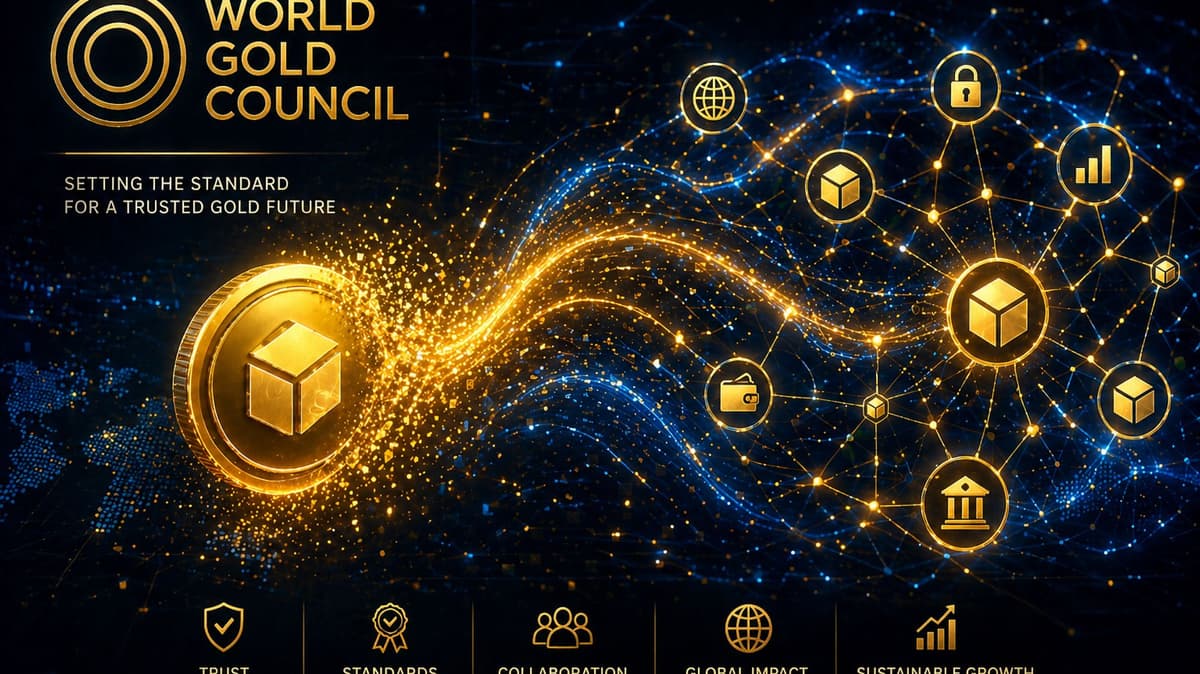
The World Gold Council plans to standardize tokenized gold through its proposed “Gold as a Service” model. The goal is to create shared infrastructure linking physical gold custody with digital issuance and lifecycle management.
According to the article, the WGC framework would standardize custody, issuance, reconciliation, and redemption. Instead of each issuer building separate systems from scratch, issuers could connect to common infrastructure.
Hemecker described the effort in simple terms: “They’re really fixing the plumbing. The idea there is that issuers don’t have to rebuild everything from scratch.”
What does the WGC white paper propose?
The WGC white paper proposes a coordinated structure that connects the physical and digital gold ecosystems. According to the article, the aim is to reduce complexity while improving trust and interoperability.
This matters because tokenized gold only scales efficiently if the gold backing, issuance process, recordkeeping, and redemption mechanisms work together in a consistent way. Standardized infrastructure could also lower barriers for new issuers and service providers.
From an India perspective, a stronger global framework could eventually improve confidence among wealth managers, fintech platforms, and high-net-worth investors looking for digital bullion exposure. It may also support more transparent comparison with traditional products tied to gold price movements in rupees.
Why is fungibility so important for tokenized gold?
Fungibility is important because it would allow different tokenized gold products to become interchangeable under trusted standards. Hemecker said this could be the biggest benefit of the WGC approach.
Today, investors often need to evaluate each token on its own merits because standards differ across products. That slows adoption and limits the kind of deep liquidity seen in more mature gold markets.
How could standardized tokenized gold work more like physical bullion?
Standardized tokenized gold could work more like physical bullion if market participants trust shared rules around purity, weight, custody, and redemption. Hemecker said that is similar to how physical gold trades on accepted standards.
He explained that shared infrastructure could make different tokens interchangeable, just as physical gold trades based on standardized purity and weight. “That limits trust and liquidity quite a bit today,” he said. “If we can get some standards in place, you move trust away from a centralized issuer to trusting the system.”
That shift is significant. In practical terms, a more fungible tokenized gold market could support broader trading, tighter spreads, and easier integration into modern portfolios.
For Indian investors, fungibility could one day matter in the same way it matters for other financial assets: better liquidity can reduce friction, improve pricing efficiency, and make entry or exit easier when gold price volatility rises.
How could tokenized gold become more useful in financial markets?
Tokenized gold could become more useful if standardized infrastructure allows it to move beyond simple buy-and-hold exposure. Hemecker said a more interoperable system would let tokenized gold be transferred more easily, used as collateral, or integrated into financial products.
Right now, those capabilities remain limited. The article said broader participation and standardized infrastructure could expand the overall market by improving both liquidity and usability.
What does interoperability mean for bullion investors?
Interoperability means tokenized gold could operate as part of a connected financial system rather than as isolated digital products. The WGC explicitly said shared infrastructure could transform digital gold into a “coherent, interoperable asset class” within modern financial systems.
That could open the door to new use cases in trading, lending, collateral management, and cross-platform transfers. It could also make tokenized bullion more competitive with other digital assets that already benefit from seamless ecosystem design.
For Indian investors, the long-term implication is that digital gold exposure may gradually become more sophisticated. If global standards improve, tokenized gold could evolve from a niche holding into a more functional portfolio tool linked to the broader precious metals market.
What does this mean for MKS PAMP and the broader gold market?
For MKS PAMP, the opportunity is less about building new plumbing and more about participating in a larger market. Hemecker said established firms with long histories in refining and custody stand to benefit if standardization increases overall market size.
MKS PAMP already operates as a major refiner and custodian in the gold market. That gives it existing credibility in physical bullion, even as tokenized products develop.
Hemecker said, “It starts to create a more fungible market, and the overall size of that market just grows. Then it leads to innovation.” That comment captures the broader thesis: standardization may not just solve operational bottlenecks, but also unlock the next stage of growth in tokenized gold.
For Indian investors watching the gold price, global bullion flows, and new ways to access precious metals, the key watchpoint is whether the WGC’s standardization effort gains industry traction. If it does, tokenized gold may move closer to becoming a mainstream, trusted, and more liquid extension of the global gold market rather than a fragmented digital niche.