# Gold Price Outlook: Why Surging Bond Yields Could Spark a Bigger Rally
Gold and silver face near-term pressure from elevated U.S. bond yields, but that same stress could eventually strengthen the long-term bullish case for precious metals. For Indian investors, the key issue is whether rising yields stay an inflation and rate headwind for bullion or turn into a broader risk signal that lifts safe-haven demand for gold.
What Is Driving the Gold Price Outlook Right Now?
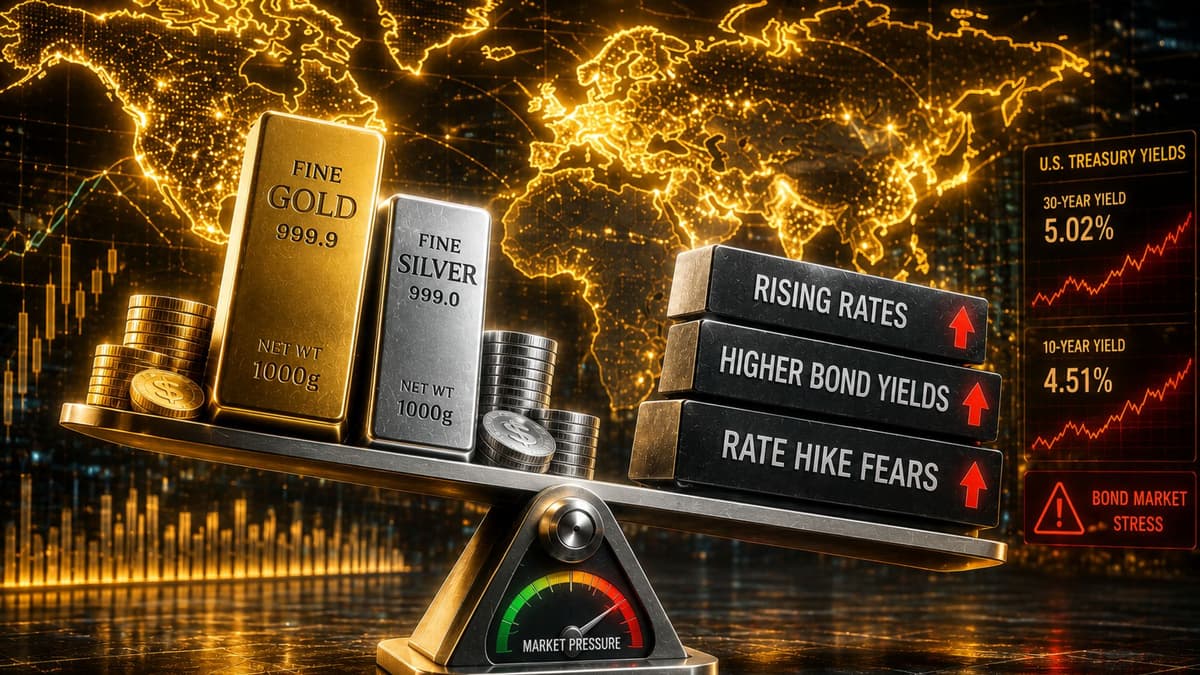
The immediate driver is higher U.S. real yields, which continue to weigh on gold and silver prices. When yields rise, investors can earn more from bonds, which increases the opportunity cost of holding non-yielding assets such as gold and silver.
The pressure has intensified rather than faded. According to the source article, 30-year U.S. Treasury yields are holding above 5% and 10-year U.S. Treasury yields are holding above 4.5%, creating a difficult near-term backdrop for bullion and other precious metals.
Markets are also increasingly considering the possibility that the Federal Reserve could keep monetary policy tighter for longer or even raise interest rates again. That expectation supports real yields and can also strengthen the U.S. dollar, both of which typically act as headwinds for XAUUSD and silver.
For Indian investors, this matters because global gold price moves often feed directly into domestic bullion rates. If the U.S. dollar stays firm and yields remain elevated, imported gold can remain volatile in rupee terms even when local demand stays resilient.
Why Are Rising Bond Yields a Threat to Gold and Silver?
Rising bond yields threaten gold and silver because they compete directly with non-yielding assets. As Treasury yields climb, income-producing fixed-income instruments become more attractive relative to bullion held for capital preservation.
That is the clearest short-term threat identified in the article. Gold and silver remain stuck in a broader consolidation pattern, and the market still faces meaningful near-term headwinds from higher real rates, sticky inflation and tight monetary policy expectations.
If investors demand higher yields mainly because inflation remains persistent, precious metals may stay under pressure for longer. In that environment, the market reads higher yields as a valuation challenge rather than a financial-stability warning.
Silver may feel that pressure even more sharply because it is typically more volatile than gold. While gold often anchors safe-haven flows, silver can swing harder when traders reassess liquidity, industrial demand and macro risk.
When Do Higher Yields Turn Bullish for Gold?
Higher yields turn bullish for gold when they start to signal systemic stress rather than normal market repricing. If investors begin to question whether sovereign bonds still provide true safety, gold's role changes quickly.
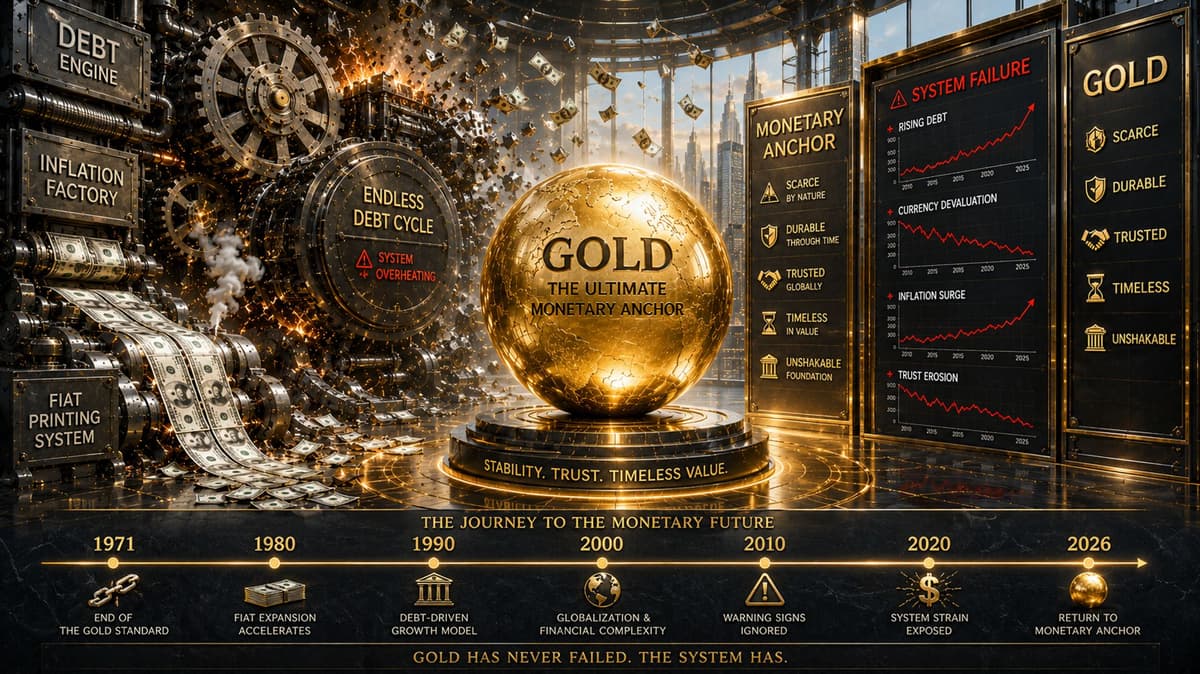
The article draws a clear distinction here. If the long end of the yield curve becomes disorderly, gold and silver stop being seen mainly as assets with no yield and start being valued as assets with no counterparty risk.
That distinction is crucial for portfolio allocation. In a stable bond market, higher yields hurt gold. In a stressed bond market, the same higher yields can push investors toward safe-haven stores of value such as physical gold, bullion-backed products and other hard assets.
This is especially relevant for Indian investors who often buy gold not only for returns, but also for wealth protection, currency diversification and crisis hedging. If global bond volatility rises sharply, domestic gold demand could strengthen even if international markets initially remain choppy.
What Fears Are Emerging Behind Elevated Bond Yields?
The bigger fear is that elevated bond yields may reflect growing concern about financial strain, not just inflation. Analysts cited in the source article are warning that rising borrowing costs, persistent inflation, elevated energy prices and deteriorating fiscal dynamics could push markets closer to a breaking point.
So far, the bond-market selloff has remained relatively orderly. But the article notes that sentiment can shift quickly once yields move from being a standard valuation headwind to a source of systemic risk.
That shift would matter far beyond the Treasury market. It could affect equities, credit markets, corporate funding conditions and overall confidence in traditional financial assets.
For Indian investors, elevated energy prices also deserve close attention. Higher oil and energy costs can worsen inflation pressures and affect India's import bill, which in turn can influence the rupee, local bond yields and domestic gold prices.
Why Is Gold’s Risk-Reward Setup Becoming More Asymmetric?
Gold's risk-reward profile is becoming more asymmetric because its downside still depends on tighter policy expectations, while its upside could expand sharply if bond stress deepens. In other words, the near-term pressure is visible, but the longer-term upside case may be strengthening.
The article says gold may still be vulnerable to a correction if markets price in more Federal Reserve rate hikes, stronger real yields and a firmer U.S. dollar. Those conditions would likely keep gold price momentum contained in the short run.
But the same paragraph argues that the deeper these pressures become, the stronger the case grows for gold as a strategic wealth-preservation asset. That is the asymmetry: what hurts gold first could later become the trigger for stronger safe-haven demand.
This framing is useful for Indian households and high-net-worth investors balancing tactical volatility with long-term allocation. Short-term weakness in international troy ounce prices can coexist with a stronger long-term case for holding some exposure to precious metals.
How Is Portfolio Strategy Changing in Favor of Hard Assets?
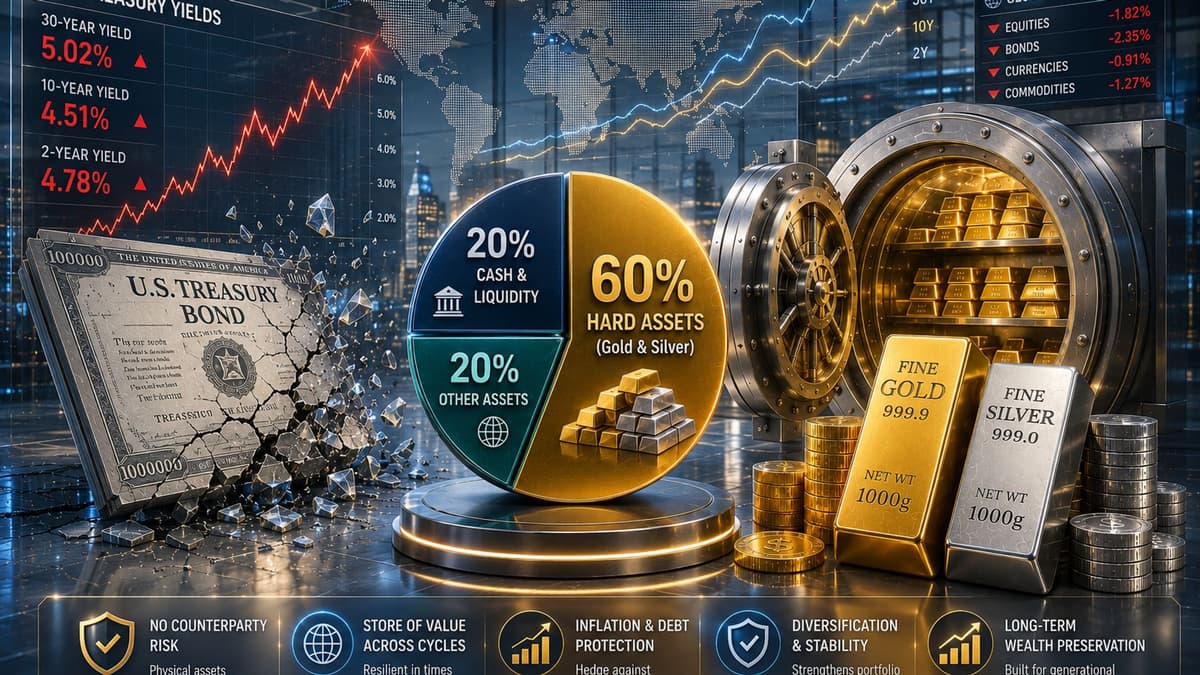
Portfolio strategy is shifting because banks have increasingly questioned the traditional 60/40 portfolio split between equities and bonds. The article notes that banks have been discussing the decline of that model and the rise of a 60/20/20 diversification approach in which hard assets play a larger role.
That shift reflects a world where both stocks and bonds can come under pressure at the same time. If inflation stays sticky and bond volatility remains elevated, investors may seek broader diversification through gold, silver and other real assets.
For Indian investors, this has practical implications. Gold has long held a cultural and financial role in India, but the global portfolio conversation increasingly supports that allocation from a modern asset-allocation standpoint as well.
What Is the Silver Price Outlook in This Environment?
Silver remains volatile, but it also has a strong strategic case if markets rotate out of expensive financial assets and into hard assets. The article says silver is still caught below key resistance, which shows that the price action remains restrained for now.
At the same time, silver has a dual identity as both a monetary metal and an industrial commodity. That gives it different upside drivers than gold, especially if industrial demand stays healthy while investors also seek safe-haven exposure.
The source article argues that if tighter liquidity, higher energy costs and bond-market stress begin to undermine confidence in equities and credit, silver could benefit from the same wealth-preservation trade that supports gold. It could also see added upside from supply constraints and industrial demand.
For Indian investors, silver can behave more aggressively than gold in both directions. That makes it attractive for higher-risk investors, but it also requires a greater tolerance for volatility in the bullion market.
What Should Indian Investors Watch Next in Gold and Silver?
Indian investors should watch U.S. real yields, Federal Reserve expectations, the U.S. dollar and signs of disorder in the long end of the Treasury market. These factors are likely to determine whether gold and silver remain under pressure or shift back into a stronger safe-haven trade.
The core message from the article is clear: gold and silver are not immune to higher yields in the short term. Rising real rates remain the biggest immediate obstacle for precious metals.
But the same forces weighing on gold and silver today may become the catalyst for renewed demand tomorrow. If bond-market stress starts to erode confidence in sovereign debt, equities or credit, Indian investors may see global bullion prices regain momentum, with rupee moves adding another layer to domestic price action.