# Gold Price Outlook: Bond Stress and Rate Fears Trap Bullion
Gold and silver are holding key near-term support, but rising U.S. bond yields are keeping bullion stuck in a neutral range. For Indian investors, the core issue is clear: if yields keep climbing in an orderly way, gold faces pressure; if bond-market stress turns disorderly, gold could regain safe-haven demand quickly.
Why are gold and silver prices stuck in a range right now?
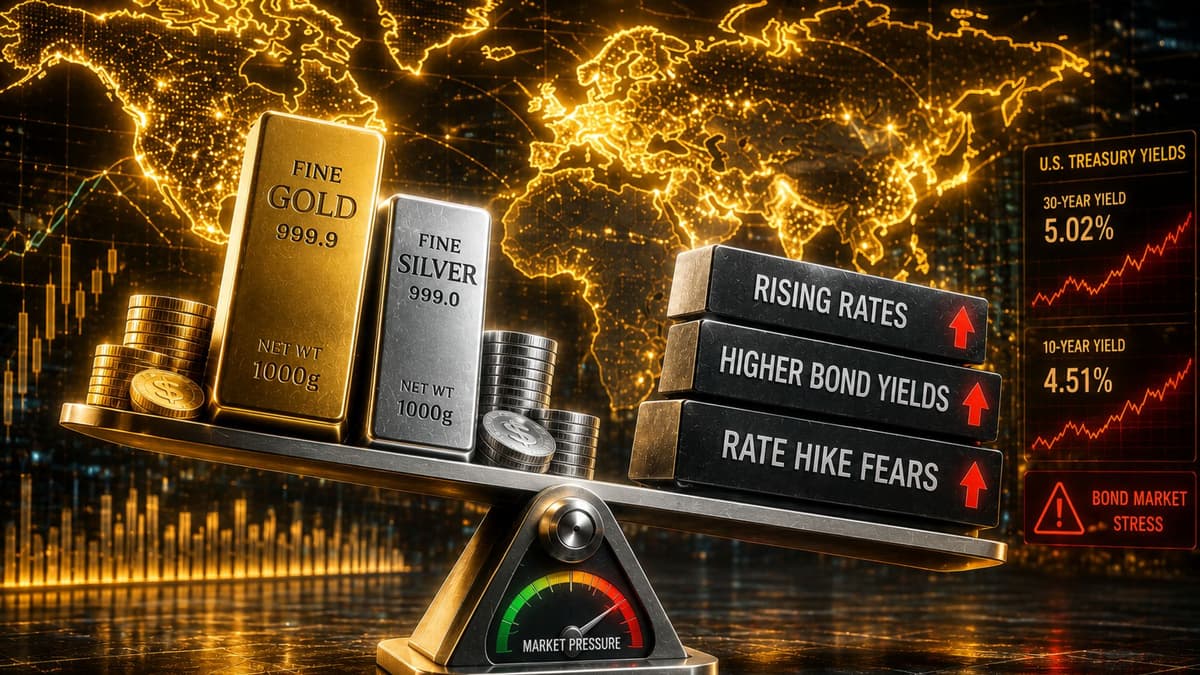
Gold and silver are range-bound because investors are weighing two opposing forces at the same time: rate-hike fears and bond-market stress. Higher yields usually hurt non-yielding assets like gold, but deeper stress in sovereign debt markets can revive demand for precious metals as a wealth-preservation hedge.
Ahead of the weekend, both metals managed to hold key near-term support levels. Even so, analysts said the precious metals market remains in relatively neutral territory, with no decisive breakout in either direction.
For Indian investors, this kind of global indecision often translates into choppy domestic pricing. INR moves can either soften or amplify swings in the international gold price, especially when XAUUSD is reacting to U.S. macro data and Treasury yields.
What is happening in the U.S. bond market, and why does it matter for gold price?
The U.S. bond market is sending a warning signal because long-dated yields remain critically elevated. That matters for gold price because higher real and nominal yields increase the opportunity cost of holding bullion.
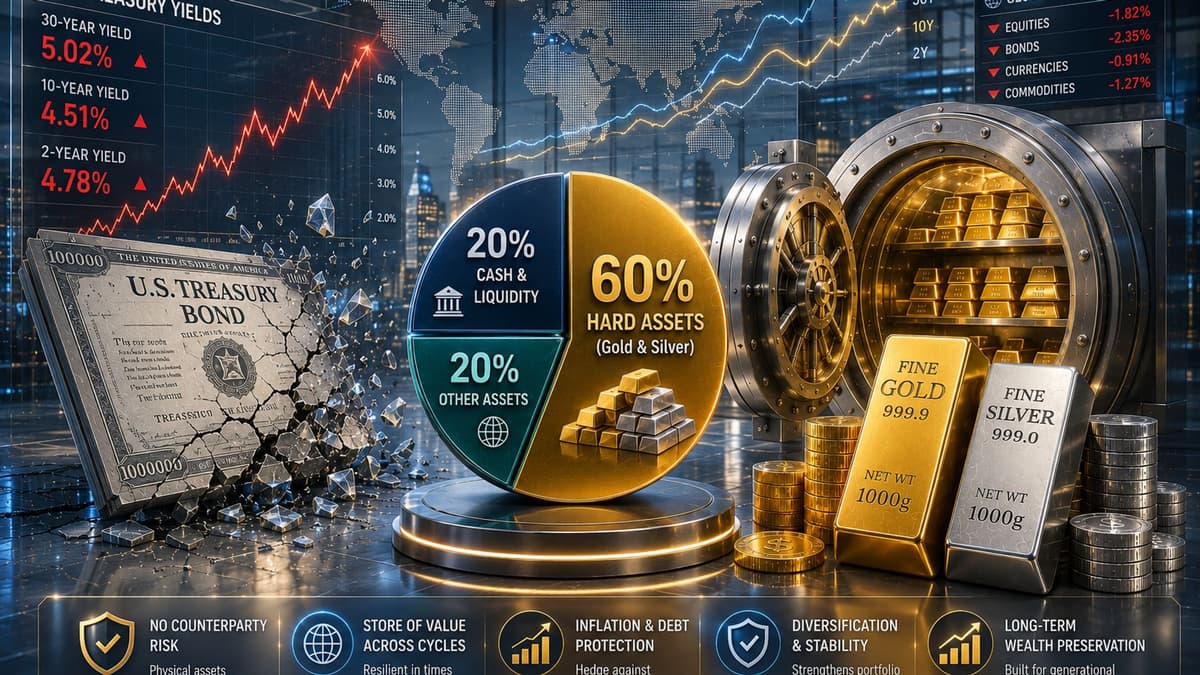
Although long-term bonds are on track to end the week below their recent highs, yields remain elevated. The yield on 30-year U.S. Treasuries is holding above 5%, while the yield on 10-year notes is ending the week above 4.5%.
In the short term, analysts said these higher bond yields are a significant headwind for gold and silver. If yields stay high, markets may expect the Federal Reserve to raise interest rates by the end of the year, which would pressure non-yielding assets such as gold and silver priced in troy ounces.
For Indian bullion buyers, higher U.S. yields often support the U.S. dollar and can affect imported gold costs. Since India is a major gold importer, any move in XAUUSD combined with USD/INR can directly influence local gold rates.
Could rising bond yields trigger a bond crisis that helps gold?
Yes, a disorderly rise in long-term yields could eventually support gold, but several analysts said the market is not fully at that point yet. The distinction is whether yields are rising because of inflation and growth expectations, or because investors are losing confidence in government bonds as safe-haven assets.
What did Naeem Aslam say about a possible bond crisis?
Naeem Aslam, Chief Investment Officer at Zaye Capital Markets, said the risk of a bond crisis is increasing, but the market has not crossed that threshold.
“We are getting close to that point, but we are not fully there yet. The key risk is the long end of the curve becoming untethered. If 10-year and 30-year yields keep rising in a disorderly way, markets may begin to question whether government bonds still offer the same safe-haven protection,” he said.
Aslam added that investors should watch the relationship between yields and gold price closely. “The signal to watch is simple: if long yields rise but gold stops falling, that means investors are no longer seeing higher yields as a reason to avoid gold — they are seeing them as a reason to own it. That is when renewed wealth-preservation demand can come back strongly.”
That view matters in India because domestic investors often increase allocations to gold when confidence in global financial assets weakens. If overseas bond stress escalates, Indian demand for safe-haven bullion and gold ETFs could strengthen even if local prices remain elevated.
How are analysts balancing near-term downside and long-term upside for gold?
Analysts are increasingly split between short-term downside risk and a much more bullish long-term view. Near-term, higher yields and hawkish rate expectations could weigh on gold; longer term, sticky inflation, geopolitical risk, and reserve diversification could support higher prices.
Why does John Murillo still see long-term support for gold?
John Murillo, Chief Business Officer at B2BROKER Group, said gold investors may face more pain before conditions improve. He noted that gold remains respected as an anti-inflation and anti-geopolitical-stress hedge, but added that fixed-income markets are becoming more vocal in pricing a more hawkish stance from incumbent Federal Reserve Chair Kevin Warsh than from his predecessor.
Murillo said gold could face a short-term correction because geopolitical tensions and a slowdown in central bank purchases are weighing on sentiment. Still, he argued that the “ongoing quiet rollover of many central bank reserves from sovereign bonds to precious metals effectively sets a firm floor against any significant bearish speculation.”
Near term, Murillo said gold prices could fall to $4,000 an ounce. Over the longer term, he sees the potential for gold to reach $10,000.
He said that outlook reflects concern about “sticky” inflation driven by the long-term consequences and high impact of the Middle East conflict, along with weakening momentum in the U.S. dollar.
For Indian investors, this type of long-term bullish framework is especially relevant. India’s gold market often responds not just to spot bullion moves, but also to inflation hedging demand, central bank reserve trends, and broader geopolitical uncertainty.
Do all analysts agree that a bond crisis is approaching?
No, not all analysts believe a bond crisis is imminent. TD Securities said the current rise in long-end yields appears more consistent with changing Federal Reserve expectations, firmer inflation expectations, and still-solid economic growth.
Fixed-income strategists at TD Securities said, “Based on our decomposition, the repricing of Fed expectations has been the primary driver of higher rates. However, rising inflation expectations and still-solid growth momentum have contributed to the upward pressure.”
They added that they do not think higher rates are currently being driven by renewed concern about U.S. deficits or weak foreign demand for U.S. debt. TD Securities also said that while it does not believe the Federal Reserve wants to hike rates, markets could continue to price in more hikes, risking a further drift higher in near-term Treasury yields.
That distinction is important for bullion markets. If rates are rising because the economy remains resilient and inflation expectations stay firm, gold may struggle to rally in the near term.
What downside levels are analysts watching for gold?
TD Securities’ commodity analysts said gold prices could test support around $4,350 an ounce in this environment.
David Morrison, Senior Market Analyst at Trade Nation, also said gold could struggle if traders aggressively price in additional Federal Reserve tightening.
How are Federal Reserve rate expectations affecting gold and silver?
Federal Reserve rate expectations are turning into a direct headwind for gold and silver because traders are assigning higher odds to additional tightening before year-end. That raises yields and undermines the appeal of non-yielding precious metals.
David Morrison said the CME FedWatch Tool now shows a greater probability of a 25-basis-point rate hike before year-end at 42% than of rates being kept on hold at 30%.
He also said the probability of 50 basis points of hikes this year has risen to 22%, up from zero a month ago. According to Morrison, that shift is likely to put downward pressure on gold prices.
Morrison added that concerns about war-related fiscal costs, federal debt, and deficits still have not gained broad traction among investors, even though debt held by the public is now over 100% of GDP. He noted, “Maybe this time will be different.”
For Indian investors, this means global gold price weakness can still emerge even during periods of geopolitical tension. If markets focus more on Fed tightening than on safe-haven buying, domestic gold prices may remain volatile rather than trend sharply higher.
What economic data should gold investors watch next week?
Gold investors should watch U.S. confidence, growth, inflation, and labour-market data next week because those releases could shift Federal Reserve expectations and move bullion prices. Inflation data, in particular, could be critical for XAUUSD.
Markets are also expected to remain sensitive to headline risks tied to the war in Iran. With holidays in Europe, the U.K., and the U.S., trading activity at the start of the week is expected to be extremely light.
Following Friday’s disappointing finalized University of Michigan Consumer Sentiment numbers, investors will focus on the U.S. Conference Board Consumer Confidence Survey.
The University of Michigan said its Consumer Sentiment survey fell to a fresh record low of 44.8. At the same time, one-year inflation expectations rose to 4.8%.
Later in the week, markets will receive the second print of first-quarter Gross Domestic Product data. However, analysts said the bigger focus will likely fall on April inflation data with the simultaneous release of the monthly Personal Consumption Expenditures Index.
Gold prices could be sensitive to any further rise in inflation pressures. For Indian investors, stronger U.S. inflation could affect both the dollar and global bullion, while any sharp USD/INR move could further alter domestic landed gold prices.
Economic data to watch next week
- Monday: U.S., European and U.K. markets closed for holidays
- Tuesday: U.S. Consumer Sentiment
- Thursday: U.S. Preliminary Q1 GDP, U.S. PCE, U.S. weekly jobless claims, U.S. Durable Goods Orders, U.S. New Home Sales