# Silver Price Enters New Regime as Permanent Inflation Builds
Investors are moving into what Mark Skousen calls an era of "permanent inflation," and that shift is changing how gold, silver, copper, uranium, currencies, and digital assets are valued. According to Skousen, the current setup is not a temporary post-crisis cycle but a structural regime that could keep bullion and other scarce assets supported for years.
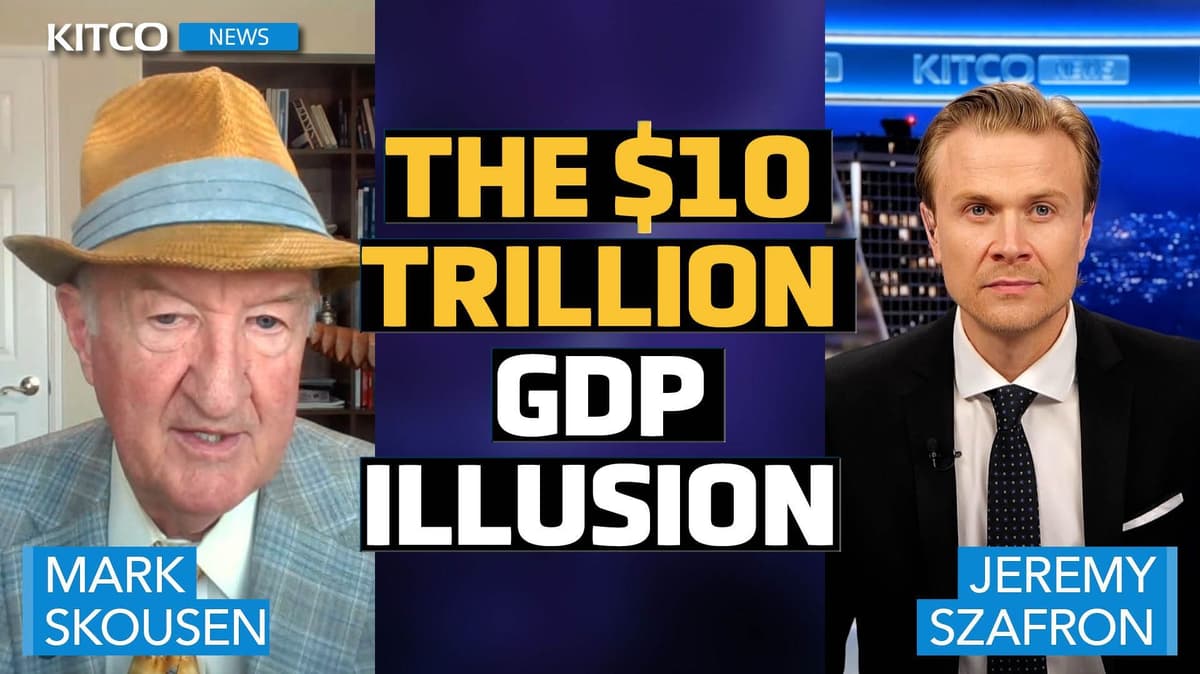
Skousen made the comments in early April 2026 in an interview with Kitco News. He is a presidential fellow at Chapman University and a macroeconomic strategist at the Oxford Club.
For Indian investors, the message is important. If global inflation stays structurally high and the U.S. dollar-based financial system becomes more fragmented, gold price and silver price trends could remain firm in both U.S. dollar terms and INR terms, especially if the rupee also faces imported inflation pressure.
What is Mark Skousen saying about permanent inflation?
Mark Skousen says inflation has become structural, not cyclical. He argues that markets have entered a long-term inflationary regime rather than a short-lived phase driven by post-pandemic distortions.
Speaking to Kitco News in early April 2026, Skousen said, “We've entered an era of permanent inflation. There's no real deflation.” He tied that view to several long-running forces: persistent deficit spending, supply constraints, geopolitical conflict, and the after-effects of ultra-low interest rates that lasted for years.
Skousen also said the Federal Reserve’s 2% inflation target effectively locks in a steady decline in purchasing power. In his words, “I tell all investors, you need to make 10% a year just to keep up with the higher cost of living in this country.”
That is a major challenge for portfolios built around cash or fixed income. In a structurally inflationary world, assets linked to scarcity, production, and hard supply limits may perform better than traditional defensive holdings.
Why does Skousen think silver price has entered a new regime?
Skousen says silver is no longer trading only as a monetary hedge. He believes industrial demand is now strong enough to support a much higher long-term floor for silver price.
In early April 2026, silver was consolidating near $75 per troy ounce after rallying roughly 100% over the past year. At the same time, gold was trading in the $4,700 to $4,800 range, reinforcing the broad strength across precious metals.
Skousen said silver demand is increasingly tied to AI chips and energy systems. That means silver now has dual support: it remains a precious metal and safe-haven asset, but it is also a critical industrial input.
He was explicit about his outlook. “My prediction is that it's back over $50 headed to a hundred again,” Skousen said. “It's never going to go back under $50.”
How do industrial demand and supply constraints support silver?
The answer is tight supply meeting durable demand. Skousen said new mine supply remains limited, while demand keeps expanding from technology and energy-linked sectors.
That combination tightens the supply-demand balance for silver. In market terms, it suggests the silver price may be moving into a higher structural range than investors were used to in earlier cycles.
For Indian investors, that matters because silver has deep retail appeal in India, both as an investment and as a store of value. If global silver benchmarks remain elevated, domestic silver rates in rupees could stay firm even if short-term volatility appears in XAGUSD or broader commodity markets.
How are gold, copper, and uranium connected to this trend?
Skousen says gold, copper, and uranium are part of the same broader repricing toward scarce assets. The common theme is constrained supply colliding with long-duration demand tied to infrastructure, technology, and energy systems.
Gold, in his framework, remains supported by monetary demand and inflation protection. With gold trading in the $4,700 to $4,800 range in early April 2026, he sees bullion as part of a larger market shift toward real assets.
Copper, however, is more economically sensitive than gold. Skousen said copper reacts more directly to growth fears, geopolitical stress, and trade disruption.
Why is copper softer even if the long-term outlook stays strong?
Copper is softer in the short term because it is closely tied to economic momentum. Skousen noted recent weakness in copper-linked equities, which he said reflects near-term concern about growth rather than a collapse in the long-term demand story.
He said, “What is least undervalued? Well, maybe the copper stocks.” That suggests he sees less immediate upside in copper equities compared with other resource themes, even though the structural outlook remains constructive.
Why does uranium still look attractive?
Uranium still looks attractive because prices remain below prior cycle highs despite rising demand for alternative energy. Skousen flagged uranium as another market with room to move higher.
That view fits his broader thesis: assets linked to production bottlenecks and long-term energy demand may continue to attract capital in an inflationary regime.
For Indian investors, these cross-commodity trends matter because they shape the broader commodity complex. When investors globally rotate into hard assets, sentiment often supports bullion, including XAUUSD and domestic gold price benchmarks.
What does this mean for gold price and Indian investors?
For Indian investors, Skousen’s thesis supports continued interest in gold and silver as inflation hedges and scarce assets. If inflation remains embedded globally, precious metals may retain strategic value even at elevated prices.
Gold’s move into the $4,700 to $4,800 per troy ounce range and silver’s consolidation near $75 suggest the market is already pricing in persistent inflation, supply stress, and strong demand. If those trends continue, Indian buyers may face higher rupee-denominated bullion prices, especially if INR weakens against the U.S. dollar.
How does INR affect the domestic bullion market?
INR can amplify global bullion moves for Indian investors. Even if international gold price or silver price gains slow, a weaker rupee can keep domestic prices elevated.
That is why Indian investors should watch both XAUUSD and USD/INR. A structurally firm bullion market combined with currency pressure could keep local gold and silver rates high.
Why are cash and fixed income less compelling in this environment?
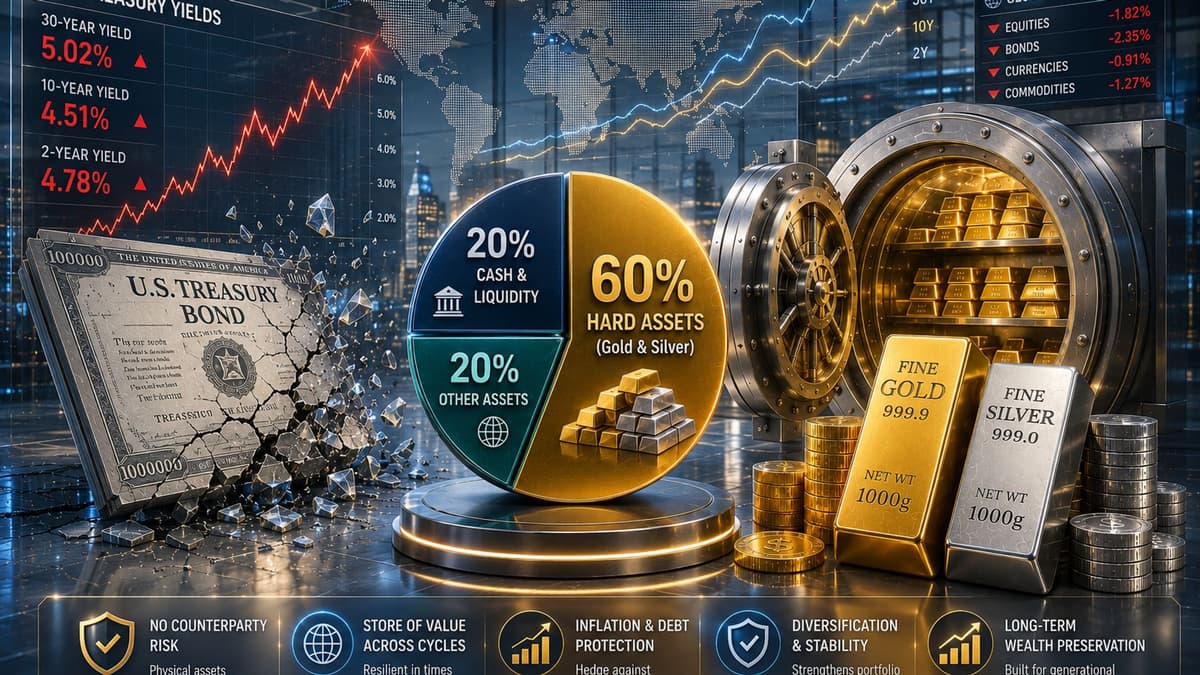
Skousen’s answer is simple: inflation erodes purchasing power. If inflation remains structurally high, cash yields and fixed-income returns may struggle to preserve real wealth.
That does not mean investors should abandon diversification. But it does mean real assets, precious metals, and select commodity-linked exposures may play a bigger role in asset allocation.
Why are some countries exploring alternatives to the U.S. dollar?
Skousen says global trade is showing early signs of fragmentation away from the U.S. dollar. He pointed to reports from the Strait of Hormuz indicating that some energy-related transactions were being conducted in alternative currencies, including yuan and cryptocurrencies.
He did not argue that the dollar faces immediate displacement. But he said the trend shows that politically sensitive regions are increasingly exploring other settlement methods.
“There are legitimate uses for the cryptocurrencies and Bitcoin and so forth,” Skousen said. “People are looking for an alternative to the dollar.”
What does this shift mean for precious metals?
It could strengthen the long-term case for gold and silver. When trust in the monetary system becomes more fragmented, investors often move toward safe-haven assets, bullion, and alternative stores of value.
For India, any gradual weakening in the dollar’s dominance could reshape trade, reserve management, and commodity pricing over time. While that process would likely be slow, it may increase interest in gold as a neutral reserve asset.
How does technology mask deeper economic weakness?
Skousen says rapid technological growth is supporting the economy, but it may also be hiding underlying weakness. He described the current period as “a golden age of technology,” driven especially by artificial intelligence and data infrastructure.
That technological strength, in his view, is creating resilience in headline economic data. But he warned that standard indicators may overstate the true health of the economy.
“Do not look at consumer spending. Do not look at retail sales,” Skousen said. “The key indicator is the supply chain, and it's business-to-business spending.”
Why does Skousen focus on supply chains instead of retail sales?
He believes business-to-business activity gives a clearer picture of economic health. If supply chains and production remain weak, then consumer spending alone may not reflect durable strength.
That matters for commodity investors because production bottlenecks often support prices for scarce resources. In other words, underlying economic fragility can coexist with elevated prices for gold, silver, and other hard assets.
How is asset allocation changing in this market regime?
Skousen says capital is shifting toward scarcity, production capacity, and alternative financial systems. He sees structural inflation, geopolitical tension, and technological change pushing investors away from traditional assumptions about money and markets.
That includes digital assets and blockchain-linked investments. Skousen said those areas have a role because they support parallel systems for transferring and recording value.
“I think it's pretty clear that Bitcoin and other cryptocurrencies have bottomed and are starting to move higher,” he said.
His broader point is that investors are repricing assets based on scarcity and functionality, not just near-term market volatility. In that environment, gold bullion, silver, industrial metals, uranium, and selected digital assets can all benefit from the same structural forces.
For Indian investors, the key watchpoint is whether inflation, supply constraints, and geopolitical stress remain entrenched through 2026. If they do, gold price and silver price trends may stay supported, and any pullbacks in bullion could be treated as strategic buying opportunities rather than a signal that the larger regime has ended.