# Silver Price Above $80 Signals a Powerful Structural Market Shift
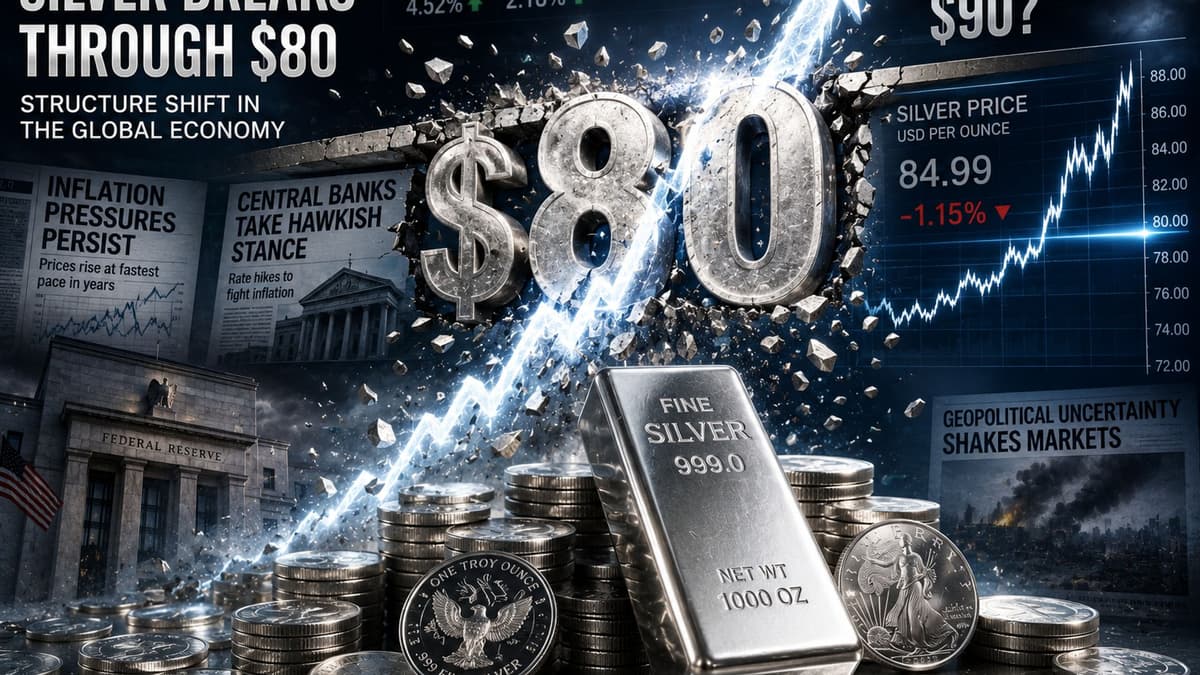
Silver prices climbed back above $80 per troy ounce and briefly surged near $87, as investors increasingly bet that a persistent supply deficit, industrial demand strength, and geopolitical risk could drive the next move toward $90. For Indian investors tracking bullion and precious metals, the rally signals that silver is no longer moving only in gold’s shadow; it is increasingly trading as both a strategic industrial asset and a safe-haven alternative.
Why is silver price above $80 again?
Silver moved above $80 an ounce because investors returned aggressively to the market amid tightening supply conditions and renewed interest in precious metals during a volatile geopolitical backdrop. The latest rally came even as the war in Iran continued to threaten the global economy.
Silver started the week with a 7% rally, pushing prices to a nine-week high near $87 an ounce. On Tuesday, prices faced some technical selling, but the market still held on to most of Monday’s advance.
Spot silver was last traded at $84.99 per ounce, down 1.15% on the day. Even with that decline, the price action showed that bullish momentum remained largely intact.
For investors in India, a sustained move in global silver prices often feeds directly into domestic bullion rates. If the Indian rupee weakens against the U.S. dollar while XAGUSD stays firm, local silver prices can rise even faster than international benchmarks.
What is driving silver prices higher despite hawkish central banks?
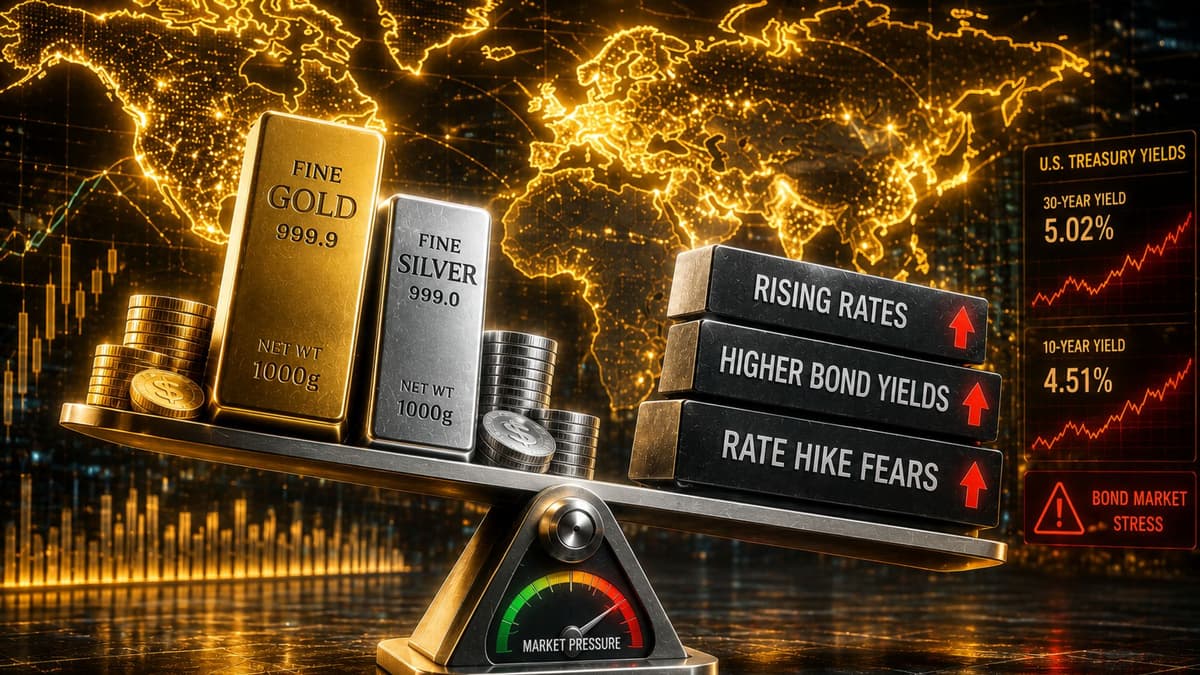
Silver is rising despite hawkish monetary policy because structural supply constraints and shifting investor behaviour are offsetting the usual pressure from higher interest rates. In normal conditions, rising rates increase the opportunity cost of holding non-yielding assets such as gold and silver.
The market backdrop appears contradictory at first glance. Inflation pressures are forcing global central banks to maintain a hawkish stance on monetary policy, which would typically weigh on bullion and other precious metals.
At the same time, broader economic uncertainty would usually hurt silver more than gold because silver has a larger industrial demand component. That should have weakened sentiment toward silver, but analysts say other forces are proving more powerful.
Those forces include a continued supply imbalance, investor diversification into hard assets, and silver’s expanding role as both a monetary metal and an industrial input. This combination has kept silver resilient even in a potentially volatile macro environment.
How big is the silver supply deficit in 2026?
The silver market is projected to face a 43 million ounce supply deficit, marking the sixth consecutive supply deficit, according to the latest industry survey. That shortage is one of the clearest fundamental supports for higher silver prices.
Last month, The Silver Institute published its annual Silver Survey, conducted by Metals Focus. The report projected that the silver market would record a 43 million ounce deficit.
A sixth straight annual deficit suggests the market is not dealing with a temporary disruption. Instead, it points to a longer-running mismatch between supply and demand that could continue to support bullion prices.
For Indian investors, this matters because structural deficits tend to create a stronger floor under prices than short-term speculative rallies. If the deficit persists, corrections in silver may attract buyers rather than trigger a lasting reversal.
How is base metal production affecting silver supply?
Silver supply is vulnerable because much of the metal is produced as a by-product of base metal mining. If base metal output weakens, silver availability can shrink further.
Barbara Lambrecht, commodity analyst at Commerzbank, said weakening base metal production this year could widen silver’s supply deficit. She added that the ongoing energy crisis caused by the war with Iran is affecting the production of base metals, from which silver is often produced as a by-product.
Lambrecht said, “The impulse for the relative strength of silver, which is more heavily influenced by industrial demand than gold, is likely to stem from the industrial metals markets.”
That insight is important for investors tracking silver versus gold. Gold price moves often reflect inflation, interest rates, and safe-haven demand, while silver can also react sharply to manufacturing trends, energy costs, and industrial metals output.
Why are analysts calling silver a strategic asset now?
Analysts say silver is being repriced as a strategic asset because investors increasingly see it as both a store of value and an industrial metal essential to the global economy. That dual role is helping silver stand apart from gold.
Simon-Peter Massabni, Head of Business Development at XS.com, said silver’s recent move reflects a major repricing driven by structural market forces rather than a marginal speculative burst.
He said, “These factors are no longer marginal; they have become a primary force reshaping silver’s position within the global financial system, not merely as a store of value, but as a multi-dimensional strategic asset.”
Massabni added that, because of the ongoing supply deficit, prices need to move higher to help rebalance the market. In other words, the current rally may be doing the economic work required to ration demand and encourage future supply.
How is silver stepping out of gold’s shadow?
Silver is stepping out of gold’s shadow because investors increasingly view it as a higher-return opportunity in uncertain markets. That change is also visible in the falling gold-to-silver ratio.
Massabni said the decline in the gold-to-silver ratio from record levels to more balanced ranges reflects a deliberate investor reassessment. According to him, silver is gaining favour because it uniquely combines the characteristics of a precious metal and an industrial asset.
He said, “This shift is not random; it stems from a growing recognition that silver uniquely combines the characteristics of a precious metal and an industrial asset — a rare blend that gives it an edge during complex economic cycles.”
For Indian investors who already follow gold price trends closely, this is a notable shift. It suggests silver may offer a different risk-reward profile than gold, especially when industrial demand and supply tightness reinforce safe-haven flows.
How are sovereign debt and geopolitical tensions influencing silver?
Rising sovereign debt and persistent geopolitical tensions are supporting silver because investors are looking for alternative assets outside traditional financial instruments. The war in Iran has added to that demand backdrop.
Massabni said worsening debt dynamics and geopolitical uncertainty are pushing more investors toward silver. He also argued that near-term pressure from expectations of higher interest rates is unlikely to derail the broader uptrend.
He said, “Even with the temporary pressures resulting from expectations of higher interest rates, I believe these effects will be short-lived and unlikely to alter the broader trend.”
He added, “The question is no longer whether silver will continue to rise, but how far this rally can extend in an increasingly volatile world that is becoming more dependent on strategic resources.”
That view reinforces the case for watching silver not just as a commodity, but as a broader macro asset. For Indian bullion buyers, the next key watchpoint is whether silver can decisively hold above $80 and rebuild momentum toward $90, especially if global risk sentiment remains fragile and supply deficits continue to deepen.