# Silver Futures in Singapore Signal Asia’s Rising Market Power
Abaxx Technologies is launching a new silver futures contract in Singapore because Asian silver demand is growing fast and supply risks are reshaping global price discovery. For Indian investors, the move matters because it could deepen Asia-based bullion pricing, improve regional hedging tools, and gradually reduce the market’s dependence on Western benchmarks such as Comex.
What is Abaxx launching in Singapore?
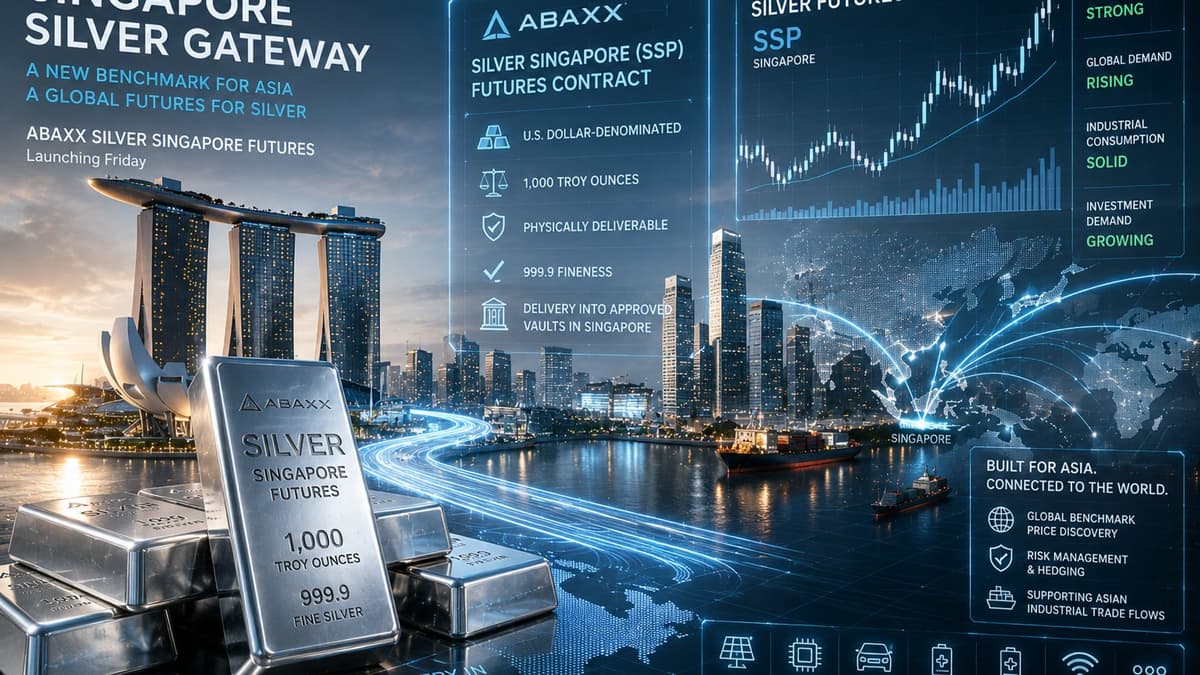
Abaxx Technologies announced on Monday that it will launch Abaxx Silver Singapore futures on Friday, expanding its precious metals product suite. The exchange is positioning the contract as a new benchmark for the global industrial silver market.
The company said its Silver Singapore (SSP) futures contract will be U.S. dollar-denominated, sized at 1,000 troy ounces, and physically deliverable. The contract will require 0.9999 fineness silver and allow delivery into approved vaults in Singapore.
Abaxx said the contract is built specifically for commercial users in the industrial silver trade. According to the company, the product is meant to create a globally accessible benchmark for price discovery and hedging, while physical delivery in Singapore is designed to support Asian industrial trade flows.
Why does physical delivery in Singapore matter?
Physical delivery matters because silver users increasingly want contracts tied closely to real metal availability. A Singapore delivery point places bullion closer to the region where industrial demand is expanding.
That shift could be important for Asian participants, including refiners, manufacturers, traders, and bullion market users. For Indian investors and market watchers, a stronger Asian pricing hub may eventually influence regional silver premiums, arbitrage flows, and import economics.
Why is the silver market changing so quickly?
The silver market is changing because repeated supply disruptions and stronger investment demand have made the market more volatile over the last six years. Those pressures have exposed weaknesses in how physical silver moves through global trading hubs.
In 2020, the COVID-19 pandemic disrupted the global silver supply chain after shutdowns hit the world economy. The pandemic also interrupted mining operations, which affected silver production.
In 2025, the market faced a second disruption after the U.S. government threatened to impose import tariffs on silver. Large volumes of silver moved into U.S. vaults and stayed there through most of the year because of tariff fears.
A tighter global supply picture, combined with rising investment demand, created major liquidity stress in London’s physical over-the-counter market. That shortage drove significant spot price premiums over futures prices.
The liquidity crisis helped push silver prices to all-time highs above $120 an ounce in January. That move highlighted how vulnerable the silver market had become to supply bottlenecks and uneven metal distribution.
How did market dislocations affect bullion pricing?
Market dislocations widened the gap between physical silver and paper silver pricing. When spot silver commands a premium to futures, it signals strain in the real-world bullion supply chain.
For traders in XAGUSD and broader precious metals markets, that kind of divergence matters because it changes hedging costs, raises delivery concerns, and can increase volatility across silver, gold, and related mining equities.
How is the Iran war affecting silver supply?
The ongoing war in Iran is creating a new supply risk because it is disrupting critical global commodities linked to metals production. The closure of the Strait of Hormuz has specifically affected global sulfur supplies.
Sulfur is needed to produce sulfuric acid, which is a key input in the production of base metals such as copper. That matters for silver because much of global silver output comes as a by-product of base metal operations.
If copper production declines, silver output is also likely to fall. The latest supply threat comes as silver is already expected to post its sixth consecutive annual supply deficit.
Why does copper matter for silver output?
Copper matters because silver is often mined alongside base metals rather than as a standalone product. Lower base metal production means less by-product silver reaches the market.
That dynamic is especially relevant for Indian investors tracking precious metals, because industrial demand trends can now move silver as much as safe-haven flows. Silver is no longer trading only as a monetary metal or bullion asset.
What did Abaxx executives say about Asian silver demand?
Abaxx executives said silver demand is increasingly shifting toward Asia and industrial use. They argue that the market needs a benchmark that better reflects how physical silver is sourced, delivered, and consumed.
Russell Robertson, Chief Business Development Officer of Abaxx Exchange, said: “Silver is no longer only a precious metals story. It is increasingly tied to the industrial inputs behind solar, electronics, and advanced manufacturing.”
Robertson added that as these supply chains expand, commercial participants need pricing and risk management tools that connect more directly to the physical silver they source and use. He said the Abaxx Silver Singapore futures contract is designed to close that gap with a physically deliverable contract built around higher-purity silver and delivery in Singapore.
In a Monday social media post after the announcement, Josh Crumb, Founder and CEO of Abaxx, said North America is losing its grip on the silver market as Asian demand rises.
According to trade data cited in the article, China imported a record 836 tonnes of silver in March. That figure underscores the scale of demand growth in Asia.
Crumb said that outside of silver ETFs and limited industrial and coin manufacturing in North America, there will be “less and less use for Comex silver.” He argued that silver has been “weaponized in recent geopolitics” through tariffs, administrative delays, and outright restrictions.
He also said it has become more difficult to move silver between the U.S., Hong Kong, and China when SGE-Comex arbitrage opportunities open up, especially because of refining bottlenecks when metal flows out to Asia. Crumb’s conclusion was blunt: “So why not just make the ‘western’ market Singapore—neutral and closer to the industrial demand?”
Why is Comex silver being challenged?
Comex silver is being challenged because the fastest growth in physical demand is no longer centered in North America. If more silver consumption comes from Asian industry, then delivery standards, logistics, and vaulting locations may need to evolve with that demand.
That does not mean Comex becomes irrelevant overnight. But it does suggest that regional contracts such as SSP could gain importance in price discovery, hedging, and bullion trade flows over time.
What does this mean for Indian silver and gold investors?
For Indian investors, the launch matters because it strengthens Asia’s role in precious metals pricing and could eventually affect regional bullion benchmarks. A more active Singapore hub may influence silver imports, trading spreads, and the way Asian industrial demand feeds into global prices.
Indian investors should also note the broader crossover with gold. When supply stress, geopolitical disruption, and logistics bottlenecks hit precious metals, volatility often spills across silver, gold, bullion, and safe-haven assets.
Abaxx has already shown that Singapore is central to its regional metals strategy. The company also launched a physical gold contract in Singapore in June 2025.
For investors in India, the key watchpoint is whether Asia-based contracts can attract enough liquidity to rival Western futures markets in silver and eventually gold. If that trend continues, Indian bullion traders may need to track not just Comex and London, but also Singapore’s growing role in precious metals price discovery.