# Private Credit Stress Warns of Bigger Liquidity Risks for Gold
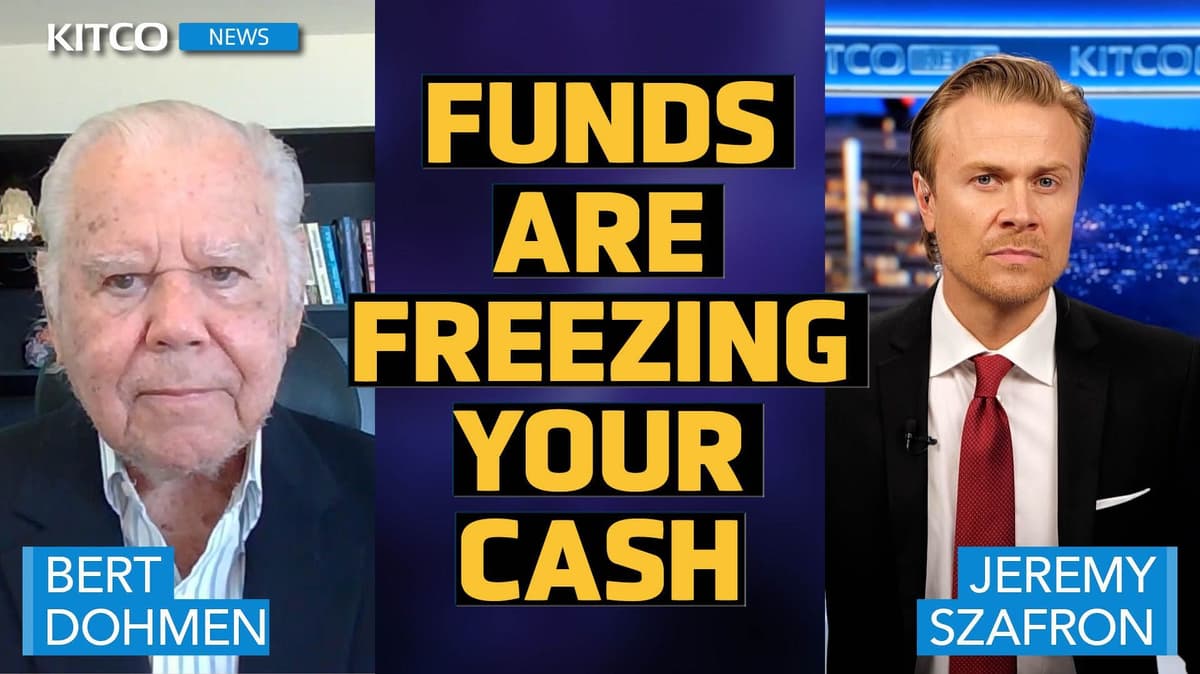
Private credit stress is signaling a deeper liquidity problem across financial markets, according to Bert Dohmen, president and founder of Dohmen Capital. Speaking with Kitco News on April 27, 2026, Dohmen said the gap between weakening credit conditions and record-high equity markets reflects a late-cycle shift in which institutional investors are cutting exposure while retail investors absorb more risk.
For Indian investors, that matters because a global liquidity squeeze can hit gold price trends, bullion flows, risk assets, and the rupee-linked domestic gold market at the same time. It can also create short-term pressure on XAUUSD and silver even when the longer-term safe-haven case for precious metals remains intact.
What is private credit stress signaling about broader market liquidity?
Private credit stress is signaling that financial system liquidity is tightening beneath the surface. Dohmen said the most visible pressure is appearing in private credit markets, where rising redemption requests are colliding with assets that cannot be sold easily.
That mismatch between investor exits and illiquid holdings, he said, reflects a broader deterioration in liquidity conditions across markets. In his words, private credit is likely to be “the leader into the abyss.”
Why is private credit under pressure?
Private credit is under pressure because leverage and illiquidity are reinforcing each other just as investors try to pull money out. Dohmen said the problem becomes severe when investors want redemptions but the underlying assets cannot be sold fast enough.
He described the situation bluntly: “You can't even get your money out.” That comment points to a structural liquidity risk rather than a simple valuation reset.
Why does Bert Dohmen say liquidity matters more than earnings?
Dohmen said liquidity and credit drive major market turning points more than earnings growth does. He told Kitco News that investors should focus primarily on whether liquidity is increasing or decreasing and whether credit is increasing or decreasing.
According to Dohmen, earnings can still look strong near a market top, which can hide worsening financial conditions. He said, “Earnings are irrelevant at the turning point.”
How can markets rise even when conditions weaken?
Markets can keep rising because public narratives often remain positive even as money conditions tighten. Dohmen argued that strong headline earnings and resilient equity indexes can mask deeper weakness in credit creation and system liquidity.
That is important for gold investors because bullion, silver, and broader precious metals often respond not only to growth data but also to liquidity cycles, funding stress, and shifts in safe-haven demand.
Why does Dohmen think markets are in a late-cycle distribution phase?
Dohmen said markets have been in a distribution phase since June 2025. He argued that large investors have been gradually reducing positions while continuing to support a constructive market narrative.
His summary was direct: “they sell to the public.” In this process, risk shifts from institutions to less-informed retail participants even as underlying liquidity conditions continue to weaken.
What does distribution mean for valuations and risk?
Distribution usually means informed investors are exiting while prices still appear strong. Dohmen said the risk is higher now because valuations are already stretched and speculative behavior has increased.
He made an extreme valuation claim, saying, “Stocks have now the highest overvaluation in history,” and added that markets are “more overvalued than 1929.” He also said leverage in the system is “five times or 10 times” prior cycles.
Why did Dohmen compare current credit conditions to 2008?
Dohmen compared current credit market structures to the period before the 2008 financial crisis because he sees similar behavior around leverage and risk transfer. He said, “They're doing the same thing that they did in 2008.”
For Indian investors, that comparison matters because a global credit event can tighten dollar liquidity, pressure emerging-market assets, and create volatility in imported commodities such as gold priced in rupees.
How could a liquidity squeeze affect gold and silver prices?
A liquidity squeeze could pressure gold and silver in the short term because investors often sell their most liquid assets first to raise cash. Dohmen said that during periods of funding stress, “They sell what they can.”
That means even defensive assets such as gold and silver may face temporary selling despite their safe-haven status. In other words, XAUUSD and bullion prices can fall initially during forced liquidation phases before stabilizing later.
Why can safe-haven assets fall during a crisis?
Safe-haven assets can fall during a crisis because investors need immediate cash, not because the long-term case has weakened. Margin calls, redemption pressure, and portfolio deleveraging can force selling in highly liquid markets, including gold, silver, and exchange-traded bullion products.
For Indian buyers, such dips can create opportunity if the rupee remains relatively stable. But if the Indian rupee weakens against the U.S. dollar at the same time, local gold prices may not fall as much as international troy ounce prices.
What could central banks do if markets turn lower?
Dohmen said central banks would likely respond to a broader market downturn with a “bailout” through liquidity injections. He argued that fresh liquidity may help stabilize markets, but it would also erode purchasing power over time.
His warning was clear: “Artificial money creation means reduced purchasing power.” That view supports the longer-term argument for owning gold as a hedge against currency debasement and declining real purchasing power.
Why does this matter for Indian gold investors?
It matters for Indian gold investors because global liquidity injections can support gold price gains over time, especially if they weaken fiat purchasing power. If central banks expand liquidity after a credit shock, bullion could regain strength after any initial forced-selling phase.
That is especially relevant in India, where investors often hold gold as both a cultural asset and a macro hedge against inflation, currency weakness, and global financial instability.
How should investors position as liquidity conditions deteriorate?
Dohmen said positioning will determine outcomes as the cycle shifts. He warned that exposure to illiquid assets and highly valued sectors becomes more dangerous when liquidity is falling.
He also stressed patience over excessive trading. “The big money is made by sitting, not by trading,” Dohmen said.
What is the key watchpoint now?
The key watchpoint is whether private credit stress spreads into broader markets and forces more visible selling across equities, credit, gold, and silver. Investors should closely track redemption pressure, central bank liquidity signals, valuation risk, and whether the June 2025 distribution phase that Dohmen identified becomes a more obvious downturn.
For Indian investors, the next move in gold price trends will likely depend on two forces at once: whether global deleveraging pushes XAUUSD lower in the near term, and whether any policy response later strengthens the long-term case for bullion in rupee terms.