# Physical Gold Faces a ‘Paper Trap’ as US Debt Tops $39T
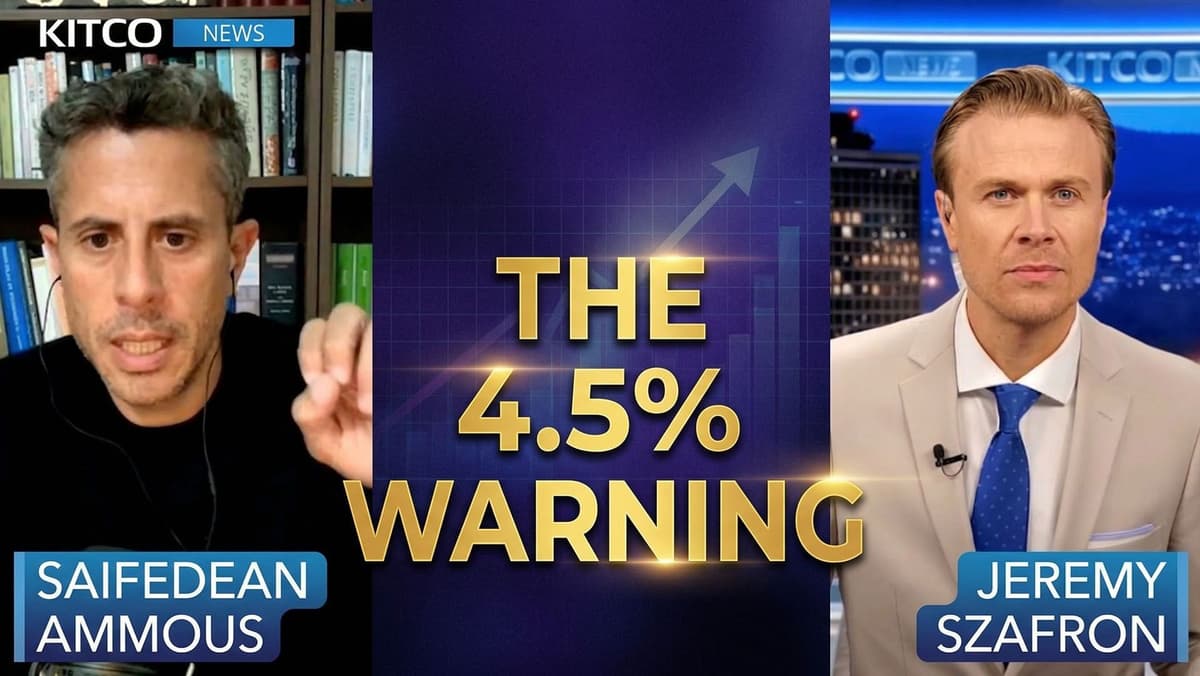
The U.S. national debt crossed $39 trillion on Wednesday, and economist Saifedean Ammous says that milestone matters for gold, the U.S. dollar, and long-term wealth protection. In an interview with Kitco News anchor Jeremy Szafron, Ammous argued that the Federal Reserve and the U.S. fiscal system are running into a structural debt wall that could reshape how investors think about bullion, safe-haven assets, and monetary risk.
For Indian investors, the message is clear: pressure on U.S. debt markets, Treasury yields, and the dollar can quickly feed into international gold price moves, XAUUSD, and ultimately domestic gold rates in INR.
Why does the U.S. $39 trillion debt milestone matter for gold investors?
It matters because Ammous believes the U.S. debt load has moved from a long-term concern to an immediate market pressure point for the dollar and for wealth-preservation assets such as gold. He told Kitco News that the fiscal path is no longer theoretical risk.
Ammous said the Federal Reserve faces an unsolvable "$10 trillion math problem" as large amounts of government debt must be refinanced at higher interest rates. He argued that when debt rolls over at materially higher yields, interest costs begin to overwhelm the federal budget.
"The math of the fiat system is hitting a wall," Ammous said.
He added that when $10 trillion in debt needs refinancing at 4% or 5%, the interest burden alone starts consuming federal spending capacity. In his view, there is no "soft landing" for a financing challenge of that scale.
What data supports Ammous's debt-wall warning?
Recent U.S. fiscal data backs part of the concern. Data from the Congressional Budget Office (CBO) released this month projects that net interest outlays will reach $1 trillion in fiscal year 2026.
The Joint Economic Committee also said that, as of March 25, the daily increase in U.S. national debt averaged more than $7 billion over the past year. That pace shows why bond investors, gold traders, and macro analysts are watching U.S. borrowing costs so closely.
For Indian market participants, this matters because higher U.S. fiscal stress can shift global flows between the dollar, Treasuries, gold, and other precious metals. Those moves can then affect imported bullion prices in India, especially when combined with rupee volatility.
What is the 4.5% Treasury yield warning for gold and the dollar?
Ammous says the 4.5% level on the U.S. 10-year Treasury yield is the key warning signal for systemic stress. In his view, that threshold marks the point where debt financing becomes much harder for Washington.
He called the 4.5% yield the "ultimate warning signal for the war machine." According to Ammous, if yields stay around that level, the U.S. government cannot easily finance both domestic obligations and global conflicts through debt issuance alone.
Where were Treasury yields trading?
As of Wednesday afternoon, the 10-year Treasury yield traded near 4.34%. That came after the benchmark yield pulled back slightly from an eight-month high of 4.4% reached earlier in the week.
Ammous argued that if yields remain elevated, policymakers face a harsh choice: either cut spending sharply or tolerate faster currency debasement. That debate matters for gold because bullion often benefits when investors fear fiat dilution, falling real purchasing power, or broader sovereign-debt instability.
Why should Indian investors watch U.S. yields?
Indian investors should watch U.S. yields because they heavily influence gold price direction, global risk appetite, and the USD/INR exchange rate. When Treasury yields rise, gold can face short-term pressure; when debt fears deepen, gold often regains safe-haven demand.
That push-pull is especially important in India, where local gold prices reflect both international troy ounce pricing and currency effects. Even if XAUUSD stays flat, a weaker rupee can keep domestic bullion prices firm.
Why does Saifedean Ammous say physical gold is stuck in a ‘paper trap’?
Ammous says physical gold is being neutralized because most gold exposure inside the financial system remains in paper form rather than in forms that can be directly used for settlement. He argues that this structure suppresses gold's monetary function even if investors still gain exposure to the gold price.
According to Ammous, the modern financial system has created a clearance monopoly that prevents physical gold from operating as a true medium of exchange. In his view, governments do not need to ban gold outright to reduce its monetary power.
"The government doesn't need to ban gold to stop it from being money," Ammous told Kitco.
He said policymakers only need to ensure that most gold "ownership" remains inside the banking system in paper form. In that setup, investors may own the price of gold, but not the ability to settle with gold directly.
What does the ‘paper trap’ mean for gold price discovery?
Ammous argues that the paper-heavy structure keeps price discovery suppressed. His point is that if investors mostly access gold through banking and financial claims rather than direct physical ownership, then gold cannot fully behave as independent money.
That distinction matters for Indian investors deciding between physical gold, digital gold products, exchange-traded vehicles, and other bullion-linked exposure. Ammous's argument favors hard assets held outside the traditional banking clearance system, though investors still need to weigh storage, liquidity, and regulatory considerations.
How does this affect India’s bullion market?
In India, where household demand for jewellery, coins, bars, and wedding-related purchases remains large, the debate between physical bullion and financial gold products is especially relevant. If global investors increasingly question paper claims, demand for allocated or directly held gold could gain attention.
At the same time, Indian buyers should remember that domestic pricing also depends on import duties, taxes, premiums, and rupee moves. So even a strong global macro case for physical gold does not always translate into a straight-line move in Indian retail prices.
How are stablecoins like Tether supporting the U.S. dollar, according to Ammous?
Ammous says stablecoins are now helping support the U.S. dollar system rather than weakening it. He described this as one of the biggest ironies in the 2026 macro environment.
In particular, he pointed to Tether (USDT) as a major source of demand for U.S. government debt. According to a February 2026 transparency report, Tether holds a record $141 billion in direct and indirect U.S. Treasury exposure.
That makes Tether one of the world's largest non-sovereign holders of U.S. debt, sitting just behind major nation-states. Ammous argued that this demand did not exist in the same form before the rise of stablecoins.
Why does Ammous call this a ‘backdoor bailout’?
Ammous calls it a "backdoor bailout" because he believes stablecoins are creating fresh global demand for dollars and Treasuries at a time when the U.S. system needs financing support. In his words, technology designed to help users opt out of the system is now helping prop it up.
"The irony of 2026 is that the very technology built to opt-out of the system is now bailing it out," Ammous said.
He added that Tether and other stablecoins are effectively giving the Federal Reserve indirect support by absorbing dollar-linked assets. For gold investors, that dynamic matters because it may delay some of the market stress that would otherwise hit the dollar sooner.
What does Ammous say investors should do as debt pressure rises?
Ammous says traditional stock-and-bond portfolios have become "melting ice cubes" in an era of debt expansion. He believes investors should shift toward hard assets outside the banking system's clearance monopoly.
That view puts physical gold back into focus as a strategic hedge against debt monetization, currency debasement, and long-term fiscal instability. It also frames bullion not only as a price trade, but as an asset held outside conventional financial plumbing.
For Indian investors, the practical watchpoints are clear: monitor the 10-year U.S. Treasury yield, especially near 4.5%; track whether U.S. net interest costs continue moving toward $1 trillion in fiscal year 2026; and watch whether rupee weakness amplifies any global gold move in local terms. If U.S. debt refinancing stress intensifies, the next move in gold may depend on whether markets focus first on rising yields or on the inflationary consequences of financing a $39 trillion debt burden.