# Gold Safe-Haven Demand Stays Strong as Prices Test $4,830
Gold’s safe-haven appeal remains intact even after its pullback during the Iran conflict, according to Heraeus. The precious metals group said recent price swings reflect speculative positioning and technical selling, not a breakdown in gold’s long-term investment case.
For Indian investors, that distinction matters. Global gold price volatility in XAUUSD can create short-term swings in domestic rates, but the underlying support from central bank demand, inflation protection and geopolitical risk still favors bullion over the longer term.
Why does Heraeus say gold is still a safe haven?
Gold is still a safe haven because its core investment case has not changed, according to Heraeus. The firm said physically held gold remains counterparty-free and has preserved purchasing power over centuries of monetary inflation and currency debasement.
Heraeus said the long-term demand base for gold comes from central banks, institutions and some retail investors. That demand differs from speculative flows, which are driven by price momentum and technical signals rather than long-term wealth preservation.
What happened to gold during the Iran conflict?
Gold did not behave like a classic safe-haven asset in every session after the US military operation in Iran began. Heraeus noted that on 2 and 3 March 2026, gold prices fell alongside stocks in the immediate aftermath of the conflict.
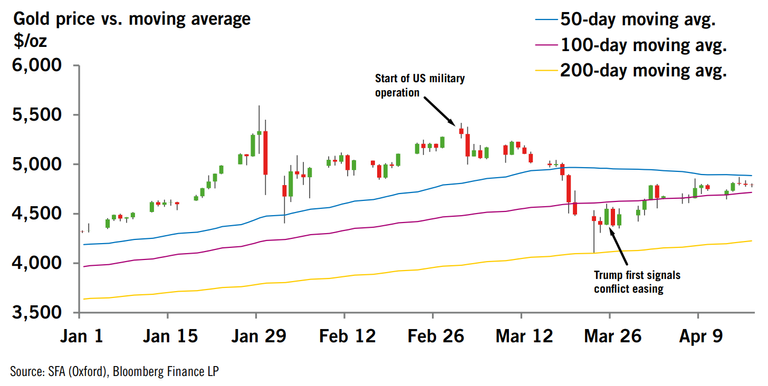
As the geopolitical situation worsened, gold continued to decline and failed to retest the highs of just over $5,400 per ounce recorded on the first trading day of the month. Heraeus said this kind of counterintuitive move can happen when speculative positioning dominates near-term trading.
Why can gold fall even during geopolitical stress?
Gold can fall during geopolitical stress when traders deleverage and reposition across asset classes. Heraeus said strong gains through 2025 and early 2026 attracted more speculative activity, which shortened the average investor time horizon in the market.
That means some investors now trade gold as a momentum asset rather than a pure safe-haven holding. Heraeus said investors should expect occasional episodes where gold moves in the opposite direction to what a traditional flight-to-safety pattern would suggest.
What technical levels shaped the recent gold price move?
Technical levels played a major role in the recent selloff and rebound in gold, according to Heraeus. The firm said gold fell sharply after breaking below its 50-day moving average on 18 March 2026.
Gold remained weak until it hit its 200-day moving average on 23 March 2026. Heraeus said that point aligned with the first signs that the conflict could ease.
How did geopolitical headlines affect the rebound?
Geopolitical headlines helped restart the uptrend. Heraeus said signs of easing emerged on 26 March, when Donald Trump claimed attacks on Iran’s energy infrastructure were delayed after constructive peace talks.
The rebound then gained further support from the temporary ceasefire announcement on 7 April. Heraeus said a new upward trend appears to have started after those developments.
Where is gold trading now?
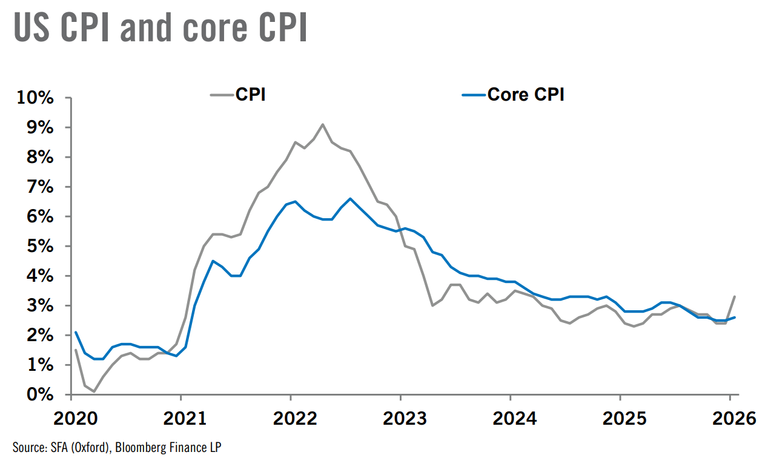
Gold is trading near session highs but is still testing resistance. Spot gold was last at $4,817.45 per ounce on Monday morning, down 0.25% on the session, while continuing to challenge resistance near $4,830 per ounce.
For Indian bullion buyers, a sustained move above that resistance in XAUUSD could influence domestic gold rates, especially when combined with rupee moves against the US dollar. If the rupee weakens while global gold holds firm, local prices can stay elevated even during minor international pullbacks.
Why is Federal Reserve policy still supportive for gold?
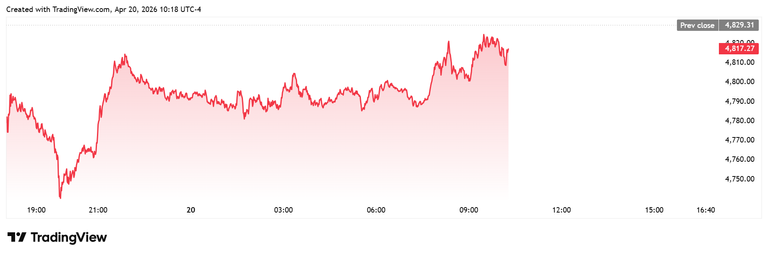
Federal Reserve policy is likely to remain supportive because Heraeus does not expect the US central bank to raise interest rates in response to the latest inflation jump. The analysts said the recent increase in CPI was driven mainly by external energy shocks linked to the Middle East war.
In the 12 months to March, the US Consumer Price Index rose to 3.3%. That was a 0.9 percentage point increase from February’s figure.
What drove the rise in US inflation?
Energy drove the rise in US inflation. Heraeus said energy prices increased 10.9% in March, heavily influenced by a 21.2% jump in gasoline prices.
Core CPI, which excludes food and energy, rose to 2.6% in March. That was only 0.1 percentage points above February.
Why does that matter for bullion prices?
It matters because the Federal Reserve is unlikely to respond aggressively to inflation caused by war-related external factors. Heraeus said higher interest rates are unlikely to have much impact in this case, and the Fed will probably focus on the relatively stable core inflation reading.
As a result, Heraeus expects the Federal Reserve to maintain a dovish tilt to avoid damaging the economy. A dovish Fed generally supports gold prices by limiting upward pressure on real yields and the US dollar.
For Indian investors, that is important because lower US rate pressure can support international bullion prices. If that coincides with festive demand or rupee weakness, domestic gold prices may remain firm.
How are record gold prices changing exploration budgets?
Record gold prices are pushing exploration budgets higher. Heraeus said gold exploration budgets rose 11% to $6.15 billion, citing S&P Global data.
Major companies account for 57% of total gold exploration budgets. Heraeus said these large miners are mainly using that spending to extend the life of existing mines by exploring nearby areas for additional ore.
Why are miners focusing on brownfield projects?
Miners are focusing on brownfield projects because they are less risky and quicker to develop than early-stage projects. Heraeus said companies are also investing in operating mines to expand production and improve recovery rates.
By contrast, greenfield exploration spending has declined. Heraeus said earlier-stage projects take longer to bring into production and carry much higher risk.
What is the risk of weaker greenfield exploration?
The risk is future supply constraints. Heraeus warned that a lack of grassroots development could tighten future gold supply as existing mines age and ore grades decline.
That long-term supply issue could matter for bullion markets if demand remains strong from investors, central banks and jewellery buyers. For India, which relies heavily on imported gold, tighter mine supply can reinforce structural price support over time.
What does Barrick’s planned 2026 IPO signal for the gold sector?
Barrick’s planned North American IPO signals a sharper focus on high-quality, lower-risk mining jurisdictions. Heraeus said Barrick Mining Corporation has announced an IPO in 2026 for a company that will hold its premier North American gold assets.
The new company will include Barrick’s joint venture interests in Nevada Gold Mines and Pueblo Viejo, as well as its wholly owned Fourmile discovery in Nevada. Barrick will keep a controlling majority interest in the new company over the long run.
Why is Barrick restructuring these assets?
Barrick is restructuring these assets to invest more heavily in Tier-1 jurisdictions and reduce exposure to riskier parts of the world, according to Heraeus. That strategy reflects a wider industry preference for stable mining regions, especially when financing costs remain high and geopolitical risk is elevated.
What is happening with silver exploration budgets?
Silver exploration budgets are also rising, following the pattern seen in gold. Heraeus said silver climbed above nickel to become the fourth most explored target in 2025, behind only gold, copper and lithium.
The source article indicates that silver exploration budgets are following the same trend as gold, although the final sentence was cut off. Even so, the message from Heraeus is clear: higher precious metals prices are encouraging miners to commit more capital to exploration.
That could matter for Indian investors who track not only gold price trends but also silver as a high-beta precious metals play. If both gold and silver exploration spending rise while macro uncertainty persists, investors may continue to see precious metals as an important portfolio hedge.
Looking ahead, the key watchpoints are clear: whether spot gold can decisively clear resistance near $4,830 per ounce, whether the Federal Reserve maintains its dovish stance despite 3.3% CPI inflation, and whether geopolitical easing holds after the 7 April temporary ceasefire. Those factors will shape the next move in global bullion and, by extension, Indian gold prices in rupee terms.