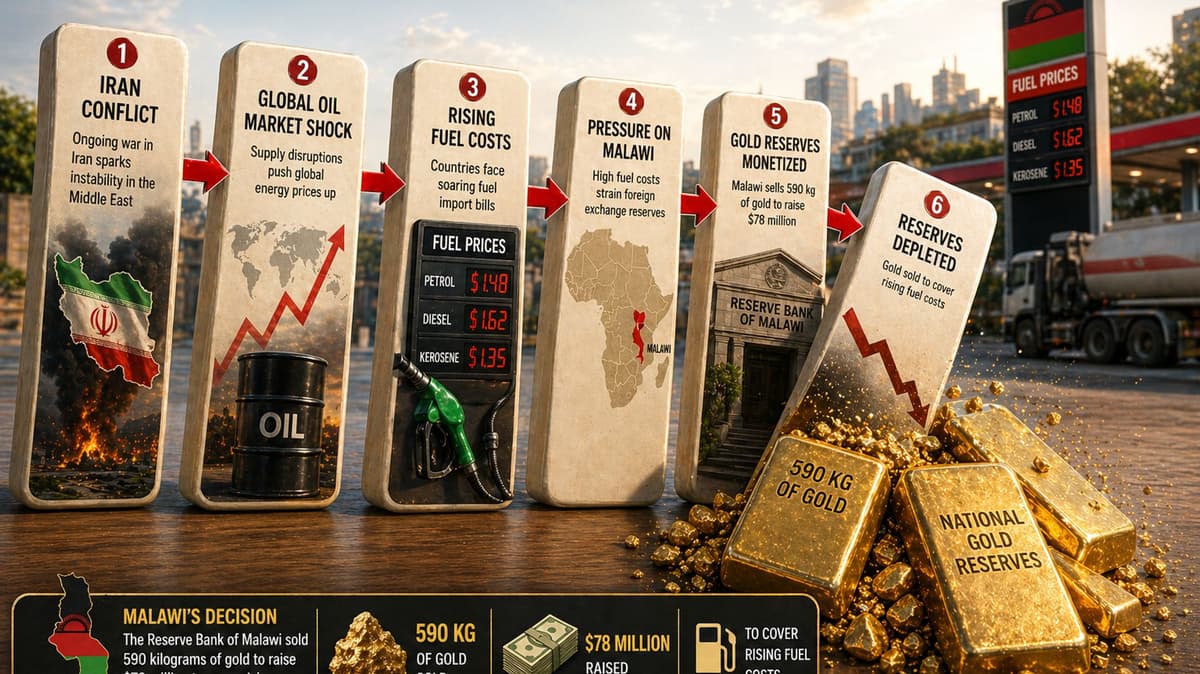
Malawi sold part of its domestic gold reserves to fund fuel imports as the Iran war-driven energy shock lifted costs sharply. The Reserve Bank of Malawi said on Friday that it sold 590 kilograms of gold to raise $78 million, highlighting how gold remains a liquid monetary asset during external crises.
For Indian investors, the move matters because central bank gold transactions can influence short-term bullion sentiment, especially when the market is already dealing with speculative selling in XAUUSD and energy-led inflation risks. At the same time, the episode reinforces gold’s long-term role as a reserve asset when currencies, fuel supply chains, and import bills come under pressure.
Why did Malawi sell gold reserves to cover fuel costs?
Malawi sold gold because rising fuel costs created urgent financing needs. According to the Reserve Bank of Malawi, the central bank sold 590 kilograms of gold—more than half a tonne—to raise $78 million for fuel purchases.The pressure comes from the ongoing war in Iran and the resulting global energy crisis, which has strained fuel-importing economies. For a country like Malawi, higher oil prices can quickly widen external financing gaps and weaken foreign exchange stability.
What exactly did the Reserve Bank of Malawi say?
The Reserve Bank of Malawi confirmed the sale on Friday. In an interview with Reuters, central bank spokesperson Boston Maliketi Banda said the gold sold came from local artisanal miners.Banda drew a clear distinction between domestically sourced bullion and Malawi’s official international reserve holdings. He said, “Our pure gold in our international reserves remains not for sale and is in the safe custody of New York Federal Reserve Bank.”
How much gold does Malawi still hold after the sale?
Malawi still holds both official reserve gold and a smaller stock of artisanal gold after the transaction. According to official reserves data cited in the report, the southeastern African nation holds $61 million in gold.In addition, Boston Maliketi Banda said the central bank still has 69 kilograms of artisanal gold available that it can use to help cover fuel costs. That means Malawi has not exhausted all of its domestic bullion buffer even after selling 590 kilograms.
Did Malawi sell its official international reserves?
No, Malawi did not sell its pure gold held in international reserves. Banda said that gold remains in safe custody at the New York Federal Reserve Bank and is not for sale.This distinction matters for reserve management. It shows that Malawi is monetizing locally accumulated gold stock first, while trying to preserve core reserve assets held abroad.
What other funding options is Malawi pursuing for fuel imports?
Malawi is also seeking external financing alongside gold sales. The central bank said it is in talks with Afreximbank for a $120 million loan to help the country buy fuel.That loan, if secured, would ease some of the near-term pressure on fuel financing. It would also reduce the need for additional immediate gold liquidation, although the central bank still has 69 kilograms of artisanal gold available if needed.
Will Malawi continue buying gold from small-scale miners?
Yes, Malawi plans to keep buying gold from small-scale miners to rebuild domestic stocks. Even after selling most of its domestic gold, the central bank said it would continue purchasing the precious metal from small-scale miners.This policy shows that the sale was driven by short-term liquidity needs rather than a rejection of gold as a monetary asset. In effect, Malawi is converting bullion into cash now, then aiming to rebuild its gold holdings later.
Why are African countries buying domestic gold?
African nations are taking a more active role in domestic gold production to strengthen reserves. The article notes that Uganda and Kenya have recently launched their own domestic gold purchase programs to build foreign reserves.For central banks, buying locally mined bullion can support reserve diversification, reduce dependence on external currency inflows, and deepen domestic gold supply chains. That trend also adds a structural layer to official-sector gold demand.
What does this mean for gold prices and central bank demand?
Central bank gold sales have been a near-term headwind for gold prices, but analysts still see reserve monetization as supportive for bullion’s long-term monetary role. The report says official-sector selling has added pressure to gold in recent weeks, alongside selling from speculative traders.Even so, analysts argue that the monetization of global reserves proves gold’s usefulness as an important monetary asset. In other words, governments sell gold precisely because bullion retains deep value, liquidity, and credibility during periods of stress.
Why could this still be bullish for gold over time?
Analysts expect central banks to keep increasing official gold reserves once the inflation and fuel supply crisis ends. That outlook suggests current sales may be tactical and temporary rather than a structural reversal in central bank gold accumulation.For the global bullion market, this matters because official-sector demand has been one of the strongest long-term supports for gold prices. If central banks resume reserve growth after the crisis, it could offset periodic liquidation episodes.
How should Indian investors read Malawi’s gold sale?
Indian investors should see Malawi’s move as a sign that gold remains both a crisis funding tool and a strategic reserve asset. When countries face imported inflation, expensive fuel, and currency stress, gold can be monetized faster than many other reserve assets.This has a direct India angle. Higher global energy prices can worsen India’s import bill, affect inflation expectations, and influence the rupee, all of which can feed into domestic gold price trends in INR even when international XAUUSD is volatile.
For Indian bullion buyers, jewellers, and long-term savers, the bigger signal is not just that one central bank sold gold. The more important takeaway is that countries continue to treat gold as real money in periods of geopolitical stress, and that theme will stay relevant as investors track fuel markets, reserve policy, and central bank buying trends in the weeks ahead.