# Gold Price Whiplash: $2 Trillion Credit Squeeze Sparks Rout
Gold prices swung violently on Monday, March 23, 2026, as traders reacted to war headlines, a sharp rise in U.S. Treasury yields, and mounting stress in the $2 trillion private credit market. Spot gold plunged toward $4,100 per troy ounce at the open, touched a session low of $4,098.60, and then rebounded in a V-shaped move toward $4,450 after U.S. President Donald Trump announced a five-day pause on Iranian energy strikes.
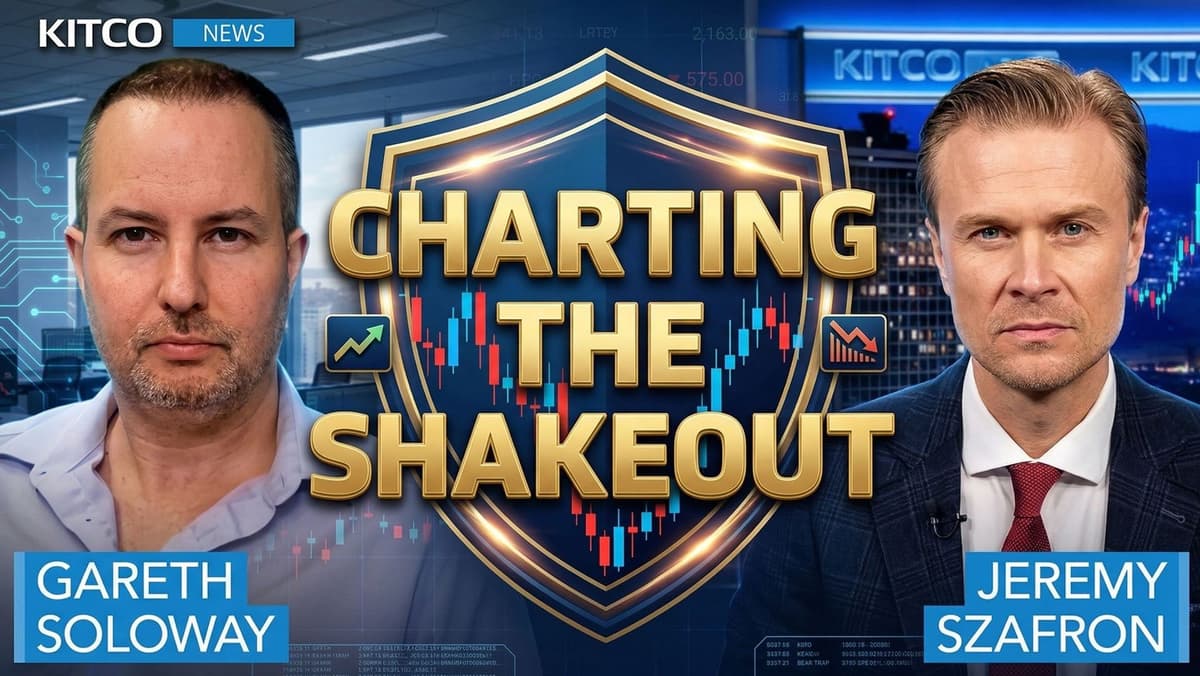
According to Gareth Soloway, chief market strategist at Verified Investing, the rebound may not hold. He told Kitco News that the bigger driver was not only geopolitics, but a fast-building liquidity squeeze that is forcing investors to sell liquid assets such as bullion to meet margin calls.
For Indian investors, this matters because sharp moves in XAUUSD often flow through to domestic gold rates, while any parallel move in the rupee-dollar exchange rate can amplify volatility in local bullion prices.
What drove gold prices down today?
Gold prices fell sharply because investors rushed to raise cash amid private credit stress and a bond-market yield shock. According to Gareth Soloway, the sell-off reflected forced liquidation more than a simple reaction to war headlines.
Gold dropped toward $4,100 an ounce at the market open on March 23, 2026, and hit a session low of $4,098.60. The fall marked gold’s steepest weekly decline in more than 40 years.
The market then reversed higher after President Donald Trump announced a five-day pause on Iranian energy strikes. That policy signal triggered a violent V-shaped recovery that lifted gold back toward the $4,450 level.
Soloway argued that traders should not read the rebound as a clean return to safe-haven buying. In his view, gold is temporarily behaving more like a risk asset during a broader liquidity event.
Why did the rebound happen after the early plunge?
Gold rebounded because markets responded immediately to signs of geopolitical de-escalation. Trump’s announcement of a five-day pause on Iranian energy strikes reduced near-term panic around the conflict.
Soloway said the diplomatic shift itself may have been shaped by the bond market. He linked the policy pivot to a sudden rise in Treasury yields and tightening financial conditions.
How does the $2 trillion private credit squeeze affect gold?
The $2 trillion private credit squeeze affects gold by triggering margin calls and forcing investors to sell liquid holdings, including bullion. Soloway said this process is flushing out “weak hands” before gold can resume a stronger uptrend.
He pointed to growing cracks in the private credit market in mid-March 2026. Major alternative asset managers started gating investors to preserve stability as redemption pressure intensified.
Morgan Stanley’s North Haven Private Income Fund met only 45.8% of redemption requests. The fund strictly enforced a 5% quarterly cap after withdrawal requests surged to nearly 11%.
The Cliffwater Corporate Lending Fund also faced heavy pressure. It received redemption requests equal to roughly 14% of its net asset value and chose to meet only half of those requests.
Why are margin calls forcing gold liquidation?
Margin calls are forcing gold liquidation because investors need immediate cash when losses deepen across leveraged positions. Soloway told Kitco News that some investors were suddenly down more than 20% on their positions, creating urgent collateral demands.
Gold is one of the more liquid assets investors can sell quickly. That makes bullion vulnerable during periods of cross-asset stress even though gold usually benefits from safe-haven demand over a longer horizon.
Soloway said, “Those players have to be wiped out... before it resumes its north trajectory.” His view suggests the current decline is part of a washout rather than the end of the broader bull market.
Why is the bond market warning important for gold investors?
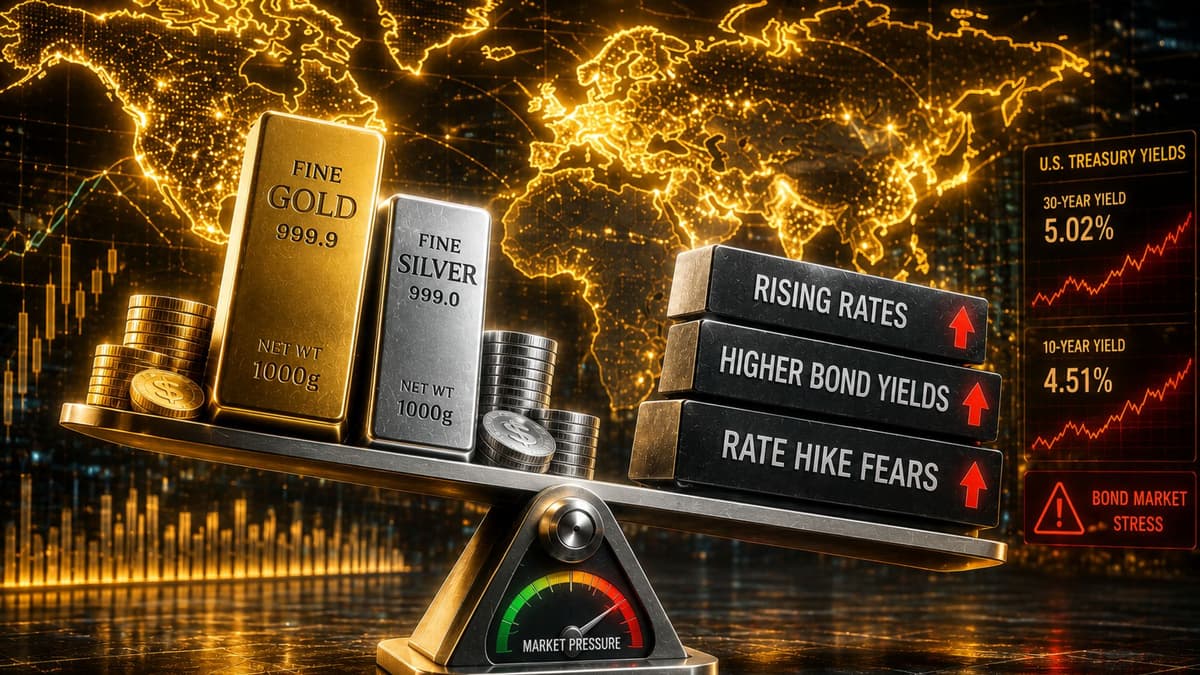
The bond market warning is important because rising Treasury yields tighten financial conditions and can pressure gold in the short term. Soloway said the jump in yields effectively acted like a surprise Federal Reserve rate hike.
Gold’s morning plunge coincided with a sharp move in the U.S. 10-year Treasury yield. The benchmark yield climbed to 4.2% and approached the critical 4.5% threshold.
Soloway described that move as a “yield shock” equal to a 50-basis-point rate hike by the Federal Reserve. Higher yields increase the opportunity cost of holding non-yielding assets such as gold and often strengthen demand for dollars.
Did the bond market shape U.S. policy?
Soloway believes the bond market helped dictate U.S. policy on March 23, 2026. He told Kitco News, “I think the bond market's in play here and actually dictating policy.”
He said the administration softened its strike threats as yields rose. He linked that shift to “very good and productive” conversations with Iranian officials in Islamabad, led by Steve Witkoff and Jared Kushner.
For Indian investors, this bond-market signal matters because a sustained rise in U.S. yields can pressure global precious metals, move the dollar, and influence imported gold prices in rupees.
What is Gareth Soloway saying about silver prices?
Gareth Soloway says silver has suffered an even harsher technical breakdown than gold and could still fall further before finding a durable bottom. He sees silver as oversold but still trapped in a bearish setup.
Silver fell for four consecutive sessions and lost nearly 20% from its March highs. On Monday, spot silver slid to an intraday low of $60.89.
That low stood at roughly half of silver’s all-time high posted just eight weeks earlier. The speed of the decline shows how aggressively speculative positioning has unwound across precious metals.
What are Soloway’s silver targets?
Soloway said silver is “more oversold” than gold, but he still sees a bearish consolidation pattern known as a bear flag. In his framework, that keeps downside risk alive despite the sharp drop already seen.
He noted that the $70 level has held for the third time in 2026. Even so, his technical target points to a possible move down to $50 to $54 per ounce before silver forms a durable bottom.
For Indian bullion buyers, silver’s weakness may create opportunities, but volatility remains elevated and price discovery may stay unstable until liquidation pressure eases.
How low could gold go before the next rebound?
Gold could fall to around $3,500 per ounce before the next major rebound, according to Soloway. He views that zone as a revisit of a major technical support area rather than a structural collapse in the long-term bull trend.
Soloway called $3,500 the “scene of the crime,” referring to April 2025 resistance that later turned into support. He expects any move into that area to be brief if the washout fully clears leveraged positions.
What is the 'Phoenix effect' in gold?
The “Phoenix effect” is Soloway’s term for a sharp recovery after a forced-liquidation event. He compared the expected rebound to the rapid bounce that followed the 2020 liquidity crunch.
He said, “My guess is $3,500-ish... it won't last very long and we will be back towards $5,000 within three to six months.” That forecast implies a steep short-term drawdown followed by a powerful recovery.
Could gold still reach $10,000?
Yes, Soloway still believes gold can eventually reach $10,000 per ounce. His long-term thesis is tied to the return of the “debasement trade,” where investors buy hard assets as fiat currencies lose purchasing power.
That outlook remains highly bullish for long-term holders of bullion and gold-linked assets, even though the short-term path may stay volatile. For Indian investors, the key additional variable is the rupee: if INR weakens against the U.S. dollar while XAUUSD rebounds, domestic gold prices could rise even faster.
What should Indian gold investors watch next?
Indian gold investors should watch U.S. Treasury yields, stress in private credit funds, and whether margin-call selling starts to fade. These factors may matter more in the near term than headline-driven geopolitical swings.
A move in the 10-year Treasury yield toward or above 4.5% could keep pressure on gold and other precious metals. At the same time, any further redemption restrictions in private credit vehicles would reinforce the liquidity-stress narrative Soloway flagged.
Investors in India should also track USD/INR alongside international gold price action. Even if gold in dollars stays volatile, rupee weakness can cushion domestic corrections or intensify upside once global bullion stabilizes.
The next big watchpoint is whether gold revisits the $3,500 zone Soloway identified and then rebounds toward $5,000 within three to six months. If that sequence plays out, the current washout may prove to be a reset in a larger precious-metals bull market rather than a lasting reversal.