# Gold Price Volatility Warning: Heraeus Sees More Wild Swings
Precious metals investors should expect unusually sharp moves to continue before gold and silver prices stabilise, according to Heraeus. The firm said fading expectations for U.S. Federal Reserve rate cuts are also creating a medium-term headwind for gold price and silver price gains.
Even with the Iran conflict and wider Middle East tensions dominating headlines, gold has failed to attract sustained safe-haven buying. That matters for Indian investors because global bullion moves feed directly into domestic gold rates, and any parallel move in the rupee can either cushion or magnify the impact on local prices.
Why is gold price still falling despite Middle East tensions?
Gold price is still under pressure because Heraeus says the market is correcting from an extremely overbought phase rather than responding only to geopolitics. In other words, the earlier rally had become stretched enough that a consolidation was likely even during a period of war-related uncertainty.
Heraeus analysts said, “Geopolitics and the war in the Middle East are dominating the news, but the gold price continues its retreat from its extremely overbought level of late January.” The key point is that safe-haven demand has not been strong enough to override technical exhaustion in XAUUSD.
The analysts added that some perspective is needed on the recent sell-off. Gold price stood at $2,625 per ounce at the start of 2025 and $4,319 per ounce at the start of 2026, representing a 65% gain. For an asset usually viewed as a lower-volatility safe-haven, that kind of move was exceptional.
How overbought did gold become?
Gold became extremely overbought by late January, according to Heraeus. The analysts said the daily RSI reached 93 at the end of January, a level that signalled the rally had gone too far too fast.
That technical backdrop helps explain why bullion has struggled to hold its highs. Heraeus said a period of consolidation was inevitable after such a steep advance.
For Indian investors, this means global gold price weakness does not automatically signal a broken long-term trend. It may instead reflect a normal reset after an unusually powerful rally in the international troy ounce market.
What did Heraeus say about Federal Reserve rate cuts and gold?
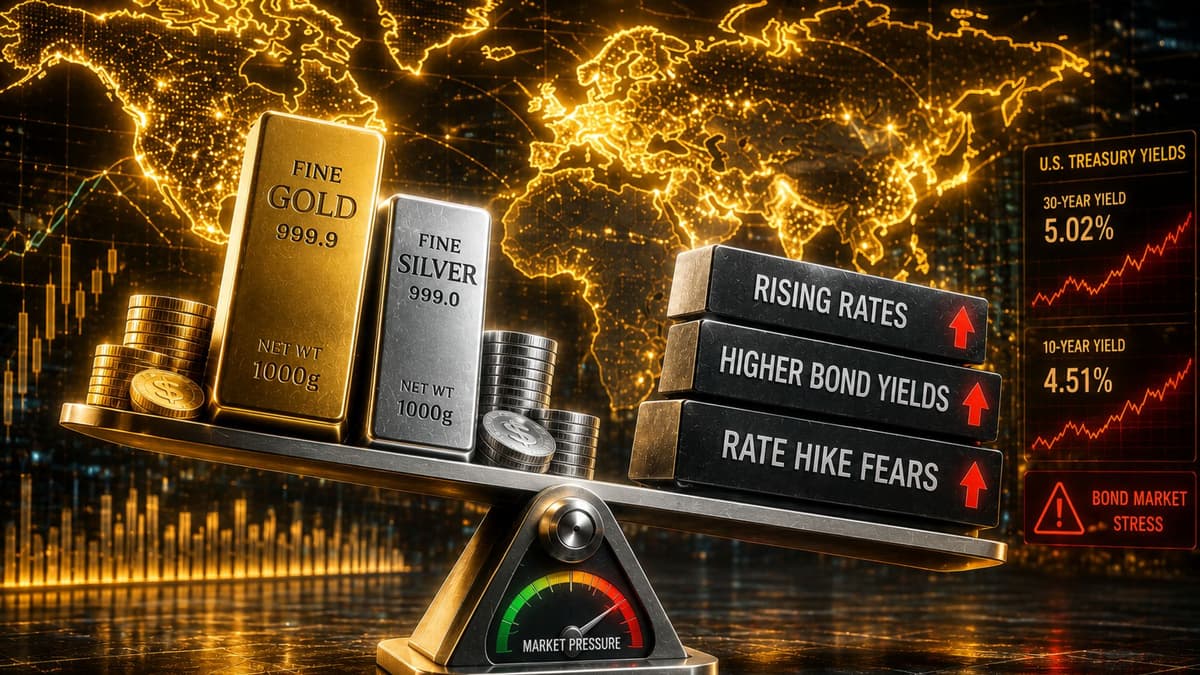
Heraeus said reduced expectations for Federal Reserve rate cuts are a medium-term negative for gold and silver. Lower odds of easing usually support bond yields and the U.S. dollar, both of which can weigh on non-yielding precious metals.
The analysts noted that the U.S. Federal Reserve held interest rates unchanged at last week’s meeting, which matched market expectations. They also said policymakers’ projections still indicate the chance of a cut later this year.
Why did the Fed outlook become a headwind?
The headwind emerged because market expectations shifted materially after the Fed meeting. Heraeus said that during the discussions, some members of the committee suggested that a rate increase might be appropriate.
The firm added that the Fed and inflation have had “an unfortunate recent history,” implying investors may now be paying closer attention to upside inflation risks. As a result, the market’s view of future U.S. rates changed sharply over the past week.
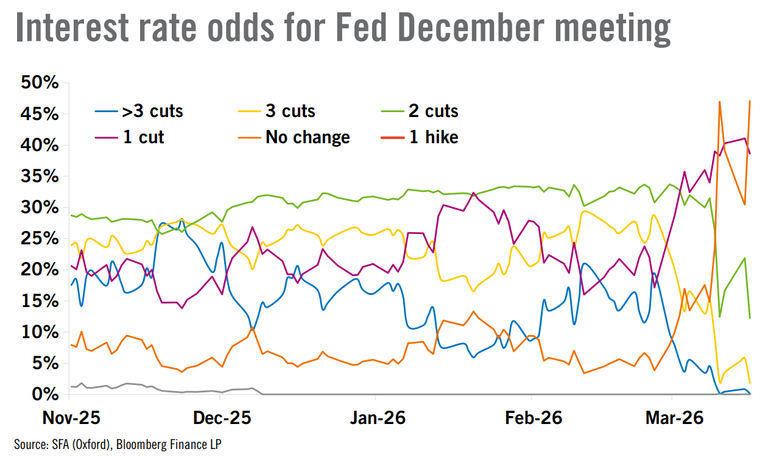
According to Heraeus, no change in rates this year now has the highest odds, followed by one rate cut, while the odds of more than one cut have fallen significantly. That repricing reduces one of the key bullish supports for gold price.
Could slower growth still help gold later?
Yes, Heraeus said slower growth linked to higher energy prices could eventually revive the case for easing. The analysts said, “Perhaps the market view is that if the eventual impact of higher energy prices is slower GDP growth, that would make monetary easing more likely.”
That leaves Indian investors with a mixed outlook. If U.S. rate cuts are delayed, international bullion may struggle near term, but any clear slowdown in growth could revive support for gold later in 2026.
How far did gold fall and where is it trading now?
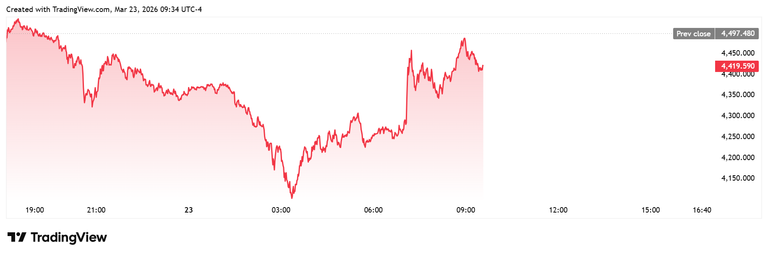
Gold dropped sharply in early trading before recovering above $4,400 per ounce. The move reinforced Heraeus’ warning that investors should prepare for larger-than-usual swings.
The report said gold sold off to $4,099.12 per ounce in early morning trading. It then rebounded to trade back above $4,400 per ounce shortly after the North American equity open.
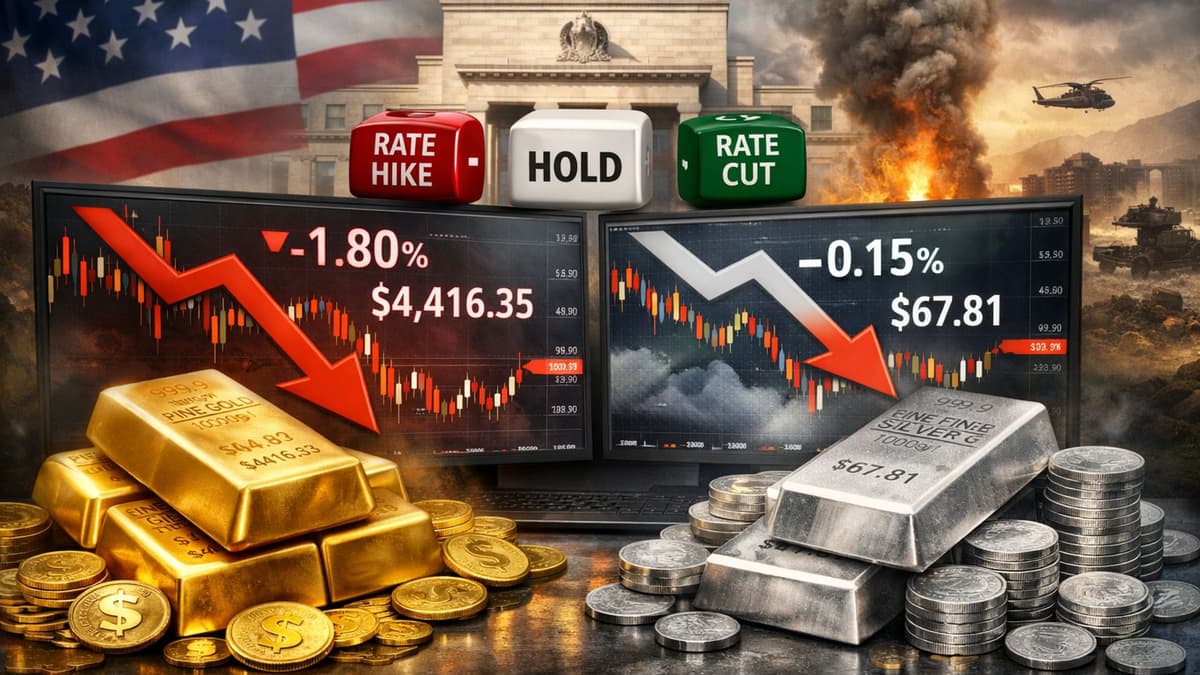
Spot gold was last seen at $4,416.35 per ounce, down 1.80% on the session. That intraday reversal shows how quickly sentiment is shifting in the current market.
For Indian buyers, such volatility in XAUUSD can translate into large changes in domestic gold rates within a single session, especially when combined with rupee moves and import-duty-linked pricing dynamics.
Why are silver prices also seeing extreme volatility?
Silver is also swinging violently because retail investor flows, leveraged ETF activity, trend-following strategies, and margin dynamics amplified both the rally and the sell-off, according to Heraeus citing the Bank for International Settlements.
Heraeus pointed to a recent BIS report that examined the late-January precious metals rout. The analysts said, “Retail investor behaviour exacerbated the rally and sell-off in silver and gold, according to an analysis published by the Bank for International Settlements (BIS).”
What role did retail traders and ETFs play?
Retail traders were a major force behind the move up and the move down. Heraeus said the strong rallies in gold and silver, followed by their sharp declines, point to retail flows and to the amplifying effects of forced sales by leveraged ETFs, trend-following investors such as commodity trading advisors, and margin dynamics.
The firm added that retail investors were the main source of inflows into silver and gold ETFs in the months before prices peaked, while institutional investors reduced their exposure. That suggests the market became more vulnerable to fast reversals once momentum stalled.
For Indian investors, silver’s higher volatility compared with gold remains an important risk. Silver can outperform sharply in rallies, but it can also correct much faster when leveraged positioning unwinds.
What support levels is Heraeus watching for silver price?
Heraeus said silver found buying support below $70 per ounce, but warned that a deeper drop could open a move toward $45-$55 per ounce. That makes silver’s near-term technical picture especially important.
The analysts said, “Investors now have to contend with much more volatility than usual in silver and gold and it may take some time for price expectations to be reset.” They also noted that silver price fell sharply last week, with buying support coming in under $70 per ounce.
If that support fails, Heraeus said the next region of support could be $45-$55 per ounce. That is a wide downside zone, underscoring how unstable price expectations remain.
Where is silver trading now?
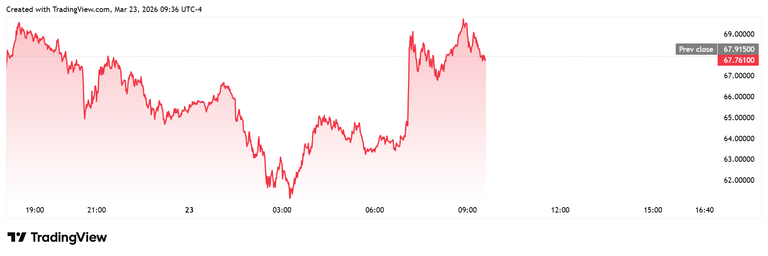
Silver traded in a broad intraday range on Monday morning. Prices moved between $61 per ounce and $69.725 per ounce and were hovering near flat early in the North American session.
Spot silver was last traded at $67.811 per ounce, down 0.15% on the daily chart. Even that relatively small daily change masks the much wider trading band seen during the session.
For Indian investors tracking silver jewellery, bars, coins, or industrial-demand trends, the key watchpoint is whether support below $70 per ounce continues to hold. If Federal Reserve rate-cut expectations keep fading and leveraged flows remain unstable, both gold and silver may stay volatile for longer than usual.