
# Gold Price Trading Levels for April 28: Key Intraday Signals
Gold traders looking for short-term opportunities on April 28 should focus on intraday support and resistance levels in Comex gold futures, as the 5-minute chart remains a practical tool for spotting early buy and sell entries. For Indian investors and active traders tracking global bullion moves, these levels can help interpret XAUUSD direction and potential spillover into domestic gold rates.
What are the key gold price trading levels for April 28?
The key gold price trading levels for April 28 come from a 5-minute bar chart of Comex gold futures designed for active intraday traders. According to Kitco News, the chart highlights short-term technical support and resistance zones that traders can use to identify possible entry points for buying and selling.
These levels matter because intraday gold price action often reacts quickly around technical barriers. In fast-moving bullion markets, support can signal areas where buyers may step in, while resistance can mark levels where sellers may emerge.
How do support and resistance guide intraday gold trades?
Support and resistance provide a structured way to read short-term gold market behavior. Traders use support as a possible buying zone when prices show early strength, while resistance can act as a selling zone when prices begin showing early weakness.
Kitco’s framework is built around this trading principle: many successful traders buy on early price strength and sell on early price weakness. That approach aims to align positions with momentum rather than trying to catch exact tops or bottoms.
Why is the 5-minute Comex gold chart important for active traders?
The 5-minute Comex gold futures chart is important because it gives active traders a short-term view of price action during the trading day. According to the source article, it is intended as both an analytical and trading tool for active intraday gold futures traders and market watchers.
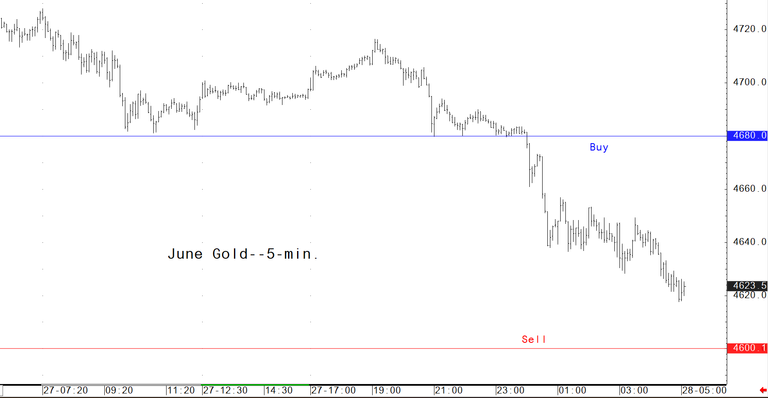
A 5-minute chart can help traders monitor rapid shifts in bullion sentiment, especially when volatility rises around U.S. economic data, Federal Reserve commentary, Treasury yield moves, or sharp swings in the U.S. dollar. In the gold market, those factors often influence XAUUSD and Comex futures within minutes.
What makes intraday chart-based analysis useful?
Intraday chart-based analysis is useful because it can reveal immediate price structure that longer-term charts may miss. Traders watching 5-minute bars can identify breakouts, pullbacks, failed rallies, and momentum reversals more quickly.
For bullion traders, this matters when price action becomes highly reactive. Gold can move sharply within a single session, and short-term technical levels may help manage timing, discipline, and risk.
How should traders use buy and sell entry points in gold futures?
Traders should use buy and sell entry points as tactical decision zones, not guarantees. The source article says the chart shows potential buy and sell price entry points based on key short-term technical support and resistance levels.
That means the tool is best used to frame possible setups rather than predict a fixed outcome. If gold shows early price strength near support, traders may look for long entries. If gold shows early price weakness near resistance or after a failed bounce, traders may look for exits or short-side opportunities, depending on their strategy.
What trading principle does Kitco emphasize?
Kitco emphasizes that most successful traders buy on early price strength and sell on early price weakness. This is a momentum-oriented principle that encourages traders to act with confirmation rather than against the prevailing short-term move.
For active market participants, that can reduce the tendency to trade emotionally during volatile sessions. It also reinforces the value of waiting for price confirmation on the chart before entering a position in Comex gold futures.

What does this mean for Indian gold market participants?
For Indian gold market participants, global Comex gold futures levels matter because international bullion pricing often feeds directly into domestic gold rates after adjusting for the rupee-dollar exchange rate, import duties, and local premiums. When Comex gold moves intraday, Indian traders in MCX gold and investors tracking physical gold prices may see the impact filter through quickly.
This connection is especially relevant when XAUUSD volatility rises during U.S. trading hours. A move in global gold prices, combined with INR weakness against the U.S. dollar, can amplify domestic gold price changes in India.
Why should Indian investors watch intraday global bullion signals?
Indian investors should watch intraday global bullion signals because they provide early clues on price direction before the domestic market fully reflects the move. Active traders, jewellers, and short-term investors can use these signals to gauge whether international momentum is turning bullish or bearish.
While long-term investors may focus more on macro drivers such as inflation, central bank buying, and safe-haven demand, intraday technical levels still offer useful context for timing purchases or hedges.
Where was this gold trading tool published, and who is it for?
This gold trading tool was published by Kitco News and is aimed at active intraday gold futures traders and market watchers. The source article describes it as a unique and exclusive daily trading and analytical tool available only at Kitco.
The focus is narrow but practical. It is not a long-term gold price forecast. Instead, it is a session-specific trading aid built around short-term price structure in Comex gold futures on April 28.
For Indian readers, the key watchpoint now is whether global gold price action on Comex confirms early strength or early weakness around short-term technical levels, because that can shape near-term bullion sentiment and influence how domestic gold prices open and trade against the rupee.