# Gold Price Tops $4,700 as Iran Peace Hopes Hit Dollar
Gold prices jumped above $4,700 per troy ounce ahead of the North American open as progress toward a potential U.S.-Iran peace agreement weakened the U.S. dollar and lifted precious metals. Silver also rallied strongly, but analysts say bullion still faces key resistance and near-term risks from Federal Reserve policy and upcoming U.S. labour-market data.
For Indian investors, the move matters because a weaker U.S. dollar can support global gold prices, while any shift in the rupee-dollar exchange rate will shape how quickly international gains feed into domestic gold rates.
Why did gold price rise above $4,700 today?
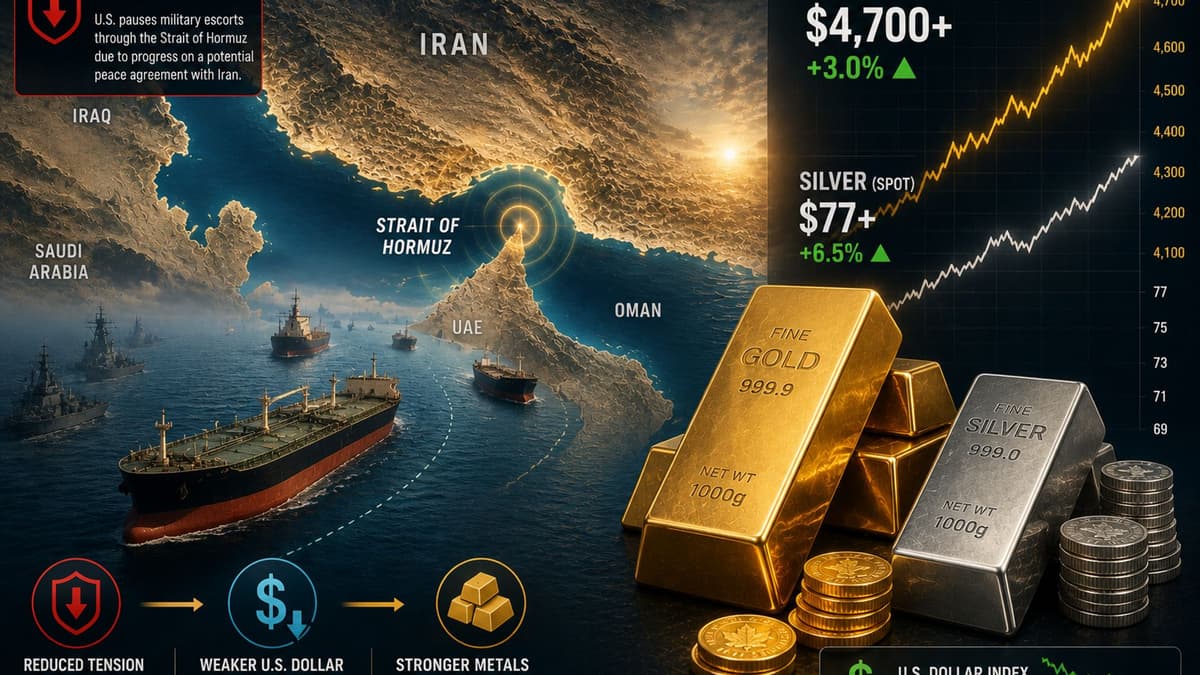
Gold price rose because the U.S. dollar fell to a 10-week low after U.S. President Donald Trump said the U.S. military would pause escorts through the Strait of Hormuz due to “great progress” toward a “complete and final agreement with the representatives of Iran.” That weaker dollar made XAUUSD more attractive and helped spot gold climb more than 3% on the day.
Ahead of the North American open, spot gold traded above $4,700 an ounce. At the same time, silver prices moved solidly above $77 an ounce, up 6.5% on the day.
The market reaction shows how quickly bullion and other precious metals respond when geopolitical risk reshapes currency markets. In this case, easing tensions in the Middle East pressured the dollar and gave gold fresh momentum.
How are Iran peace talks affecting gold, oil and market sentiment?
The progress toward a possible peace agreement between the U.S. and Iran improved geopolitical sentiment, pushed oil prices sharply lower and reduced immediate inflation fears. That combination created a supportive backdrop for financial markets and helped gold and silver recover.
Lower oil prices matter because they can ease inflation pressures that had pushed central banks toward a more hawkish monetary-policy stance. If inflation fears cool, investors start reassessing interest-rate expectations, the U.S. dollar and safe-haven demand across asset classes.
David Morrison, Senior Market Analyst at Trade Nation, said the market is responding positively to any reduction in uncertainty. He said, “It’s unclear what may be in the agreement, especially concerning the reopening of the Strait of Hormuz. But investors seem confident that, ten weeks into the war, an end to hostilities may be in sight.”
For Indian investors, lower oil prices can also matter beyond bullion markets. Softer crude prices can help India’s macro outlook by easing imported inflation pressure, which can affect the rupee, bond yields and local gold demand.
What risks could limit gold’s upside from here?
Gold may struggle to extend gains if the U.S. dollar rebounds or if interest-rate expectations turn less supportive. Analysts say prices are still below key resistance levels, which means the precious metals rally is not yet fully secure.
David Morrison warned that the war has already had a significant impact on the global economy and inflation. Because of that, he said rate cuts this year are not guaranteed.
He added, “It’s worth noting that investors see a 20% probability of a Federal Reserve rate hike by year-end. This could limit the upside in gold should the dollar resume its rally.”
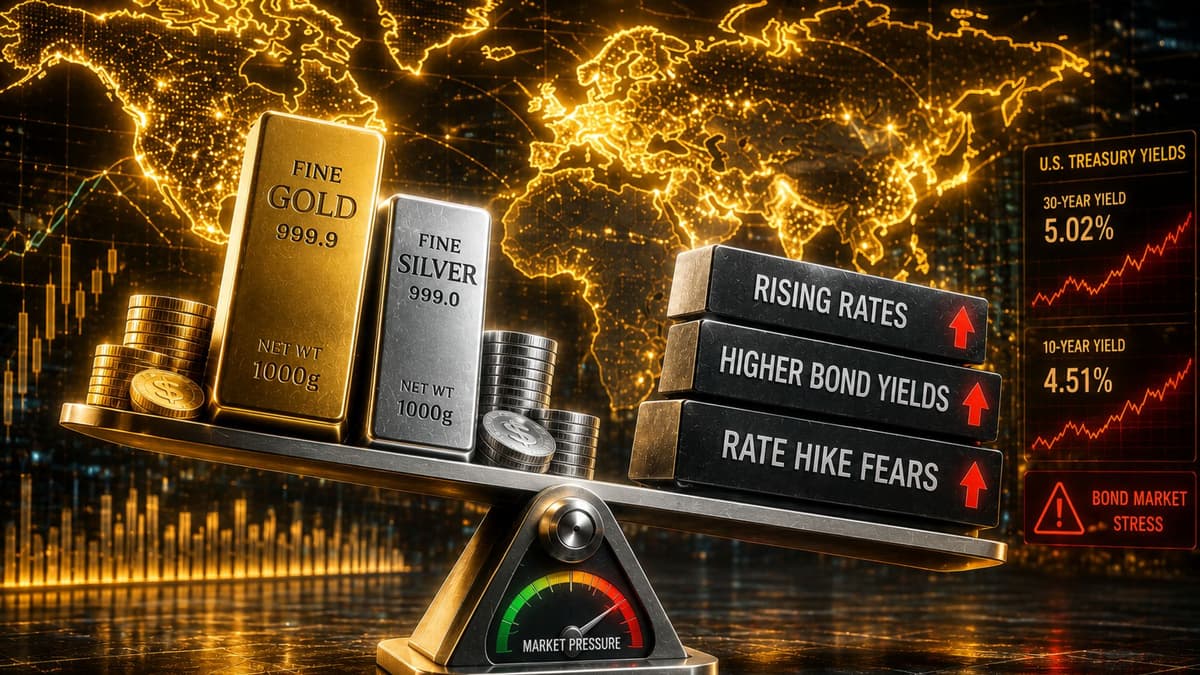
That matters for XAUUSD because gold does not yield interest. If the Federal Reserve stays hawkish or markets begin pricing higher rates, Treasury yields and the dollar could rise, reducing the appeal of holding bullion.
Why do analysts say gold still has support despite volatility?
Analysts say gold still has structural support because even temporary de-escalation in the Middle East does not remove broader global uncertainty. Gold continues to attract buyers both as a safe-haven asset and as a hedge against deeper financial-system shifts.
Simon-Peter Massabni, Head of Business Development at XS.com, said the latest move looks bigger than a purely technical bounce. He said the rally may reflect a broader shift in global risk appetite.
Massabni said, “This type of de-escalation, even if temporary, creates a dual-impact environment; on one hand, it supports risk assets, and on the other, it reinforces safe-haven demand for gold due to the fragility of stability, which explains the current delicate balance in price action.”
That view is important for investors tracking precious metals because it suggests gold can rise even when headline tensions ease. If investors believe stability remains fragile, they may continue to hold gold as portfolio insurance.
How is the Federal Reserve shaping the gold price outlook?
The Federal Reserve remains the key near-term swing factor for gold prices. Analysts say the central bank has little urgency to either cut or raise rates this year, leaving bullion sensitive to each major U.S. data release.
Massabni said gold’s near-term gains could be limited because the Federal Reserve is still walking a fine balance in its monetary policy. In his view, the market needs clearer weakness in the U.S. economy, especially more softness in the labour market, to support a sustained move higher.
He said, “The upcoming Nonfarm Payrolls report, I believe it represents a potential turning point for market direction in the short term. If the data comes in weaker than expected, it would strengthen expectations of rate cuts and directly support gold. Conversely, if the data is strong, we may see some corrective pressure on the precious meta.”
For Indian investors, that means the next U.S. jobs report could influence both international gold prices and domestic bullion rates. If weaker payrolls hurt the dollar, gold could strengthen globally, and any rupee weakness against the dollar could further amplify local price moves.
What is gold’s longer-term outlook after this rally?
Gold’s long-term outlook remains bullish, according to Simon-Peter Massabni, even if short-term volatility persists. He argues that investors should view current price swings in the context of broader structural changes in the global financial system.
Massabni said, “Investing in gold at this stage requires a deep understanding of the balance between short-term and long-term factors. Markets do not move based on a single event, but rather through a complex interaction between politics, economics, and investor psychology. From this standpoint, I see gold as maintaining its appeal as a key hedging instrument, and any current volatility should be viewed within a broader context reflecting structural shifts in the global financial system, rather than merely short-term reactions to news.”
That leaves the market at a critical juncture. Gold has regained momentum above $4,700 per ounce and silver has surged above $77, but traders will now watch whether the U.S. dollar stays weak, whether the Strait of Hormuz situation continues to improve, and whether the next Nonfarm Payrolls report revives expectations for Federal Reserve rate cuts.