# Gold Price Tests $4,800 as Soft US Inflation Hits Dollar
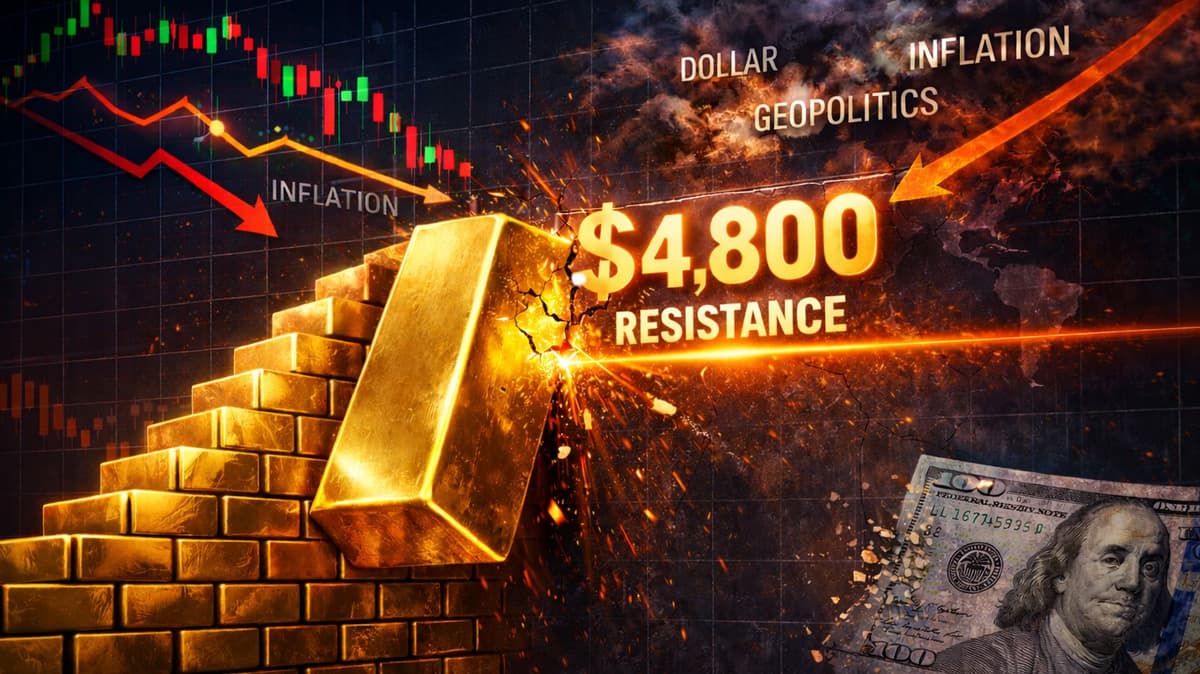
Gold price is testing resistance above $4,800 per troy ounce as weaker-than-expected U.S. inflation and a softer U.S. dollar support bullion. But analysts say gold is still stuck in a consolidation phase because easing U.S.-Iran tensions and uncertainty over Federal Reserve policy could cap further upside.
For Indian investors, the move matters because global XAUUSD strength can support domestic bullion rates, but any recovery in the U.S. dollar or easing geopolitical risk could limit gains in rupee-denominated gold prices.
Why is gold price testing $4,800 today?
Gold price is testing initial resistance above $4,800 because the U.S. dollar index fell to a six-week low and approached support at 98 points. A weaker dollar typically makes gold more attractive to global buyers and helps lift bullion prices.
According to Simon-Peter Massabni, Head of Business Development at XS.com, the greenback is facing renewed selling pressure as markets increasingly expect the United States and Iran to eventually reach a long-term peace deal, even though early negotiations have struggled.
Massabni said the dollar's decline is not just a temporary correction. He said market sentiment is shifting as risk appetite improves and hopes rise for an easing of tensions between the United States and Iran, reducing demand for the dollar as a safe-haven asset.
What did Simon-Peter Massabni say about the U.S. dollar?
Massabni said the Dollar Index is at a critical crossroads. In the short term, he expects continued weakness or sideways trading with a bearish bias because of improving risk sentiment and lower geopolitical stress.
He added that the medium-term direction will depend mainly on two factors: the path of U.S.-Iran relations and changes in U.S. monetary policy. If political progress continues and U.S. data weakens, the dollar could fall further. If tensions return or economic data beats expectations, the dollar could recover quickly.
How did softer U.S. inflation affect gold and Fed expectations?
Softer inflation helped gold because it reduced some pressure for tighter U.S. monetary policy and weighed on the dollar. On Tuesday, the U.S. Labor Department's Producer Price Index surprised sharply to the downside.
Headline PPI rose 0.5%, well below the 1.1% consensus forecast. That weaker-than-expected inflation reading suggested price pressures, while still elevated, were not accelerating as much as markets feared.
Before that data, markets had shifted significantly after the start of the war in Iran. Investors had quickly priced out expected Federal Reserve rate cuts for this year and had even started to price in possible rate hikes because the conflict disrupted oil supply chains, lifted energy prices, and intensified inflation fears.
Why does Federal Reserve policy still matter for bullion?
Federal Reserve policy still matters because higher interest rates usually reduce the appeal of non-yielding assets such as gold. Even with the latest inflation miss, analysts say gold is not in a clear breakout yet.
Massabni said gold remains in a consolidation phase, caught between its safe-haven role and the pressure from a high-interest-rate environment and a strong dollar. He added that geopolitical risks still support gold, but monetary policy uncertainty and the evolution of the U.S.-Iran conflict remain the key short-term drivers.
Is gold likely to fall sharply from current levels?
A sharp fall looks limited for now, according to Carsten Fritsch, Commodity Analyst at Commerzbank. He said gold prices should remain well supported as long as inflation expectations stay relatively contained.
Fritsch said downside potential is limited because markets are pricing in virtually no further Fed rate cuts until the end of the year, but they are also not seriously pricing in a Federal Reserve rate hike. He said there are no signs so far that the market is beginning to seriously expect a hike.
That combination matters for gold price because it removes some easing support, but it also prevents a major repricing toward much tighter policy. In that setting, bullion may consolidate rather than collapse.
Are investors returning to gold-backed ETFs?
Yes, investors are starting to return to gold-backed ETFs after heavy selling earlier. According to Carsten Fritsch, global ETFs have increased their gold holdings by 25 tonnes since the start of April.
That marks a reversal from March, when global gold-backed ETFs saw 85 tonnes of outflows. The data suggests investors are using lower prices to rebuild positions in precious metals.
Why do ETF flows matter for gold price?
ETF flows matter because they show whether institutional and financial investors are adding or reducing bullion exposure. Rising ETF holdings often reinforce support for gold, especially when macroeconomic uncertainty remains elevated.
For Indian investors, stronger global ETF demand can help keep international gold prices firm, which can feed into domestic bullion rates when combined with rupee movements and import-related costs.
What are analysts saying about gold support and resistance levels?
Analysts say gold remains constructive above $4,600 per ounce, but resistance near $4,800 is still important. The market has not yet shown a decisive breakout.
Christopher Lewis, Market Analyst at FXEmpire.com, said he remains bullish on gold because prices have held solid support above $4,600 an ounce. However, he also said he remains cautious because peace talks could quickly shift sentiment.
Lewis warned that a single negative comment during the negotiations could push prices lower again. He also said that good news from the Middle East tends to drive rates lower and release tension from the market, which changes the safe-haven backdrop for bullion.
What is the key risk for XAUUSD right now?
The main risk for XAUUSD is that improving geopolitical sentiment could weaken safe-haven demand even if the dollar remains soft. If the peace process between the United States and Iran improves further, traders may reduce defensive gold positions.
At the same time, if talks break down or tensions flare up again, gold could quickly find renewed support. That makes headline risk a major short-term driver for bullion.
What does this mean for Indian gold investors?
Indian gold investors should watch both the international gold price and the U.S. dollar trend because both can influence domestic bullion rates. If gold breaks decisively above $4,800 per troy ounce, it could support higher prices in India, especially if the Indian rupee weakens against the U.S. dollar.
However, if geopolitical tensions keep easing and the dollar stabilizes, domestic gold gains may be more measured even if bullion remains broadly supported. Investors in India should also track Federal Reserve expectations, oil prices, and ETF flows because these factors can shape near-term moves in global precious metals.
For now, the key watchpoint is clear: whether gold can sustain momentum above $4,800, or whether improving U.S.-Iran peace prospects and a still-restrictive Fed backdrop keep bullion locked in consolidation.