# Gold Price Stuck Near $4,700 as Central Bank Risks Build
Gold prices are holding initial support near $4,700 per ounce, but bullion remains trapped below $4,800 as traders weigh Middle East tensions, inflation risks, and a heavy week of central bank decisions. For Indian investors, this means global gold price direction remains tied not only to safe-haven demand, but also to the U.S. dollar, interest-rate expectations, and rupee movements.
Why is gold price stuck between $4,700 and $4,800?
Gold is stuck because safe-haven demand exists, but it is not fully translating into fresh upside for bullion. Geopolitical uncertainty is supporting defensive positioning, yet the U.S. dollar is attracting a significant share of that safe-haven flow.
According to the source report, gold continues to find initial support around $4,700 an ounce, but it has been unable to break above $4,800 an ounce. That leaves the market in a neutral zone, with neither bulls nor bears taking full control.
What range are analysts watching?
Analysts are watching a wider trading band centered around current prices. Ole Hansen, Head of Commodity Strategy at Saxo Bank, said gold remains caught in a $200 range between $4,650 and $4,850 an ounce.
That range matters because it defines the near-term battle in XAUUSD. A sustained break below the lower end could trigger deeper selling, while a move above resistance could revive momentum buying in precious metals.
What drove downside risks for gold next week?
The main downside risk is the possibility that central banks remain hawkish for longer because inflation fears are rising. Higher oil prices linked to Middle East instability are adding to those concerns.
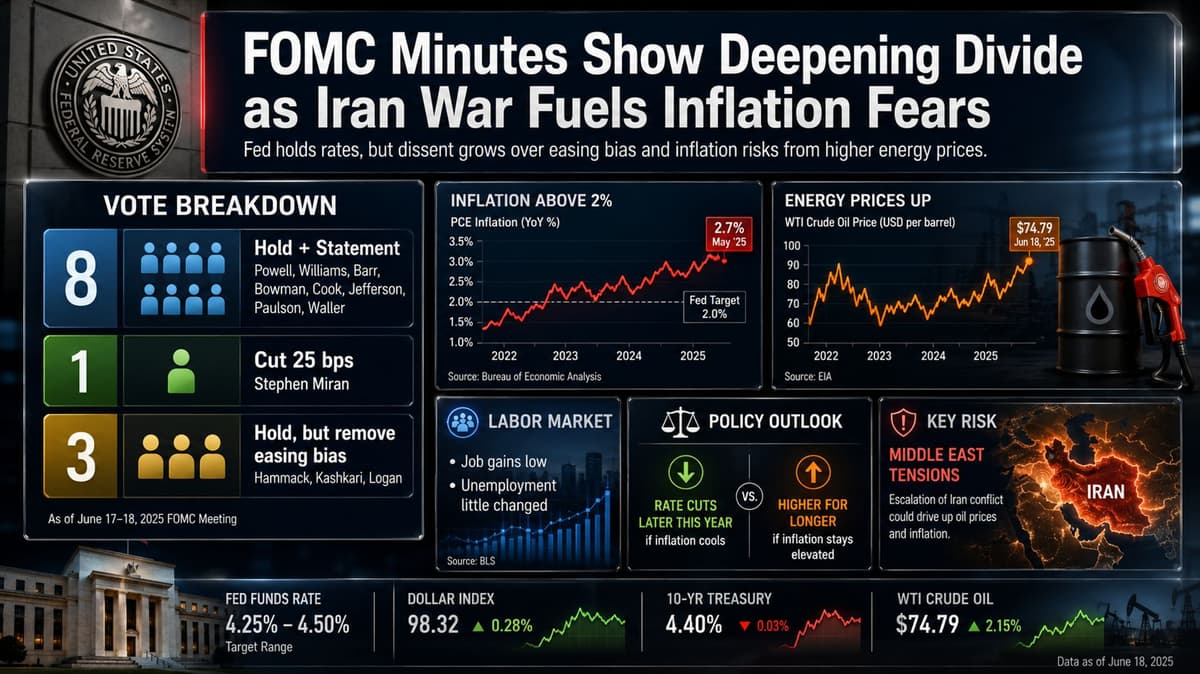
Some analysts said gold could retest the bottom end of its broader range next week as rising energy prices fuel inflation fears. If inflation stays elevated, the Federal Reserve may have to maintain current monetary policy for longer, which is typically negative for zero-yielding gold.
What did Lukman Otunuga say about inflation and rates?
Lukman Otunuga, Senior Market Analyst at FXTM, said mounting fears over inflation shocks could keep central banks from easing. He warned that policymakers are likely to keep rates steady or even raise them later if inflation worsens.
Otunuga said: “As fears over inflation shocks mount, central banks are likely to keep rates steady or even hike down the road. This hawkish reality is bad news for zero-yielding gold despite the risk-off sentiment.”
He added that turmoil around the Iran conflict has effectively erased hopes of a Federal Reserve rate cut in 2026. He said rates are expected to remain unchanged in April, with Jerome Powell under close scrutiny.
How is Federal Reserve policy affecting gold prices?
Federal Reserve policy is affecting gold by reducing confidence in near-term rate cuts. As expectations for easing fade, bond yields and the dollar become more competitive versus bullion.
The report said market forecasts for Federal Reserve policy have been highly volatile because of economic and geopolitical turmoil. Last month, markets even started to price in a small possibility of a rate hike by the end of the year.
That scenario has now been priced out, but traders are still shifting on whether the Federal Reserve will cut rates at all. Last week, markets saw a 50/50 chance of a rate cut by year-end. Now, markets see less than a 40% chance of easing.
Why does that matter for Indian investors?
For Indian investors, fewer Federal Reserve rate cuts can support the U.S. dollar, which often pressures international gold price gains in dollar terms. However, if the Indian rupee (INR) weakens against the dollar at the same time, domestic gold prices can remain firm even when global bullion stalls.
This is why Indian buyers should track both XAUUSD and USD/INR. A flat global gold market can still translate into volatile local pricing in the Indian bullion and jewellery market.
What is happening with the Fed chair transition?
The U.S. Senate Banking Committee has started the confirmation process for Kevin Warsh to become the new Federal Reserve Chair. However, the report said it is unlikely that he will be confirmed by mid-May, when Jerome Powell’s tenure ends.
That adds another layer of uncertainty to monetary policy expectations at a time when markets are already struggling to price the path of rates.
What technical levels should gold traders watch now?
The key technical levels are $4,700, $4,600, $4,450, $4,870, $4,900, and $4,880. These levels will likely shape short-term trading sentiment in the bullion market.
Otunuga said gold prices are back below the 100-day SMA. He warned that a weekly close below that moving average could open the way toward $4,600 and then $4,450.
If gold holds above $4,700, he said bulls may target the 50-day SMA at $4,870 and then $4,900.
What is the latest spot gold price?
Spot gold was last trading at $4,716.10 an ounce, down more than 2% since last Friday. The decline also means gold is ending a four-week winning streak.
That pullback is important because it suggests near-term momentum has weakened, even though the market has not yet suffered a decisive technical breakdown.
What did Razan Hilal say about gold and silver?
Razan Hilal, Market Analyst at Forex, said both gold and silver face downside risk while prices remain below key resistance levels. She said gold remains below $4,880, while silver remains below $84 an ounce.
Hilal said: “On the daily chart, gold is forming a consolidation structure with higher lows from the $4,080 level and capped highs below the $4,880 resistance.”
She added that this pattern resembles the setup seen after the February rebound into the March 2026 highs. According to Hilal, two main scenarios are in focus: a breakout above resistance or a breakdown below trendline support.
Why do analysts still see long-term support for gold?
Analysts still see long-term support for gold because structural drivers remain in place, even if short-term price action stays weak. These drivers include fiscal stress in the United States, debt concerns, and the broader appeal of gold as a safe-haven asset.
Ole Hansen said Jerome Powell is unlikely to materially change his stance as long as the U.S. economy remains resilient, even if growth is only modest. But Hansen said a more serious issue is the direction of U.S. public finances.
What structural drivers are supporting bullion?
Hansen said fiscal pressures are mounting due to tariff-related repayments and elevated military spending, adding to an already large debt burden. In his view, these long-term macro trends continue to support gold.
He said: “Looking ahead, the underlying case for gold remains intact. Once geopolitical tensions surrounding Iran begin to ease, investor focus is likely to return to the structural drivers that supported gold’s recent rally.”
For Indian investors, that means short-term price swings may not change the broader case for holding some exposure to precious metals, especially when inflation, currency volatility, and global fiscal risks remain elevated.
Which central bank meetings and economic data matter next week?
A packed calendar of central bank meetings and U.S. data will likely drive gold price volatility next week. Traders will closely watch whether policymakers reinforce a wait-and-see approach or hint at tighter policy.
Alongside the Federal Reserve, the Bank of Japan, Bank of Canada, Bank of England, and European Central Bank will all hold monetary policy meetings this week. Markets expect these central banks to maintain a wait-and-see stance because of the ongoing chaos in the Middle East.
Why are inflation data and GDP important for gold?
Inflation data matter because stronger price pressures could keep interest rates higher for longer, which tends to weigh on gold. Growth data matter because they shape expectations for Federal Reserve policy and risk sentiment.
Economists said markets will be especially focused on the first reading of U.S. first-quarter GDP and the Personal Consumption Expenditures (PCE) report. The report added that economists expect the inflation data for March to show the impact that the war with Iran has had on consumer prices.
Full economic calendar to watch
- Monday: BoJ monetary policy decision
- Tuesday: US Consumer Confidence
- Wednesday: US Housing Starts and Building Permits, BoC monetary policy decision, Federal Reserve monetary policy decision
- Thursday: BoE monetary policy decision, ECB monetary policy decision, US Q1 GDP, US PCE, US Jobless Claims
- Friday: ISM Manufacturing PMI