# Gold Price Struggles Near $4,800 as US Retail Sales Surprise
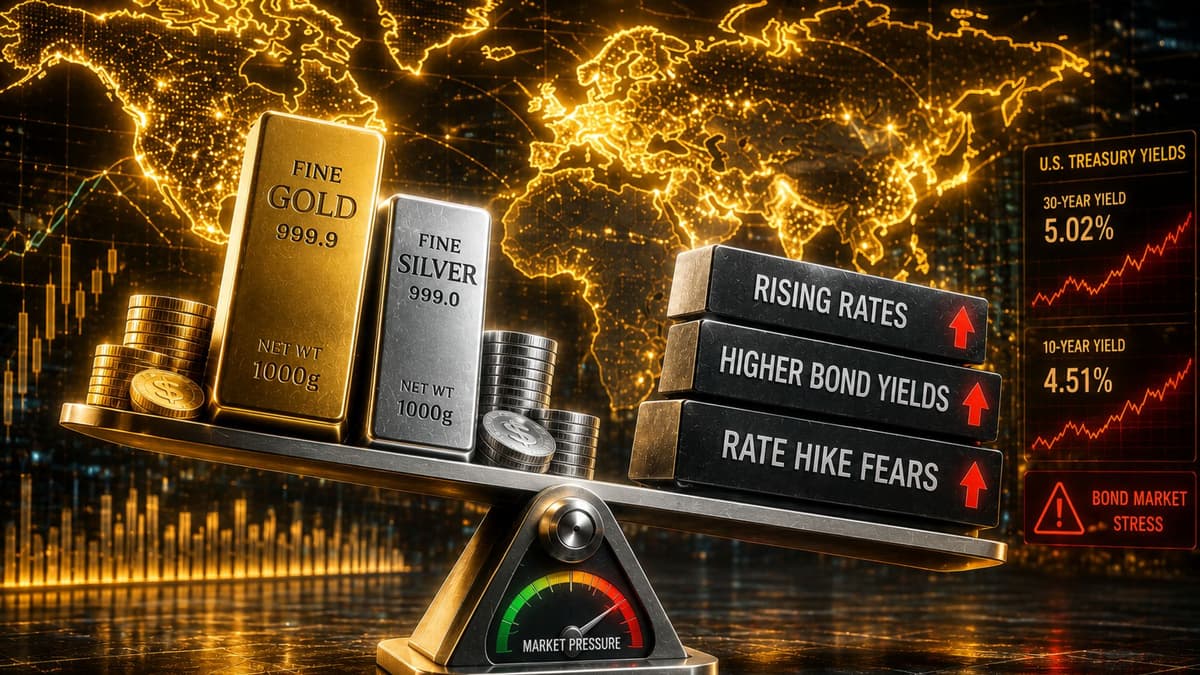
Gold prices are struggling to break higher because strong U.S. retail sales data is reinforcing the view that the Federal Reserve may delay interest-rate cuts. That stronger economic backdrop is limiting upside in bullion, even as safe-haven demand from Middle East tensions helps keep a floor under prices.
Spot gold was last trading at $4,776.80 per troy ounce, down nearly 1% on the day, after the latest U.S. data. Even so, the broader gold market continues to consolidate around $4,800 an ounce rather than entering a deeper sell-off.
For Indian investors, this matters because global XAUUSD moves directly influence domestic bullion rates, while any delay in U.S. rate cuts can support the U.S. dollar and shape imported gold prices in rupee terms.
Why is gold price struggling near $4,800?
Gold price is struggling near $4,800 because stronger-than-expected U.S. consumer spending reduced expectations for quick Federal Reserve rate cuts. Higher-for-longer U.S. rates generally weigh on non-yielding assets such as gold.
The latest data showed the U.S. economy remains resilient. That resilience has kept gold in a consolidation phase instead of giving bullion a clear breakout trigger.
Kitco News reported that the gold market continues to trade sideways around $4,800 an ounce and appears in no hurry to break out. After the retail sales report, spot gold was last seen at $4,776.80 per ounce, down nearly 1% on the session.
What did the US retail sales data show in March?
U.S. retail sales rose much more than expected in March, signaling robust consumer demand. That strength is important because it suggests economic activity remains firm despite tight monetary conditions.
According to the U.S. Commerce Department, U.S. retail sales jumped 1.7% in March, following February’s revised 0.7% increase. Economists had expected a 1.4% increase in the headline figure.
On an annual basis, retail sales increased 4%. That year-on-year gain added to the view that the U.S. consumer is still supporting growth.
How strong were core retail sales?
Core retail sales were even stronger. Sales excluding vehicles increased 1.9% in March, compared with 0.7% growth in February.
That result also beat expectations. Economists had forecast another 1.4% rise in core sales.
How does strong retail sales data affect Federal Reserve rate cuts?
Strong retail sales data can delay Federal Reserve rate cuts because it shows the U.S. economy is still holding up well. If growth and spending remain firm, the Federal Reserve has less urgency to ease monetary policy quickly.
Naeem Aslam, Chief Investment Officer at Zaye Capital Markets, said the latest numbers put the gold market in a difficult position. In his view, the data could push the Federal Reserve to maintain a neutral monetary policy through the second half of the year.
Aslam said: “This is not just a strong print — it’s strong against a high bar, which means markets now have to seriously question how quickly policy easing can realistically happen.”
For gold, that message is critical. When markets price in fewer or later rate cuts, U.S. yields and the dollar can stay supported, which often caps upside in gold price and other precious metals.
Why hasn’t gold fallen more sharply despite strong US data?
Gold has not fallen much more sharply because safe-haven demand linked to Middle East tensions is still supporting prices. In other words, strong U.S. data is bearish for bullion, but geopolitical risk is limiting the downside.
Aslam said gold is caught in a tug-of-war between ongoing chaos in the Middle East, which is affecting inflation and growth, and resilient U.S. economic activity.
He noted that gold’s ability to avoid a deeper sell-off after such a strong economic report is itself an important signal. According to Aslam: “What stands out is that gold, despite this strong data, is not seeing a deeper sell-off — suggesting that safe-haven demand linked to ongoing Middle East tensions is still providing a structural floor.”
What role is oil playing in the gold market?
Oil is reinforcing inflation concerns because supply-side geopolitical risks remain elevated. That matters for gold because persistent inflation pressure can support demand for inflation-sensitive assets.
Aslam said Brent crude holding above 91 shows the oil market is being driven less by demand expectations and more by supply-side risks, especially around the Strait of Hormuz.
He added: “At the same time, Brent crude holding above 91 reflects that oil is being driven less by demand expectations and more by supply-side risks, particularly around the Strait of Hormuz. This creates a complex market setup where strong economic data is pushing rate expectations higher, while geopolitical risk continues to keep commodities elevated, limiting the downside in inflation-sensitive assets.”
What does this mean for Indian gold investors?
For Indian gold investors, the current setup suggests gold may remain range-bound unless either the Federal Reserve outlook shifts or geopolitical risks intensify further. Global bullion prices are staying supported near $4,800 per ounce, but strong U.S. data may prevent an immediate upside breakout.
This has a direct effect on Indian bullion markets because domestic gold prices track international gold price moves and currency changes. If U.S. rate-cut expectations are pushed back, the U.S. dollar could remain firm, and that can affect landed gold prices in INR even when international spot gold is only moving sideways.
Indian buyers should also watch the interaction between safe-haven flows, crude oil, and the rupee. If Middle East tensions keep energy prices elevated, imported inflation risks could stay in focus, with implications for both jewellery demand and investment demand for gold in India.
For now, the key watchpoint is whether gold can hold its structural floor near current levels while markets reassess the timing of Federal Reserve easing after the surprisingly strong March retail sales report.