# Gold Price Struggles Below $4,620 as Oil Shock Fuels Caution
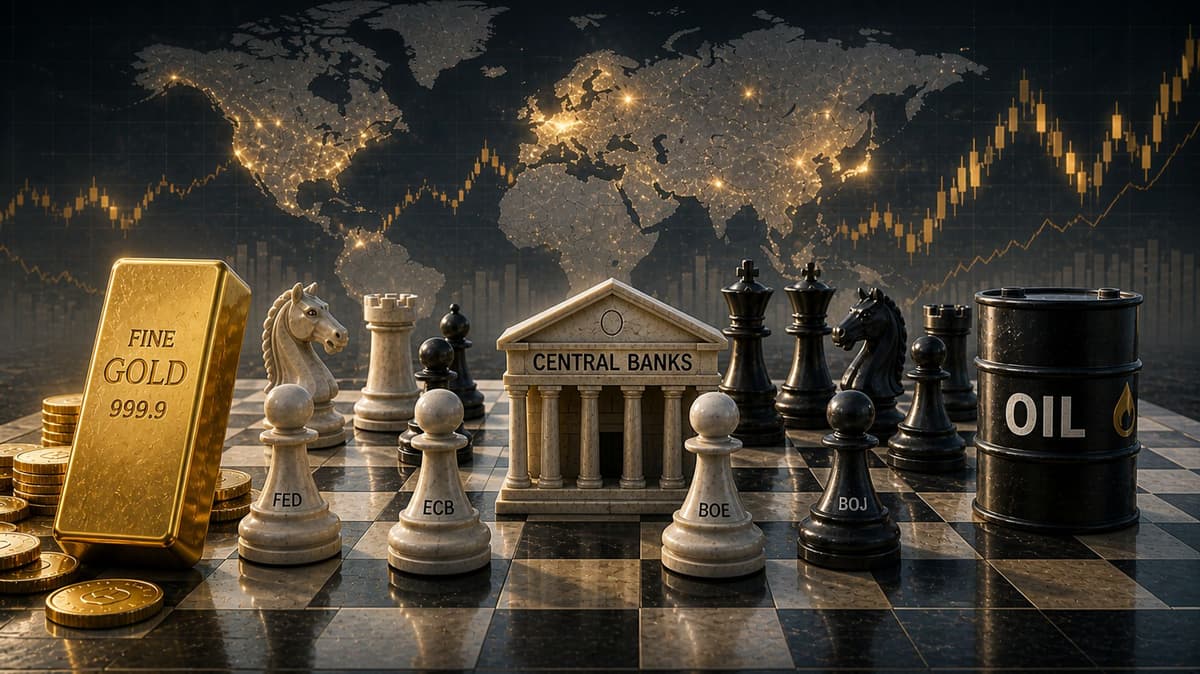
Gold prices remain under pressure as the Iran-linked energy crisis keeps oil elevated, inflation fears alive, and central banks in a wait-and-watch mode. For Indian investors, that means global bullion sentiment is being driven less by routine economic data and more by oil, inflation expectations, and interest-rate uncertainty.
Spot gold last traded at $4,618.70 per troy ounce, unchanged on the day but down nearly 2% from last Friday. The latest move shows that even safe-haven demand is struggling to overpower the market’s concern that higher energy prices could delay monetary easing.
Why is the gold price struggling right now?
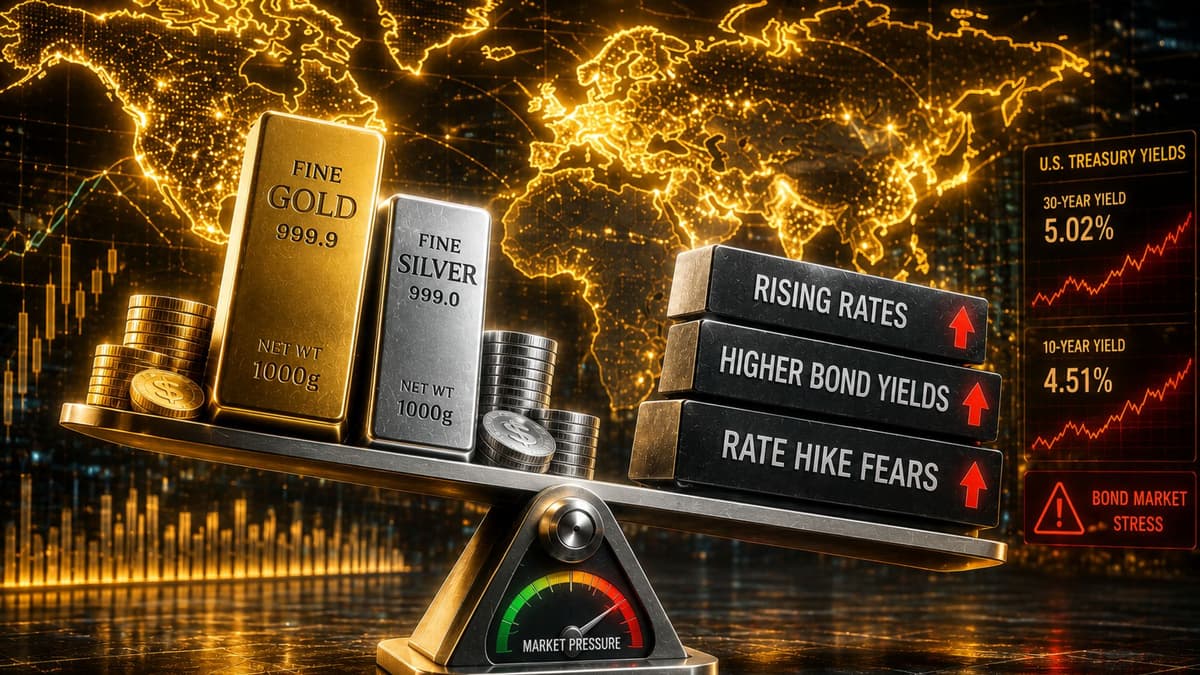
Gold is struggling because rising oil prices are lifting inflation fears and reducing expectations for interest-rate cuts. That backdrop has pushed central banks away from an easing bias and toward a more cautious stance.
The ongoing global energy crisis is being driven by the war in Iran. Even though a ceasefire is in place, the Strait of Hormuz remains closed to shipping traffic, keeping the market focused on supply disruption and the risk of triple-digit oil prices.
Lukman Otunuga, Senior Market Strategist at FXTM, said gold could remain under pressure next week because there is no sign that the conflict with Iran will end anytime soon. He said, “Despite extended periods of uncertainty and growing market fatigue, gold could be stuck at the losing end due to triple-digit oil prices.”
For bullion markets, the logic is straightforward: if energy costs stay high, inflation may remain sticky. That makes it harder for the Federal Reserve and other central banks to cut rates quickly, which in turn limits upside for non-yielding assets such as gold.
How are oil prices and inflation affecting gold markets?
Oil prices are affecting gold by shifting investor attention from safe-haven flows to inflation risk and central-bank restraint. As long as oil stays elevated and the Strait of Hormuz remains shut, inflation concerns are likely to dominate gold trading.
Philip Streible said the market will stay locked on inflation until shipping resumes. He said, “Until the Strait of Hormuz is open and oil starts flowing, everyone is going to be focused on inflation. Central banks can’t do anything until they know if inflation is going to be persistent or temporary, and that means gold will remain stuck.”
That view matters for XAUUSD because gold often benefits when investors expect lower interest rates. But if inflation rises due to energy supply shocks, policymakers may hesitate to ease, even if broader growth data softens.
For Indian investors, higher crude prices can also complicate the domestic outlook. Elevated oil typically worsens India’s import bill, can pressure the rupee, and may influence local inflation expectations. A weaker INR can cushion domestic gold prices even when international gold in U.S. dollars softens, making the global gold price and INR moves equally important.
What did the Federal Reserve signal on interest rates?
The Federal Reserve signaled caution, not tightening, but that was still enough to unsettle gold. The U.S. central bank left interest rates unchanged this past week, as expected, while Chair Jerome Powell acknowledged a healthy debate about whether to remove the current easing bias.
Powell also said the Federal Reserve is not expected to hike rates anytime soon. However, markets also do not think a rate cut is likely this year, which has reduced one of gold’s key bullish supports.
Michael Brown, Senior Market Analyst at Pepperstone, said he does not expect next week’s employment data to materially change Federal Reserve policy. In his view, the market’s primary concern remains the inflationary impact of higher energy prices resulting from developments in the Middle East.
Could gold still be a buying opportunity on dips?
Yes, some analysts still see lower gold prices as a buying opportunity despite near-term weakness. Their argument is that the medium-term tailwinds for bullion have not disappeared.
Michael Brown said he would buy the dip because several paths could still lead to one or two rate cuts before year-end. He pointed to multiple scenarios: Kevin Warsh could convince colleagues of an AI-driven productivity boom, labor-market weakness could intensify if inflation proves temporary, and the Federal Reserve could need a lower fed funds rate if Warsh succeeds in shrinking the balance sheet and shortening its duration.
Brown said, “Focus is very much on the impact of higher energy prices as a result of developments in the Middle East right now. I do think, though, that there are still plenty of paths to a rate cut or two before year-end, either Warsh convincing his colleagues of an AI-driven productivity boom, further labour fragility if inflation does indeed prove temporary, and/or the need for a lower fed funds rate if Warsh succeeds in shrinking the balance sheet & shortening its duration.”
He added, “This is a dip that I’d be buying, consequently, as numerous tailwinds remain amid the positive risk tone, and as EM CBs continue to increase their holdings too.”
That last point is especially relevant for precious metals investors. Continued buying by emerging-market central banks remains a structural support for gold demand, even when short-term price action turns weak.
What are the key gold price levels to watch now?
The most important near-term gold level is $4,600 per ounce. Analysts see that level as a major psychological marker for spot gold.
Lukman Otunuga said weakness below $4,600 could open the door to $4,450 and then $4,320. On the upside, he said a weekly close above $4,600 could trigger a move toward the 21-day simple moving average at $4,710 and the 100-day simple moving average at $4,750.
Ole Hansen, Head of Commodity Strategy at Saxo Bank, said the next support he is watching is $4,500 an ounce. He added that gold needs to climb back above $4,670 an ounce to regain technical momentum.
Hansen said, “We need to have the ME crisis sorted before we can return to focusing on something as boring as economic data and stagflation risks.” He also noted, “The stock market is currently on steroids, so that’s the sector investors are currently chasing. I’m cautiously optimistic and see greater upside than downside risks from here. However, Kevin Warsh has his work cut out for him if he indeed wants to argue for lower rates at this stage.”
For traders tracking XAUUSD and Indian bullion prices, these levels matter because a break below support could accelerate global liquidation, while a recovery above resistance may revive momentum buying. In India, any sharp move in the rupee against the U.S. dollar could amplify or soften these international gold price signals.
What economic data should gold investors watch next week?
Gold investors should still watch U.S. labor and activity data next week, even though oil and geopolitics are dominating the narrative. The data may not overtake the Middle East crisis, but it can still affect Treasury yields, the U.S. dollar, and short-term gold price expectations.
Tuesday
- US ISM Services PMI
- US JOLTS job openings
- US New Home Sales
Wednesday
- ADP Employment
Thursday
- US weekly jobless claims
Friday
- US Nonfarm Payrolls
- University of Michigan Consumer Sentiment
For Indian investors, the key watchpoint is clear: monitor oil, the U.S. dollar, Federal Reserve expectations, and the $4,600 gold level together. If crude remains elevated and the Fed stays cautious, gold may remain volatile globally, while domestic prices in INR could stay relatively supported if the rupee weakens.