# Gold Price Stays Range-Bound, but That Stability Matters
Gold prices have turned quiet after the intense rally and attention seen at the start of the year, but that calm may actually signal strength rather than weakness. Gold is trading in a broad range between $4,600 and $4,900 per ounce, and despite softer momentum, bullion continues to hold historically elevated levels as central banks and long-term investors keep buying dips.
For Indian investors, this matters because a stable global gold price can still support firm domestic rates, especially when rupee moves and import costs are factored in. In other words, gold may look boring in XAUUSD terms, but its role as a safe-haven and portfolio diversifier remains highly relevant.
Why Is Gold Price Moving Sideways Right Now?
Gold price is moving sideways because the market lacks a strong near-term catalyst to force a breakout in either direction. Trading volumes have dropped in recent weeks, while prices have fluctuated within a wide but defined band of $4,600 to $4,900 an ounce.
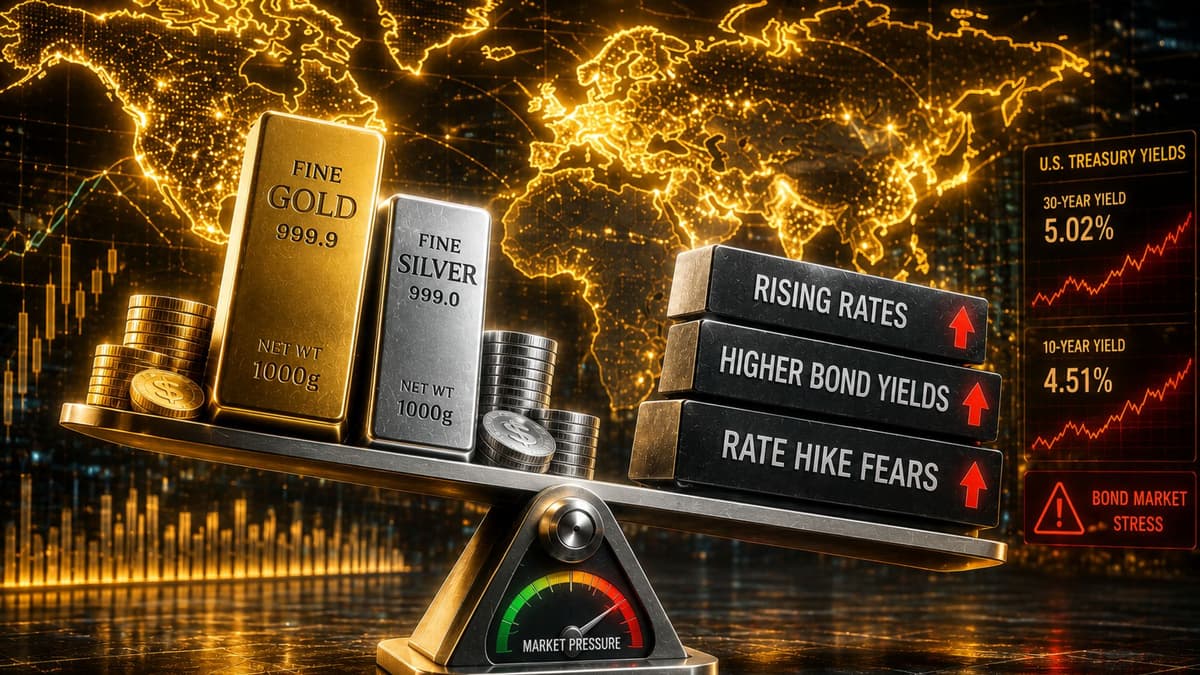
Renewed inflation concerns have also pushed interest-rate expectations higher. That raises the opportunity cost of holding non-yielding assets such as gold and makes aggressive fresh buying harder to justify in the short term.
At the same time, traders are reluctant to bet heavily against gold. Gold remains the world’s primary geopolitically neutral safe-haven asset, and ongoing geopolitical tensions and elevated economic anxiety continue to discourage strong bearish positioning.
Why does higher rate outlook cap bullion gains?
A higher interest-rate outlook usually pressures bullion because gold does not pay interest. When markets expect higher rates, yield-bearing assets become more attractive relative to gold.
Still, that pressure has not triggered a major breakdown in gold price. Instead, the market has settled into consolidation, suggesting investors still see value in holding gold even during rate-driven headwinds.
What Does This Quiet Phase Say About Gold Demand?
This quiet phase suggests gold demand has changed shape, not disappeared. The current consolidation reflects a shift in how gold is being used and who is buying it.
Rather than chasing momentum, buyers appear to be using gold as a strategic reserve asset and long-term hedge. That makes the current range-bound action less a sign of fading interest and more a sign of a maturing market structure.
How are central banks reshaping gold demand?
Central banks are a major reason gold has stayed resilient. Recent initiatives involving the London Bullion Market Association (LBMA) and the World Gold Council (WGC) show continuing efforts to classify gold as a High-Quality Liquid Asset (HQLA).
If finalized, that status would place gold alongside cash and sovereign bonds in regulatory standing. Although the designation has not yet been formally approved, central banks appear to be acting as if that shift is already underway.
Steady official-sector accumulation over the past several years points to growing discomfort with traditional reserve assets. That trend has helped support gold even after prices pulled back from January’s record highs.
Why Are Central Banks Still Buying Gold at High Prices?
Central banks are still buying gold because they increasingly view it as insurance against systemic risk, not just as a short-term inflation hedge. Even at historically high prices, official-sector demand remains resilient.
Market commentary in recent months has focused on the widening gap between asset valuations and underlying risks, especially in equities and sovereign debt. Geopolitical fractures have also remained an underappreciated threat to global economic stability.
In that backdrop, gold is being treated less as protection against one specific economic outcome and more as protection against broader financial-system stress. That helps explain why buyers continue to step in even when gold is expensive on a historical basis.
What did the People’s Bank of China do in March?
The People’s Bank of China offered one of the clearest signals of official demand. In March, when gold prices recorded their sharpest monthly decline in decades, China’s central bank bought gold at its fastest pace in more than a year.
That behavior shows that major official buyers are treating price dips as opportunities rather than warning signs. It also helps explain why gold has managed to remain near historically high levels even as upside momentum has cooled.
How Is Gold Acting as a Safe-Haven in a Stressed Financial System?
Gold is acting as an anchor in a financial system that is showing increasing strain. Even with restrained price movement, bullion continues to serve as a safe-haven asset and long-term diversification tool.
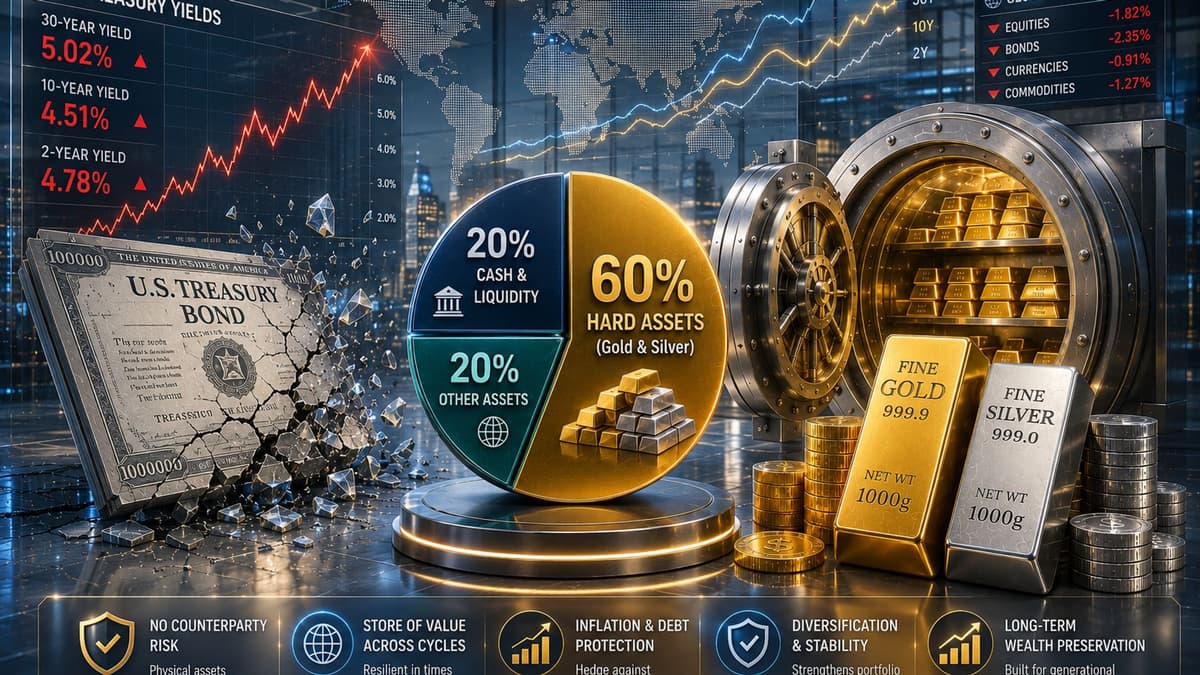
Unlike most financial assets, gold carries no counterparty risk. That feature becomes more valuable during periods of systemic uncertainty, when confidence in other reserve assets, sovereign debt, or financial intermediaries can weaken.
Although short-term volatility has at times disrupted gold’s correlation with other assets, its longer-term role remains intact. Over a broader horizon, gold’s lack of yield becomes less important than its ability to preserve purchasing power and diversify risk.
Why does no counterparty risk matter now?
No counterparty risk matters because gold does not depend on an issuer, borrower, or financial institution to retain value. In periods of market stress, that makes physical bullion and allocated gold especially attractive relative to paper assets.
This is one reason long-term holders appear to remain in control of the market. The recent consolidation has not generated meaningful selling pressure, even at elevated price levels.
What Does Gold’s Stability Mean for Indian Investors?
For Indian investors, gold’s current stability suggests bullion is still doing its job as a defensive portfolio asset. A range-bound global gold price does not automatically mean weak returns in India, because domestic prices also depend on the Indian rupee, import costs, and local demand.
If global gold remains supported near $4,600-$4,900 per troy ounce, any rupee weakness could keep Indian gold prices firm. That makes gold relevant not only as a geopolitical hedge, but also as protection against currency volatility and broader asset-market stress.
Indian households and investors typically respond strongly to price dips, especially when long-term fundamentals remain intact. In that sense, the same dip-buying behavior seen in central banks could also shape local bullion demand if prices soften.
Does This Consolidation Signal Weakness or Strength?
This consolidation signals underlying strength more than weakness. The market appears to be absorbing higher prices without creating significant selling pressure.
That suggests long-term holders still dominate the market. Gold’s return to quieter trading may therefore point to stability rather than stagnation.
For now, the key watchpoint is whether official-sector buying, including from major central banks, continues to offset the headwind from higher interest-rate expectations. If that support remains in place, gold’s boring phase could prove to be one of its most constructive signals for long-term investors.