# Gold Price Risks Deepen: Avi Gilburt Sees $3,800 Ahead
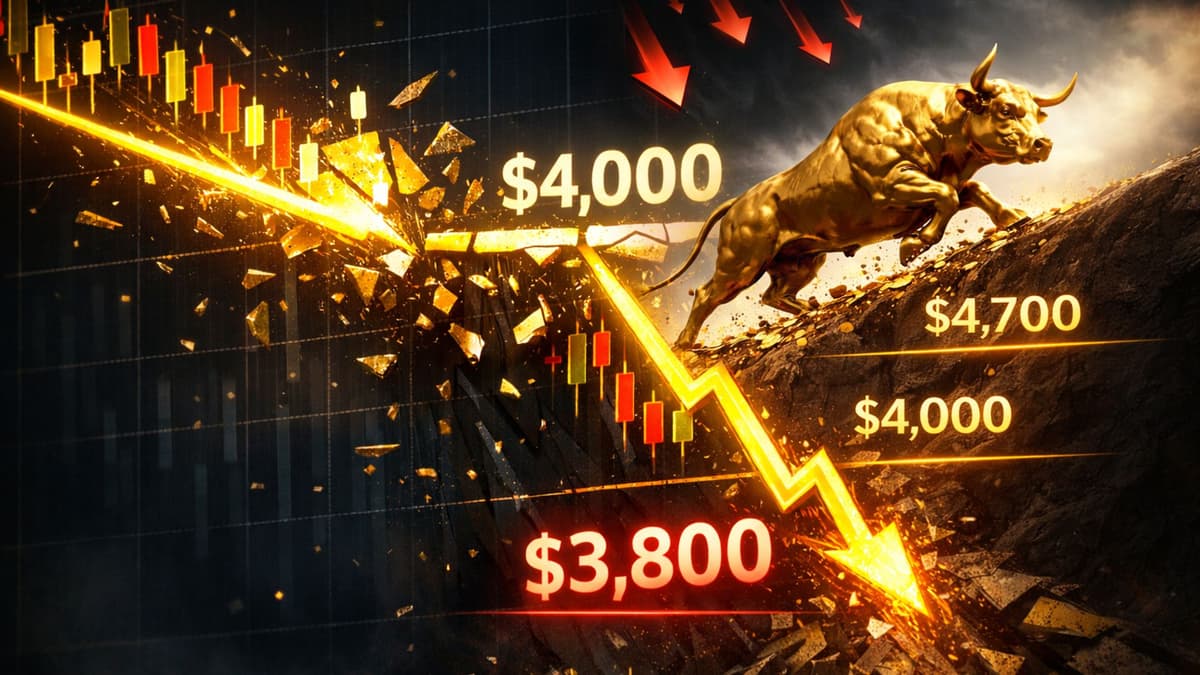
Gold price may face a deeper correction even after rebounding above $4,700 per troy ounce at the start of the new month and the second quarter. Avi Gilburt, veteran technical analyst and founder of ElliottWaveTrader, told Kitco News that gold could still fall below $4,000 and slide toward $3,800 an ounce.
Spot gold was trading at $4,775.10 an ounce, up more than 2% on the day, but Gilburt said the broader correction may not be finished. For Indian investors, that matters because any fresh drop in XAUUSD can influence domestic bullion prices, although INR moves can either soften or amplify the impact.
Why does Avi Gilburt think gold price could fall to $3,800?
Avi Gilburt says gold still shows technical risks that could drag prices toward $3,800 an ounce. That target implies another 20% decline from current levels.
According to Gilburt, the present setup offers two distinct technical paths. In both cases, he ultimately sees the precious metal moving below $4,000.
He said the first path would see gold hit resistance around current levels and then turn lower. That would suggest the rebound above $4,700 is a temporary bounce inside a larger correction.
What are the two technical paths for gold from here?
The first path is a rejection near current resistance, while the second path is a break above resistance that later traps bullish traders. Gilburt said the second scenario is more dangerous because it can create a false sense that the correction has ended.
Could gold face resistance near current levels?
Yes, Gilburt is watching whether gold stalls near where it is trading now. If bullion fails to clear resistance decisively, he expects prices to trend lower from these levels.
This would fit a classic corrective pattern in technical analysis, where a recovery rally fades before a larger decline resumes.
What happens if gold breaks above $4,800?
If gold price breaks $4,800 an ounce, Gilburt said it could still rally to $5,200 before reversing lower. He warned that such a move would be deceptive rather than outright bullish.
As he told Kitco News: “This path is more evil or deceptive, because the higher prices will convince everyone that the correction is over, but it's really just getting started.”
For Indian investors, this means a rally in international bullion should not automatically be read as confirmation of a new uptrend. A spike toward $5,200 in XAUUSD could still be followed by a sharp correction in global and local gold prices.
How important is gold’s recent rebound above $4,700?
Gold’s rebound above $4,700 is notable, but Gilburt does not see it as proof that the correction is over. He made that point after gold suffered its biggest monthly loss since the early 1980s.
The market has started the new month and the second quarter on stronger footing, but Gilburt’s view is that the technical structure still points to unfinished downside risk. In other words, strong short-term price action has not yet invalidated the bearish correction case.
That distinction is especially important for Indian bullion buyers tracking both COMEX and domestic rates. A recovery in international gold can support Indian prices, but if the global correction resumes, local prices may again come under pressure unless the rupee weakens sharply against the U.S. dollar.
What is Avi Gilburt’s outlook for silver prices?
Avi Gilburt’s silver outlook mirrors his gold view. He said silver still faces downside risk as long as it remains below its recent March high.
Gilburt sees silver potentially falling toward $53.50. He also said long-term investors should watch deeper value zones rather than focus only on short-term volatility.
Is silver below $60 a buying opportunity?
Yes, Gilburt said anything under $60 in silver represents a strong long-term buying opportunity over the next 10 years. However, he also does not rule out a deeper pullback toward $40.
He said: “For silver, long term—over the next 10 years—anything under $60 will represent a great buying opportunity.”
For Indian investors, silver remains highly relevant because domestic demand spans investment, jewellery, and industrial use. If global silver prices retreat toward $53.50 or even $40, Indian buyers may see attractive entry points, depending on rupee movement and local taxes.
What should traders and long-term investors do differently?
Gilburt says traders and investors should not use the same playbook. Traders need to watch resistance, breakout levels, and confirmation signals, while long-term investors should focus on whether lower levels become durable support.
He said that if his target zone holds as support, it could create a buying opportunity. But he added that the next rally after that support test will be crucial in deciding whether precious metals remain in a broader bull trend or shift into a longer-term bear phase.
This is a key distinction for Indian households and portfolio investors. Short-term swings in gold price can be sharp, but strategic accumulation decisions should depend on whether the correction forms a base or breaks the larger bullish structure.
Why is Gilburt comparing today’s market with the 2011 precious metals peak?
Gilburt sees similarities between current market structure and the 2011 peak in precious metals. He said the way gold and silver behave after the current correction could decide whether history repeats itself.
That comparison matters because 2011 marked a major turning point for precious metals. If the current pattern evolves in a similar way, the next rebound may not simply restart the old bull market; it may instead reveal a more prolonged bear phase.
For Indian investors, this is a reminder not to rely only on long-standing assumptions that gold always recovers quickly. Technical structure, not just safe-haven sentiment, may determine the next major trend.
Are mining stocks a better opportunity than gold and silver?
Gilburt believes select mining equities could outperform gold and silver during the next rally phase. He said opportunities exist in both producers and developers, depending on their individual chart structures.
According to Gilburt, some mining stocks have already bottomed, while others are still moving through corrective patterns. That creates selective opportunities rather than a blanket bullish call on the entire mining sector.
He said: “There are a number of mining stocks that can potentially outperform both silver and gold,” adding that opportunities exist across producers and developers.
Indian investors typically gain mining exposure through international funds, ETFs, or global brokerage platforms rather than direct domestic listings. For those investors, stock selection may matter more than simply buying broad precious metals exposure.
What is his outlook for oil and broader commodities?
Gilburt expects oil prices could still move higher in the near term, but he sees a significant decline later this year. He said oil has the potential to fall below $50.
That broader commodity outlook is important because it shows his view is not limited to bullion. He expects key inflection points across gold, silver, equities, and commodities in the coming months.
A drop in oil below $50 would also matter for India, which is a major crude importer. Lower oil prices can affect inflation expectations, the rupee, and broader investment flows, all of which can indirectly shape domestic gold demand.
What should Indian investors watch next in gold price?
Indian investors should watch $4,800, $5,200, $4,000, and $3,800 in international gold very closely. These are the main technical levels Avi Gilburt identified as the next key markers for bullion.
If gold fails near current levels, the correction case strengthens quickly. If gold breaks above $4,800 and climbs toward $5,200, Gilburt still warns that the move may be a bull trap before a larger decline resumes.
The next few months may decide whether this pullback becomes a buying opportunity within a longer bull market or the start of a broader bear phase. For Indian buyers tracking both global spot prices and rupee-based bullion rates, the combination of XAUUSD direction and INR movement will be the key watchpoint.