# Gold Price Risks Deepen as Oil Shock Spurs ETF Selling Fears
Gold prices could face medium-term downside even if the first liquidity shock fades, because higher energy prices may keep inflation elevated, shift Federal Reserve expectations, and trigger exchange-traded fund liquidation and slower central bank buying, according to Amy Gower, metals and mining commodity strategist at Morgan Stanley.
For Indian investors, that matters because global gold price moves in XAUUSD often feed directly into domestic bullion rates, while any parallel move in the U.S. dollar can further affect gold prices in rupees.
Why did Morgan Stanley warn that gold prices could fall after the oil shock?
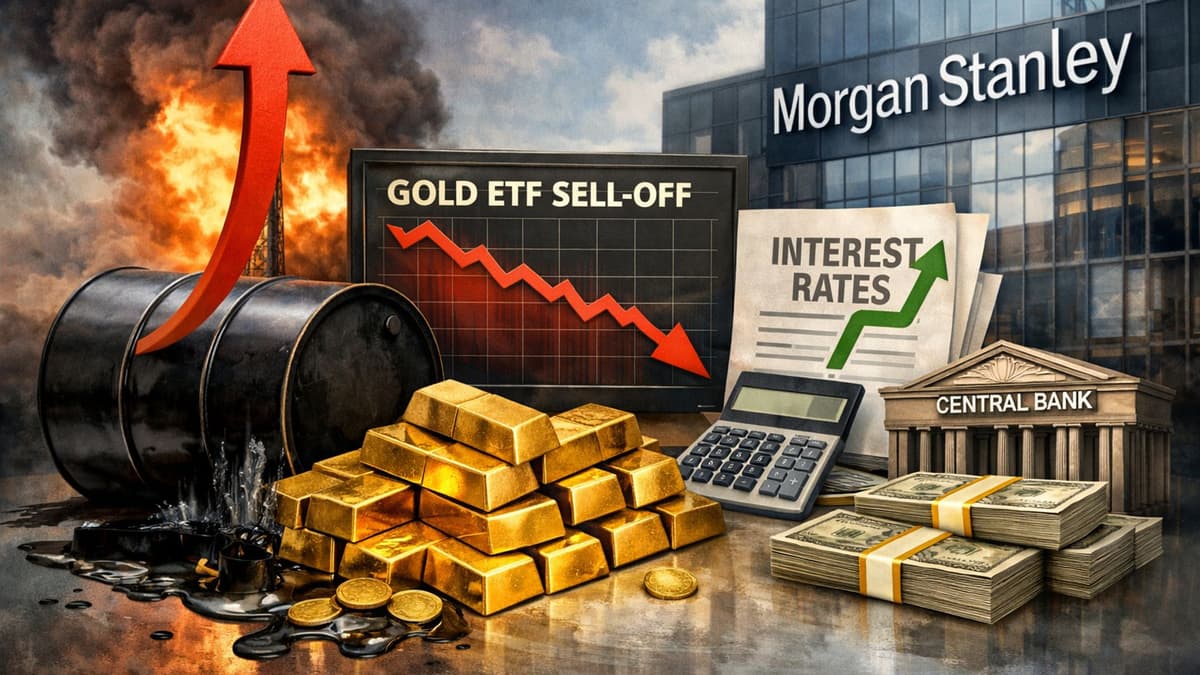
Morgan Stanley warned that gold could fall in the medium term because the current oil shock may do more than create a temporary liquidity squeeze. According to Amy Gower, the bigger risk is that higher energy prices could lift inflation expectations, change interest-rate expectations, and push ETF investors to sell bullion.
Gower told Bloomberg TV on Monday that the initial market reaction was not unusual. She said gold often pulls back at the start of a major shock because investors sell their most liquid assets to raise cash.
“I think we've had a shock, clearly here, with the conflict beginning, and I think it's not unusual to see gold initially pull back when we do get those shocks,” Amy Gower said.
She compared the current move with previous crisis periods, including COVID, the start of the Russia-Ukraine war, and what she called “Liberation Day.” In each case, gold’s liquidity worked against it in the short run.
How does gold's liquidity work against it in a crisis?
Gold often gets sold first during market stress because it is easy to liquidate. Gower said investors use gold to free up cash, whether to meet margin calls or to reallocate capital elsewhere.
That means even a traditional safe-haven asset like gold can fall at the start of a geopolitical or macro shock. In practical terms, traders may sell bullion, gold futures, or gold-backed products simply because they can do so quickly.
For Indian investors, this is an important reminder: a global risk event does not always send gold price higher immediately. Short-term volatility can push prices lower first before the broader safe-haven bid returns.
What technical levels are supporting gold right now?
Gold has found support at key moving averages, which suggests technical buyers are still active. Gower said bullion bounced off the 200-day moving average, a widely watched level in technical analysis.
“We definitely found support at key moving averages,” she said. “For example, we bounced off the 200-day [moving average], so that suggests that there's perhaps some technicals behind this.”
This matters for XAUUSD traders because the 200-day moving average is often treated as a major trend marker. A successful bounce can attract dip buyers, while a clean break below it can invite further selling pressure.
Is there also technical selling in gold?
Yes, Gower said she also sees some technical selling in the market. Even so, buyers have stepped in at important chart levels, limiting the initial decline.
That combination suggests gold is in a tug of war between short-term liquidation pressure and longer-term support from investors who still view bullion as a strategic real asset.
How are oil prices, Federal Reserve policy, and the dollar affecting gold price?
The key shift is that the oil shock could change inflation and interest-rate expectations. Gower said this is the main difference between the current energy-driven shock and an event such as Donald Trump’s tariff announcement.
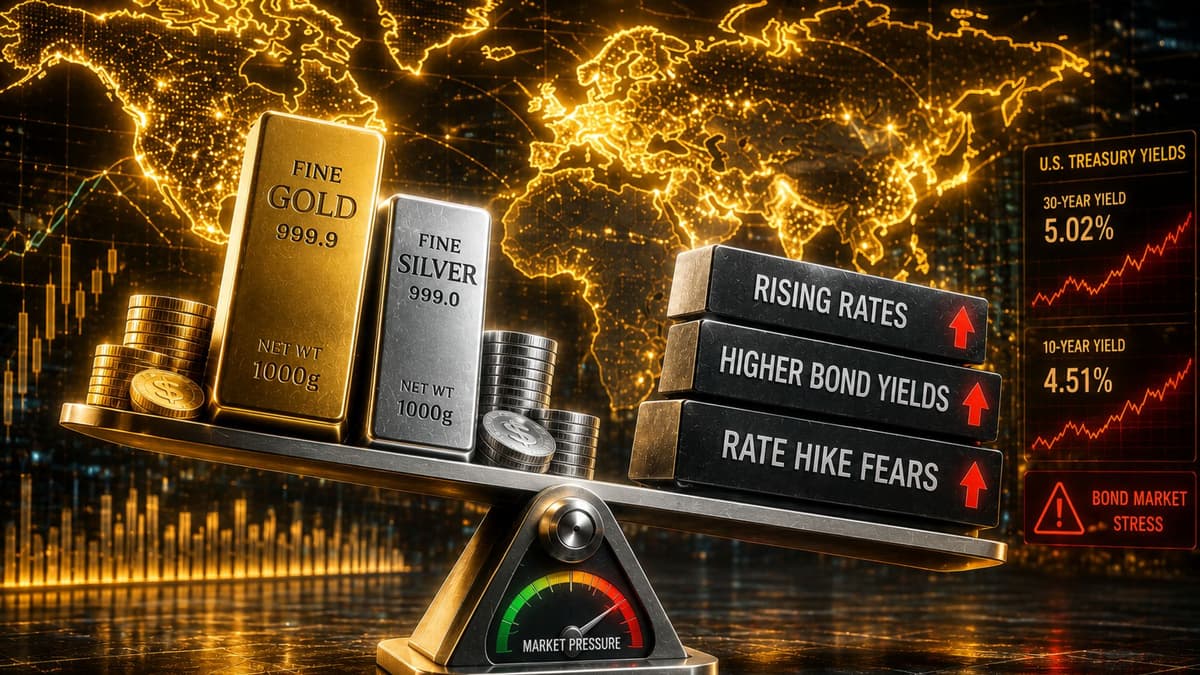
According to Gower, markets have already changed how they price Federal Reserve policy. Expectations have moved from rate cuts toward possible rate hikes.
“We have seen the pricing on the Fed change from expecting rate cuts to rate hikes,” she noted.
That is important because gold is highly sensitive to U.S. interest rates. Higher expected rates raise the opportunity cost of holding non-yielding assets like bullion.
Gower also said the U.S. dollar has been creeping higher. A stronger dollar usually pressures gold because it makes the precious metal more expensive for non-U.S. buyers.
Why is the dollar move important for gold?
The dollar move matters because last year gold benefited from an unusual backdrop. Gower said gold saw safe-haven demand alongside a weakening U.S. dollar, which is not the normal pattern.
Now, that dynamic may be reversing. If the dollar rises and the Federal Reserve turns more hawkish, gold could lose one of the major supports that helped drive the rally.
For Indian buyers, this creates a mixed picture. A softer global gold price can limit gains in domestic bullion, but a stronger dollar can keep Indian rupee gold prices elevated if the rupee weakens against the greenback.
Could ETF liquidation push gold prices lower?
Yes, ETF liquidation is one of the clearest medium-term risks Morgan Stanley identified. Gower said exchange-traded funds can switch quickly from buying to selling depending on the Federal Reserve outlook.
She described central banks and ETFs as the two biggest buckets of gold buyers. If the market starts to believe the Federal Reserve may hike rates, or keep rates higher for longer, ETF holders may reduce exposure.
“If the narrative does start to become that we are at risk of a hike, or maybe a longer pause, you might see that liquidation coming through,” Gower said.
What do the ETF buying numbers show?
The data show how powerful ETF demand has become. Gower said ETFs bought zero gold in 2024, but in 2025 they nearly bought as much as central banks.
Morgan Stanley Research also highlighted stronger institutional demand. Physical gold-backed ETFs posted a record inflow of $26 billion in the third quarter, and total assets under management ended that quarter at a record $472 billion.
Those numbers show why ETF flows matter so much for gold price direction. If large inflows helped support the rally, large outflows could just as easily pressure bullion.
For Indian investors using sovereign gold bonds, gold ETFs, or digital gold proxies, global ETF sentiment remains a key signal to watch.
Are central banks still supporting gold, or could selling increase?
Central banks are still a major structural pillar for gold, but Morgan Stanley sees signs that buying is slowing. Gower said it does not take much official-sector selling to begin weighing on prices if the pace of aggregate buying cools.
Turkey is the immediate example. Gower said Turkey sold a large amount of gold reserves.
“Turkey, obviously, it's a large amount, 60 tonnes of gold,” she conceded.
She added that central banks collectively bought about 860 tonnes last year. Against that backdrop, even limited selling can affect market psychology.
Why are Turkey and Poland important for the gold market?
Turkey matters because a sale of 60 tonnes is large enough to attract attention in a market already watching for slower official-sector buying. Poland matters because it was the largest buyer last year, and any shift there would carry even more weight.
Gower said Poland has recently discussed different ways to monetize its gold reserves. She warned that if Poland were to start selling, the impact would be significant.
“Poland was the largest buyer last year. So if they started to sell, that would obviously have an impact as well,” she said.
At the same time, Gower said no other country has said it plans to sell at this point. Still, she expects a slower pace of aggregate central bank buying going forward.
For Indian investors, this is important because central bank demand has been one of the strongest long-term supports for bullion. Any broad moderation could reduce a key tailwind for global gold prices.
Does Morgan Stanley still see a longer-term bullish case for gold?
Yes, Morgan Stanley still argues that gold remains a real asset with long-term support, even if the near-term outlook has become more complicated. Gower said the investor demand shift toward real assets that emerged last year, especially around fiat currency debasement concerns, is still in place.
“Gold should still be that real asset,” she said.
She said the broader narrative has not disappeared, but investors must now deal with changing macro conditions, especially around inflation, central bank policy, and ETF positioning.
What did Morgan Stanley forecast for gold in 2026?
Morgan Stanley remained constructive on gold even during sharp volatility. On Oct. 22, just one day after gold posted its largest daily loss in 12 years, Morgan Stanley said the rally could continue and raised its 2026 gold price forecast by 33% to $4,400.
At that time, Gower said investors were watching gold as both an inflation hedge and a wider barometer of central bank policy and geopolitical risk.
“We see further upside in gold, driven by a falling U.S. dollar, strong ETF buying, continued central bank purchases and a backdrop of uncertainty supporting demand for this safe-haven asset.”
What broader signals still support bullion demand?
Several structural factors still support gold over the longer term. Morgan Stanley Research said central banks, institutional investors, and retail investors have all helped strengthen demand.
One of the most striking signals is reserve composition. Morgan Stanley said that for the first time since 1996, gold now accounts for a larger share of central bank reserves than U.S. Treasuries.
That shift, according to the bank, signals confidence in gold’s long-term value. It also helps explain why bullion has remained resilient despite repeated volatility shocks.
Are retail investors also returning to gold?
Yes, Morgan Stanley said retail investors are joining the gold rally after spending two years largely on the sidelines. The bank linked that return to expectations for slower U.S. growth and a weaker dollar.
The analysts said many investors are moving safe-haven allocations away from dollar-denominated assets and into gold. They also noted that a weaker dollar makes gold more affordable for international buyers.
How do Fed rate cuts usually affect gold?
Federal Reserve rate cuts have historically supported gold prices. Morgan Stanley said that since the 1990s, gold prices have averaged a 6% increase in the 60 days following the start of a Fed rate-cutting cycle.
That history explains why the market is so sensitive to any shift from expected cuts toward possible hikes or a longer pause. If rate-cut hopes weaken, one of gold’s most reliable cyclical supports may weaken too.
For Indian investors, the takeaway is clear: the global gold price outlook now depends heavily on whether inflation from the oil shock keeps the Federal Reserve cautious, whether ETF flows stay positive, and whether central banks continue buying at anything close to last year’s pace. If the Fed turns more hawkish and ETF liquidation begins, bullion could face pressure even if gold’s longer-term safe-haven case remains intact.