# Gold Price Resilience Strengthens LBMA’s HQLA Push
Gold has been acting as a liquid reserve asset during crisis-driven market stress, not failing as an investment. That is the core message from the London Bullion Market Association after a sharp gold selloff that followed the joint U.S.-Israel war against Iran and the broader liquidity squeeze that hit global markets.
The debate matters for Indian investors because gold is not just a price trade. It is also a reserve asset, a safe-haven holding, and a source of liquidity when financial conditions tighten. If regulators ultimately move closer to recognizing bullion as a high-quality liquid asset, that could strengthen gold’s standing in the global financial system over the long term.
Why does the LBMA say gold has been doing its job?
Gold has been doing its job because it provided liquidity when markets came under stress. Ruth Crowell, managing director of the LBMA, told Kitco News that gold’s recent price action should be viewed through the lens of monetization during crisis periods rather than as evidence that bullion failed.
The gold market has been recovering after what Kitco described as its worst monthly loss in decades. Many analysts said that selloff was logical because gold became an important source of emergency liquidity after the joint U.S.-Israel war against Iran created severe uncertainty across the global economy.
That shock triggered a supply chain crisis that affected everything from food production to energy markets. In such conditions, investors, institutions, and even countries often sell assets that can quickly raise cash.
Crowell summed up the process directly: investors are often "selling the winners to pay for the losers." She said gold behaves very similarly to U.S. Treasuries from that point of view because holders can pull cash out of it when they need capital.
How did Ruth Crowell describe gold’s role?
Ruth Crowell said investors should not see gold as a failing asset in the current environment. She said they should see it as a functioning asset that can be monetized when domestic or market-wide liquidity needs rise.
She added that countries are monetizing gold holdings to meet domestic liquidity needs. That reinforces gold’s role as a strategic financial reserve, not merely a passive store of value.
Crowell also pushed back against the idea that short-term volatility disqualifies gold from safe-haven status. According to her, the key question is not whether gold moves in price, but how it behaves relative to other assets during periods of stress.
“People focus on the volatility. However, it’s not quite that simple. It’s still a safe-haven asset. It’s still a reserve asset, and it plays its role during a time of crisis,” Crowell said.
What is the new LBMA and World Gold Council HQLA platform?
The LBMA and the World Gold Council launched a dedicated platform on March 31 to support gold’s case as a high-quality liquid asset, or HQLA. The platform is designed to provide market participants and regulators with data-driven evidence that bullion deserves greater recognition in prudential frameworks.
This initiative addresses a long-running regulatory gap. Under Basel III rules, gold has historically been excluded from top-tier HQLA classifications largely because regulators lacked standardized evidence showing how gold performs in crisis scenarios.
Why is HQLA status important for gold?
HQLA status matters because it would place gold more firmly inside the global liquidity architecture used by banks and regulators. Assets classified as high-quality liquid assets are expected to hold value, remain tradable, and generate cash quickly during market stress.
According to the LBMA and the World Gold Council, gold already meets many of those real-world tests. They argue that gold’s deep global market, lack of credit risk, and ability to generate cash quickly make it a strong candidate for inclusion alongside government bonds in diversified liquidity buffers.
Crowell said the organizations built a data set specifically to answer regulators’ concerns. She noted that they now have multiple crises to analyze, including the global financial crisis, the COVID-19 pandemic, and recent geopolitical shocks.
“We went away and created that data set… and now we have multiple crises to analyze,” Crowell said.
For Indian investors, this matters because formal recognition of gold’s liquidity role could support long-term institutional demand for bullion. That may not drive XAUUSD higher immediately, but it can deepen gold’s strategic importance in reserve management, banking, and portfolio construction.
How did the recent geopolitical shock affect gold prices and liquidity demand?
The recent geopolitical shock increased demand for emergency liquidity, which in turn contributed to gold selling pressure. Analysts cited in the source article said gold’s selloff last month was a rational response after the joint U.S.-Israel war against Iran intensified uncertainty in the global economy.
That uncertainty did not stay confined to geopolitics. It spilled into supply chains and affected food production and energy markets, increasing the need for ready cash across the system.
When markets face that kind of stress, gold often serves two roles at once. It remains a safe-haven reserve asset, but it also becomes something holders can sell quickly to raise funds.
Why can a safe-haven asset still fall in price?
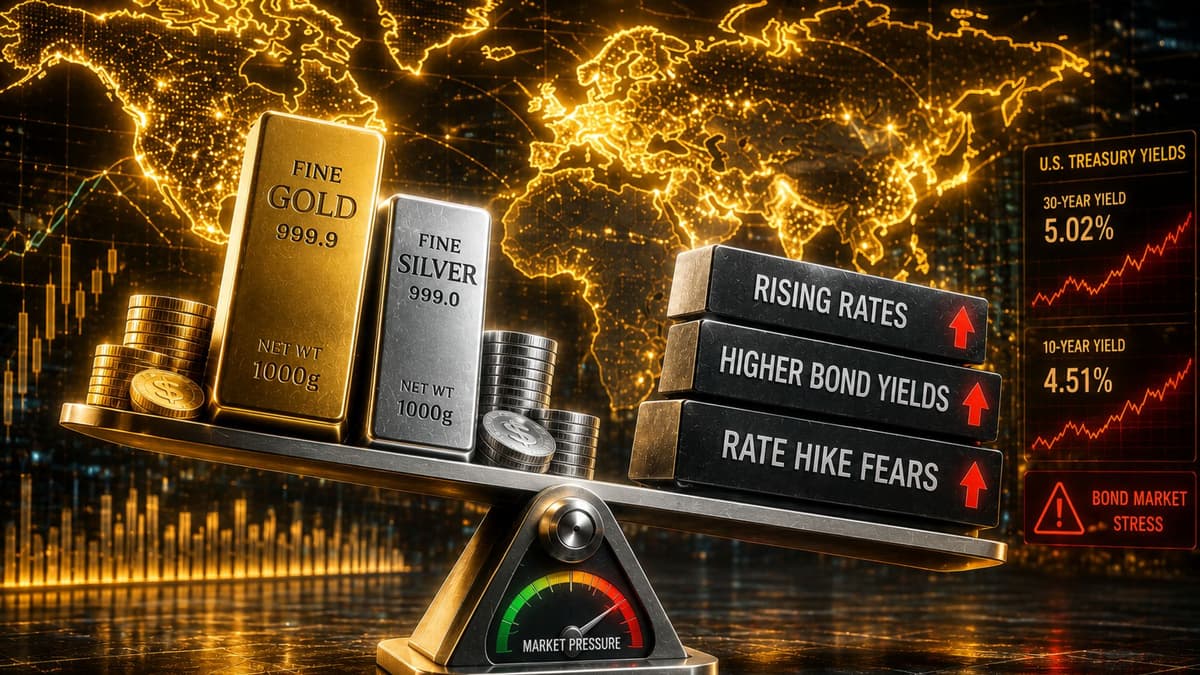
A safe-haven asset can still fall in price because liquidity events force market participants to sell what they can, not just what they want to. Gold is highly liquid, globally traded, and easy to monetize, which can make it one of the first assets sold during periods of acute funding stress.
That does not necessarily weaken the case for gold. In Crowell’s view, it actually strengthens it because it shows bullion can function in the same way U.S. Treasuries do when capital is urgently needed.
For Indian bullion buyers, this distinction is important. A short-term drop in international gold price benchmarks such as XAUUSD does not automatically mean gold has lost its safe-haven appeal. It may simply mean the market is using gold as a liquidity bridge.
Why are central banks increasing gold purchases?
Central banks are increasing gold purchases because they want to diversify away from the U.S. dollar and hold neutral reserve assets with no counterparty risk. That official-sector behavior supports the broader case that gold is evolving beyond a simple inflation hedge or speculative trade.
The source article said official sector purchases have surged in recent years. That trend aligns with a world shaped by geopolitical fragmentation, recurring liquidity shocks, and greater concern about reserve concentration.
What did Crowell say about gold as an international currency?
Crowell said it is unsurprising that gold is being viewed as an international currency because it carries no third-party liability. That is a critical point in the current reserve-management debate.
Unlike many financial assets, physical bullion does not depend on the credit quality of an issuer. For central banks and sovereign institutions, that makes gold attractive as a neutral reserve asset during times of political and financial fragmentation.
For India, this trend is especially relevant. The Reserve Bank of India and Indian investors alike operate in a market where global central bank buying can influence long-term sentiment, rupee gold prices, and demand for physical bullion.
If international gold prices stay firm while the Indian rupee weakens against the U.S. dollar, domestic gold prices can remain elevated even when global bullion pauses. That is why Indian investors should watch both XAUUSD and USD/INR when assessing the gold price outlook.
What does gold’s HQLA push mean for Indian investors now?
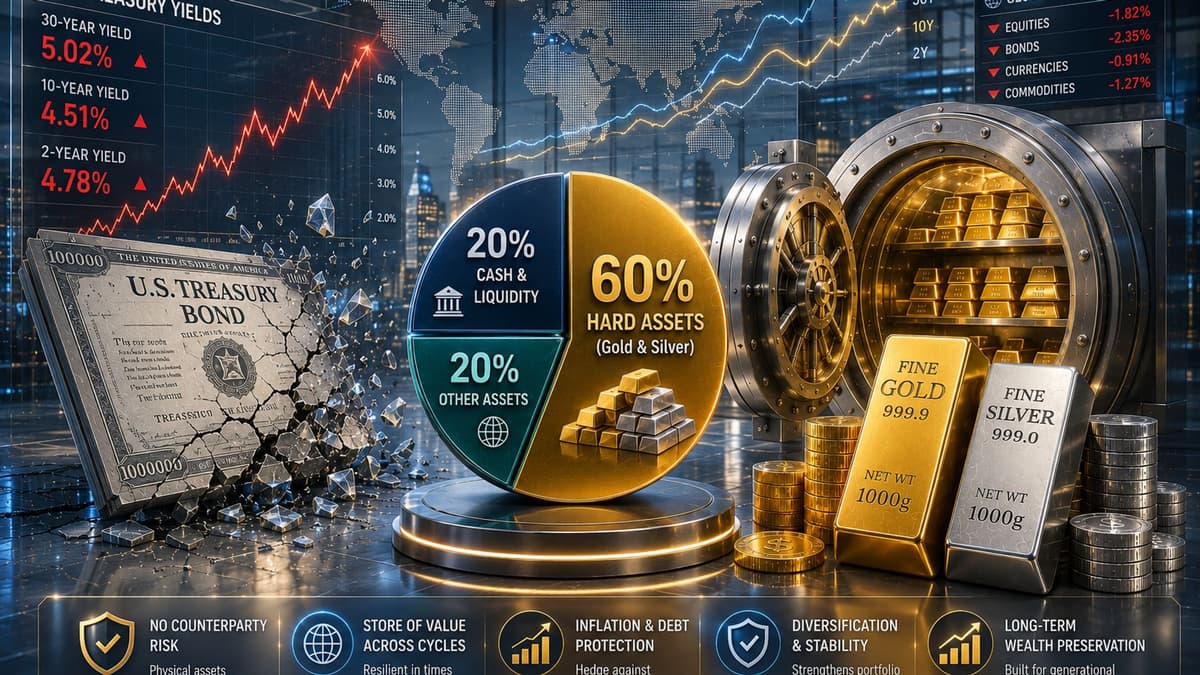
Gold’s HQLA push means Indian investors should increasingly view bullion as a strategic portfolio asset, not only as a hedge against inflation or festival-season demand. The regulatory debate reinforces the idea that gold can serve as a liquid, credit-risk-free reserve in a fragmented world.
Crowell said there is growing recognition that gold should be part of any diverse portfolio. That argument fits well with how many Indian households already use precious metals: as a store of wealth, a crisis hedge, and a long-term diversification tool.
Will regulators move quickly on gold’s classification?
Probably not. Crowell said progress will require continued engagement and education, and she described the process in clear terms: “It is a marathon, not a sprint.”
Her message to policymakers is equally direct: “Look at the data.” That suggests the next phase of the debate will depend less on theory and more on empirical evidence from multiple crisis periods.
For Indian investors, the key watchpoint is whether global regulators and major financial institutions begin giving gold a larger formal role in liquidity frameworks. If that happens over time, it could support stronger structural demand for bullion, even if near-term gold price moves remain volatile.