# Gold Price Outlook: World Bank Sees 2026 Ceiling Amid Volatility
The World Bank says gold and silver prices may stay near elevated levels through 2026, even as war-driven volatility, inflation risks, and safe-haven demand keep bullion markets highly unstable. For Indian investors, that means global gold price strength could continue to support domestic rates, especially if the rupee remains under pressure against the U.S. dollar.
What is the World Bank’s latest gold price outlook through 2026?
The World Bank expects gold prices to remain capped near current high levels through 2026, despite sharp gains and extreme volatility in precious metals. In its April Commodity Market Outlook, the bank said the market still has room for one more year of solid growth, but it does not expect an unlimited breakout higher.
The bank forecasts gold prices to average about $4,700 per troy ounce this year, which would be 37% higher than last year. After that, it expects gold prices to decline by 7% in 2027.
The World Bank sees a similar path for silver. It expects silver to average around $70 per ounce this year, a rise of 76% from last year, before also falling 7% next year.
The report adds that gold and silver prices are likely to face a ceiling through 2026, even though geopolitical shocks and financial-market stress are still supporting safe-haven demand.
How strong have gold and silver prices been so far this year?
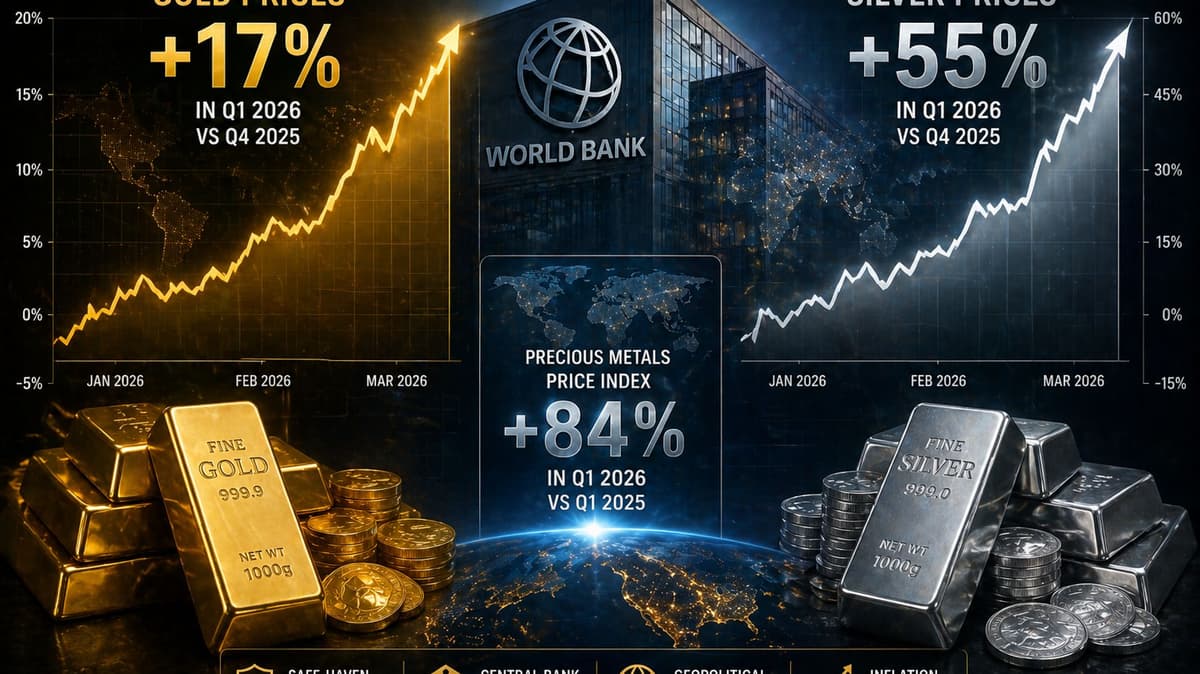
Gold and silver have already posted exceptional gains. The World Bank noted that gold prices ended the first quarter up 17% compared with the fourth quarter.
Silver surged even more sharply. According to the World Bank, silver prices jumped 55% in the first three months of the year compared with the final quarter of 2025.
The rally has been broad across precious metals. The bank said the overall precious metals price index rose 84% compared with the first quarter of last year.
That scale of price appreciation shows how strongly investors have moved into bullion and related assets during a period of geopolitical conflict, inflation anxiety, and speculative buying.
Why does the World Bank think gold and silver upside may be limited?
The World Bank says the recent correction in gold and silver likely reflects a partial unwinding of speculative excess. In other words, some of the earlier surge in bullion prices appears to have been driven by speculative fervor that is now cooling.
The analysts said momentum in gold and silver has slowed in recent months. They linked that shift to ongoing chaos in the Middle East, which has driven energy prices higher, intensified inflation fears, and increased expectations for interest rate hikes.
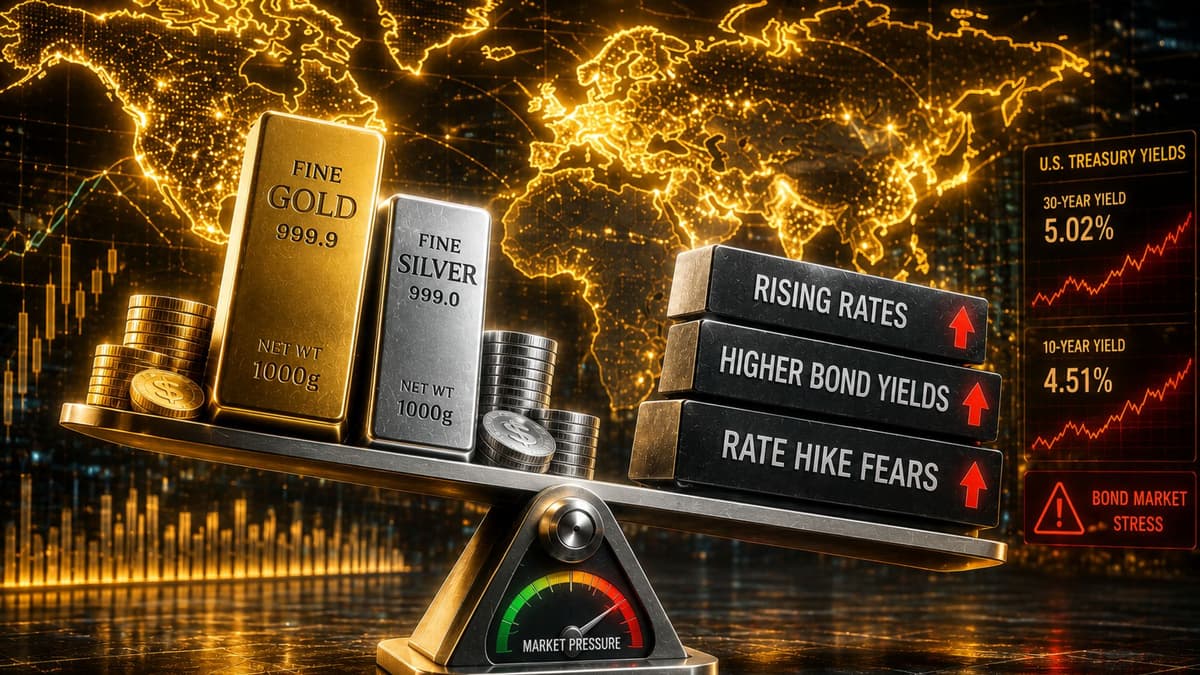
Higher interest rate expectations can weigh on gold price and silver price performance because both are non-interest-bearing assets. When yields rise, the opportunity cost of holding bullion also rises.
The World Bank said it has maintained a negative outlook on gold and silver in 2025 since its October report. Even so, it now still expects one more year of solid gains before prices begin to ease.
What risks could push gold and silver above the World Bank’s forecast?
The World Bank says upside risks remain significant. The analysts stated that risks to the baseline forecast are still tilted to the upside because precious metals are highly sensitive to global risk sentiment, speculative demand, and broader macroeconomic conditions.
According to the World Bank analysts: “A resurgence of global trade tensions or financial market volatility could trigger additional safe-haven inflows into gold and silver, pushing prices above current projections.”
That matters for XAUUSD and global bullion markets because fresh trade conflict or a new financial shock could quickly send investors back into gold-backed exchange-traded products, physical bullion, and other safe-haven assets.
For Indian investors, any such move could lift local gold prices even further if it coincides with rupee weakness. Since India imports most of its gold, a higher international gold price plus a weaker INR can amplify domestic price gains.
What downside risks does the World Bank see for gold and silver?
The World Bank says the biggest downside headwind is higher inflation caused by a rapid increase in energy prices and other commodities. That may sound counterintuitive because gold often acts as an inflation hedge, but the bank argues that inflation-driven rate expectations can become a bigger negative for bullion.
The analysts said: “This would tend to increase the opportunity cost of holding precious metals, which are non-interest-bearing assets.” If inflation forces tighter monetary policy, gold and silver could lose momentum.
The World Bank also warned that a sustained easing of geopolitical tensions could reduce safe-haven demand. If conflict risks fade, some of the fear premium embedded in precious metals prices could unwind.
Another downside risk is central bank demand. The analysts said that a sharper slowdown in central bank purchases—after several years of exceptionally strong accumulation—could remove another important source of price support.
They also warned that downside price surprises could be significant, especially if the speculative surge in demand seen since early 2025 reverses sharply through profit-taking and portfolio rebalancing.
Why is silver more vulnerable than gold in this outlook?
Silver may face greater downside risk than gold because silver depends not only on investment demand but also on industrial demand. The World Bank said silver could be particularly vulnerable if rising economic uncertainty leads to slower growth.
A weaker global economy would likely hurt industrial consumption, which is a crucial support for silver prices. That makes silver more exposed than gold when growth expectations deteriorate.
So while both gold and silver have benefited from safe-haven flows and speculative demand, silver’s industrial use creates an extra layer of risk if the global economy cools.
How has the Iran war changed the broader commodity market outlook?
The World Bank says the war involving Iran has fundamentally reshaped the wider commodity market. In its October outlook, the bank had expected commodity prices to fall 7%.
It has now reversed that call. The bank expects commodity prices to average 16% higher, which would mark the first annual increase since 2022.
The World Bank said the broader commodity complex remains dominated by energy. According to the report, oil and natural gas prices have surged because of supply shortfalls, and average energy prices are forecast to rise 24% in 2026.
The analysts added: “However, the supply shocks brought about by the war and its consequences are widespread, affecting many commodities and industrial inputs.”
How could rising energy and commodity prices affect gold and Indian investors?
Rising energy and input costs could intensify global inflation pressures, and that creates a complicated backdrop for gold. On one side, inflation and war uncertainty can support safe-haven buying. On the other, persistent inflation can keep interest rates higher for longer, which can cap gains in non-yielding assets like bullion.
The World Bank said crop fertilizer prices are expected to soar this year because of export disruptions and rising production costs. It also said these input costs are putting upward pressure on food commodities and metals.
The bank projects that average base metals prices will reach an all-time high, and it said prices for precious metals are also expected to reach record levels amid extraordinary volatility.
Most importantly, the World Bank warned that rising commodity prices could push global inflation pressures to their highest level in four years.
For India, that mix is critical. Higher global commodity prices can worsen imported inflation, pressure the rupee, and increase the landed cost of gold imports. That means Indian gold buyers may continue to see elevated domestic prices even if international gold pauses near the World Bank’s projected ceiling.
Indian investors should now watch three factors closely: whether safe-haven demand strengthens further, whether central bank buying slows, and whether energy-led inflation keeps rate expectations high. Those forces are likely to decide whether gold price and silver price stay near the World Bank’s projected ceiling through 2026 or break away from it.