# Gold Price Outlook: WisdomTree Sees $5,500 by Q1 2027
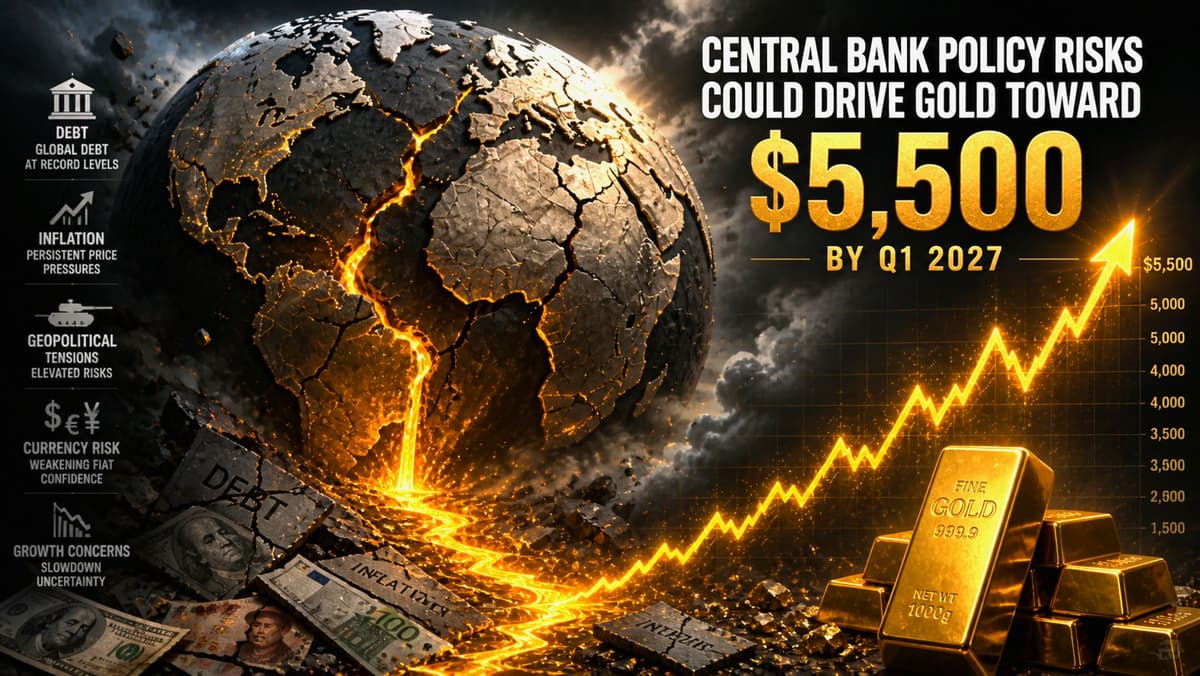
Gold prices may be struggling below $4,600 an ounce, but WisdomTree still sees a powerful long-term rally ahead. Nitesh Shah, head of commodities and macroeconomic research at WisdomTree, told Kitco News that central bank policy risks, recession fears, structural dollar pressure, and steady Asian demand could push gold to around $5,500 by the first quarter of 2027.
For Indian investors, the outlook matters beyond global bullion markets. If international gold prices climb toward $5,500 per troy ounce while the rupee faces pressure against the U.S. dollar, domestic gold rates in INR could remain elevated even if jewellery demand softens.
Why does WisdomTree expect gold to reach $5,500 by Q1 2027?
WisdomTree expects gold to reach around $5,500 by Q1 2027 because policy mistakes by central banks, recession risks, and strong investment demand are building a bullish long-term backdrop for bullion. Shah said his latest base-case scenario points to gold returning close to its all-time highs by the first quarter of 2027.
In his words, “I’m looking at gold around $5,500 for Q1 2027.” He added that he views that target as closer to the lower end of a broader range because investment demand remains strong.
That is a notable call because spot gold has continued to struggle below $4,600 an ounce in the near term. Even so, Shah argues that current price weakness does not reflect a deterioration in core gold fundamentals.
Why does he see limited downside for XAUUSD?
Shah said the downside for gold appears relatively capped even under a bearish macro scenario. He said that even if inflation falls to 2%, the U.S. dollar strengthens, and bond yields rise, he still sees gold holding around $4,630 an ounce.
His conclusion was direct: “Even with quite bearish assumptions, the downside is relatively capped. The risks are much more to the upside.” For XAUUSD traders and long-term bullion investors, that suggests a floor remains intact despite volatility.
What central bank policy risks could drive gold higher?
Central bank policy errors could drive gold higher because policymakers now face a narrow path between controlling inflation and avoiding a deeper economic slowdown. Shah said central banks are increasingly constrained, and that tension is bullish for precious metals.
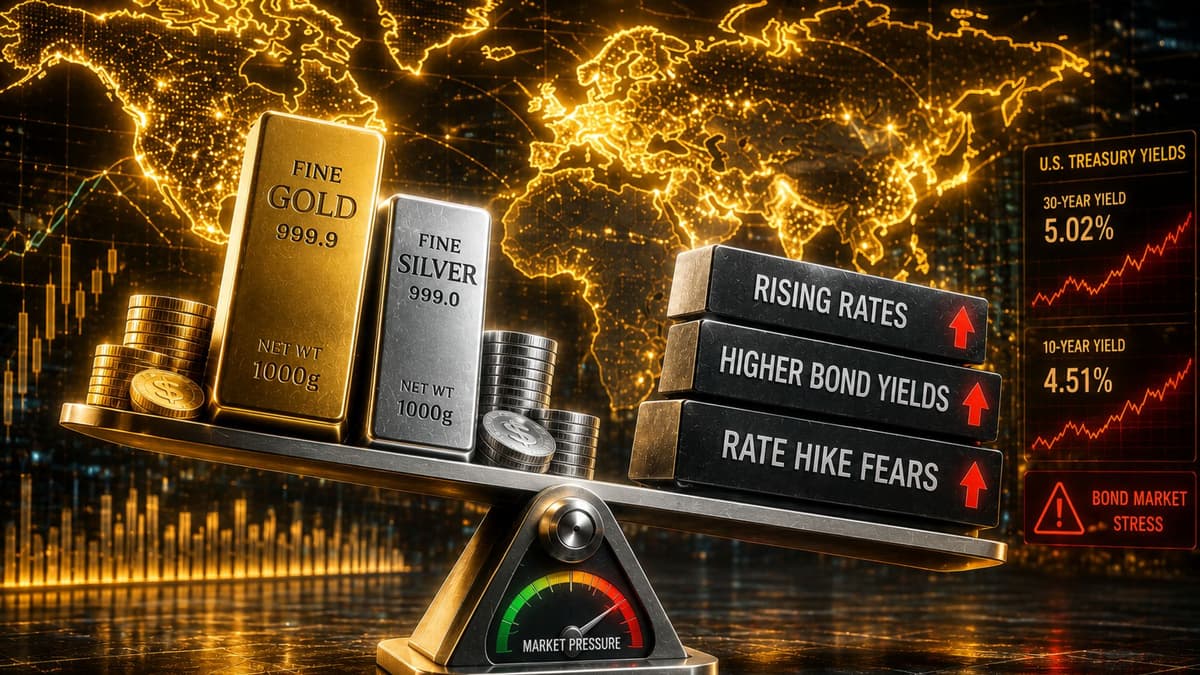
He said aggressive rate hikes could deepen recession risks or even trigger stagflation. That makes the policy trade-off much harder for the Federal Reserve and other central banks.
“Central banks are fully cognizant that there’s not much they can do with interest rate policy without inflicting pain,” Shah said. When markets believe policymakers are likely to misstep, investors often turn to safe-haven assets such as gold.
How does policy uncertainty support bullion?
Policy uncertainty supports bullion because markets react strongly when monetary leadership, priorities, or timelines become less predictable. Shah said uncertainty could intensify if officials try to achieve too much in too short a time.
“If you’re trying to achieve too much in a short space of time, that could lead to policy errors, and that uncertainty is potentially supportive for gold,” he said. In practice, that means gold can benefit not only from actual rate changes but also from confusion around future policy direction.
Why has gold struggled below $4,600 despite geopolitical tensions?
Gold has struggled below $4,600 despite geopolitical tensions because broader market liquidation and margin pressure have offset some safe-haven buying. Shah said gold is not yet behaving like a full-fledged geopolitical hedge.
“Gold still isn’t quite performing as you’d expect as a full-fledged geopolitical hedge,” he said. However, he stressed that the weakness is not being driven by a change in fundamentals.
Instead, Shah said, “a lot of that selling pressure is being driven by liquidation and margin dynamics in broader markets rather than a change in fundamentals.” That distinction is important for investors because temporary forced selling can depress prices even when the long-term case remains constructive.
Are geopolitical risks still bullish for gold?
Yes, Shah still sees geopolitical risks as supportive for gold over time. He said those risks are not yet fully priced into the market.
“I think geopolitical risks need to be priced in more,” he said, adding that gold is currently “sitting a little bit lower than where it should be given the prevailing risks.” That implies bullion may reprice higher if investors become more focused on global instability.
How do recession risks and structural debt concerns affect gold?
Recession risks typically support gold because economic slowdowns increase demand for defensive assets and raise expectations for easier monetary policy. Shah said recessionary risks are one of the clearest catalysts for higher gold prices.
“Recessionary risks are generally what help gold prices,” he said. “If we start seeing that, then it becomes very supportive for gold.”
He also pointed to structural pressures that could reinforce the bullish case. Rising government debt and long-term strain on the U.S. dollar, in his view, could create additional tailwinds for bullion.
What role could the U.S. dollar play?
A structurally weaker U.S. dollar could help gold prices rise over time. Shah said budget pressures may eventually revive long-term dollar depreciation.
“We may start to see structural depreciation reemerging with pressures on budgets, and that could help gold prices,” he explained. Because gold is priced in dollars globally, dollar weakness often improves the metal’s appeal and supports higher prices per troy ounce.
For Indian investors, this matters twice. A stronger gold price in dollars and any INR weakness against the U.S. dollar can together push domestic gold prices higher.
How are China, India, and institutional investors supporting gold demand?
Demand from Asia and rising strategic allocations by institutions are helping support gold even at elevated prices. Shah said buying has not disappeared; it has shifted in form.
He highlighted strong and persistent demand from Asia, especially from China and India. Even though high prices can weigh on jewellery volumes, the market remains supported by investment-led buying and cultural demand.
“Demand hasn’t gone away, it’s just shifted,” Shah said. He added that in many regions gold is still treated as a “wearable investment.”
Why is the India angle important?
India remains one of the world’s most important physical gold markets, so sustained Indian demand helps underpin global bullion prices. For Indian households, gold serves both as jewellery and as a store of value, especially during periods of inflation, currency volatility, or economic uncertainty.
If global gold remains firm near current levels and moves toward WisdomTree’s $5,500 target by Q1 2027, Indian buyers could face persistently high local prices. That may reduce jewellery volumes but strengthen investment interest in bars, coins, ETFs, and sovereign gold-linked products.
Why are institutions raising gold allocations?
Institutional investors are increasing gold allocations because they see it as a necessary portfolio diversifier. Shah said many investors believe they have remained underweight gold for too long.
“Most clients feel they need some strategic allocation to gold,” he said. “They recognize their portfolios are not diversified enough without it.”
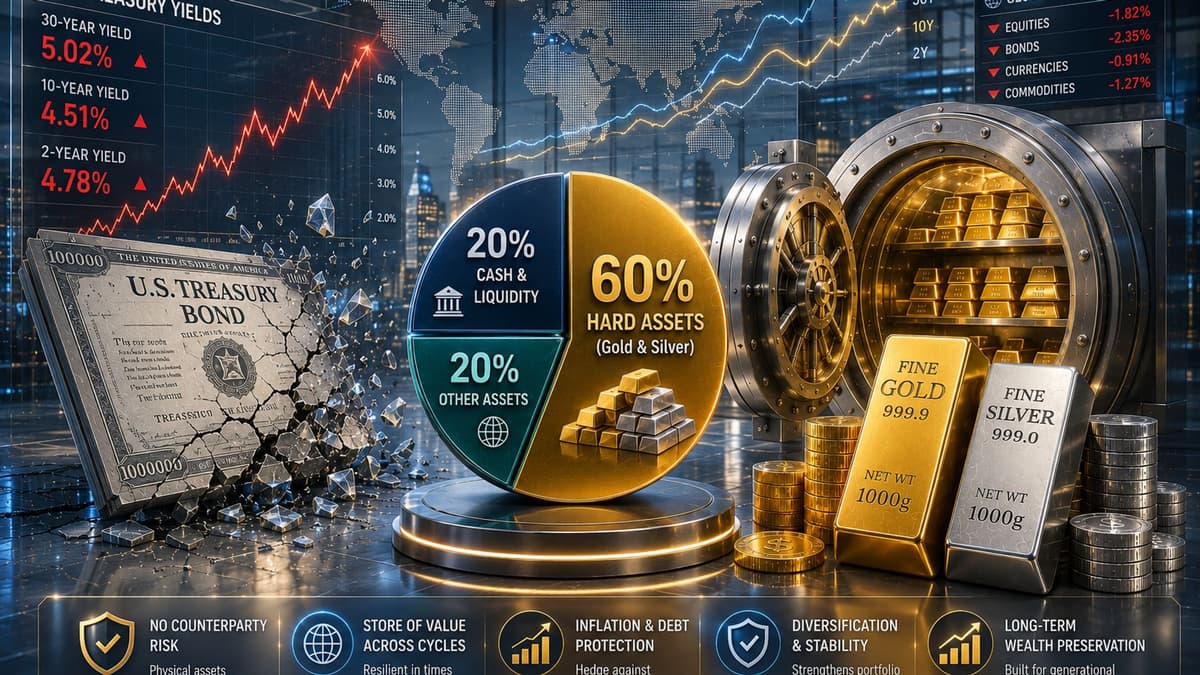
He added that some investors now view gold as a replacement for part of their traditional fixed-income exposure. That shift matters because bond markets have also become more volatile, reducing the defensive role fixed income once played.
What is WisdomTree’s silver forecast for Q1 2027?
WisdomTree expects silver to reach about $92.50 an ounce by Q1 2027, although Shah said silver carries more uncertainty than gold because industrial demand plays a bigger role. Even so, he remains constructive on the metal.
He said gold strength could pull silver higher as well. “If gold goes up much more, it should drag silver up,” Shah said.
What could drive silver demand higher?
Electrification trends and solar demand could lift silver further over the long term. Shah said the global push for energy diversification may create an additional demand tailwind.
That industrial link gives silver more upside potential in a strong growth niche, but it also makes silver more sensitive than gold to changes in manufacturing and technology demand.
As volatility persists and policymakers navigate a more complex economic landscape, Shah expects gold and silver to stay well supported. For Indian investors, the key watchpoints now are whether gold can break sustainably above $4,600 an ounce, how the Federal Reserve and other central banks handle inflation and growth risks, and whether rupee moves amplify the next leg in domestic bullion prices.