# Gold Price Outlook: Why Tavi Costa Sees This Dip as a Buy
Gold prices have pulled back sharply, but Tavi Costa says the decline is a buying opportunity rather than the end of the bull market. He argues that rising government debt, weaker long-term confidence in fiat balance sheets, and tightening hard-asset supply still support a strong long-term outlook for gold and other precious metals.
Spot gold was trading at $4,610.90 per troy ounce, the lowest level since the selloff that followed its record high near $5,600 in January. The latest drop also marked gold's second 4% single-day loss since the U.S. and Israel started a war with Iran, a conflict that has raised economic uncertainty and pushed energy prices and inflation higher.
For Indian investors, this matters because a correction in global bullion prices does not always translate into a similar fall in domestic rates. If the Indian rupee weakens while XAUUSD remains volatile, local gold prices can stay elevated even during an international pullback.
Why did gold prices fall even as geopolitical risks stayed high?
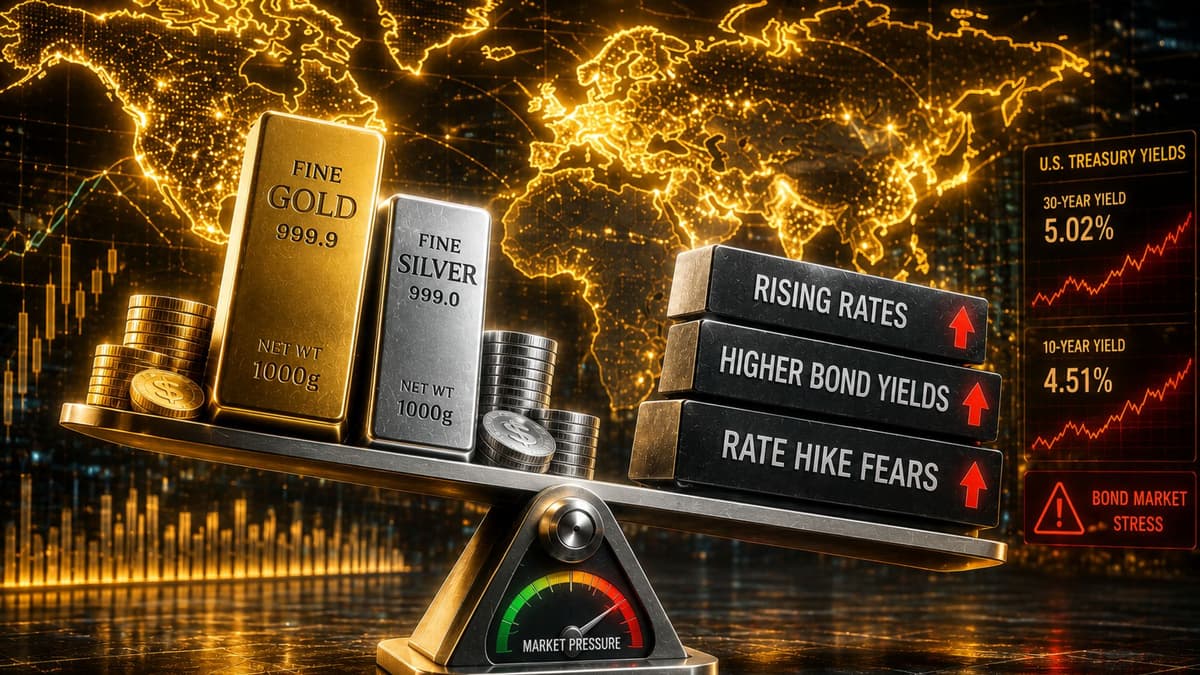
Gold fell because tighter liquidity conditions and shifting interest-rate expectations pressured the market in the short term. According to Tavi Costa, founder and CEO of Azuria Capital, those near-term forces have created volatility even though the larger macro backdrop remains supportive for bullion.
The recent correction has frustrated investors because it came during a period of war-related uncertainty. The conflict involving the U.S., Israel, and Iran has increased concern about growth, inflation, and energy costs, yet gold still suffered another steep daily decline.
Spot gold was last quoted at $4,610.90 an ounce, down to its weakest level since the selloff that followed the metal's record high near $5,600 in January. That slide shows how even safe-haven assets such as gold can come under pressure when markets tighten liquidity and reprice rates.
What is Tavi Costa's view on the selloff?
Tavi Costa says the pullback is "noise" inside a much larger and still early-stage bull market for precious metals. In his view, the correction does not break the long-term thesis for gold.
In an interview with Kitco News, Costa said structural forces across both the global economy and the mining industry continue to support higher gold prices over time. He added that short-term volatility often creates the best entry points for investors with conviction.
Costa stated his position clearly: "There's zero chance this is the end of the cycle." He believes investors should focus less on short-term sentiment and more on the longer debt-driven trend behind gold.
What makes rising global debt bullish for gold prices?
Rising government debt is Costa's central bullish argument for gold. He says the unsustainable build-up in sovereign liabilities, especially in the United States, will eventually force policymakers to prioritize lower rates to reduce debt-servicing costs.
Costa argues that rising interest expenses are increasingly crowding out other forms of government spending. Because of that pressure, he expects policymakers to push toward lower borrowing costs regardless of inflation data or traditional economic signals.
That policy direction would support gold because lower real rates and easier financial conditions typically improve demand for non-yielding safe-haven assets. In Costa's framework, debt dynamics matter more than short-term market mood.
How large is the U.S. debt burden now?
The U.S. debt burden has already reached a major milestone. Costa's comments came as U.S. government debt surpassed $39 trillion, with growing expectations that the cost of the war with Iran could push debt to $40 trillion before the fall.
Costa underscored that point in a social media post on March 19, 2026, writing: "US federal debt now officially reached $39 trillion. None of us own enough hard assets." That message reflects his broader view that investors remain underexposed to gold and other real assets.
For Indian investors, this debt story matters because global fiscal stress can weaken confidence in paper currencies and lift demand for bullion. A structurally stronger gold price in U.S. dollar terms can also support Indian domestic prices, especially if the rupee does not fully offset the move.
Why does Tavi Costa think gold is still in a bull market?
Costa believes gold remains in a bull market because reserve trends, debt pressures, and currency risks still favor hard assets. He says the current correction is part of a larger cycle, not a reversal of it.
He expanded on this view during a presentation at the Prospectors & Developers Association of Canada (PDAC) 2026 Convention. There, he described the current moment as a historic inflection point for hard assets.
Costa said that even after gold's standout performance last year, the sector remains under-owned and undervalued relative to the scale of the opportunity. In other words, he sees investor positioning as too light for the macro risks now building.
How under-owned is gold relative to U.S. debt?
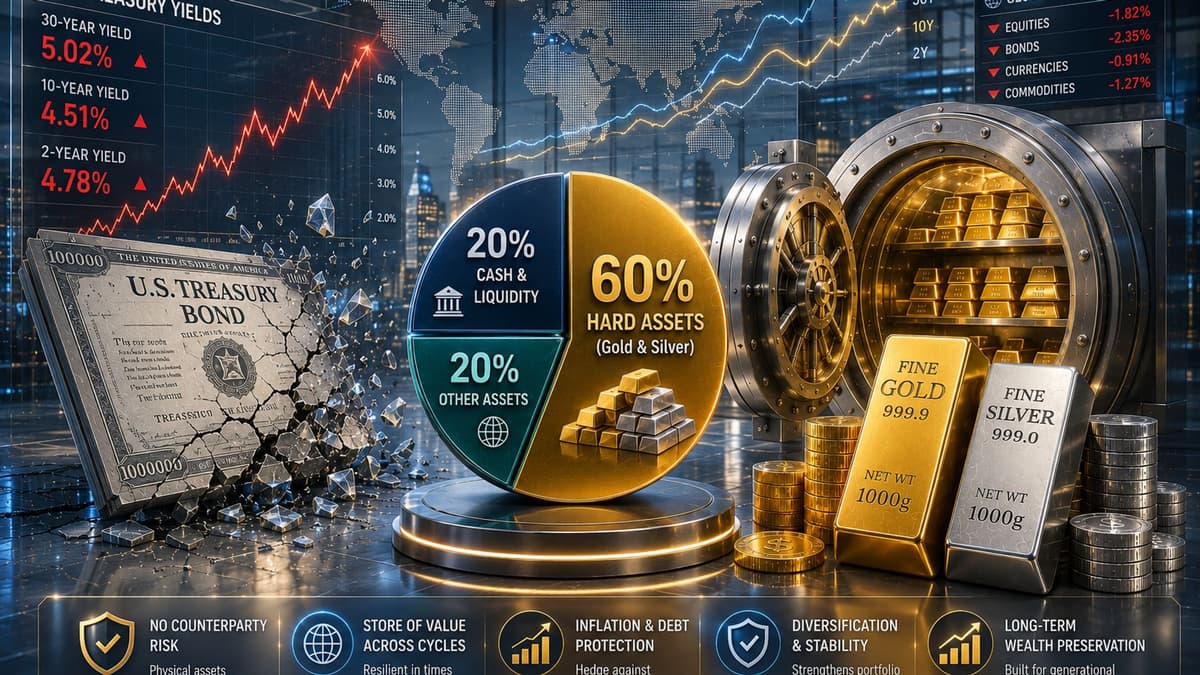
Costa says gold looks under-owned when measured against the U.S. balance sheet. He noted that U.S. gold reserves represent only about 3% of federal debt today, compared with roughly 51% in the 1940s.
He argues that this gap shows how much room gold has to reprice higher if governments try to rebuild reserves or restore confidence in their balance sheets. That comparison is a key part of his long-term gold price outlook.
Are central banks still moving toward gold?
Yes, Costa says many countries, especially in emerging markets, are moving away from U.S. Treasuries and toward gold. That shift in reserve management adds another long-term tailwind for precious metals.
He also expects a weaker U.S. dollar over time, which would further reinforce his bullish view on gold and silver. For Indian buyers, any broad decline in the U.S. dollar could support international bullion demand, although the rupee's path would still shape the final domestic price impact.
Costa warned against reacting emotionally to volatility. He said, "In situations like this, a lot of people tend to think in the short term and believe the thesis has shifted. But this is the moment where you build wealth. You should be adding to your positions when you're down. This is the moment where those with high conviction buy, not sell—and I am one of those people."
Why is Tavi Costa bullish on mining stocks as well as gold?
Costa is bullish on mining equities because he sees the industry in the early stages of a major cycle and believes capital flows have not yet fully arrived. He says valuations still do not reflect the earnings power created by higher gold and silver prices.
According to Costa, one of the most striking features of the current market is the disconnect between metal prices and mining valuations. Even after the rise in gold and silver, many producers still trade at modest multiples.
He added that some companies are generating margins comparable to technology firms because production costs remain far below prevailing precious metals prices. That dynamic, in his view, makes mining shares attractive alongside physical bullion and XAUUSD exposure.
Why have mining valuations lagged bullion prices?
Costa says investor skepticism has kept mining valuations low. Many investors still doubt that higher gold and silver prices can last, even as the macro backdrop has strengthened.
He believes that skepticism is misplaced because supply constraints across the mining sector are becoming more severe. If investors start to accept that higher precious metals prices are sustainable, he expects mining stocks to re-rate.
How tight is gold and silver supply in the mining sector?
Costa says supply is tightening because the mining sector has not invested enough in exploration and development. He believes that lack of investment is now setting up a prolonged period of structurally higher prices for gold and other commodities.
At PDAC, Costa highlighted data showing the industry has seen virtually no major discoveries over the past two years. He described that as an unprecedented development in modern mining history.
This shortage of new deposits follows years of underinvestment. Capital expenditures across the broader commodity sector have remained significantly constrained since the last cycle, which has weakened the future supply pipeline.
Why does limited new supply matter for gold prices?
Limited supply matters because demand can stay firm even when new production struggles to grow. If central banks, investors, and reserve managers continue buying gold while mine supply stays constrained, prices can remain structurally elevated.
That is one reason Costa sees the current pullback as an opportunity rather than a warning sign. He expects the supply-demand setup to support bullion, mining margins, and precious metals valuations over the long run.
What should Indian gold investors watch next?
Indian investors should watch three factors next: U.S. debt growth, rate expectations, and the direction of the U.S. dollar against the rupee. These variables will shape both international gold prices and the local bullion market.
If U.S. debt moves from $39 trillion toward $40 trillion before the fall, Costa's debt thesis will likely gain even more attention. Investors should also monitor whether policymakers shift toward lower rates as debt-servicing costs rise.
For India, the key question is whether any further correction in XAUUSD is offset by rupee weakness and strong local demand. If that happens, domestic gold prices may prove more resilient than the global chart suggests, leaving dips in bullion and precious metals equities firmly in focus for long-term buyers.