# Gold Price Outlook Turns Bolder With New $8,900 Target
Gold’s long-term bull market remains intact, according to Incrementum AG’s 20th annual In Gold We Trust report, which now sees an inflationary upside target of $8,900 per troy ounce by the end of the decade. For Indian investors, the report matters because a structurally stronger global gold price, combined with rupee moves against the U.S. dollar, can keep domestic bullion prices elevated even during periods of short-term volatility in XAUUSD.
Why did Incrementum raise its gold price target to $8,900?
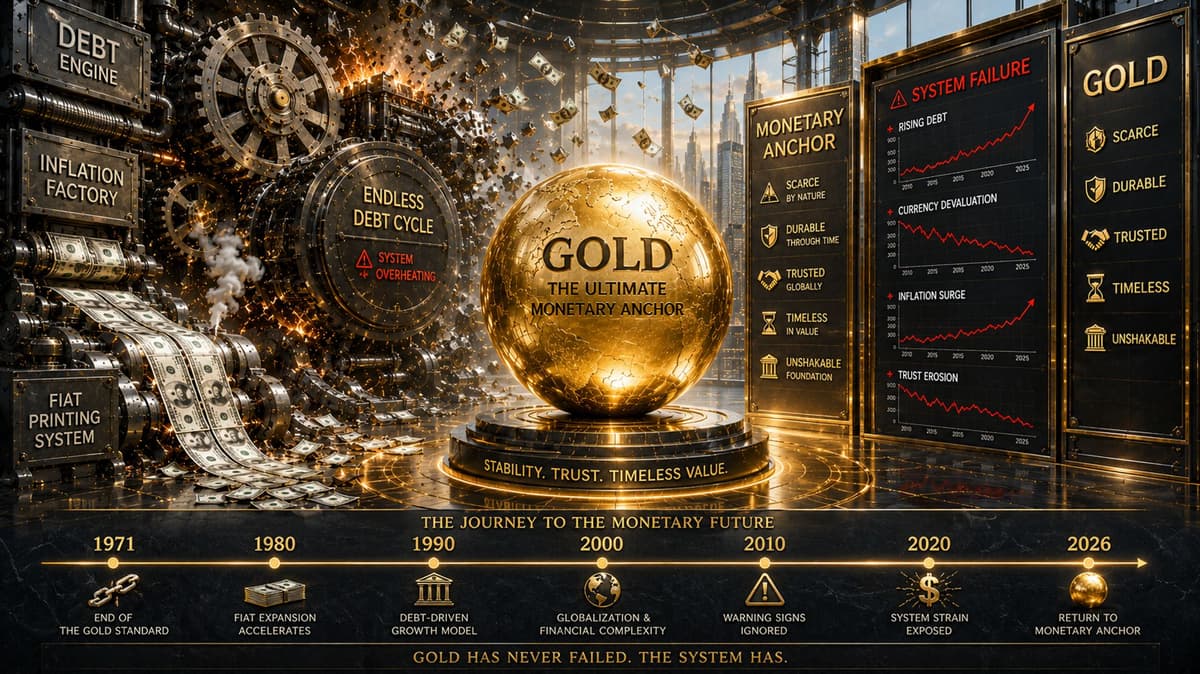
Incrementum raised its long-term gold price target because it believes gold is moving deeper into a global remonetization cycle. The report argues that gold is no longer behaving like just another commodity or a short-term safe-haven trade, but increasingly as a neutral reserve asset in a changing monetary order.
In the 20th anniversary edition of the report, titled Back to the Monetary Future, lead authors Ronald-Peter Stöferle and Mark Valek said gold’s historic rally is not a speculative anomaly. They tied the move to geopolitical fragmentation, de-dollarization, inflation volatility, and mounting distrust in fiat currencies.
“The future of money lies in its past,” the authors wrote. They said gold is becoming a more important monetary anchor as the post-1971 fiat system shows “unmistakable signs of fatigue.”
The fund managers said their earlier decade target has already been met ahead of schedule. “Our decade target of USD 4,800 by 2030, as outlined in our 2020 In Gold We Trust report, has already been a reality in 2026,” the authors wrote. “We are now turning our attention to the inflationary alternative scenario: USD 8,900 by the end of the decade.”
The report added that if current remonetization dynamics accelerate further, “significantly higher gold prices” could eventually emerge.
How strong has gold’s rally been so far?
Gold has already delivered an extraordinary run, according to the report. Incrementum said gold hit a record high of $5,595 an ounce in January 2026 after surging 64.4% in 2025, its strongest annual performance since 1979.
The authors said this strength confirms that the “Golden Decade” thesis remains on track. “The Golden Decade proclaimed in the In Gold We Trust report 2020 is in full swing,” the report said. “Since then, the price of gold has risen by 165% in U.S. dollars.”
The report also reflected on how both gold and the publication itself have expanded over two decades. The inaugural report was just 20 pages long, and gold traded near $670 an ounce at the time. This year’s edition runs to more than 400 pages, while gold prices have climbed by more than 600% over the same period.
For Indian investors, that long-term move is especially important because domestic gold prices do not depend only on the international bullion quote. A rising U.S. dollar gold price, when combined with a firm dollar against the rupee, can amplify gains in India’s physical gold, jewellery, and ETF markets.
What does the report say about the current phase of the gold bull market?
Incrementum said gold is now in the public participation phase of its secular bull market. The authors described this as “the longest and most dynamic stage of a bull market.”
That view suggests the rally may be broadening beyond early adopters and official-sector buyers. According to the report, long-term fundamentals remain strong enough to support a further expansion in investor demand.
The analysts argued that gold is still far from a euphoric peak. “Gold is anything but a crowded trade — on the contrary, it is a party where the first guests are just starting to arrive,” they said.
One reason is ownership. The report estimated that privately held gold accounts for just 2.7% of global financial assets, indicating that institutional and private investor participation remains relatively limited despite the powerful move in bullion prices.
For Indian investors, this matters because a broader global allocation shift toward gold could support not just spot prices, but also sentiment across sovereign gold bonds, gold ETFs, and physical bullion demand in India.
Why are central banks and governments so important to gold’s outlook?
Central banks remain a major pillar of the bullish gold price outlook. Incrementum pointed to official-sector buying as one of the clearest signs that the global monetary system is changing.
According to the report, central banks bought 863 tonnes of gold in 2025 after three consecutive years in which purchases exceeded 1,000 tonnes annually. That pace of buying signals continued demand for bullion as reserve diversification accelerates.
The report framed that shift in broader geopolitical terms. “The Pax Americana — that political, military, economic, and above all monetary order that has shaped the global system since 1945 — is drawing to a close,” the authors wrote.
Incrementum also highlighted growing debate around the valuation of U.S. gold reserves. The report noted that U.S. gold reserves are still officially priced at $42.22 an ounce on Treasury books, even as market prices hover near $4,600.
“A revaluation of the U.S. gold reserves is no longer a far-fetched speculation, but a political possibility that is quietly gaining plausibility,” the authors said.
For India, this central bank-driven trend is highly relevant. The Reserve Bank of India and other emerging-market central banks operate in a world where reserve diversification and reduced reliance on the U.S. dollar can strengthen the strategic case for holding gold.
How does rising global debt support higher gold prices?
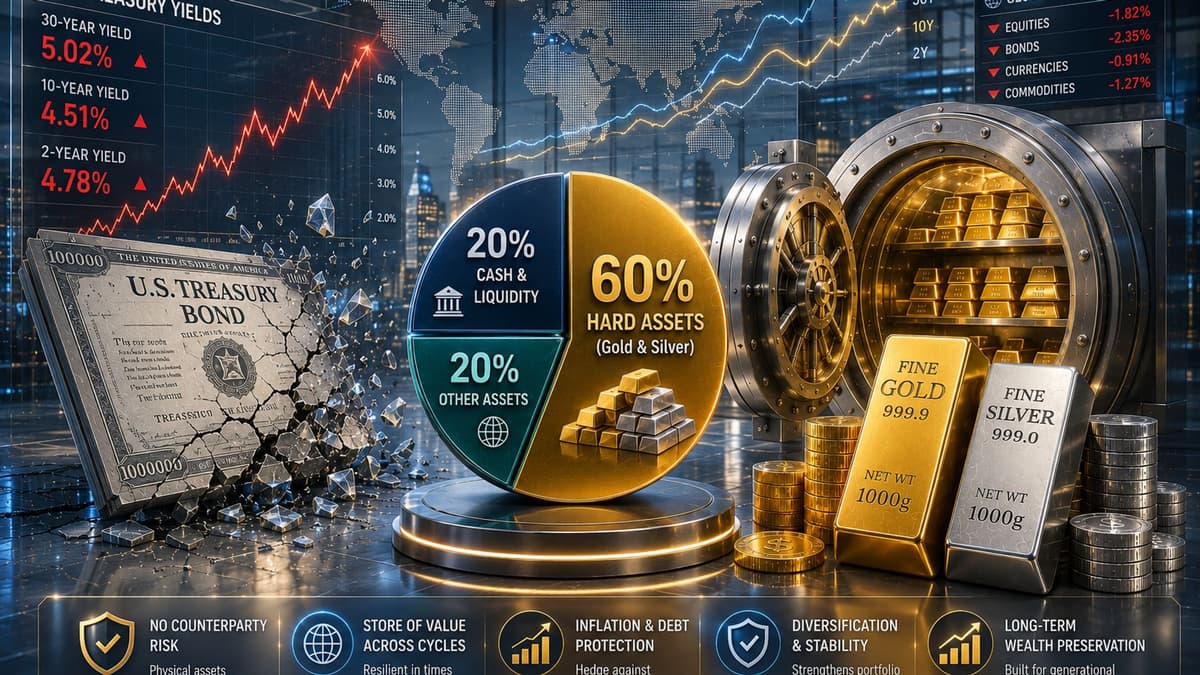
Rising sovereign debt is one of the strongest long-term drivers for gold, according to Incrementum. The report said investors are increasingly questioning whether government bonds can still serve as a reliable risk-free asset.
The debt numbers are substantial. Incrementum said global debt climbed to a record $348 trillion at the end of 2025, while U.S. debt surpassed $39 trillion earlier this year.
The authors argued that in this environment, the traditional role of government bonds is weakening because inflation-adjusted returns remain deeply negative. That pushes investors toward alternative stores of value such as gold.
The report expects the next phase of demand to broaden from central banks to investors. If sovereign debt concerns intensify and bond-market confidence deteriorates further, investor allocations to gold, bullion funds, and other precious metals products could rise sharply.
For Indian households, this backdrop reinforces gold’s long-standing role as both a store of value and a portfolio hedge. When global debt risks rise and real yields remain unattractive, Indian demand for physical gold and investment products often stays resilient.
What is Incrementum’s short-term gold price outlook?
Incrementum expects gold to remain volatile in the short term, even as the medium- and long-term outlook stays bullish. The report said gold should “take a breather in the short term, trend higher in the medium term, and be back at the center of the monetary system in the long term.”
Through early summer, the analysts expect volatile sideways movement in the range of USD 4,500–4,950. That implies consolidation in XAUUSD rather than a straight-line move higher after the sharp rally and subsequent turbulence seen earlier this year.
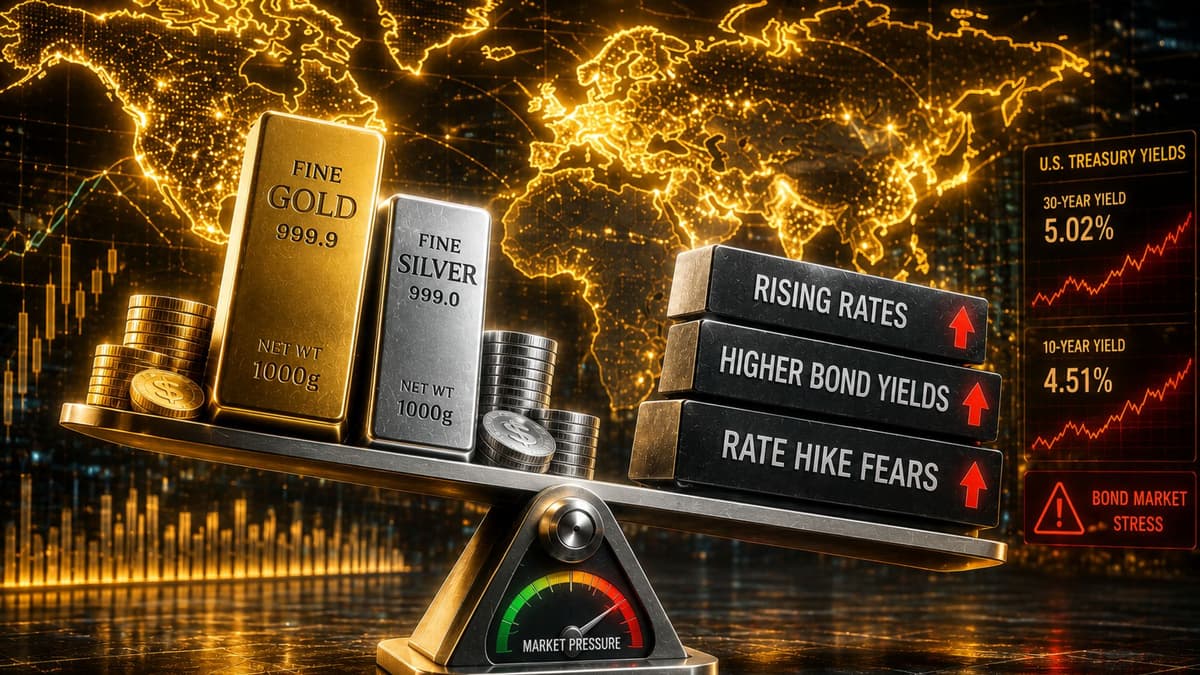
The report also warned that higher bond yields, liquidity stress, and broader market volatility could trigger additional short-term pullbacks. Following gold’s sharp correction earlier this year, these macro pressures remain key risks for bullion traders.
Still, the authors said they view any pullback as a buying opportunity. For Indian investors, that means short-term declines in international gold price could offer entry points, though rupee moves and local premiums will also shape the final price paid in the domestic market.
Gold’s next major test will likely come from the interaction between bond yields, liquidity conditions, central bank buying, and investor participation. If those remonetization forces continue to build, Incrementum’s upgraded $8,900 end-of-decade target will stay central to the global gold price debate.