# Gold Price Outlook: Why NDR Says Build a 3% to 8% Position Now
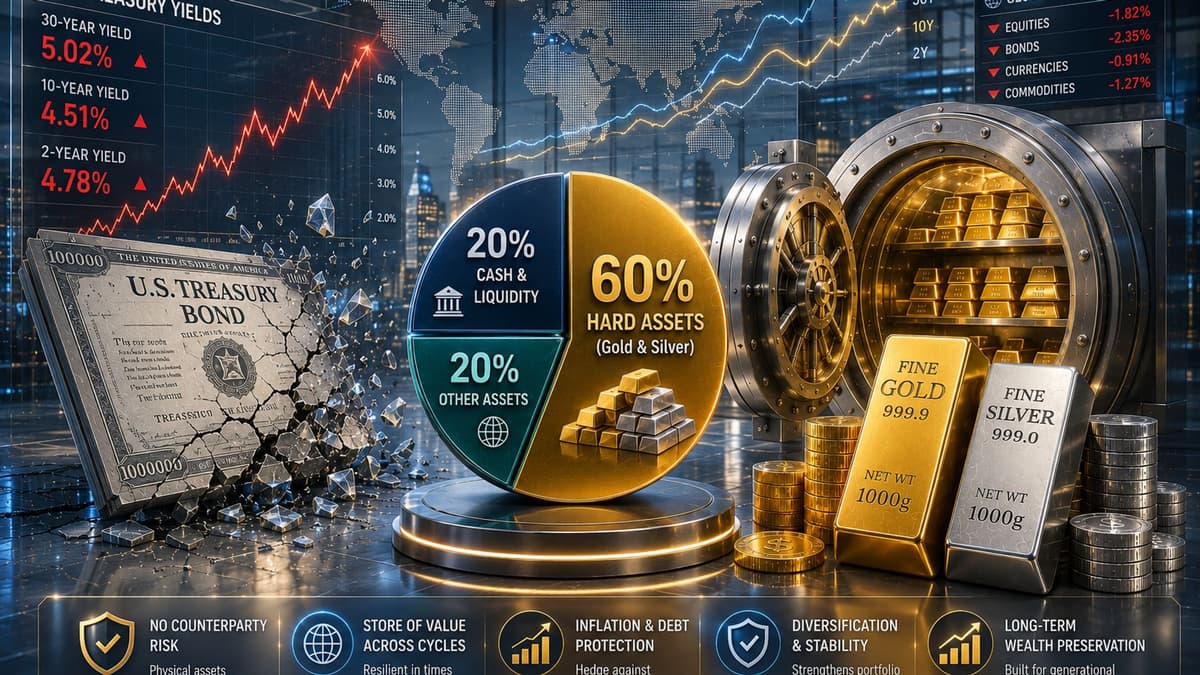
Gold looks attractive at current levels, and investors should not wait for a deeper pullback to start building exposure, according to John LaForge, Chief Alternative Strategist at Ned Davis Research (NDR). LaForge says the recent correction and consolidation in bullion offer a long-term entry point, with his framework supporting a 3% to 8% portfolio allocation to gold.
For Indian investors, that view matters beyond global headlines. A strategic allocation to gold can help diversify portfolios exposed to equities, debt, and rupee volatility, especially when global markets are recalibrating expectations on inflation, interest rates, and geopolitical risk.
Why does NDR say gold is attractive now?
Gold is attractive now because sentiment has turned extremely pessimistic and the U.S. dollar trend has weakened, according to NDR. John LaForge said those conditions have created a fresh buy signal for long-term investors.
LaForge said all three of NDR’s U.S. dollar trend models are on sell signals. He added that the firm’s main gold sentiment gauge has moved into its extreme pessimism zone, which he sees as another positive timing signal for building long-term positions in the yellow metal.
That combination matters because gold price trends often benefit when the U.S. dollar weakens. A softer dollar can improve the appeal of XAUUSD for global investors and support bullion demand across markets, including India.
What gold allocation does John LaForge recommend?
John LaForge recommends that investors hold between 3% and 8% of their portfolios in gold. He also said gold should be treated as a standalone allocation within commodities rather than being lumped into a broader commodity bucket.
LaForge’s advice is aimed especially at investors who are currently underweight gold or have no exposure at all. He said such investors should begin building a strategic position now instead of waiting for a pullback to time the market.
“For allocators currently underweight or with no exposure, our framework supports beginning to build a strategic position rather than waiting on a pullback to time entry — the multi-year case laid out above is structural, not tactical.”
His bullish stance comes even as gold prices remain below key initial resistance at $4,600 an ounce. In other words, NDR’s argument is not based on short-term momentum but on gold’s structural role in long-term portfolio construction.
For Indian investors, a 3% to 8% allocation can be expressed through physical gold, gold ETFs, sovereign gold bonds where available in the secondary market, or other regulated bullion-linked products. The exact route depends on liquidity, tax treatment, and investment horizon.
How does gold help diversify a portfolio?
Gold helps diversify a portfolio because it has historically shown low or negative correlation with equities and bonds, especially during periods of financial stress. LaForge said that feature makes gold useful when standard portfolio assumptions begin to fail.
He argued that gold’s role is often misunderstood. While some investors describe gold as an inflation hedge or a safe-haven asset, LaForge said its role can be more clearly defined in two ways: a diversification tool and a monetary asset.
What happens when traditional assets fall together?
Gold becomes especially valuable when stocks and bonds decline at the same time. LaForge pointed to 2022, when both asset classes fell together in what he described as a rare and painful combination, while gold held its ground.
“It has had a historically low or negative correlation with equities and bonds, especially during financial stress,” he said. “In 2022, when stocks and bonds both fell — a rare and painful combination — gold held its ground. The point is that a portfolio diversified across assets that all crash together isn't really diversified. Gold’s low correlation to stocks and bonds has consistently helped portfolios over time.”
That is a key message for Indian households and HNIs that remain heavily tilted toward domestic equities, real estate, and fixed income. Gold can act as a ballast when risk assets and bonds come under pressure together.
Why has gold struggled despite geopolitical tension?
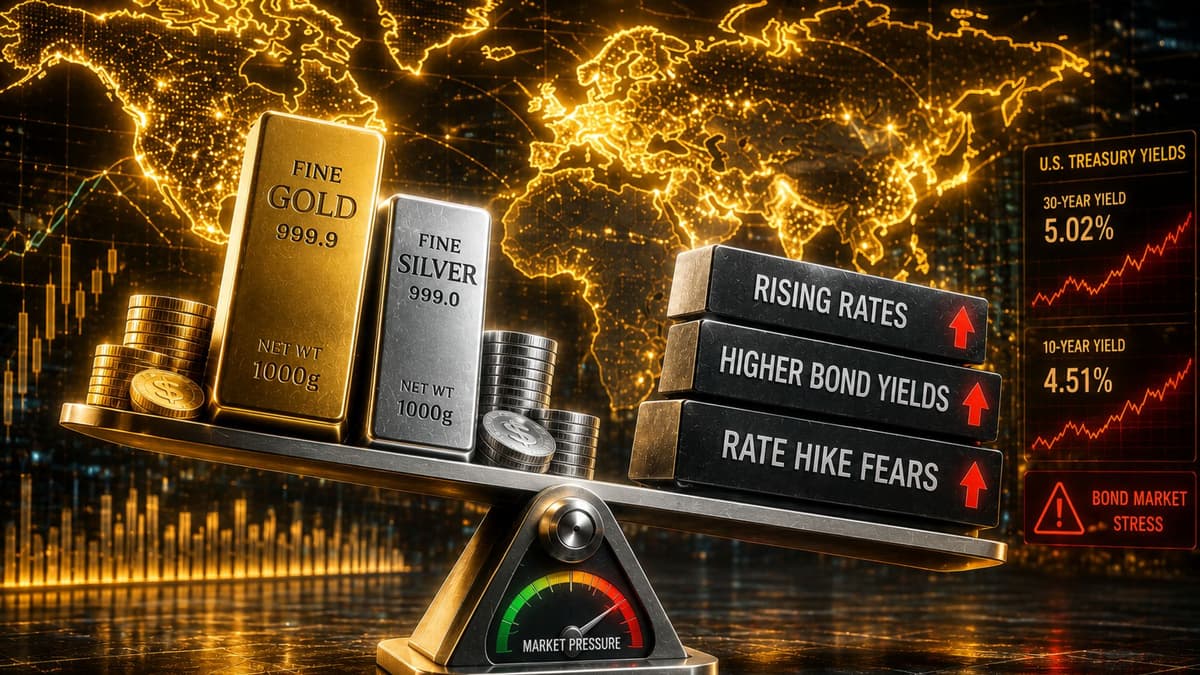
Gold has struggled because rising inflation fears and shifting monetary policy expectations have increased the opportunity cost of holding a non-yielding asset. That pressure has emerged even amid heightened geopolitical uncertainty linked to the ongoing war in Iran.
The conflict in the Middle East has created significant supply shocks in the energy market. Rising oil prices are feeding inflation concerns, and that is pushing central banks toward a more neutral policy stance.
Markets have also started pricing out rate cuts this year. If monetary policy stays tighter for longer, higher yields can reduce the relative appeal of non-yielding bullion in the short term.
Why doesn’t LaForge focus on gold as a pure inflation hedge?
LaForge said gold does not have a strong long-term track record as a simple inflation hedge. Instead, he believes gold performs best when confidence in the financial system itself starts to weaken.
That distinction is important. Gold may not always rise just because consumer prices are climbing, but it can perform well when investors begin questioning the stability of financial assets, policy credibility, or the broader credit system.
For Indian investors, that means gold should not be viewed only through the lens of CPI inflation or festive demand. Its strategic value often becomes clearer when global macro risks, currency shifts, and systemic stress intensify.
Why does NDR call gold a monetary asset?
NDR calls gold a monetary asset because gold carries no counterparty risk and sits outside the liabilities of any single government or financial institution. LaForge said that quality makes gold one of the most neutral stores of wealth in the global system.
He stressed that gold does not depend on a CEO, a legal system, or another government’s approval to retain value. In his view, that independence is one of the biggest reasons global central banks have been increasing their gold holdings in recent years.
“Gold is one of the few major assets with no counterparty risk. Gold owes nothing to anyone. It doesn't need a CEO, a court system, or approval from another government to work. It’s for these reasons that global central banks began piling into gold in recent years,” he said.
Why are central banks buying more gold?
Central banks are buying more gold because they want to reduce exposure to a world dominated by financial liabilities and credit-based assets. LaForge said the issue goes beyond the remote risk that U.S. Treasuries could be confiscated.
According to LaForge, many countries now recognise that they own too many liabilities in a global system saturated with them. He said adding gold while reducing some liability exposure amounts to prudent risk management.
“Central banks are not simply worried about the remote possibility that their U.S. Treasuries could be confiscated, though. Countries have woken up to the fact that they own too many liabilities in a world awash in them, based on a credit system backed only by the ‘full faith and credit of’... Adding some gold, while shedding some liabilities, is prudent risk management. Gold is one of the most direct, time-tested ways to hold wealth outside of any single nation's monetary policy.”
This trend carries particular significance for India. The Reserve Bank of India has also increased its focus on gold reserves over time, reflecting the broader central-bank preference for diversification away from purely paper-based reserve assets. For Indian investors, that reinforces gold’s role not just as jewellery or a tactical trade, but as a strategic reserve asset.
What does this mean for Indian gold investors now?
Indian investors may want to view the current gold price consolidation as a strategic accumulation phase rather than a reason to stay on the sidelines. NDR’s message is clear: if you are underweight gold, the time to start building exposure is now, not after a perfectly timed dip.
Gold remains below $4,600 per ounce resistance, sentiment is deeply pessimistic, and NDR’s dollar models are flashing weakness. At the same time, geopolitical stress, inflation risks, changing central-bank policy expectations, and reserve diversification trends continue to support the long-term case for bullion.
For investors in India, the next watchpoints are global interest-rate expectations, U.S. dollar direction, oil price moves, and any resulting impact on the rupee and domestic gold rates. If the dollar weakens further or financial-system concerns deepen, gold’s role as a portfolio diversifier and monetary asset could come back into sharper focus.