# Gold Price Outlook: Why Inflation Still Supports a Bullish View
Gold remains under short-term pressure from sticky U.S. inflation and rising rate-hike expectations, but its long-term outlook is still constructive, according to Fawad Razaqzada of FOREX.com. Spot gold last traded at $4,687 per troy ounce, down 0.5% on the day, while holding just below the important $4,700 an ounce technical level.
For Indian investors, this matters because global gold price moves in XAUUSD often feed directly into domestic bullion rates, especially when combined with rupee-dollar moves. If U.S. inflation keeps real yields under pressure over time, gold could remain an important safe-haven and inflation hedge despite near-term volatility.
Why Is Gold Facing Pressure From Inflation Data Right Now?
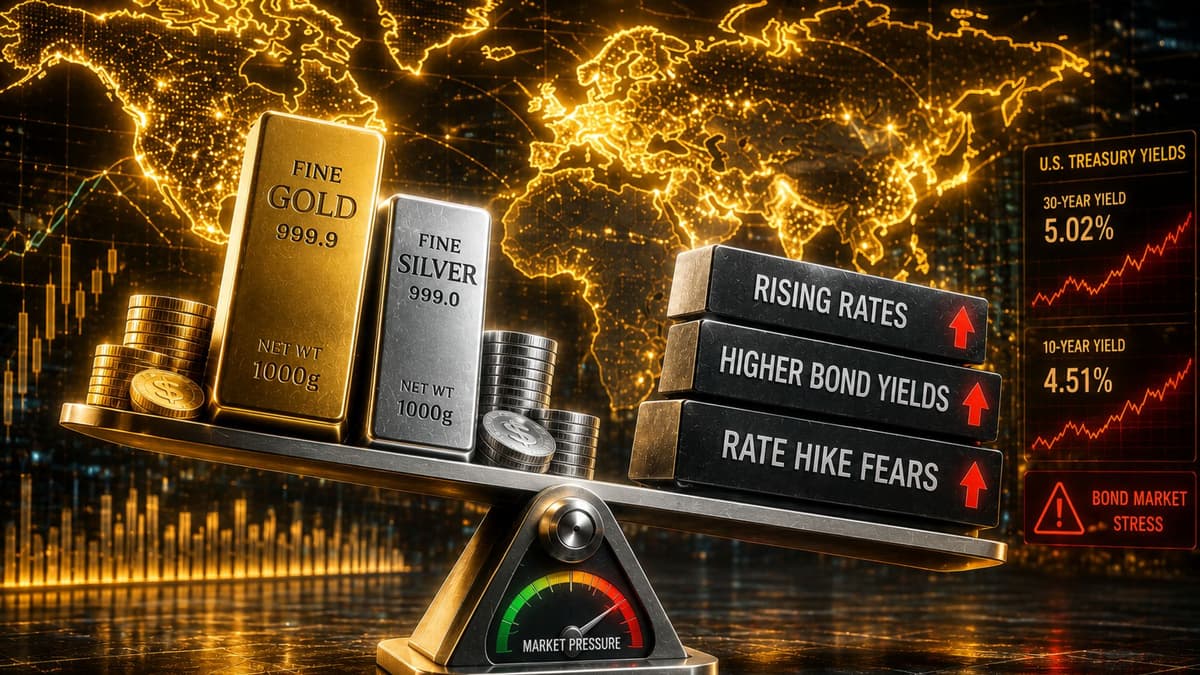
Gold is facing pressure because stronger-than-expected U.S. inflation data has forced markets to scale back expectations for Federal Reserve rate cuts and even price in a chance of fresh rate hikes. Higher interest rate expectations raise the opportunity cost of holding non-yielding bullion.
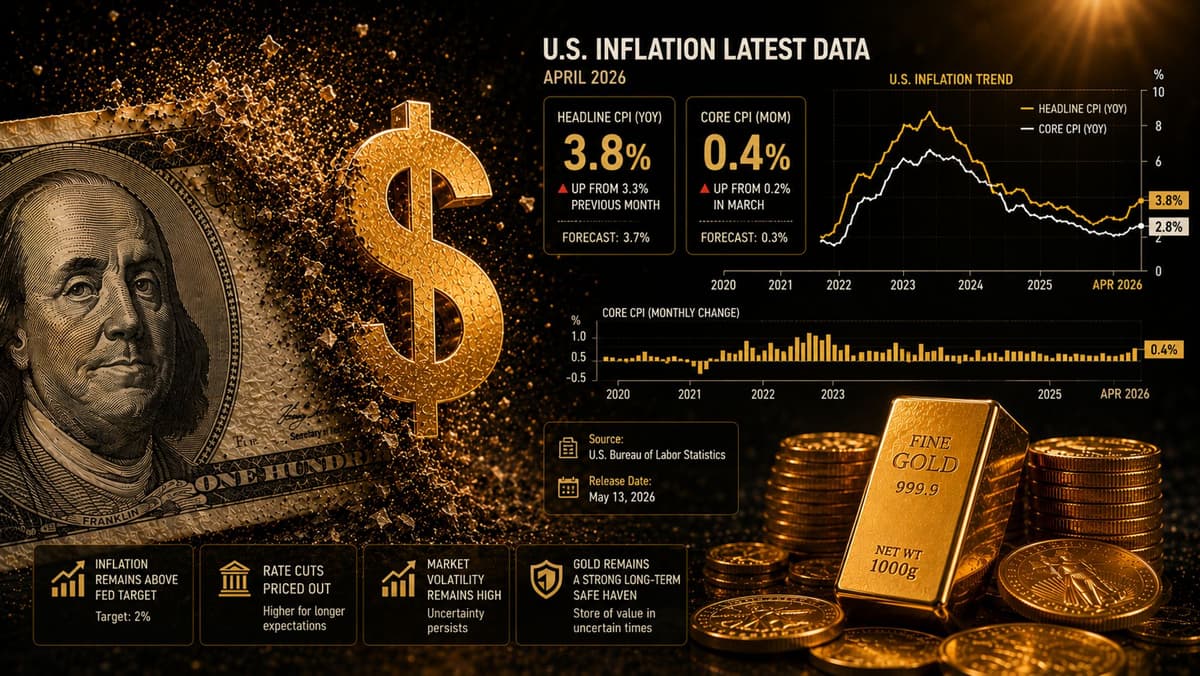
In the last two days, investors absorbed two major U.S. inflation reports. On Tuesday, the U.S. Labor Department said headline consumer prices rose 3.8% over the previous 12 months, while core inflation rose 2.8%, above expectations. Both readings showed inflation moving further away from the Federal Reserve’s 2% target.
On Wednesday, the Labor Department reported that the Producer Price Index (PPI) surged in April. Wholesale inflation increased 6.0% over the last 12 months, marking the largest annual advance since December 2022, when prices rose 6.4%.
At the same time, core producer prices rose 4.4%, their biggest 12-month increase since February 2023, when they jumped 4.5%. That combination deepened concerns that inflation is becoming more entrenched across the U.S. economy.
How Have Markets Reacted to These Inflation Reports?
Markets now see more than a 30% chance that the Federal Reserve will have to raise interest rates by the end of the year. That shift has created a tougher near-term backdrop for gold, silver, and other precious metals.
When traders price out rate cuts and start considering hikes, U.S. yields usually rise. That tends to weigh on XAUUSD because investors can earn more from yield-bearing assets relative to bullion.
What Did Fawad Razaqzada Say About Gold’s Long-Term Outlook?
Fawad Razaqzada said gold looks negative in the short term but positive in the long term. He argued that inflation is creating economic risks that could eventually revive demand for gold as an inflation hedge.
Razaqzada, a Market Analyst at FOREX.com, told Kitco News that gold may be finding support because persistent inflation could hurt broader economic activity. According to Fawad Razaqzada, “High inflation and rising yields are not good news for risk assets. Gold has been treated as a risk asset over the past several years, with a strong positive correlation with the S&P 500. On the other hand, there is now even more reason for investors to seek inflation hedge. So short-term I think it is negative for gold, long-term positive.”
That view matters because it captures gold’s current tension. In the near term, rising yields hurt bullion. Over a longer horizon, stubborn inflation can strengthen gold’s role as a store of value.
Could the U.S. Economy Be Moving Toward Stagflation?
Yes, that is the growing concern raised by Fawad Razaqzada. He said the latest inflation data suggests the U.S. economy may be drifting toward a stagflationary environment, where growth slows while inflation stays high.
In a note published on Wednesday, Razaqzada wrote that the hotter-than-expected CPI report was followed by an even larger shock in producer prices. He said, “Just one day after a hotter-than-expected CPI report rattled investors momentarily, the latest Producer Price Index data delivered an even bigger shock. Wholesale inflation exploded higher in April, reinforcing fears that the world’s largest economy may be drifting towards a stagflationary environment — where growth slows while inflation remains high.”
A stagflation backdrop is important for the gold price because it usually undermines confidence in traditional risk assets while increasing demand for defensive assets. For Indian investors, such a setup can support global bullion prices even if short-term corrections remain sharp.
What Is Driving These Stagflation Fears?
Razaqzada said energy is still the dominant catalyst, linked largely to the earlier oil spike and the ongoing war in Iran. But he also warned that inflation is no longer just about oil.
He said higher input costs are now spreading into the wider economy, especially services. According to Razaqzada, “Yes, energy remains the dominant catalyst, driven largely by the earlier oil spike, but this is no longer just an oil story. Services inflation is now accelerating as higher input costs gradually seep into broader areas of the economy. That ‘pipeline effect’ is exactly what investors feared would happen if elevated energy prices persisted long enough.”
That pipeline effect matters for India as well. Higher global energy costs can raise imported inflation risks, affect the rupee, and influence local gold demand as households often turn to bullion when inflation stays elevated.
Why Could Stagflation Eventually Support Gold Prices?
Stagflation could support gold because it tends to reduce real yields and increase demand for inflation hedges. Analysts said this kind of environment is positive for gold over time.
The logic is straightforward. If growth weakens while inflation remains high, the Federal Reserve may struggle to keep policy tight for too long. Analysts said such a backdrop could force the Federal Reserve to maintain low interest rates even as inflation pressures rise.
That would push real yields lower, which reduces the opportunity cost of holding a non-yielding asset like gold. Lower real yields have historically supported the bullion market and improved sentiment toward precious metals.
For Indian investors, this is especially relevant because domestic gold prices reflect both the international troy ounce price and currency effects. If global gold stays resilient and the rupee weakens against the U.S. dollar, Indian bullion prices could remain firm even when international prices pause.
What Technical Level Are Traders Watching in Gold Right Now?
Traders are watching $4,700 per ounce as a key short-term technical level. Gold has stayed in neutral territory despite the recent inflation shock, which suggests some underlying support remains in the market.
The article notes that gold prices were trading just below $4,700 an ounce, a level described as important in the short term. Spot gold last traded at $4,687 an ounce, down 0.5% on the day.
Holding near that zone matters because it shows gold has not broken down aggressively even as inflation data has turned more hawkish for rates. That resilience may encourage investors who still see bullion as a hedge against macro and geopolitical risk.
What Should Gold Investors Watch Next?
Investors should watch Thursday’s retail sales numbers next because they could clarify whether elevated prices are starting to weaken U.S. consumer demand. That data may become an important part of the market’s next move in gold.
Analysts are focused on whether consumer activity remains healthy despite elevated gasoline prices and embedded inflation. If retail sales weaken, markets may become more concerned about slowing growth, which could strengthen the stagflation narrative and support gold.
For Indian investors, the next key watchpoints are clear: U.S. retail sales, Federal Reserve rate expectations, oil prices, the war in Iran, and USD/INR moves. If inflation stays sticky while growth slows, gold could remain volatile in the short run but retain its appeal as a long-term portfolio hedge.