# Gold Price Outlook: Why Gold Remains a Powerful Portfolio Anchor
Gold remains an important anchor in a diversified portfolio, even after recent volatility and its failure to attract a strong safe-haven bid during heightened geopolitical risk. According to Indrani De, Head of Global Investment Research at FTSE Russell, the recent gold price move reflects a clash between supportive long-term fundamentals and short-term macro headwinds.
For Indian investors, that distinction matters. Global gold prices, inflation fears, interest-rate expectations and commodity trends all influence domestic bullion prices in INR, especially when geopolitical shocks also affect crude oil and the rupee.
Why has gold price struggled despite geopolitical risk?
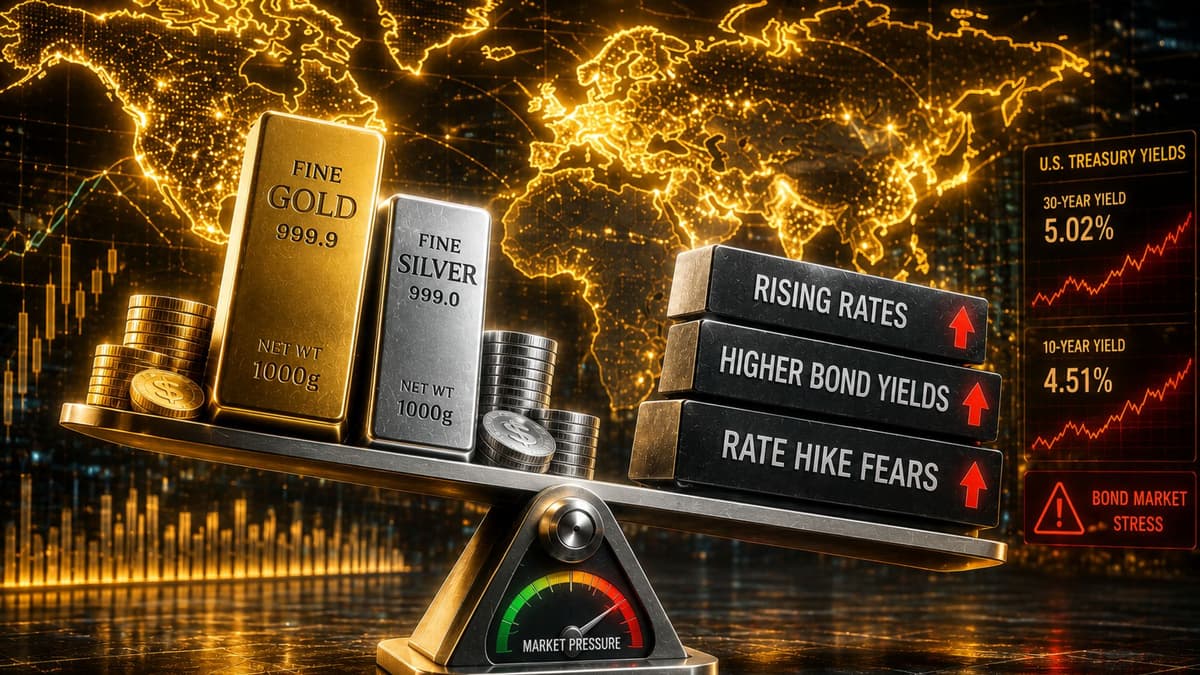
Gold price has struggled in the short term because its safe-haven appeal is colliding with higher interest-rate expectations and rising opportunity costs. Indrani De said gold still benefits from geopolitical uncertainty, but investors must separate long-term drivers from short-term pressure.
In her interview with Kitco News, De said the Middle East crisis has disrupted oil supply chains, pushed energy prices higher and revived inflation fears. Those inflation concerns are increasing expectations that central banks may have to raise interest rates.
That matters because gold is a non-yielding asset. When rates rise, the cost of holding bullion increases relative to income-generating assets.
“Gold doesn't return anything by way of a regular income stream… so what is the cost of holding a non-yielding asset? That is where things have dramatically shifted,” De said.
For Indian investors, this dynamic can cap upside in XAUUSD even when global tensions increase. If U.S. rates stay higher for longer, international gold prices may face resistance, although INR weakness can still cushion domestic prices.
What is driving gold’s short-term volatility now?
Gold’s short-term volatility is being driven by its growing financial-asset behaviour, profit-taking and broader liquidity conditions. De said gold’s rally earlier this year to a record high of $5,600 changed how investors are trading the precious metal.
After such a strong run, gold has seen sharper profit-taking cycles. That means some investors now treat gold more like a financial asset than a pure defensive store of value.
How did the rally to $5,600 change market behaviour?
The move to an all-time high of $5,600 increased speculative and tactical trading in gold. As a result, bullion has become more sensitive to shifts in market liquidity, especially during periods when investors prefer cash.
De said this change does not mean gold has lost its long-term role. It means short-term price action can look weaker or noisier than many investors expect during geopolitical stress.
Is gold underperforming on its own?
No, gold is not moving in isolation. De noted that gold’s decline has been broadly in line with global equities, suggesting that the precious metal is part of a wider repricing across multiple asset classes.
That is an important signal for portfolio construction. It suggests recent weakness in gold price is not necessarily a structural break in demand for safe-haven assets, but part of a broader global adjustment in risk and liquidity.
Does gold still work as a diversification tool?
Yes, gold still works as a diversification tool, and De said it can reassert itself as a key safe-haven asset. Her main argument is that the recent shift is tactical, not structural.
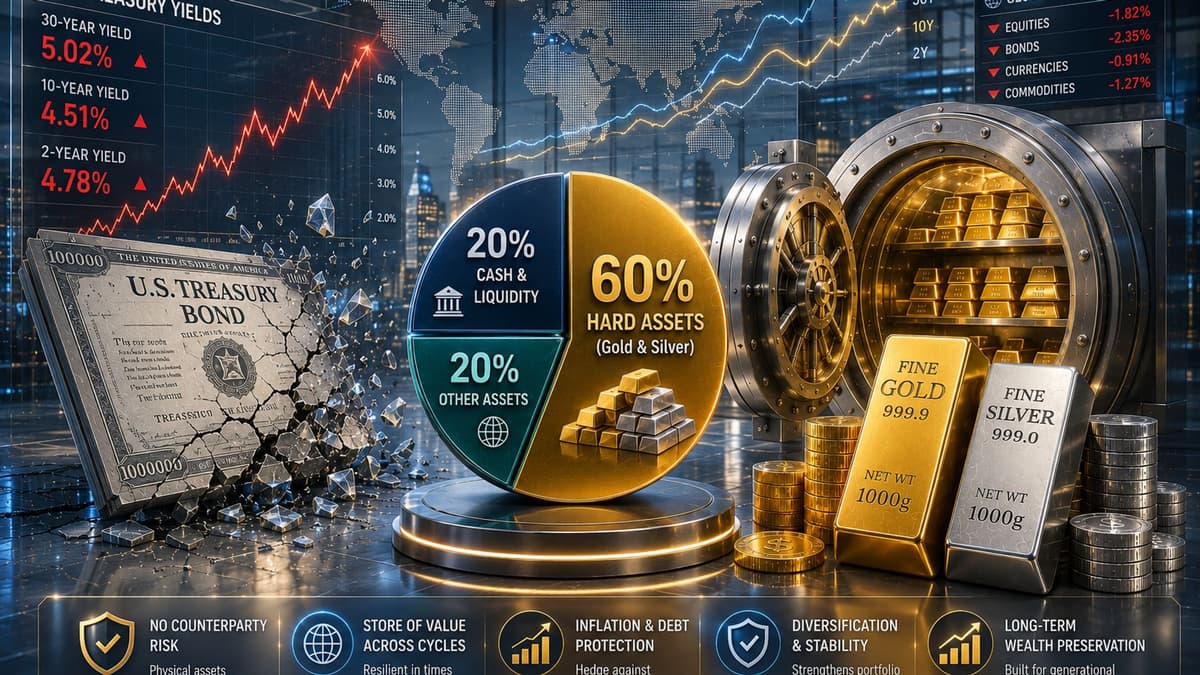
Even with near-term pressure, gold still plays a defensive role in portfolios. In uncertain macro conditions, diversification becomes more valuable, not less.
Why does diversification matter more now?
Diversification matters more now because markets are increasingly signalling a stagflationary setup. That means slower economic growth could coexist with persistent inflation pressure.
In that environment, real assets such as gold and other commodities usually become more relevant. De said the payoff to diversification rises when economic uncertainty increases.
“Commodity markets are sending a clear signal of stagflationary risks,” she said. “The moment you have heightened economic uncertainty… the payoffs to diversification increase.”
For Indian households and investors, this is especially relevant because gold has traditionally played both a wealth-preservation role and a hedge against inflation, currency volatility and macro shocks.
Is the global economy moving toward stagflation, and why does that matter for gold?
The global economy is showing signs consistent with possible stagflation, although De said it is too early to say stagflation is certain. Still, current market signals suggest the environment is becoming ripe for it.
De pointed to two commodity signals. Rising oil prices indicate inflationary pressure, while weakening copper points to concern about economic growth.
What are oil and copper signalling?
Oil is signalling inflation risk because supply-chain disruptions in the oil market are lifting energy prices. Copper is signalling growth worries because weaker copper prices often reflect softer expectations for industrial demand and economic activity.
Together, these moves suggest a stagflationary mix. That backdrop tends to support demand for portfolio hedges and real assets, including gold.
Why should Indian investors care about stagflation?
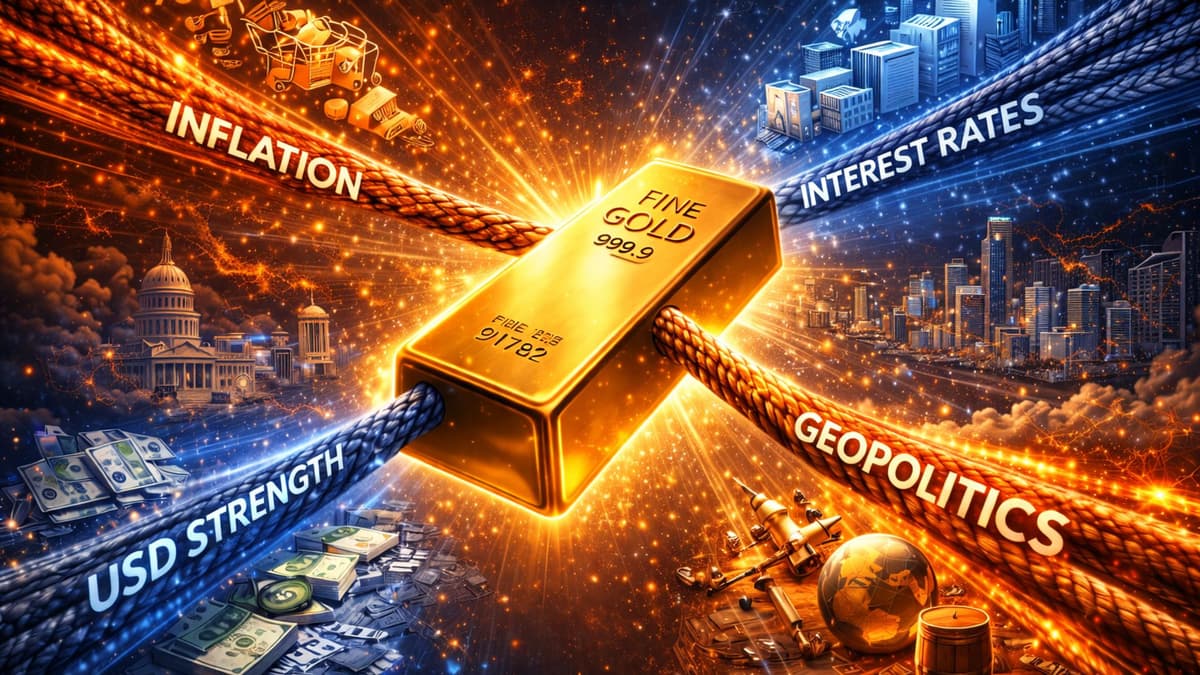
Indian investors should care because stagflation can affect gold through several channels at once: higher global inflation expectations, stronger commodity prices, pressure on interest rates and possible rupee volatility. If crude oil stays elevated, India’s imported inflation risks rise, which can feed into domestic bullion demand.
That means gold in INR may remain strategically relevant even if international gold price action in troy ounce terms appears uneven.
Is gold still the best commodity hedge for investors?
Gold remains a defensive anchor, but De said it is no longer the only commodity exposure investors should watch. In the current macro environment, other commodities may offer more direct sensitivity to inflation and growth trends.
She said energy and industrial metals can respond more directly to these economic forces. That does not weaken the case for gold; it broadens the case for commodities overall.
Which commodities does Indrani De favour beyond gold?
De highlighted industrial and transition metals as areas with sustained structural demand. She said the global push toward artificial intelligence and the green energy transition is supporting specific resources tied to those themes.
“Any commodities that have a role to play in the AI transition or the green transition will probably continue to have tailwinds,” she said.
That view matters for Indian investors who want broader precious metals and commodity exposure. Gold may remain the core defensive holding, while industrial and transition metals offer growth-linked upside tied to AI infrastructure and clean-energy investment.
What does this gold price outlook mean for Indian investors now?
The key message for Indian investors is that gold has not lost its strategic role, even if short-term price moves have disappointed some bulls. De’s view suggests investors should look beyond daily volatility in XAUUSD and focus on gold’s portfolio function during periods of inflation risk, slowing growth and wider economic uncertainty.
She did not recommend specific allocations. But her conclusion was clear: in a world of heightened uncertainty and widening economic outcomes, the case for gold and commodities has strengthened.
For India, the next big watchpoints are global interest-rate expectations, oil prices, copper trends, geopolitical developments in the Middle East and the rupee’s direction against the U.S. dollar. If stagflation signals strengthen further, gold could once again assert itself as a leading safe-haven asset in both global markets and domestic bullion portfolios.