Gold prices may have suffered their worst weekly drop in six years, but the longer-term story has not broken. The bigger shift may be happening away from short-term price swings and toward how gold is owned, traded, and integrated into modern finance.
For Indian investors, that matters because gold is not only a safe-haven asset and cultural store of value, but also a fast-evolving financial product. As global markets explore tokenized bullion and shared trading infrastructure, the future of gold could become more digital, more accessible, and more closely connected to everyday investing.
What happened to gold prices, and why does it matter now?
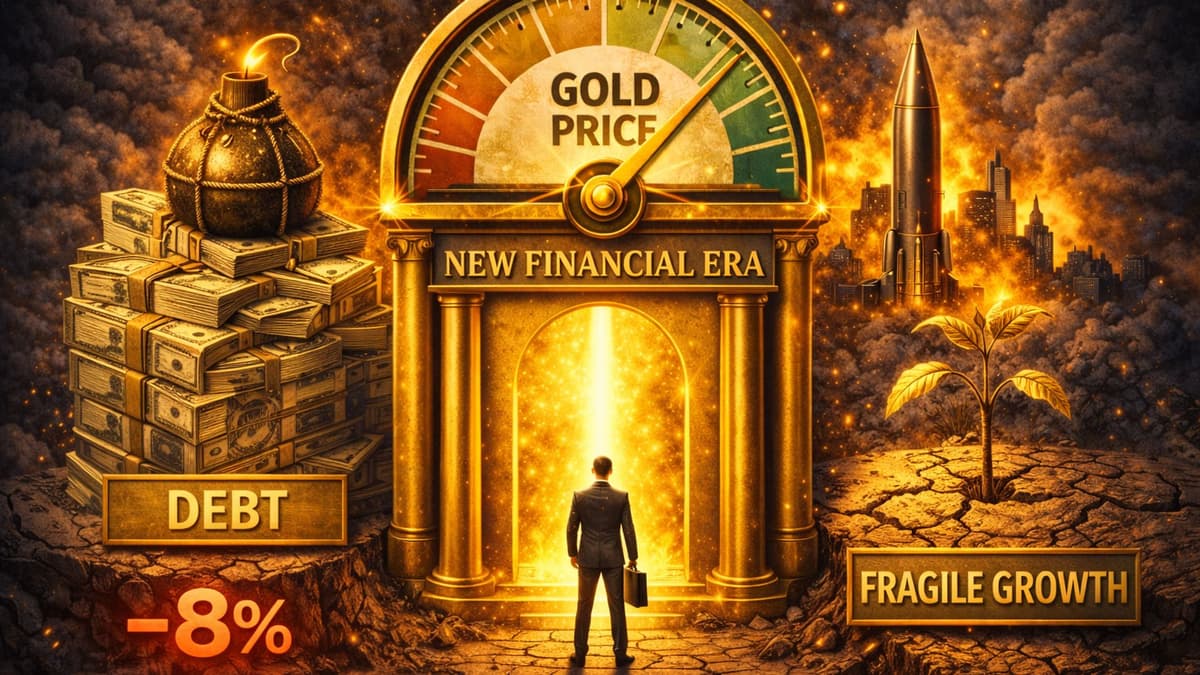
Gold prices posted their worst weekly drop in six years, falling 8%, and that kind of selloff usually damages investor sentiment. Sharp pullbacks often force speculative traders out of positions and test conviction across the bullion market.
That said, one week of heavy selling does not automatically change gold’s long-term outlook. Short-term volatility in XAUUSD can be dramatic, but long-term trends in precious metals usually depend on macroeconomic forces, investor positioning, and structural demand.
For Indian investors, a global gold price decline can offer relief if local prices in rupees soften. But the final impact on domestic bullion prices also depends on the INR-USD exchange rate, import costs, and local demand for jewellery, bars, and coins.
What has actually changed in the gold market?
The core answer is that the macro backdrop supporting gold has not materially changed. The same forces that helped push gold to record highs earlier this year still remain in place.
Government debt continues to expand at what the article describes as an unsustainable pace. Global growth remains uneven and fragile. Geopolitical tensions also show no signs of easing.
Those drivers still support gold’s long-term bull case. Investors typically buy gold as a safe-haven asset when they worry about debt risks, weak growth, financial instability, or geopolitical stress.
So while the recent 8% weekly drop looks severe, the article argues that the broader investment case for gold remains intact. The key question is not only where the gold price moves next, but what form the gold market itself takes in the coming years.
Why is tokenized gold becoming such a big theme?
Tokenized gold is gaining attention because it gives investors exposure to physical bullion in a more flexible and accessible digital format. These products work in a similar way to stablecoins backed by currencies, except the underlying asset is gold.
The growth has been striking. According to the source article, tokenized gold market capitalization jumped 177% in 2025, rising from roughly $1.6 billion to $4.4 billion.
That is still a small share of the overall gold market. But the article stresses that the trajectory matters more than the current size.
How does tokenized gold work?
Tokenized gold lets investors own digital units backed by physical bullion. Instead of buying and storing a full bar or a full troy ounce, investors can buy smaller fractions while still keeping exposure to gold.
This matters because physical gold ownership has traditionally required more upfront capital. At current prices, not every investor can afford to purchase a full ounce.
By contrast, tokenization can allow smaller allocations such as $50 or $100 at a time. That lowers the entry barrier and makes gold easier to access for younger investors, digital-first savers, and portfolio builders.
Why could this matter for Indian investors?
India is one of the world’s largest gold-consuming markets, but many investors still face a trade-off between physical ownership, liquidity, storage, and affordability. Tokenized bullion could eventually appeal to Indians who want gold exposure in smaller amounts without buying a full unit of physical metal.
That does not replace traditional demand for jewellery or coins, especially during weddings and festivals. But it could broaden participation by making gold investing more flexible for urban savers, first-time investors, and those already comfortable with digital financial platforms.
What is the World Gold Council trying to do?
The World Gold Council is trying to build shared infrastructure that connects the fragmented gold market and helps integrate physical bullion into a digital ecosystem. This initiative may not have drawn as much attention as the gold price selloff, but the long-term implications could be much larger.
The global gold market remains fragmented across physical trading, vaulting, settlement systems, and digital access points. A more unified framework could make gold ownership, transfer, and trading smoother across platforms and investor groups.
The article frames this move as recognition that the future of gold will not look like its past. Physical bullion is not disappearing, but the systems around ownership and trading are evolving.
Why does infrastructure matter as much as price?
Infrastructure matters because it shapes adoption. If investors can access gold more easily, trade it more efficiently, and verify backing more clearly, participation in the market can expand.
That is especially important in a world increasingly driven by digital finance. Gold has long been valued for stability and scarcity, but modern investors also want speed, portability, low-ticket access, and integration with financial apps and platforms.
For Indian investors, that future could complement existing channels such as jewellery, coins, bars, ETFs, and sovereign gold bonds. If digital bullion infrastructure improves globally, it may eventually influence how gold products are packaged and distributed in India as well.
Does physical gold still matter if digital gold grows?
Yes, physical gold still remains central because tokenized gold derives its credibility from real bullion backing. The article makes clear that physical bullion is not going away.
Instead, the ownership model is changing. Gold may increasingly sit inside a system where physical bars support digital claims that are easier to trade, divide, and integrate into broader portfolios.
That could be a meaningful shift for the precious metals market. Gold would remain a tangible store of value, but its usability in modern finance could improve significantly.
Is digital gold replacing traditional safe-haven demand?
No, digital gold is not replacing gold’s safe-haven role; it may strengthen it by making access easier. Investors still turn to gold when they want protection from macro uncertainty, debt expansion, fragile growth, and geopolitical risk.
The difference is that future demand may come through more technologically enabled channels. That would make gold not just a defensive asset, but a more adaptable one.
What does the future hold for gold after this 8% weekly drop?
The article’s core message is that gold’s underlying narrative remains intact and may even be getting stronger. The recent decline may test patience, but it does not appear to have erased the long-term reasons investors own gold.
Gold still benefits from heavy government debt, uneven global growth, and persistent geopolitical tensions. On top of that, the market is now developing new digital pathways that could widen access and deepen adoption.
That combination matters. Gold is not only holding its place as a safe-haven asset; it is adapting to a new financial era.
For Indian investors, the key watchpoint is no longer just whether XAUUSD rebounds after an 8% weekly fall. It is also whether tokenized bullion, shared market infrastructure, and more accessible digital ownership models reshape how Indians buy, hold, and value gold in the years ahead.