Why is the gold price outlook strengthening after the IEA oil shock warning?
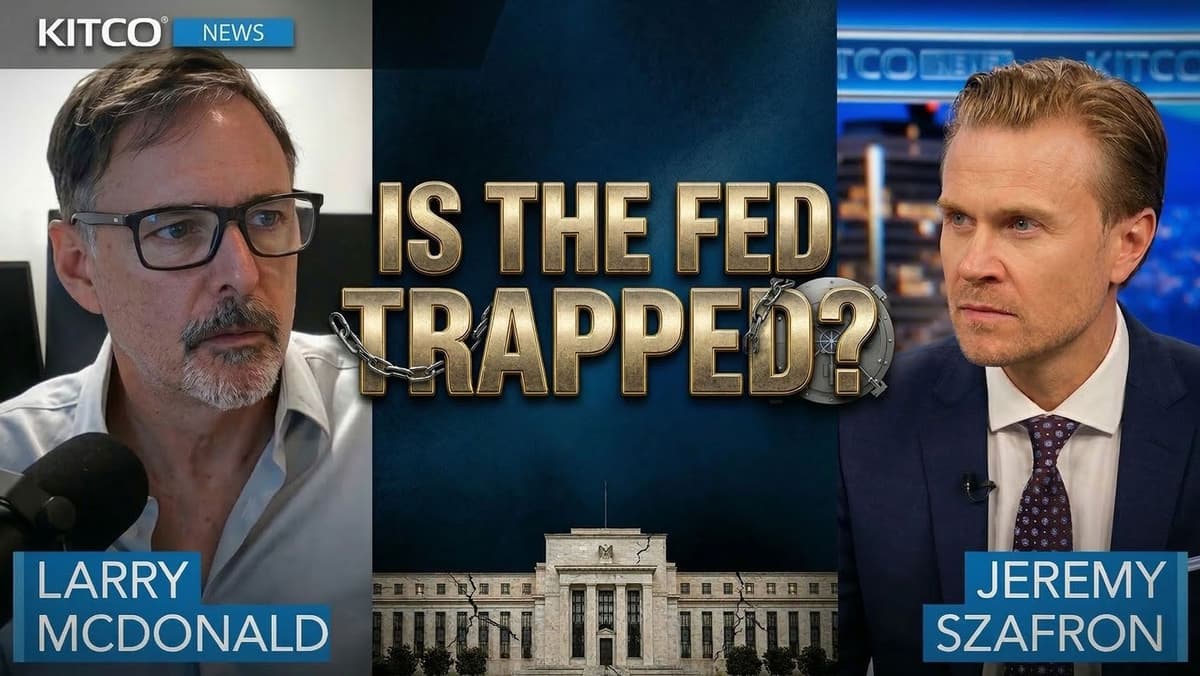
Gold price sentiment is strengthening because the International Energy Agency, or IEA, called the current energy crisis the largest supply disruption in oil market history, while Larry McDonald said the Federal Reserve faces a "nightmare setup" of rising energy costs and a weakening U.S. labor market. That combination typically supports bullion as a safe-haven asset when investors lose confidence in paper assets and credit markets.The source of the shift is not just inflation. According to Larry McDonald, founder of The Bear Traps Report, the shock is creating a broader "monetary fracture" that is pushing sophisticated investors out of paper assets and into physical commodities, including gold and other precious metals.
The timing matters. As the Federal Reserve began its two-day policy meeting on March 17, markets were already balancing sticky inflation risks against signs of labor-market softness in the United States.
For Indian investors, this matters because global energy shocks can lift inflation expectations, pressure the rupee, and raise local bullion prices even if XAUUSD moves more gradually. A higher crude bill also tends to worsen India's import burden, which can feed into domestic inflation and strengthen demand for gold as a store of value.
What did the IEA say about the oil supply disruption?
The IEA said global oil output fell by about 8 million barrels per day in March compared with February, confirming an extraordinary supply shock. That makes the current disruption the biggest supply break in the history of the oil market, according to the source article.The United States has responded by leading a coordinated release of 400 million barrels from global reserves. The article describes this as the largest such intervention in history.
Why are refined fuels still a problem despite the reserve release?
Refined-product markets remain tight because the disruption is not only about crude supply. McDonald said targeted attacks on infrastructure in the Middle East have damaged trust across the supply chain, and he expects that trust to remain impaired for at least 60 to 90 days.That loss of confidence affects logistics, fuel delivery, and the availability of key products used across the economy. In other words, even a record reserve release may not fully solve the bottlenecks that matter most for end users.
How is the logistics squeeze spreading into the real economy?
The logistics shock is already hitting agriculture and household costs. Urea fertilizer prices have jumped 28% in two weeks, while diesel has risen above $5 a gallon just as U.S. farmers enter planting season.McDonald warned that this will move inflation from the gas station to the grocery bill. If food inflation hardens on top of energy inflation, the Federal Reserve may be forced into a more hawkish stance than markets currently expect.
For India, that is important because imported energy inflation can spill into transport, food, and manufacturing costs. If the rupee weakens while crude stays elevated, domestic gold buyers may see support in both international gold prices and INR-denominated bullion rates.
How does the Federal Reserve's 'nightmare setup' affect gold?
The Federal Reserve faces a difficult policy mix because soaring energy costs can keep inflation high even as the labor market softens. That backdrop is usually constructive for gold price expectations because it raises the risk of policy error, financial repression, and weaker real returns on paper assets.McDonald said the market is confronting a "nightmare setup" in which rising oil and fuel costs collide with a cooling jobs backdrop. He added that equity-market stability is masking a deeper systemic "truth bleed" in credit and logistics.
Could the Fed turn more hawkish instead of cutting rates?
Yes, that is one of McDonald's key warnings. He said sticky inflation could force a hawkish reset that shifts expectations from three rate cuts to zero, or even to additional rate hikes later this year.That matters for gold in two ways. Higher rates can pressure non-yielding assets in the short term, but if investors believe the Federal Reserve is trapped between inflation and slowing growth, gold often regains support as a safe-haven and as protection against policy instability.
Why does this matter for Indian gold investors?
Indian investors should watch both the U.S. dollar and U.S. rate expectations. A hawkish Federal Reserve can strengthen the dollar and create volatility in XAUUSD, but if energy-driven inflation persists and confidence in credit markets deteriorates, gold can still find strong support globally and in rupee terms.That is especially relevant in India, where retail and investment demand often rises when inflation risks climb and financial-market uncertainty increases.
What is happening in the private credit market, and why does it matter for bullion?
A major stress point is building in the $1.7 trillion private credit market, and that is one reason gold is being viewed as a systemic hedge rather than just an inflation hedge. According to the source article, Morgan Stanley said on March 17 that default rates in direct lending could rise to 8%.The bank linked that risk partly to artificial intelligence disruption in the software industry. The article says software accounts for roughly 26% of many business development company portfolios.
Why did Larry McDonald call it a 'private credit inferno'?
McDonald said, "Now you have a real private credit inferno that's picking up steam." He pointed to the recent 70% collapse of subprime lender Goeasy as a sign of a broader "contagion trade" that could eventually hit insurance companies.He described insurers as the "ultimate bag holders of credit risk." That is a critical warning because insurers and private debt funds sit at the center of modern credit transmission.
Are there already signs of fund stress?
Yes. The article says Morgan Stanley and Cliffwater LLC recently capped withdrawals from their multi-billion-dollar private debt funds after redemption requests exceeded quarterly limits.When investors cannot easily exit private debt vehicles, they often rethink their exposure to illiquid paper assets. That can strengthen the appeal of physical assets such as gold, bullion, energy producers, and other hard-asset plays.
Why did Larry McDonald describe gold as a verdict on the paper-credit system?
McDonald argued that gold is responding to a deeper loss of confidence in debt-heavy financial structures. He said gold's behavior reflects the "exhaustion of the paper-credit system itself," not simply a hedge against macroeconomic fear.The debt backdrop is central to that view. U.S. national debt reached a record $38.86 trillion this month, and interest payments now consume about 17% of total federal spending.
How does financial repression support gold?
McDonald said policymakers are being pushed toward "financial repression," meaning they may keep interest rates below the inflation rate to help monetize the debt burden. That policy mix tends to erode the real value of financial claims over time.He framed gold as protection against that deliberate erosion. In his words, investors should ask whether gold is no longer just a hedge against policy mistakes, but also a hedge against a policy choice to deliberately erode real claims.
For Indian investors, that thesis matters because gold has long played a dual role in portfolios: an inflation hedge and a hedge against currency debasement. If global debt pressures intensify, INR gold prices can remain resilient even during periods of short-term volatility in international spot prices.
What are the risks for gold mining stocks even if gold stays strong?
Gold mining equities may underperform physical gold in the near term because energy inflation is crushing margins. McDonald warned that diesel costs for miners are up 70% since December.That cost pressure can directly reduce profitability across the mining sector. He cautioned that gold mining stocks could suffer a 20% to 30% drawdown before a sustainable rally begins.
Why can miners lag bullion during commodity shocks?
Miners are leveraged businesses, not pure gold proxies. When diesel, transport, labor, and financing costs jump, gold miners can struggle even if the gold price per troy ounce stays firm or rises.For investors in India looking at global mining exposure through international funds or proxy instruments, that distinction matters. Physical gold, domestic bullion products, and gold ETFs can behave differently from mining equities during cost-driven commodity shocks.
Where did Larry McDonald say investors should rotate now?
McDonald recommended rotating toward companies that control physical assets in what he called a multipolar world. His core message was that access, trust, and ownership of real assets matter more when confidence in paper claims falls.Which hard-asset sectors did he highlight?
He named uranium as a primary opportunity and said prices could double over the next two to three years because production remains "way behind the curve." He also favored the "under-owned" natural gas and coal sectors.McDonald specifically cited Core Natural Resources (`CNR`) for its free cash flow yield and its role in powering artificial intelligence data centers. That view ties the commodity thesis to the rise in electricity demand from AI infrastructure.
What was his broader investment message?
McDonald closed with a sharp warning: "In a market like this, the story is not just price. It's access, it's trust, and who still believes in paper claims."That framework helps explain why gold, bullion, and other hard assets are drawing interest even when short-term rate expectations remain volatile. For Indian investors, the key watchpoint now is whether the March 17 Federal Reserve meeting, ongoing Middle East infrastructure risks, and private-credit stress push more capital into safe-haven assets such as gold in the sessions ahead.