# Gold Price Outlook Turns Bearish Near Term as Currie Sees $4,000
Jeff Currie has turned bearish on gold in the near term, warning that bullion could fall to $4,000 an ounce before rebounding sharply. Even so, the former Goldman Sachs commodity research chief still sees a powerful long-term commodity supercycle, with gold eventually racing toward $10,000 as supply constraints deepen across energy, metals, and broader raw materials markets.
Why has Jeff Currie turned bearish on gold in the near term?
Jeff Currie has turned bearish on gold because liquidity stress, rising inflation pressure, and soaring energy costs could force central banks and nations to sell bullion reserves. He argues that this short-term funding squeeze is overwhelming gold’s usual safe-haven appeal.
In comments posted on social media on Friday, Currie said the current market environment is being driven by immediate cash needs rather than long-term fundamentals. He described liquidity needs as the biggest reason behind his negative short-term gold price outlook.
Currie is Executive Co-Chairman of Abaxx Markets, Senior Advisor at The Carlyle Group, and former head of commodity research at Goldman Sachs. Despite his short-term caution on XAUUSD, he remains a major long-term bull on commodities.
He said gold could drop to $4,000 an ounce before staging a major rebound. After that reset, he expects gold to surge toward $10,000 an ounce.
What is pressuring gold prices right now?
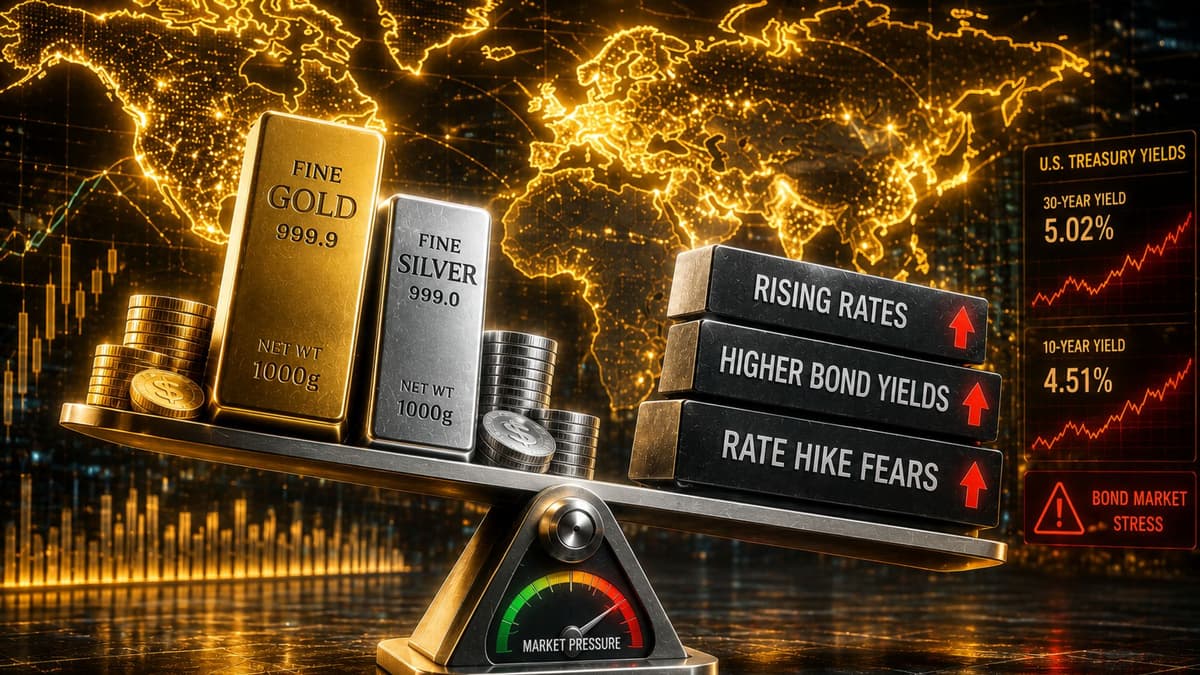
Gold prices are under pressure because investors are reassessing the opportunity cost of holding non-yielding bullion as interest rates may move higher. Higher oil prices linked to the war in Iran are also pushing markets to price in more rate hikes.
Spot gold last traded at $4,561.70 per ounce, down nearly 2% on the day ahead of the weekend. Silver performed even worse, with spot silver last trading at $76.73 per ounce, down nearly 8% on the day.
The precious metals sector is weakening as traders worry that central banks may need to keep policy tighter for longer. Gold, unlike bonds or cash, does not offer a yield, so rising rate expectations can hurt bullion demand in the short run.
According to the CME FedWatch Tool, markets now see nearly a 50/50 chance of a rate hike by December. Just a month ago, markets assigned only a 1% chance to that outcome.
For Indian investors, this matters because global gold price weakness can be partly offset by rupee moves and import costs. If crude oil remains elevated and pressures India’s trade balance, the rupee could weaken, which may cushion any decline in domestic gold prices even if international XAUUSD falls.
How is the war in Iran affecting gold and commodities?
The war in Iran is driving a major supply shock in oil, lifting inflation risks and tightening financial conditions across global markets. That backdrop is supportive for commodities overall but is creating short-term stress for gold.
Currie said the oil market is receiving the most attention because the conflict has created an unprecedented global supply shock. West Texas Intermediate (WTI) crude oil climbed back above $100 a barrel ahead of the weekend.
He cautioned that the oil market’s problems will likely continue even after the immediate crisis fades. In his words, every oil CEO has warned that the world will exit the disruption with lasting supply issues, but the market is still ignoring those warnings.
Higher oil prices matter for gold because they can feed inflation, raise energy import bills, and pressure central banks to stay hawkish. For emerging markets, including India, sustained high crude prices can widen external imbalances and complicate the inflation outlook.
Why does Currie believe central bank gold selling is a key risk?
Currie believes central bank gold selling is a major risk because some countries may need to monetize reserves to defend their currencies or pay for energy imports. If that happens, one of gold’s strongest structural demand pillars could weaken.
He pointed to Turkey’s central bank, saying it has already sold roughly 120 tonnes of gold to defend the lira and fund energy imports. Currie also cited Bernard Dahdah, who said in April that central banks are now selling gold “to defend their currency and/or to fund energy purchases.”
Currie’s warning is simple: when the marginal central bank shifts from being a structural buyer of gold to a forced seller, the market loses an important source of support. That is why he sees downside risk in bullion before a broader recovery begins.
He added that once central banks turn dovish after the energy crisis starts damaging growth, the trade will reset. At that point, he said, he would turn bullish on gold again.
For Indian investors, central bank activity matters because official-sector buying has been a major support for global bullion prices in recent years. If that support fades temporarily, domestic gold could face more volatility, especially in rupee terms.
Why does Jeff Currie still see a massive commodity upside?
Currie still sees massive upside in commodities because supply imbalances across energy, metals, grains, and soft commodities remain unresolved. He argues that investors have crowded into the AI trade while ignoring the physical assets needed to support that transformation.
He said commodities have received very little attention despite becoming one of the best-performing asset classes of the decade. His message to investors was blunt: “Get long. Buckle in. Hang on for the ride.”
According to Currie, investors have focused on technology winners but overlooked the real-world inputs required to build and run the next phase of global growth. That includes molecules, electrons, mined metals, and agricultural commodities.
He said the broad supply strain extends well beyond oil. In his view, this trend has been in place since 2020, when he first warned about the beginning of a commodity supercycle.
What did Currie say about the commodity supercycle?
Currie argued that in 2020 and 2021, many tech promoters, macro commentators, central bankers, and financial market voices dismissed supply-chain and inflation risks. By contrast, physical market operators warned that capital expenditure was collapsing, inventories were thinning, refining capacity was retiring, and mines were closing just as demand was preparing to rise.
He said those operators were right then and are still right now. He urged investors to listen to people who work directly in physical markets rather than commentators detached from barrels, tonnes, and bushels.
Currie said the commodity supercycle remains in its early innings. He stressed that none of the market imbalances have been resolved and that they are growing worse by the day.
Which commodities does Currie favour?
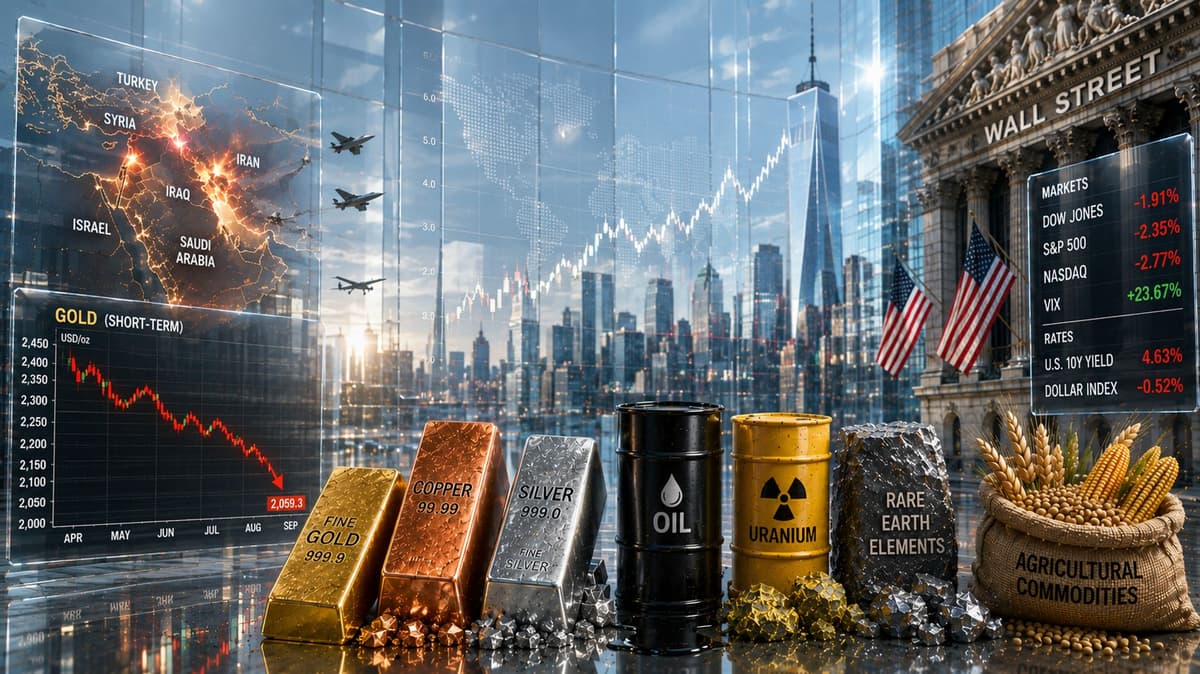
Currie’s preference is broad-based across raw materials. He said investors should own grains/softs, metals, and molecules.
His closing line summed up the structural bull case: “Remember, you cannot print molecules.” That reflects his view that physical scarcity, not financial engineering, will drive the next major commodity move.
What does this gold price outlook mean for Indian investors?
Indian investors should prepare for short-term volatility in gold prices while keeping an eye on the long-term bullish case for bullion and commodities. A pullback in international prices does not automatically translate into an equal fall in Indian gold rates.
If spot gold drops toward $4,000, domestic prices will also depend on the USD/INR exchange rate, import duties, local premiums, and festive-season demand. A weaker rupee could soften the impact of any global decline for buyers in India.
At the same time, high crude oil prices above $100 a barrel can add inflation pressure in India, influence bond yields, and shape Reserve Bank of India policy expectations. That broader macro mix could keep bullion demand firm among Indian households seeking a safe-haven asset.
The key watchpoint now is whether oil-driven inflation and emerging-market funding stress force more official gold sales before central banks eventually pivot. If that forced-selling phase deepens, gold could face more downside near term; if growth slows and policymakers turn dovish, Currie’s longer-term bullish target of $10,000 will return to the market narrative quickly.