# Gold Price Outlook Turns Bearish as Central Bank Demand Wanes
Gold prices face a weaker near-term backdrop because central banks have shifted from buyers to sellers, removing an important layer of bullion demand, according to Heraeus. At the same time, silver supply from major producers is improving, which adds another pressure point for precious metals investors watching XAUUSD and silver prices.
Heraeus said the near-term trend for gold still looks bearish even after sharp intraday swings linked to U.S. geopolitical headlines. For Indian investors, that means global gold price volatility could spill into domestic rates, although rupee moves may either cushion or amplify changes in international bullion prices.
Why does Heraeus say the gold price outlook is bearish?
Heraeus says the gold price outlook is bearish because central bank selling has weakened a key source of demand and price action still suggests consolidation after a powerful rally. The analysts said the market has lost some of the support that helped push gold to record highs in January.
They noted that central banks added 863 tonnes of gold to reserves last year. If official-sector buyers now slow purchases or sell into market stress, that affects a large share of global gold demand.
Heraeus wrote that the near-term trend still looks bearish as gold consolidates after its dramatic rally. In other words, even when safe-haven flows return on geopolitical headlines, the broader setup remains less supportive than before.
How did the Turkish central bank affect gold demand?
The Turkish central bank is one clear example of this shift. Heraeus said it reportedly reduced its gold reserves by around 53 tonnes to 772 tonnes.
That decline reflected 22 tonnes of outright sales and 31 tonnes tied to gold-backed currency swaps. According to Heraeus, this shows central bank reserves can be used during financial and economic stress, with gold serving as a counterparty-free liquid asset.
That detail matters for investors because official gold holdings are not always passive reserves. In times of pressure, central banks may mobilize bullion, which can weaken support under the gold price.
What moved gold prices this week?
Gold prices swung sharply because U.S. foreign policy headlines, especially around Iran, triggered volatility. Heraeus said President Donald Trump’s announcements on Iran continued to move the metals market.
The analysts wrote that gold sold off sharply early last Monday and fell to $4,099 per ounce. It then rebounded to the $4,400 per ounce level, which also marked the low in early February.
How did Trump’s Iran comments impact bullion?
According to Heraeus, the move began after President Trump threatened over the weekend to attack Iran’s power plants if the Strait of Hormuz was not opened within 48 hours. Later on Monday, he postponed the strikes, and that helped reverse part of the selloff.
Heraeus said very short-term price swings may be dictated by U.S. foreign policy announcements. Still, the firm maintained that the near-term trend for gold remains bearish despite those spikes.
Where is spot gold trading now?
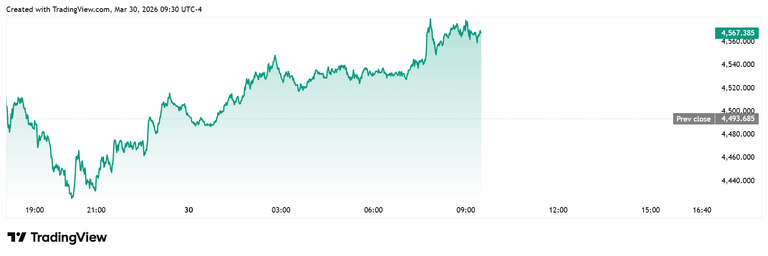
Spot gold recovered strongly on Monday morning. Gold spiked to a session high of $4,580 per troy ounce just before 8 a.m. Eastern and continued to challenge that level in the early minutes of the North American equity open.
At the time cited in the report, spot gold last traded at $4,568.57 per ounce, up 1.66% on the session. That rebound shows safe-haven demand remains active, but Heraeus does not see it as enough to overturn the current near-term bearish structure.
For Indian investors, any move in international gold prices also feeds into domestic bullion rates after adjusting for the USD/INR exchange rate, import duties and local premiums. So even if XAUUSD corrects, a weaker rupee can limit the fall in Indian gold prices.
How is rising silver production affecting the precious metals outlook?
Silver’s supply picture looks healthier because major producers are reporting stronger output and upgraded guidance. Heraeus said silver production from key miners is running ahead of last year’s pace.
That matters because silver often trades as both an industrial metal and a precious metal. More mine supply can cap upside even when investor sentiment stays constructive.
What did Heraeus say about KGHM silver production?
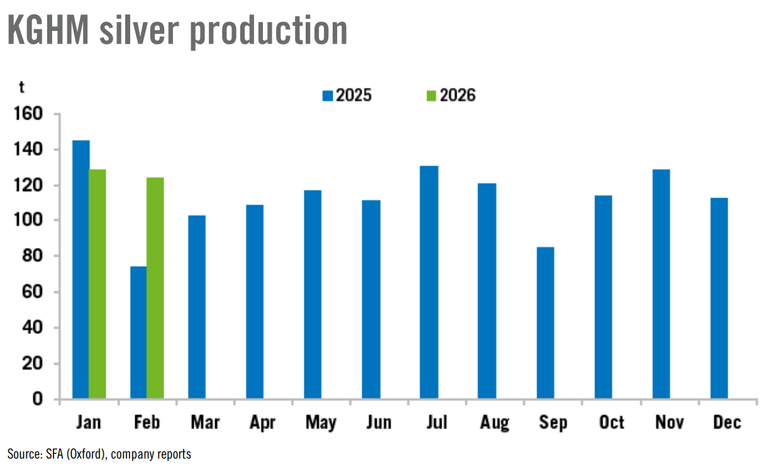
Heraeus said KGHM Group’s silver production rebounded in the first two months of 2026. KGHM is primarily a copper miner, but it produces significant silver as a by-product.
In 2025, KGHM’s silver output was 1,323 tonnes, or 42.5 million ounces, from mines in Poland, North America and Chile. Heraeus noted that February 2025 production was affected by processing plant maintenance, which reduced refined output.
This year, production in the first two months reached 252.3 tonnes, or 8.1 million ounces. That indicates a stronger start to the year versus the maintenance-hit period a year earlier.
What changed in Coeur Mining’s silver guidance?
Coeur Mining also lifted its silver production outlook after acquiring New Gold. Heraeus said New Gold’s portfolio includes two gold mines that also produce by-product silver and copper.
Coeur now expects to produce between 18,680 koz and 21,930 koz of silver in 2026. That compares with 17.9 million ounces in 2025.
The updated guidance includes between 480 koz and 630 koz from the newly acquired mines. Heraeus said that implies there is also potential for Coeur’s existing mines to expand output.
What are the key silver price levels to watch now?
Silver is holding up well in the short term, but Heraeus flagged an important downside risk if support breaks. The analysts said silver rebounded above $70 per ounce, yet a fall below $64 per ounce could open the way to $55 per ounce.
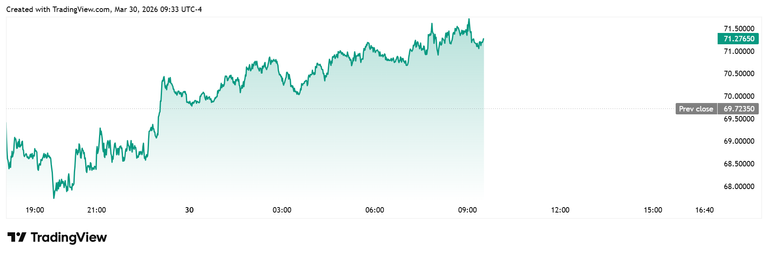
On Monday morning, silver hit a session high of 71.763 just after 9 a.m. Eastern. It continued to trade near the upper edge of its daily range at the time of writing.
Spot silver was last at $71.251 per ounce, up 2.19% on the day. That performance outpaced gold on the session, though Heraeus remains focused on technical support levels and the prospect of increased mine supply.
Why should Indian investors track silver as well as gold?
Indian investors should track silver because domestic demand spans jewellery, investment bars and industrial uses such as solar and electronics. If global silver prices stay above $70 per ounce, Indian retail prices could remain elevated, especially if the rupee weakens.
But if the $64 per ounce support fails globally, silver could face a deeper correction toward $55 per ounce. That would have direct implications for Indian bullion traders, jewellers and investors positioning across precious metals rather than gold alone.
What should Indian gold investors watch next?
Indian gold investors should watch three factors next: central bank buying trends, U.S. geopolitical headlines and support levels in gold and silver. Heraeus has made clear that official-sector demand is now a critical swing factor for bullion.
If more central banks follow Turkey and reduce reserves, gold could lose another layer of support. If geopolitical tensions around Iran escalate again, safe-haven demand could quickly return and push XAUUSD higher.
For now, Heraeus’ message is straightforward: gold’s short-term rebounds do not yet cancel the bearish near-term trend, while silver’s resilience faces a test from improving producer supply. For investors in India, the next move in global bullion may depend as much on official-sector flows and geopolitics as on the rupee’s direction against the U.S. dollar.