# Gold Price Outlook: Ted Oakley Warns of a Sharp $500 Pullback
Wall Street is chasing artificial intelligence-driven gains, but Ted Oakley says the bigger risk sits in rising debt stress, expensive equities, and a tapped-out U.S. consumer. For gold investors, Oakley remains bullish on long-term wealth preservation, but he warns that the recent rally in bullion may need a deeper washout before the next durable move higher.
The warning matters for Indian investors because U.S. bond yields, gold prices, and global risk appetite directly affect domestic bullion rates in rupees. When U.S. yields rise and speculative money exits XAUUSD, Indian gold prices can also turn volatile, even if the longer-term safe-haven case stays intact.
Why is Ted Oakley warning about a gold price pullback?
Ted Oakley is warning about a gold price pullback because he believes too much momentum money entered the recent rally to record highs. He says speculative positioning in paper gold now needs to clear before bullion can build a stronger base.
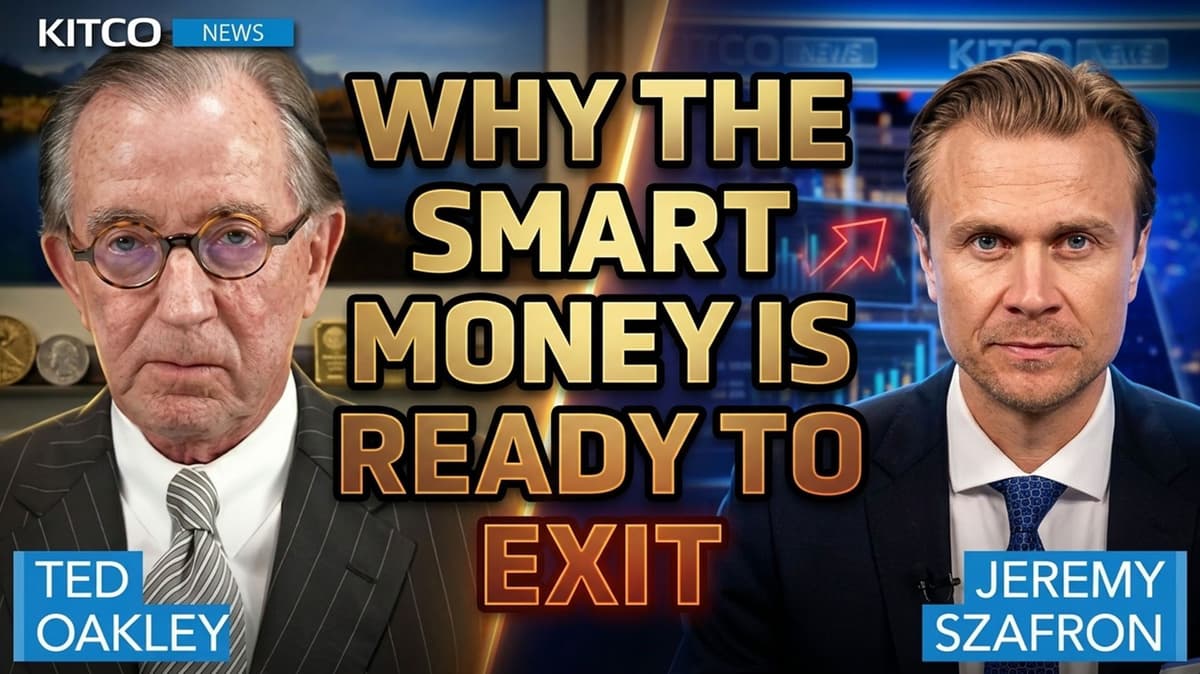
Oakley, founder and managing partner of Oxbow Advisors, told Kitco News that gold's surge attracted fast-money traders. According to Ted Oakley, that process could require another $500 decline from current levels.
How far could gold fall, according to Ted Oakley?
Oakley said gold could fall another $500, which would likely push spot gold toward the $4,000 level. He sees that zone as the point where momentum-driven traders may finally exit.
He added that such a flush would create a prime buying opportunity in physical bullion. In his view, long-term investors should distinguish between short-term paper-market volatility and the strategic role of gold as a wealth-preservation asset.
Why does this matter for Indian gold buyers?
A correction in international gold price benchmarks such as XAUUSD can quickly feed into Indian bullion rates. However, the rupee exchange rate against the U.S. dollar can either soften or amplify the fall for local buyers.
For Indian investors, a global dip toward $4,000 per troy ounce could become an opportunity if INR stability allows domestic prices to ease. That would especially matter for long-term buyers of coins, bars, and jewellery accumulating on weakness.
What is driving Ted Oakley’s broader market warning?
Ted Oakley’s broader warning is that Wall Street optimism no longer matches the financial condition of the average American consumer. He argues that soaring U.S. Treasury yields, overstretched equity valuations, and deteriorating household credit create a fragile backdrop for all risk assets, including gold in the short run.
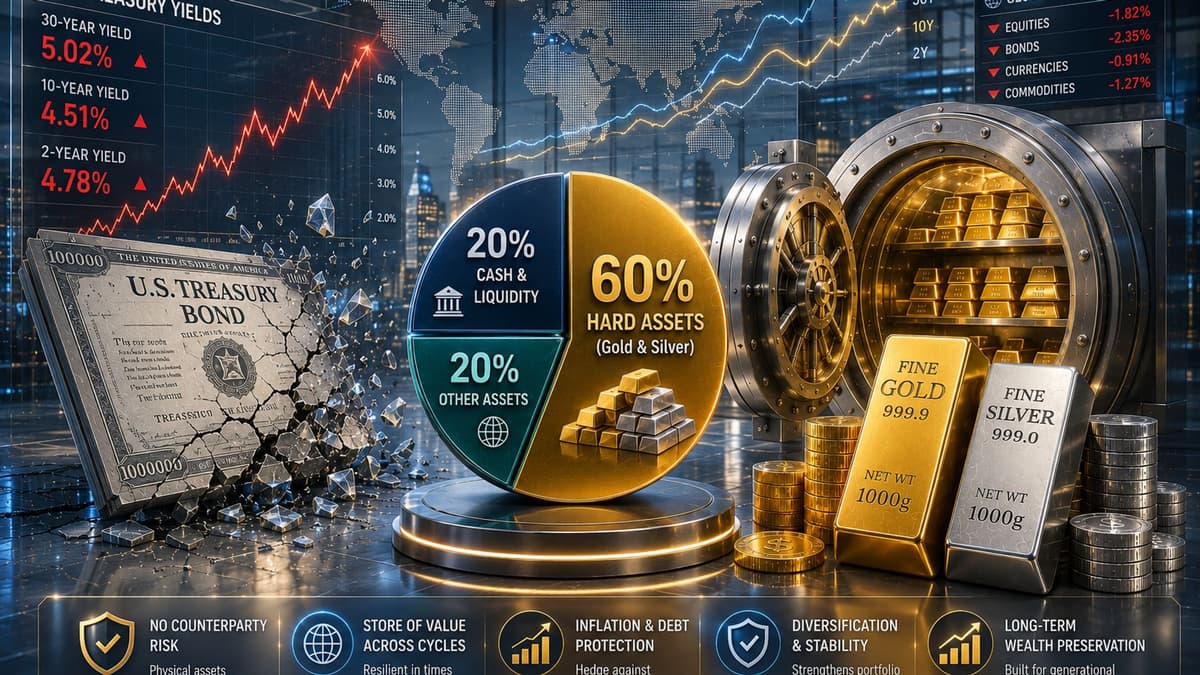
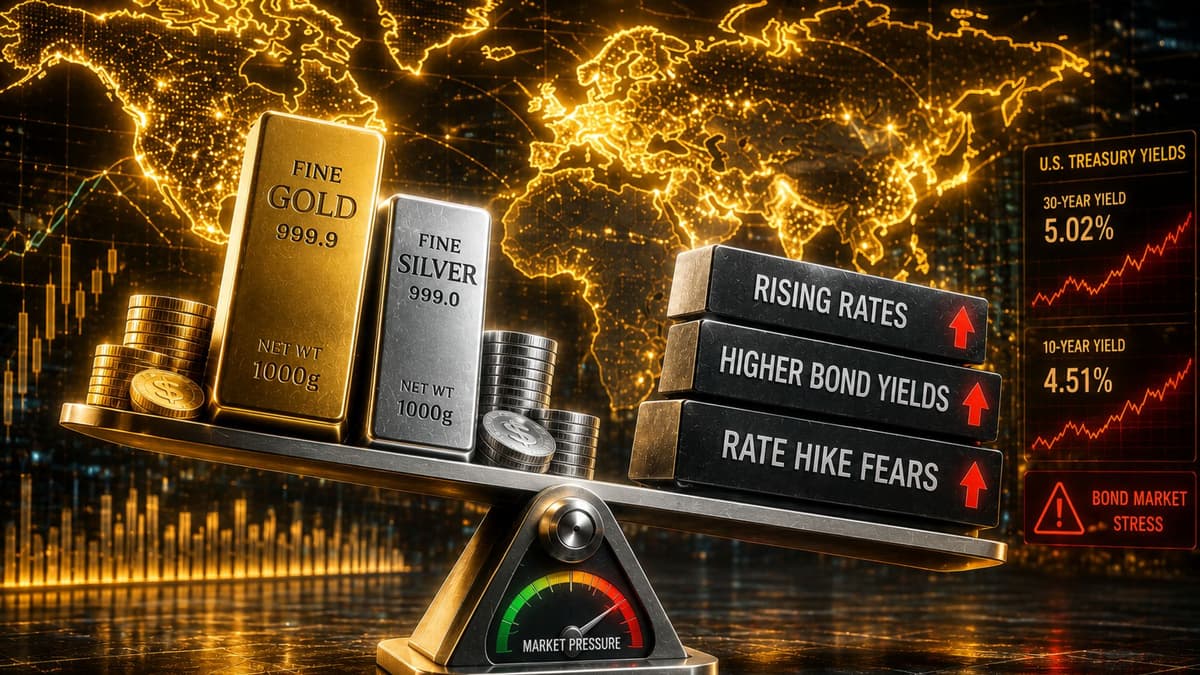
The 30-year U.S. Treasury yield is trading near 5.18%, a level not seen since the global financial crisis era. Oakley says that yield level is fundamentally changing the valuation math for equities, credit markets, and the traditional 60/40 portfolio.
What did Ted Oakley say about the U.S. consumer?
Oakley said the average U.S. consumer is not doing well. He pointed to rising stress in credit cards and auto loans as clear signs that household finances are weakening.
According to Ted Oakley, credit card delinquencies are now at levels similar to those seen during the great financial crisis, while auto loan delinquencies are actually higher. He told Kitco News that repeated claims about consumer strength do not match the underlying data.
What does the Federal Reserve Bank of New York data show?
The Federal Reserve Bank of New York data supports Oakley’s concerns. U.S. household credit card balances reached a record $1.28 trillion by the end of 2025.
The share of debt in serious delinquency, defined as balances at least 90 days overdue, rose to 11%, returning to levels last seen more than a decade ago. Even after a slight seasonal decline in total balances to $1.25 trillion in early 2026, the flow of credit card debt moving into serious delinquency remained elevated at 7.1%.
How does the AI spending boom affect markets and gold?
The artificial intelligence spending boom is lifting technology stocks, but Oakley says investors are ignoring the real-world costs needed to support that growth. He believes this disconnect increases broader market risk and may eventually support hard assets such as commodities and precious metals.
Major U.S. technology firms are expected to spend as much as $725 billion this year on artificial intelligence-related capital expenditure. Oakley argues that the market is focused on the software dream while overlooking the required physical inputs.
What physical constraints does Ted Oakley see in AI?
Oakley said investors are underestimating the need for commodities, energy, and power grid upgrades to make AI infrastructure work. In his view, data centers cannot scale smoothly without major investment in the physical economy.
He told Kitco News that many investors assume those resources will be available when needed, but he doubts that assumption is correct. That matters because shortages or underinvestment in energy and infrastructure could reshape market leadership away from over-owned tech.
Why should Indian investors care about the AI-capex story?
Indian investors should care because a global shift from software enthusiasm toward physical assets can affect both gold and commodity-linked sectors. If capital starts rotating out of expensive technology stocks and into real assets, gold, silver, and mining shares could benefit over time.
The same trend could also influence India’s imported inflation outlook through energy prices. Higher energy costs often affect the rupee, inflation expectations, and local gold demand as households seek safe-haven protection.
Why does Ted Oakley favor energy over crowded tech trades?
Ted Oakley favors energy because he sees extreme under-ownership in the sector just as a commodity supercycle advances. He believes institutional investors may be forced to rotate into energy after being heavily concentrated in technology and passive index trades.
Oakley highlighted a sharp imbalance in S&P 500 sector weights. He said energy is only 3% of the S&P 500 today, compared with 32% in the early 1980s, while tech was only about 11% or 12% back then.
What rotation does Oakley expect?
Oakley expects a major institutional rotation into energy. He said funds may wait too long, then rush in at the same time once performance pressure builds.
According to Ted Oakley, that setup could trigger a sharp move higher as institutions that do not already own energy scramble to gain exposure. For commodity investors, that view reinforces the idea that the physical economy may start outperforming the most crowded growth trades.
Why does Ted Oakley still like gold and silver miners?
Ted Oakley still likes gold and silver miners because he sees a major valuation gap between mining equities and the record cash generation now available from high metals prices. He argues that miners look unusually cheap relative to bullion.
Even though he expects short-term pressure on the gold price, Oakley remains constructive on the mining sector as a value opportunity within precious metals. He says miners have strong balance sheets and record free cash flow, yet their share prices remain depressed relative to the metals they produce.
What valuation case did Oakley make for miners?
Oakley said the spread between what it costs miners to produce an ounce of gold and the current selling price is the best it has ever been. In simple terms, margins are exceptionally strong.
He added that if gold miners traded today at the same price-to-cash-flow multiples they reached in 2011, the sector would be 200% higher from here. That is one of the strongest quantitative claims in his outlook.
What could this mean for Indian investors?
For Indian investors using international ETFs, offshore strategies, or tracking global mining stocks, Oakley’s argument points to leverage on the gold price without buying only physical bullion. Still, mining shares carry equity-market risk and can remain volatile even when spot gold holds firm.
For more conservative Indian buyers, the message is simpler: a sharp correction in gold may hurt sentiment first, but it may also improve long-term entry points in physical bullion and selected precious-metals exposure.
How is Oxbow Advisors positioning for volatility?
Oxbow Advisors is positioning defensively by holding a large allocation in short-dated U.S. government paper. Oakley says that cash-like reserve gives the firm flexibility to buy quality assets when markets finally reprice.
The firm is holding roughly 45% of its portfolios in short-term U.S. Treasuries, mostly securities maturing in under 18 months. That defensive stance reflects Oakley’s expectation that today’s combination of high yields, weak consumers, and expensive equities could produce better buying opportunities later.
For Indian investors, the key watchpoint is whether rising U.S. yields continue to pressure risk assets and trigger profit-taking in bullion, or whether financial stress ultimately revives stronger safe-haven demand for gold. If gold does retreat toward $4,000 per troy ounce, as Ted Oakley suggests, the next move in the rupee and global bond yields will likely determine how attractive that dip becomes in India.