# Gold Price Outlook: Tactical Risks Stay High, 12-Month Upside Intact
Gold prices face elevated short-term risks, but BCA Research still expects the broader bull market to continue through early 2027. For Indian investors, that means bullion may remain volatile in the near term even as the longer-term case for holding gold stays constructive.
According to Roukaya Ibrahim, Chief Commodity Strategist at Montreal-based BCA Research, gold remains vulnerable in the short run because of stretched speculative positioning, sensitivity to real interest rates, and geopolitical uncertainty. Even so, BCA has stayed bullish on gold since late 2022 and has kept its longer-term positioning intact despite turning tactically cautious at the start of this year.
Why does BCA Research still expect gold prices to rise over the next 12 months?
BCA Research expects gold prices to move higher over the next 12 months because the structural bull case remains in place. Ibrahim said that despite current volatility, she sees gold advancing through early 2027.
She said the current gold bull market has unfolded in several clear phases. The first phase was driven by strong central bank buying. The second phase came from rising geopolitical demand for safe-haven assets. The most recent phase, however, has been led by speculative activity.
How has the gold bull market evolved since late 2022?
The rally began with official-sector demand. Central banks helped create a strong foundation for gold prices as they added reserves.
After that, geopolitical tensions boosted safe-haven demand for bullion. More recently, speculative flows, especially from Asia, became a major force behind the move higher in XAUUSD and broader precious metals markets.
What did Roukaya Ibrahim say about the latest phase of the rally?
Ibrahim said the latest stage of the rally has been “very, very speculative in nature.” She added that inflows from Asian investors, particularly into exchange-traded funds, have played a major role.
That matters because speculative ETF flows can reverse quickly if gold prices start falling. When that happens, the gold price can become more vulnerable to sharp pullbacks in the short term.
What is making gold prices vulnerable in the near term?
Gold prices look vulnerable in the near term because speculative positioning is elevated, real interest rates remain important, and geopolitical developments are keeping inflation expectations unstable. Ibrahim said these factors have increased short-term tactical risks.
She also noted that gold has behaved more like a risk asset in recent months. That shift has increased its correlation with equities, which is unusual for an asset often bought as a safe-haven.
Why does speculative positioning matter for gold?
Speculative positioning matters because crowded bullish trades can unwind fast. If investors who recently entered gold through ETFs or momentum-driven strategies rush to exit, prices can fall quickly.
Ibrahim said this is especially relevant because recent Asian inflows have been strong. Those flows supported the rally, but they also create downside risk if sentiment changes.
How are real interest rates affecting XAUUSD?
Real interest rates are once again a key driver for gold. Ibrahim said gold has re-established its traditional inverse relationship with real interest rates.
That means when real yields rise, gold often struggles because non-yielding assets like bullion become less attractive relative to interest-bearing assets. When real yields fall, gold usually benefits.
How do inflation shocks and bond yields affect gold prices?
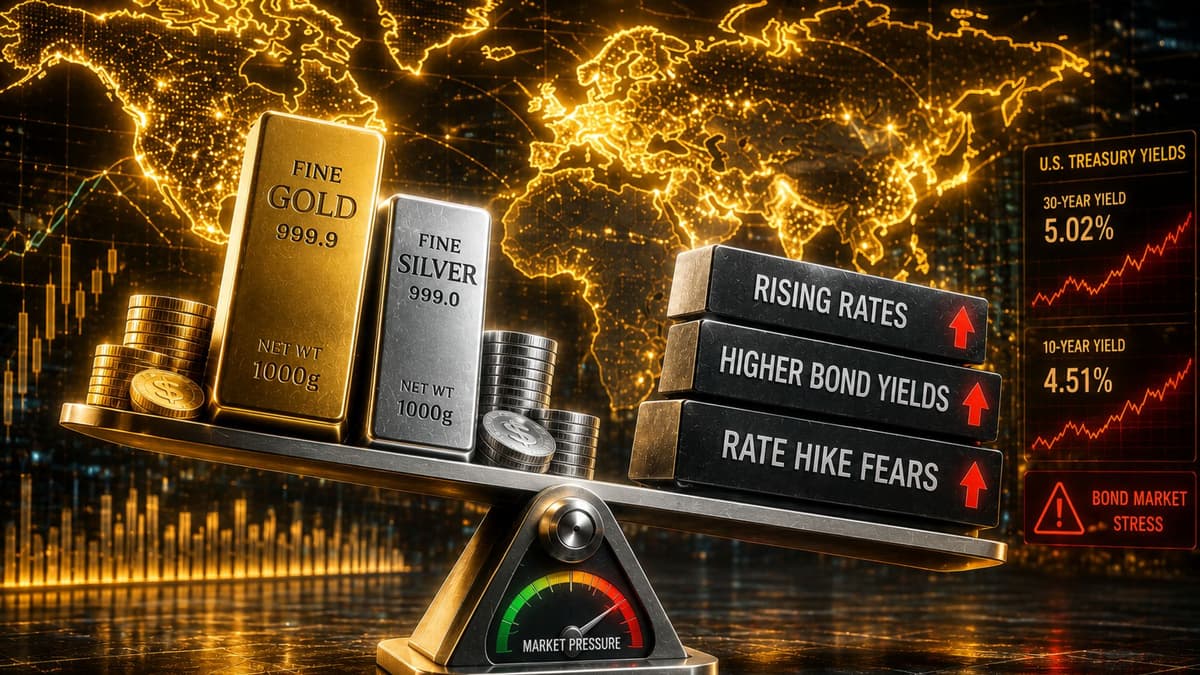
Gold often struggles in the early stage of a supply-driven inflation shock because rising inflation expectations push bond yields higher and support tighter monetary policy. Ibrahim said that pattern is consistent with gold’s recent weakness.
She stressed that this is not unusual historically. Gold tends to perform better later, once the inflation shock starts hurting economic growth and yields begin to decline.
Why can gold fall first during a supply shock?
Gold can fall first because markets initially focus on higher inflation and higher yields. That environment tends to strengthen expectations for tighter Federal Reserve policy, which can pressure the gold price.
Ibrahim said, “Gold usually declines in the early phases of a supply shock, but 12 months out, it tends to recover.” In her view, the key turning point comes when the shock shifts from being inflation-driven to growth-driven.
What is the key transition investors should watch?
The key transition is the move from inflation concerns to growth concerns. Once slower growth becomes the dominant theme, bond yields often come down, and that tends to support gold prices.
For Indian investors, this matters because international gold prices in U.S. dollars per troy ounce often feed directly into domestic bullion rates, alongside USD/INR moves. If global yields soften and gold recovers, rupee gold prices could remain firm even if the Indian rupee is stable.
How do oil disruptions and geopolitics shape the gold price outlook?
Geopolitical developments, especially those linked to energy markets and oil flows, remain central to gold’s outlook. Ibrahim said the path of oil supply disruptions and inflation pressure will determine whether the market shifts toward slower growth.
That scenario would ultimately support gold. In other words, energy-driven inflation may hurt gold first, but a later growth slowdown could become bullish for bullion.
Why do energy markets matter so much for bullion?
Energy disruptions can lift inflation expectations quickly. That can push bond yields higher and create pressure on gold in the short run.
But if expensive energy starts to weaken broader economic activity, markets may begin pricing slower growth and easier policy later. That is when gold often regains strength as a safe-haven and store of value.
What happens if inflation concerns ease?
If disruptions fade in the coming months and inflation concerns ease, Ibrahim said markets could return to the earlier backdrop where the bullish gold story is still intact. That would support the longer-term case for gold even if short-term volatility remains elevated.
For India, any renewed global gold strength can quickly influence local jewellery and investment demand, especially during periods when investors use gold as a hedge against volatility, inflation, and currency weakness.
Why is central bank buying still important for gold prices?
Central bank buying remains a major structural support for gold prices. Ibrahim said official-sector demand creates a floor under the market, even if it is not always the direct trigger for sharp rallies.
She described central bank buying as a background force that helps establish an upward trend. That is important because it gives the gold market longer-term support during periods of tactical weakness.
Can central bank demand keep gold in an uptrend?
Yes, central bank demand can help sustain an uptrend by absorbing supply and reinforcing confidence in gold as a reserve asset. Ibrahim said this support does not necessarily push prices sharply higher on its own, but it underpins the broader bullish trend.
That is particularly relevant for Indian investors tracking reserve diversification, global de-dollarisation trends, and long-term bullion demand.
What could damage the bullish case for gold?
A sustained shift from central bank buying to central bank selling could weaken the outlook. Ibrahim said that broad official-sector selling, rather than isolated cases, would be a negative signal for gold.
She noted that some countries, including Turkey, have already temporarily monetized gold reserves to meet liquidity needs amid chaos in the Middle East. If such actions became widespread, the structural support for gold could weaken.
Why is BCA Research more cautious on silver than on gold?
BCA Research is more skeptical on silver because silver depends more on industrial demand and lacks meaningful central bank buying. Ibrahim said silver looks more vulnerable than gold if global growth weakens.
That makes the recent silver rally harder to justify in her view. She argued that industrial demand data does not support the magnitude of the move.
Why does silver face bigger risks than gold?
Silver faces bigger risks because the same concerns affecting gold are amplified for silver. If economic activity slows, silver can suffer more because industrial use is a larger part of its demand profile.
Gold, by contrast, benefits from reserve demand, safe-haven demand, and portfolio hedging demand. Those factors can provide more resilience during periods of global uncertainty.
What should Indian investors watch next in the gold market?
Indian investors should watch Federal Reserve policy, real interest rates, oil-market disruption, and signs of a shift from inflation stress to growth slowdown. Ibrahim said she still prefers gold over a 12-month horizon, but she is not ready to call a near-term entry point.
That caution reflects ongoing geopolitical uncertainty and the risk of more volatility tied to inflation expectations. In practical terms, rupee-denominated gold prices in India will depend on both international bullion moves and the direction of the Indian rupee against the U.S. dollar.
What is BCA Research’s view on the Federal Reserve?
Ibrahim expects the Federal Reserve to eventually prioritize economic growth over inflation if conditions worsen. She said that policy shift could mark an important turning point for gold.
“I think they will favor growth over inflation,” she said. “But getting to that point could involve more pain for gold. When we do get there, it will likely be a good buying opportunity.”
That makes the next phase especially important for Indian bullion buyers, ETF investors, and long-term savers. If the Federal Reserve turns more growth-focused after a period of pressure on gold, any correction in XAUUSD could become a closely watched buying window for the next leg of the bull market through early 2027.