# Gold Price Outlook Strengthens as Iran Ceasefire Extends Risk
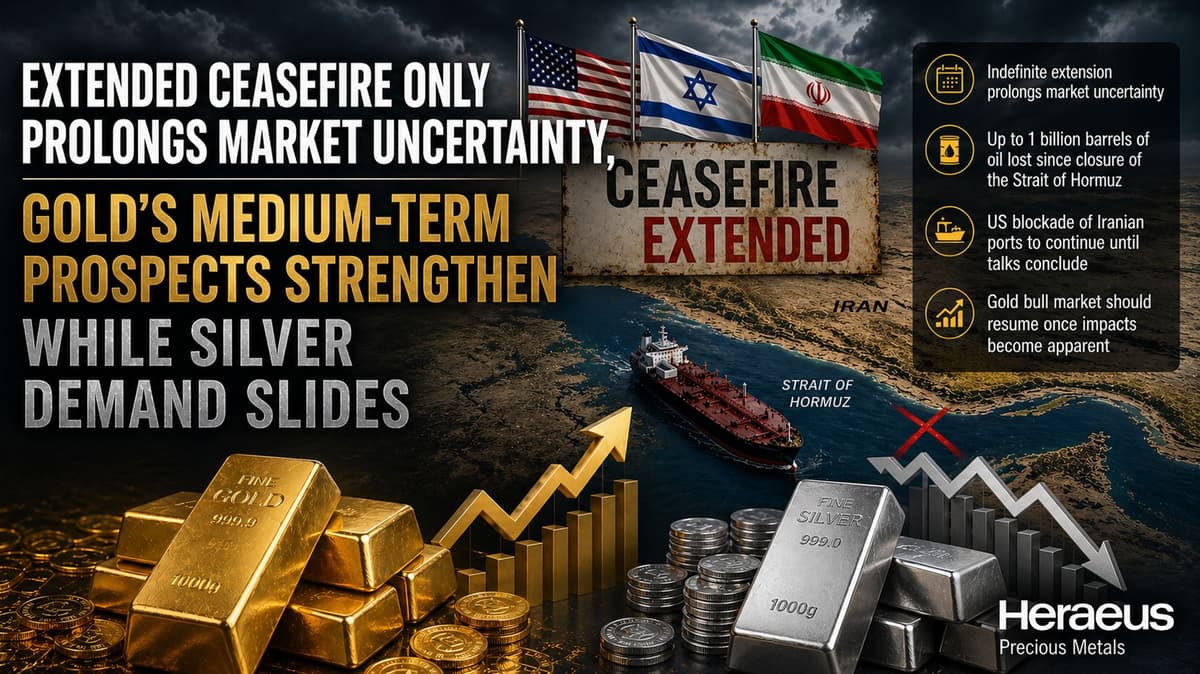
Gold’s medium-term outlook is strengthening because the extended ceasefire linked to the U.S., Israel and Iran is prolonging uncertainty rather than removing it. According to Heraeus, markets may be underestimating the economic fallout from disrupted oil flows, sticky inflation risks and the possibility of stagflation, all of which typically support bullion.
Why does the extended Iran ceasefire support the gold price outlook?
The answer is that the ceasefire has not removed risk; it has stretched uncertainty over a longer period. Heraeus said the indefinite extension of the Iran war ceasefire is turning the conflict into a prolonged one, which keeps safe-haven demand for gold relevant.
Heraeus analysts said markets initially welcomed the ceasefire. They noted that the gold price gradually trended upwards and the S&P 500 hit a new all-time high on 17 April.
But the analysts argued that the deeper economic effects are still not fully priced in. They said there has been little traffic through the Strait of Hormuz, while the United States has begun a blockade of Iranian ports that is expected to continue until proposed talks conclude.
What is happening in the Strait of Hormuz and why does it matter for bullion?
It matters because supply disruption in energy markets can feed inflation and weaken growth at the same time. Heraeus said up to 1 billion barrels of oil have been lost since the closure of the Strait of Hormuz, and the impact is likely to worsen the longer the disruption lasts.
For gold investors, that combination is important. Higher energy costs can lift inflation expectations, while prolonged geopolitical stress can increase safe-haven flows into bullion and XAUUSD.
For Indian investors, the oil channel matters even more because India is a major energy importer. If oil prices stay elevated, the rupee could face pressure, and a weaker INR can lift domestic gold prices even if international gold prices move only modestly.
What economic risks could push gold higher in the medium term?
The core risk is stagflation: rising prices alongside weaker growth. Heraeus said the stock market does not appear to be pricing in the economic impact of a longer conflict.
The analysts warned that rising prices in the United States could overshadow strong company earnings and recent rallies in metals prices. If inflation begins to rise quickly, they said the Federal Reserve may be forced to raise interest rates to contain it.
Why would the Federal Reserve face a difficult policy choice?
The Federal Reserve could face a supply-shock problem that is harder to solve with liquidity. Heraeus said the Fed cannot simply print money its way out of this kind of crisis because liquidity injections do not fix supply shortages.
The analysts added that demand destruction is inevitable in that scenario. In the long run, they said the combination of economic stagnation and rising prices could provide fertile ground for the gold bull market to continue.
That view is especially relevant for Indian investors tracking imported inflation, bond yields and rupee sensitivity. If global stagflation fears rise, gold often regains appeal as a portfolio hedge despite rate uncertainty.
Where is spot gold trading now and what levels are traders watching?
Spot gold is hovering near the $4,700 per ounce zone after meeting resistance higher up. Heraeus noted that gold ran into firm resistance at $4,730 per ounce earlier on Monday morning.
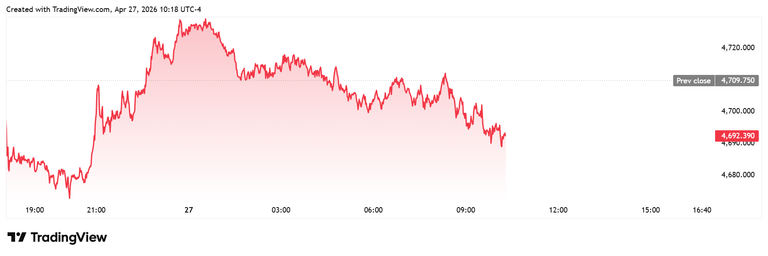
In early North American trading, gold continued to hold near the $4,700 level. Spot gold was last traded at $4,692.42 per ounce, down 0.37% on the session.
Why do these gold price levels matter for Indian investors?
These levels matter because international gold price moves quickly feed into Indian bullion rates when combined with USD/INR fluctuations. If XAUUSD holds near $4,700 per troy ounce and the rupee weakens due to higher oil prices or broader risk aversion, domestic gold prices in India could remain elevated.
Indian jewellery buyers may face higher landed costs in that setup. At the same time, long-term investors in gold ETFs, sovereign gold bonds in the secondary market, and physical bullion may continue to see support from global macro uncertainty.
What are central banks doing with gold reserves right now?
Central bank activity is mixed, but the broader signal still supports gold’s strategic role in reserves. Heraeus highlighted a divergence between Russia, which is selling, and Poland, which continues to buy.
Why is Russia selling gold reserves?
Russia is selling gold mainly to manage fiscal pressure and rebalance reserves after the rally in bullion. Heraeus said the Bank of Russia sold another 6.5 tonnes in March, bringing year-to-date sales to 22 tonnes.
The analysts said two reasons were given for these divestments. First, Russia is addressing a budget deficit that has reached $61.3 billion. Second, the rally in gold increased the share of gold in the country’s reserve mix, creating a need to rebalance.
Even so, the overall reduction remains limited. Heraeus said Russia has been a net seller in each month so far this year, but it has only reduced reserves by roughly 1%, leaving holdings at 2,305 tonnes, down from 2,327 tonnes at the beginning of the year.
The analysts added that the increase in Russia’s budget deficit is likely due in large part to the conflict in Ukraine. As a result, they expect further reductions in reserves, not just gold, until that conflict ends.
Why is Poland still buying gold at higher prices?
Poland is still buying because it continues to treat gold as a strategic reserve asset even at elevated prices. Heraeus said the National Bank of Poland raised its gold reserve target to 700 tonnes in January, up from 550 tonnes, a level it reached in late 2025.
In March, the National Bank of Poland bought another 11.2 tonnes, taking total reserves to 581.6 tonnes. Heraeus noted that Poland now holds more gold in its reserves than the European Central Bank, underscoring continued official-sector appetite for bullion.
For Indian investors, central bank buying remains an important structural signal. Persistent official accumulation can support long-term confidence in gold even during short-term price corrections.
Why is silver demand falling despite strong investor interest?
Silver demand is falling overall because high prices are hurting consumption in key sectors, even though investment demand remains strong. Heraeus said global silver demand fell to 1,130.6 million ounces in 2025, down 2% from 2024.
Industrial demand dropped 3%. Demand from photovoltaic applications fell 6%, showing how high prices and substitution pressures are affecting usage.
The sharpest percentage declines came from jewellery and silverware. Heraeus said jewellery demand contracted 8% and silverware demand fell 21% compared with 2024.
What is happening to silver demand in electronics and solar?
Silver demand in electronics declined, but the underlying picture is mixed. Heraeus said electronics demand fell 2% to 449.5 million ounces in 2025.
The decline was driven by thrifting, especially replacing silver with copper in photovoltaic manufacturing. Photovoltaic demand accounted for 186.6 million ounces of total electronics demand in 2025.
At the same time, new technology segments are still supporting silver use. Heraeus said rising demand is coming from electric vehicles, charging infrastructure and high-performance computing hardware used in datacentres.
High-bandwidth memory is also emerging as a new source of silver demand. The analysts said this trend helped South Korea’s industrial demand for silver rise 4%.
Still, Heraeus said that for now, thrifting and demand destruction remain the dominant themes. That explains why silver’s fundamental demand picture looks weaker than gold’s despite enthusiasm among some investors.
How strong was silver investment demand, especially in India?
Silver investment demand was strong in 2025, and India played a major role. Heraeus said coin and net bar demand rose 14% to 217.2 million ounces in 2025.
The increase was driven heavily by India, where silver investment demand jumped 33% year-on-year. East Asia and the Middle East also recorded significant growth in investment demand.
Exchange-traded products saw inflows of 273 million ounces, up 26% from 2024. However, Heraeus said that trend reversed in early 2026 as investors began taking profits after the silver price rally.
For Indian investors, this split is important. Physical and retail investment demand remains strong, but elevated prices may continue to suppress fabrication demand in jewellery and industrial segments.
What is the Federal Reserve expected to do next and why does it matter for gold and silver?
The market expects the Federal Reserve to leave rates unchanged at its April meeting later this week. Heraeus agreed with that consensus view.
The bigger focus, according to Heraeus, will be Federal Reserve Chair Jerome Powell’s press conference. The analysts said Powell is likely to offer insight into how the committee views the recent rise in the CPI and the future path of interest rates.
Why will Jerome Powell’s comments matter more than the rate decision?
Powell’s guidance could shape near-term moves in the U.S. dollar, Treasury yields, gold price action and silver sentiment. If the Federal Reserve sounds more concerned about inflation, markets may reassess the path for rates.
That would matter for Indian investors because higher U.S. yields and a stronger dollar can affect both imported gold prices and rupee direction. At the same time, if the Fed acknowledges stagflation risks, bullion could gain renewed support as a safe-haven asset.
What is the silver price level traders are watching now?
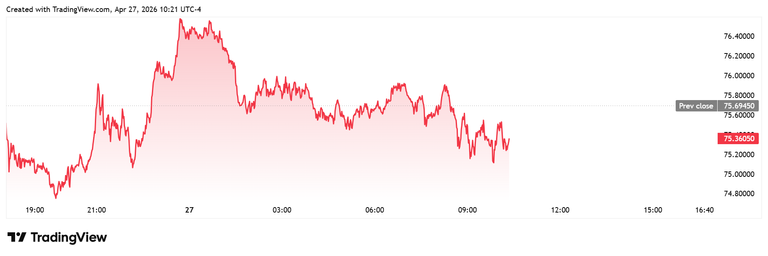
Silver has struggled to break higher at a key resistance level. Heraeus said silver prices have twice failed to break above $76.585 per ounce.
That repeated rejection suggests momentum is facing resistance even as long-term technology demand themes remain constructive. For traders in precious metals, the near-term focus now shifts to Federal Reserve guidance, inflation signals and whether geopolitical disruption deepens further.
For Indian investors, the key watchpoint is clear: if oil disruption around the Strait of Hormuz persists, inflation and INR pressure could reinforce the bullish case for gold, while silver may remain more mixed as investment buying collides with demand destruction in price-sensitive sectors.