# Gold Price Outlook: Steve Hanke Sees Bullion at $7,000
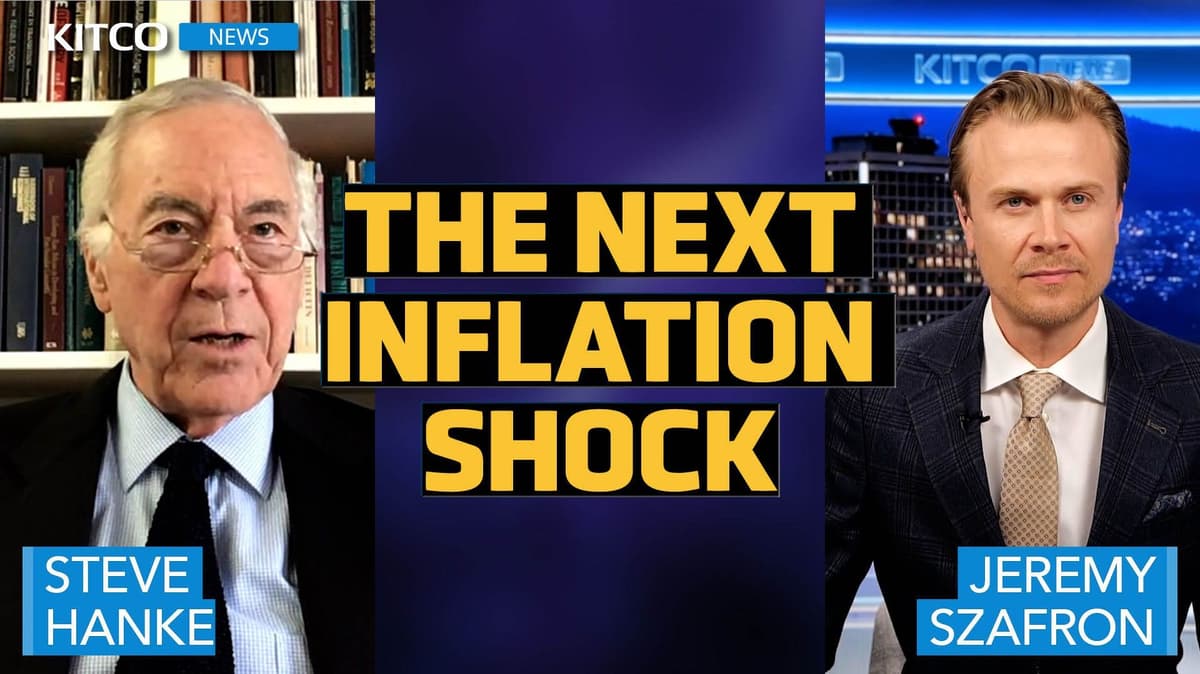
Gold prices could eventually reach $6,000 to $7,000 per troy ounce, according to Steve Hanke, Professor of Applied Economics at Johns Hopkins University, who argues that markets are misreading inflation as U.S. bank lending and money supply growth accelerate. Speaking to Kitco News on April 23, 2026, Hanke said investors are focusing too much on oil, Federal Reserve rate-cut hopes, and artificial intelligence, while ignoring the deeper driver of inflation: commercial bank credit creation.
For Indian investors, the argument matters because a structurally stronger gold price in XAUUSD can feed directly into domestic bullion rates, especially if the Indian rupee (INR) weakens against the U.S. dollar. That means global inflation dynamics and U.S. credit growth can have a meaningful impact on India’s physical gold market, jewellery demand, and investment flows into bullion.
Why Does Steve Hanke Think Markets Are Misreading Inflation?
Hanke’s core view is simple: markets are underestimating inflation because they are not paying enough attention to bank lending and money supply growth. He said the current consensus is too complacent about future price pressures.
Speaking with Kitco News, Hanke said, “I think the markets are very complacent right now.” He argued that the standard market narrative around inflation misses the central role of commercial banks in creating money across the economy.
How do commercial banks create inflation pressure?
Hanke said inflation starts with bank credit expansion. When banks issue more loans, they also expand deposits in the financial system.
In his words, “When they increase the loans that they’re extending, that increases somebody’s checking account, and checking accounts are part of the money supply.” He added that commercial banks produce about 80% of broad money, a point he believes many investors and analysts overlook.
What numbers did Hanke cite?
Hanke said loan growth in the United States is approaching 7% annually. In his framework, that pace sits above the roughly 6% growth rate consistent with the Federal Reserve’s 2% inflation target.
That gap matters because, in Hanke’s view, faster credit creation today translates into stronger inflation pressure later. He summed it up bluntly: “We’re not going to get the inflation genie back in the bottle.”
What Recent U.S. Inflation Data Supports His View?
Hanke pointed to a fresh rise in headline inflation as evidence that earlier monetary expansion is already feeding through to consumer prices. He said the latest CPI move confirms the underlying trend.
According to the data he cited, U.S. headline CPI rose from 2.4% in February to 3.3% in March. Hanke said that increase reflects monetary conditions that were set in motion earlier, not just short-term moves in energy or commodity markets.
For bullion investors, this matters because gold often responds to changing inflation expectations, real yields, and confidence in fiat currencies. If inflation proves more persistent than markets expect, support for safe-haven assets such as gold and other precious metals could strengthen.
Why is this relevant for India?
For India, a sustained rise in U.S. inflation can affect gold through multiple channels. It can lift XAUUSD, alter U.S. Treasury yields, and influence the U.S. dollar, all of which feed into local gold prices.
If global bullion prices rise while the INR softens, Indian buyers could see even sharper gains in domestic gold rates. That is especially relevant for households, jewellers, and investors using gold as a hedge against inflation and currency risk.
Why Does Hanke Reject Oil Prices as the Main Inflation Driver?
Hanke said oil prices do not cause broad inflation in the way many market participants assume. He argued that oil moves are often relative price changes, not the root cause of a sustained rise in the general price level.
He said, “It’s not changes in the oil prices by the way,” adding, “Those are relative price changes.” In his view, inflation reflects earlier changes in the money supply, and today’s pricing pressure is already “baked in” because of prior credit expansion.
What historical example did he use?
Hanke cited Japan in 1979 to challenge the oil-inflation narrative. He said inflation declined in Japan despite rising oil prices because the Bank of Japan had already tightened money supply growth beginning in 1974.
He contrasted that with the period leading into the 1973 oil shock, when rapid money supply expansion had already contributed to rising inflation. His point was that monetary conditions, not oil alone, determine whether inflation becomes entrenched.
Why Does Steve Hanke Still See a Bullish Gold Price Trend?
Hanke said the long-term bull market in gold remains intact despite recent volatility. He sees the latest pullback as a normal consolidation, not the end of the uptrend.
He said, “I think the secular bull market is intact.” He also described the recent decline as a reset after a sharp rally, saying, “You had a lot of characters in there with weak hands. Those have been shaken out.”
What is Hanke’s gold price target?
Hanke maintained a longer-term gold price target of $6,000 to $7,000 per ounce. He said continued growth in money supply should keep supporting bullion over time.
That forecast is significant for Indian investors because any move toward that range in international markets would have major implications for domestic prices per 10 grams. It would also reinforce gold’s role in Indian portfolios as a long-term store of value during inflationary and geopolitical stress.
What could this mean for Indian bullion buyers?
For Indian buyers, a structurally bullish gold price outlook suggests continued caution on timing but not necessarily on long-term allocation. If global bullion remains in a secular uptrend, dips could attract strategic buying from retail investors, HNIs, and jewellers.
A move higher in global gold prices can also spill over into demand for gold ETFs, sovereign gold bond alternatives, and physical bullion holdings in India. The INR exchange rate would remain a key variable in determining how sharply international gains translate into local market prices.
What Is the Commodity Supercycle Argument?
Hanke said gold is not moving in isolation. He believes commodities more broadly are entering a new super cycle supported by monetary conditions and geopolitical stress.
He said, “I think we are entering a super cycle again with the commodities.” In his view, the trend extends beyond gold into strategic raw materials that are increasingly important for industrial policy, energy security, and national stockpiling.
Which commodities did he mention?
Hanke pointed to rising prices in materials such as lithium and vanadium. He also highlighted growing inventory accumulation as governments and companies hedge against supply chain risks.
He said this behavior reflects a broader shift toward “HALO” assets, shorthand for heavy assets with low obsolescence. The idea is that in an uncertain geopolitical environment, investors and institutions prefer hard assets that retain strategic value over time.
Why does this matter for precious metals?
A broad commodity upcycle can improve sentiment across the hard-asset complex, including gold, silver, and other precious metals. It also strengthens the case for owning tangible assets when inflation risk, supply disruptions, and geopolitical uncertainty rise together.
For Indian investors, this framework supports diversification into bullion as part of a wider inflation-hedge strategy rather than viewing gold only as a short-term trade.
Why Does Hanke Doubt the AI Disinflation Story?
Hanke said artificial intelligence is unlikely to deliver the kind of sustained disinflation many investors now expect. He argued that the productivity boom promised by Silicon Valley has not yet shown up in the data.
He said, “This is the hype coming out of Silicon Valley.” According to Hanke, the hard numbers do not yet support the idea that AI is about to suppress inflation across the economy.
What data did he cite on productivity?
Hanke pointed to U.S. data showing that both GDP and productivity declined in 2025. That, he said, undercuts the argument that AI is already creating a powerful economy-wide productivity surge.
He also stressed a broader historical point: even when productivity growth is strong, inflation can still rise if money supply growth accelerates. In other words, productivity alone cannot offset excessive monetary expansion.
Why Does Hanke Warn Against Long-Duration Bonds?
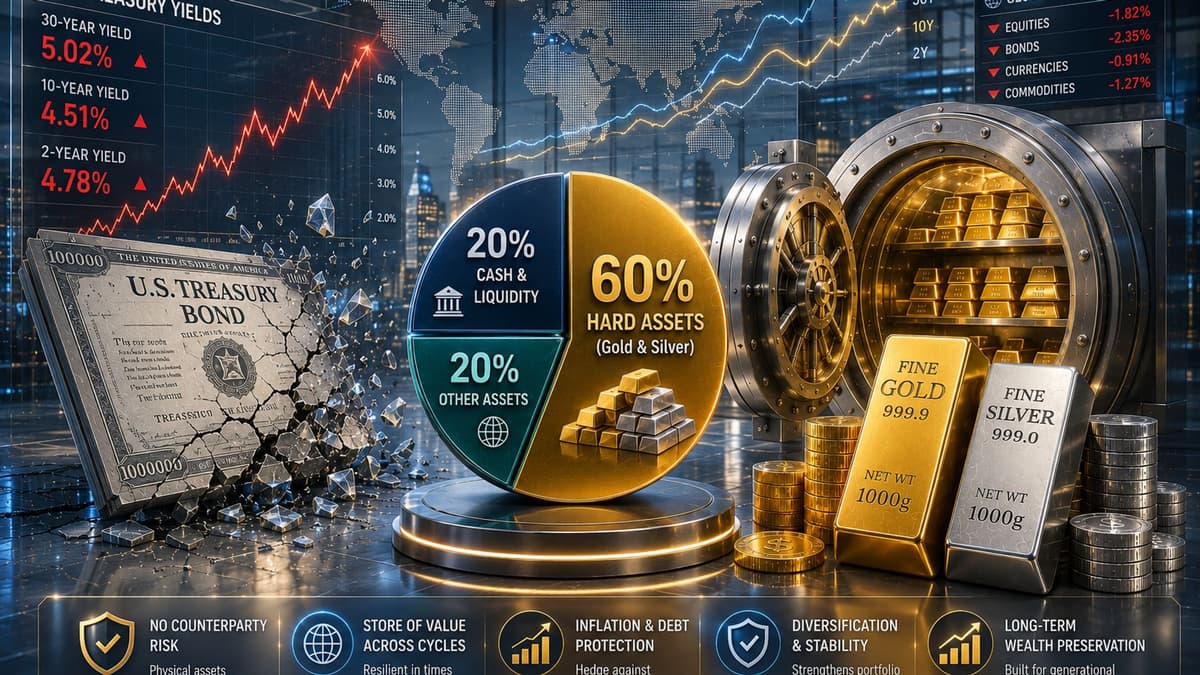
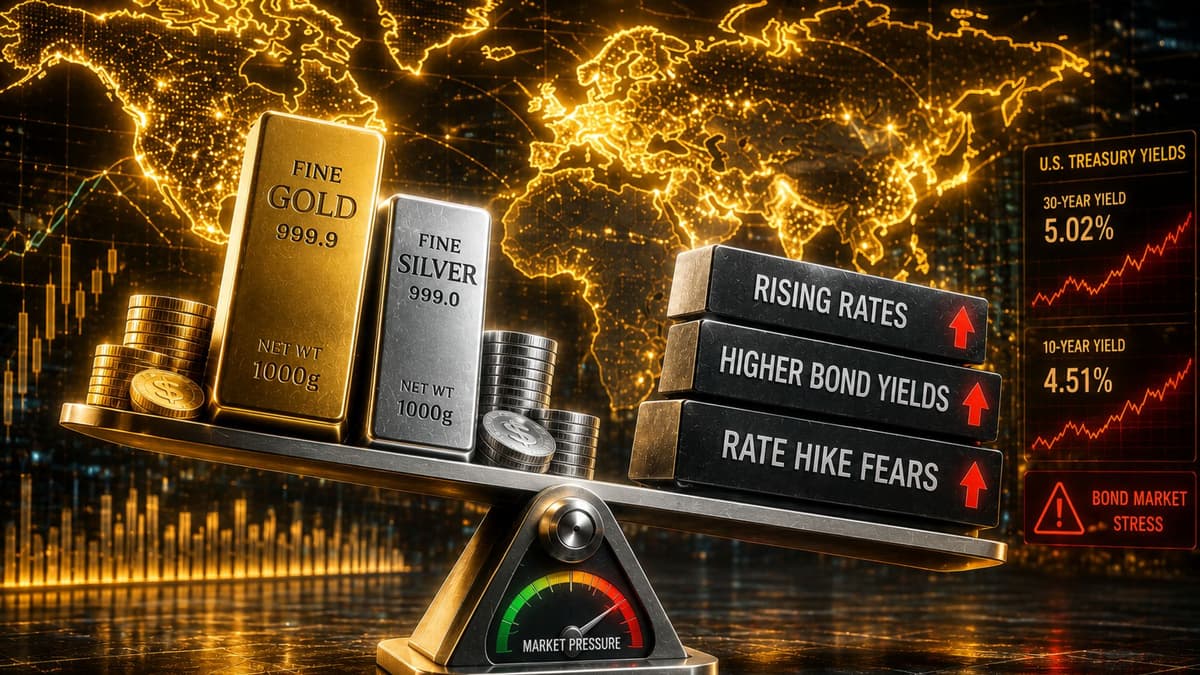
Hanke said investors should be cautious on long-term bonds because rising inflation expectations are likely to push yields higher. In that environment, long-duration fixed income becomes less attractive.
He said directly, “You don’t want to be long bonds.” If inflation stays sticky or rises further, bond prices could remain under pressure as markets demand higher yields.
What does he say about the bond bull market?
Hanke argued that the long-running bull market in bonds that began in 1980 has broken down. That shift, he said, leaves investors more exposed to inflation risk in fixed income markets than many portfolios currently assume.
For Indian investors, the message is relevant beyond the U.S. Treasury market. If global yields rise and inflation expectations reset upward, the relative appeal of gold as a non-yielding but inflation-sensitive asset can improve.
What Should Gold Investors Watch Next?
Hanke’s main message is that inflation expectations are rising for the wrong reasons. He said the real driver is accelerating money supply, meaning “more inflation” is already “baked in the cake” regardless of near-term swings in oil or other commodities.
That view keeps the focus on U.S. bank lending, money supply growth, headline CPI, bond yields, and the durability of the current gold bull market. For Indian investors, the next key watchpoint is whether persistent U.S. inflation, higher global commodity prices, and INR volatility combine to push domestic bullion prices materially higher.
Investors should also monitor whether the Federal Reserve can keep inflation near its 2% target if loan growth remains near 7% annually. If Hanke’s framework proves right, gold may remain one of the clearest beneficiaries in the global precious metals complex.