Gold and silver prices remain fundamentally supported in the second quarter, but Sucden Financial says neither precious metal is likely to break decisively higher until a stronger macro trigger emerges. For Indian investors, that means bullion may stay resilient, but a fresh rally in global gold price and XAUUSD likely needs lower U.S. real yields, a weaker U.S. dollar, or clearer Federal Reserve easing signals.
Why is gold price struggling to break higher despite supportive fundamentals?
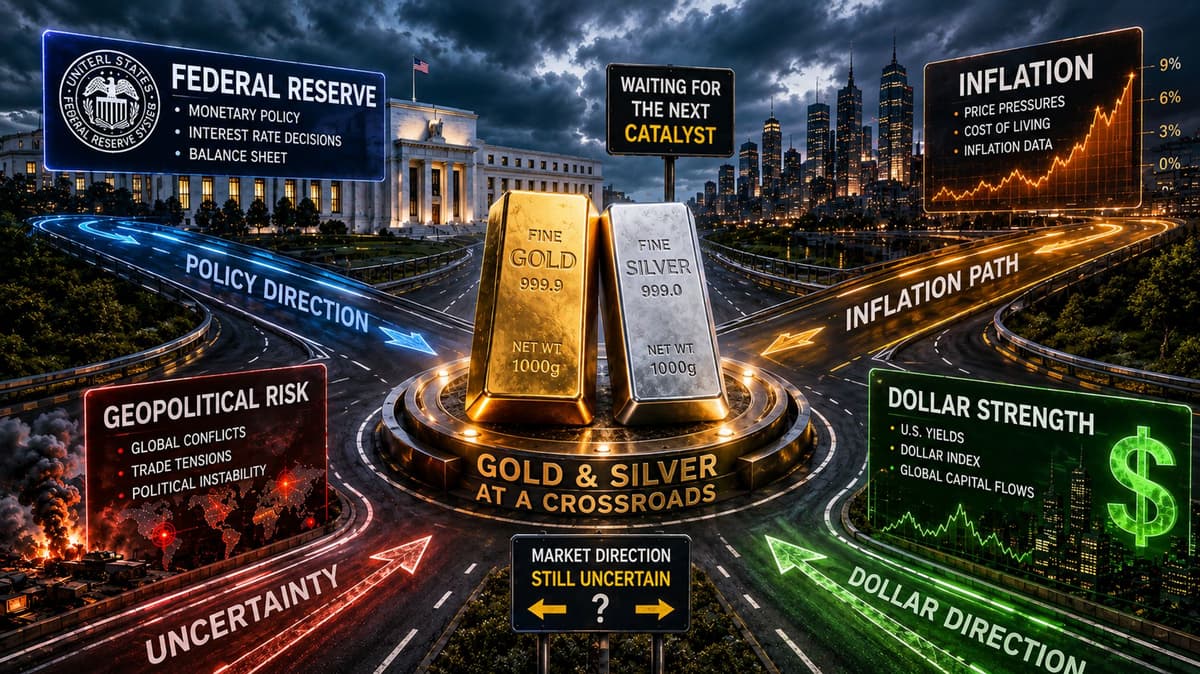
Gold is struggling to rally because elevated U.S. yields and a resilient U.S. dollar are offsetting supportive fundamentals. According to London-based brokerage firm Sucden Financial, those two macro headwinds continue to cap upside even as geopolitical risks and physical demand provide a floor under prices.Sucden Financial said gold and silver continue to draw support from solid longer-term fundamentals through the second quarter. However, the firm added that the market is still waiting for a clear macroeconomic catalyst before either precious metal can move decisively higher.
The brokerage summed up the main condition for a stronger rally clearly: “Meaningful upside requires lower real yields and a weaker dollar.”
For Indian investors, this matters because international bullion prices directly influence domestic gold rates, while rupee moves against the U.S. dollar can amplify or cushion those changes in INR terms.
What is preventing gold from acting like a traditional safe-haven asset?
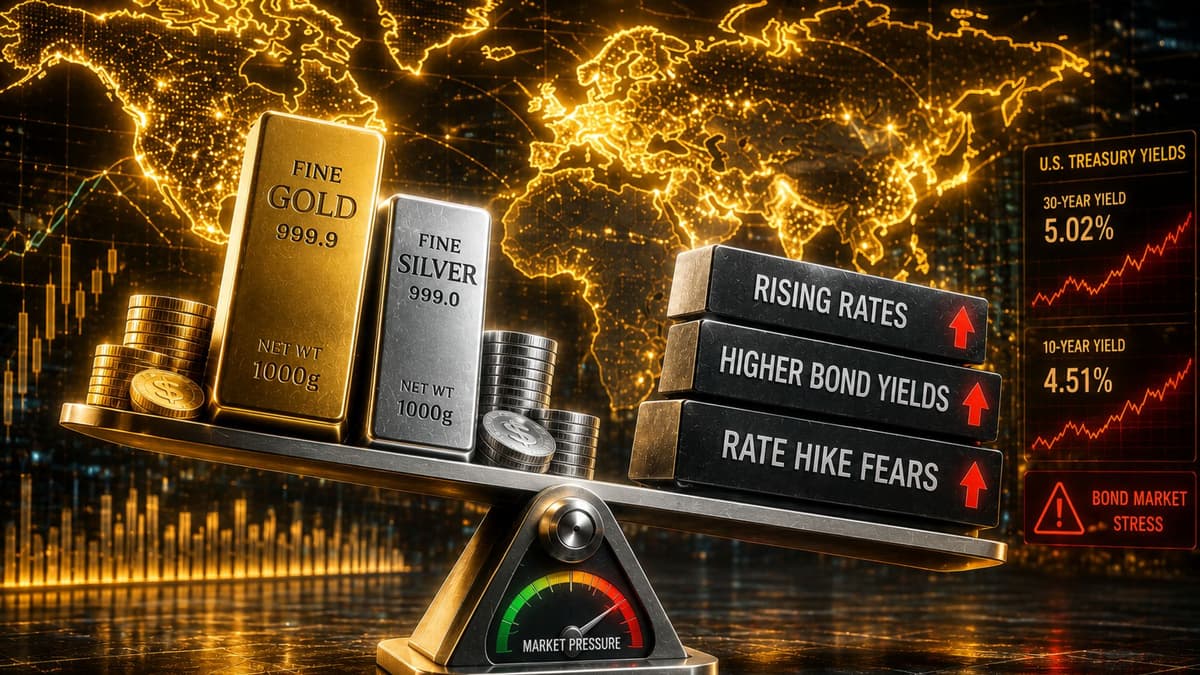
Gold has not behaved like a classic safe-haven because geopolitical tensions have pushed oil prices and bond yields higher instead of driving sustained buying into bullion. Sucden Financial said this pattern has been especially visible during heightened tensions in the Middle East.Rather than sending investors decisively into gold, the latest flare-ups have lifted oil prices. That has fed inflation expectations and pushed U.S. Treasury yields higher.
Higher Treasury yields raise the opportunity cost of holding a zero-yielding asset such as gold. As a result, safe-haven demand has not translated into the kind of breakout many bullish investors expected.
This dynamic is important for Indian bullion buyers as well. Even when geopolitical risk appears supportive for gold price, rising global yields can keep XAUUSD rangebound, which may limit upside in local gold prices unless INR weakens sharply.
What does Sucden Financial expect for gold prices in the near term?
Sucden Financial expects gold to remain rangebound in the near term, with support around $4,500 per ounce. The firm said a move toward $4,800 per troy ounce would likely require weaker economic data or more clearly dovish communication from the Federal Reserve.The analysts said gold is unlikely to move meaningfully higher until markets start pricing in lower real yields, a weaker U.S. dollar, or a clearer shift toward Federal Reserve easing. In other words, supportive fundamentals alone are not enough to launch the next leg higher.
Sucden also pointed to steady institutional participation. Gold ETF holdings remain historically elevated despite bouts of price volatility, suggesting investors have not abandoned bullion.
Still, the firm said that demand is currently acting more as downside protection than as a catalyst for a sustained rally. In practical terms, ETF demand and physical buying are helping hold the gold price floor, but they are not yet creating strong upside momentum.
For Indian investors, this suggests that price dips may continue to attract buyers, especially during wedding-season or festival demand periods, but a major global breakout may need a shift in U.S. macro conditions.
Why does silver still look supported in Q2?
Silver remains supported in Q2 because supply deficits persist and speculative positioning is relatively light. Sucden Financial said silver’s fundamental backdrop is tighter than gold’s, even though it also lacks the scale of investment inflows usually seen in a sustained rally.Earlier in the week, silver prices pushed to a two-month high above $87 an ounce. Even so, Sucden said the market still needs stronger participation from investors to extend gains.
After a sharp correction earlier this year, speculative positioning in COMEX silver has been pared back considerably. Exposure now sits well below previous highs, which reduces the risk of overcrowding but also shows that bullish conviction is not yet fully rebuilt.
ETF holdings have also retreated from late-2025 levels. That points to softer institutional participation despite continued tightness in the physical market.
Sucden said: “Silver should remain supported in Q2, underpinned by persistent supply deficits and relatively light speculative positioning. A stronger move higher would likely require renewed ETF buying, rebuilding speculative length, and a more supportive macro environment.”
How could macroeconomic conditions affect silver versus gold?
Silver could outperform gold in a soft-landing scenario, but it could underperform in a sharper downturn. Sucden Financial said silver is more sensitive to macroeconomic conditions than gold because silver has a significant industrial demand component.In a soft-landing scenario, inflation cools and the Federal Reserve eases policy without pushing the economy into recession. That backdrop would improve liquidity while preserving industrial demand, which could help silver outperform gold.
However, Sucden warned that a steeper economic slowdown would hurt silver more than gold. If industrial activity weakens materially, silver’s industrial exposure could become a headwind, creating greater volatility and possible underperformance versus bullion.
That distinction is relevant for Indian investors deciding between gold and silver allocations. Gold often serves as a more defensive safe-haven asset, while silver can offer stronger upside in growth-friendly conditions but usually carries higher volatility.
What silver price levels is Sucden Financial watching?
Sucden Financial expects silver prices to remain supported between $70 and $72 per ounce. The firm said a recovery toward the $80 to $85 range would likely require stronger ETF inflows and improving macroeconomic conditions.Those price bands suggest silver still has a supportive floor, but the next durable leg up depends on broader investor participation. Without renewed ETF buying and stronger speculative interest, silver may struggle to sustain rallies even with supply deficits in place.
For Indian investors, silver’s sharper global price swings can translate into more volatile domestic pricing in rupee terms. That may create tactical trading opportunities, but it also raises risk compared with gold.
The key watchpoint now is the U.S. macro backdrop. If weaker economic data, falling real yields, or a more dovish Federal Reserve emerge, both gold and silver could gain fresh momentum. Until then, Sucden Financial sees gold supported near $4,500 per ounce and silver supported in the $70-$72 range, with upside to $4,800 for gold and $80-$85 for silver dependent on a clearer catalyst.