# Gold Price Outlook Shifts as Fed Flags Iran, Two-Way Rate Risk
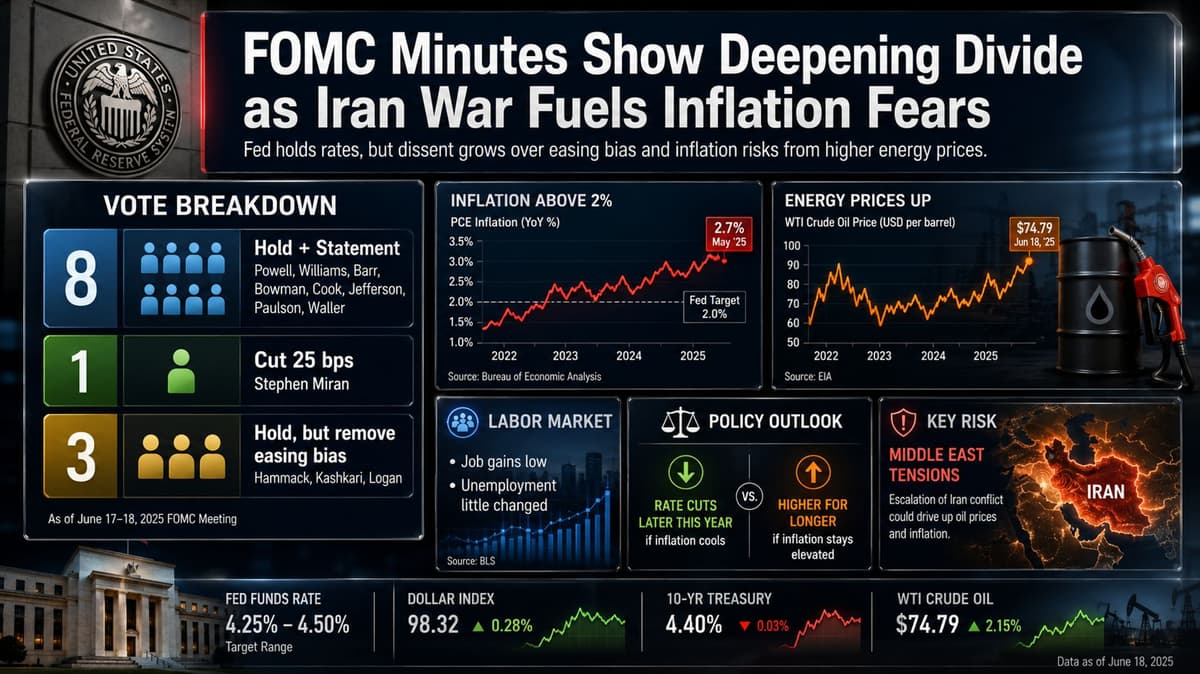
The Federal Reserve’s March 17-18 FOMC minutes showed a more divided policy outlook, with officials increasingly viewing the odds of a rate hike as roughly equal to the odds of a rate cut. For gold investors, that matters because higher-for-longer inflation, rising energy prices, and Iran-related geopolitical risk can support safe-haven demand, even as elevated U.S. yields and a firmer dollar pressure XAUUSD.
For Indian investors, the mix is especially important. A stronger U.S. dollar, higher crude oil prices, and shifting Fed expectations can affect imported bullion costs, rupee-denominated gold prices, and local jewellery demand.
What Did the March FOMC Minutes Reveal About Federal Reserve Policy?
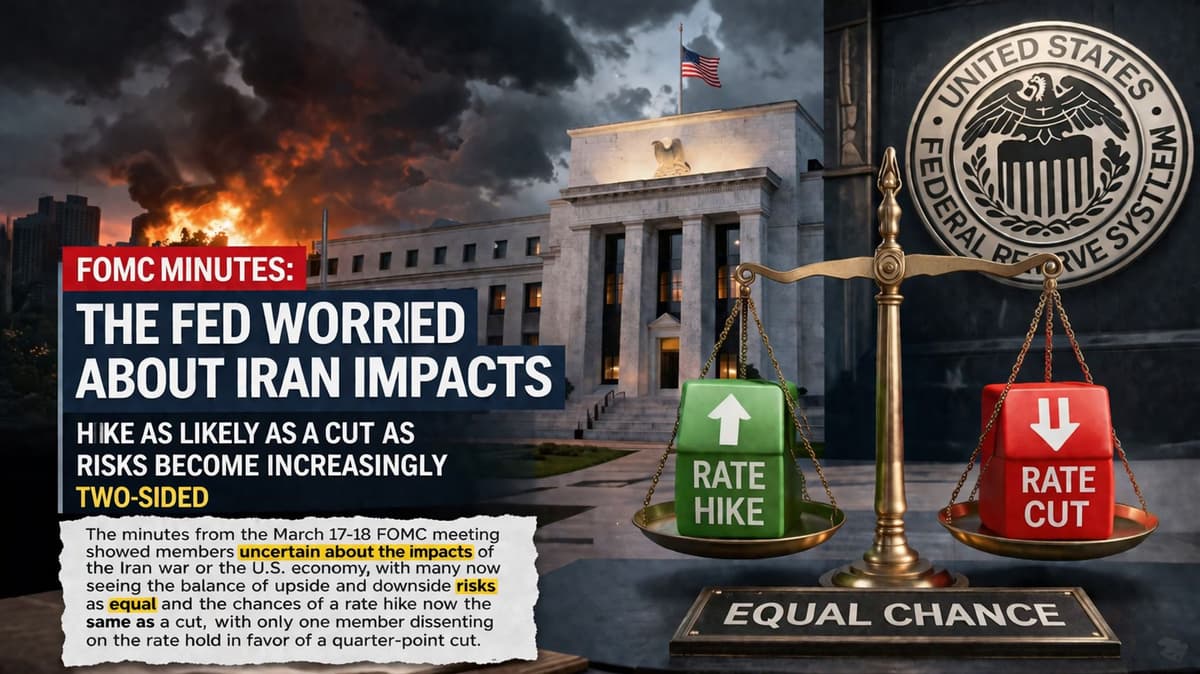
The key message is that the Federal Reserve no longer sees the policy path as clearly tilted toward easing. The March 17-18 meeting minutes showed many officials now view risks as increasingly two-sided, meaning a rate hike could be as likely as a rate cut depending on how inflation and growth evolve.
Only one member dissented from the decision to hold rates steady. Stephen Miran voted against the hold and preferred to lower the target range for the federal funds rate by 1/4 percentage point at that meeting.
The minutes said participants stressed the need to stay nimble. Federal Reserve officials said they would adjust policy in response to incoming data, the evolving outlook, and the balance of risks.
Which Federal Reserve officials voted for the rate hold?
The officials who voted to hold rates were Chair Jerome Powell, John Williams, Michael Barr, Michelle Bowman, Lisa Cook, Beth Hammack, Philip Jefferson, Neel Kashkari, Lorie Logan, Paulson, and Christopher Waller.
Stephen Miran was the only dissenter. He preferred an immediate quarter-point cut.
Why did the Federal Reserve describe risks as two-sided?
The answer is that Middle East developments, especially the Iran war and the oil-price shock, created conflicting risks for inflation and growth. On one hand, higher oil prices can keep inflation elevated and potentially justify rate hikes. On the other hand, a prolonged conflict could weaken labour markets and growth, which could justify rate cuts.
Some participants said there was a strong case to describe future interest-rate decisions in a two-sided way in the post-meeting statement. That language reflected the possibility that upward adjustments to the federal funds target range could become appropriate if inflation stayed above target.
How Did the Iran War and Energy Prices Change the Fed’s Economic View?
The answer is that the Federal Reserve sees the Iran-linked energy shock as a major new source of uncertainty. The staff said surging energy prices after developments in the Middle East lifted near-term inflation concerns and complicated the outlook.
In the financial review, the minutes said the market-implied path of the federal funds rate moved higher. That shift largely reflected expectations that easing would be pushed toward the end of this year.
The two-year nominal U.S. Treasury yield also increased on balance. According to the staff, that move was driven primarily by higher inflation compensation, consistent with rising near-term inflation concerns tied to surging energy prices after Middle East developments.
By contrast, the 10-year nominal Treasury yield was little changed on net.
What did the Federal Reserve say about inflation and growth?
The Federal Reserve staff said real gross domestic product continued to expand at a solid pace. They noted that this was especially true after accounting for the effects of the federal government shutdown in the fourth quarter of last year.
The unemployment rate was little changed in recent months, although job gains remained low. Consumer price inflation also remained elevated.
For future conditions, the staff said the projection for economic activity was weaker than the one prepared for the January meeting. That downgrade reflected incoming data and less expected support from financial conditions.
The staff built in only a small effect on economic activity from lower equity prices and higher crude oil prices linked to Middle East developments. Even so, real GDP growth was expected to run about in line with potential growth through 2028.
As a result, the unemployment rate was expected to stay near its current level through most of next year. After that, it was expected to edge down to the staff’s estimate of the longer-run natural rate of unemployment.
What is the Federal Reserve’s inflation forecast now?
The answer is that the Fed lifted its 2026 inflation forecast slightly compared with January. The minutes said the 2026 inflation forecast was slightly higher on balance, mainly because of incoming data and an expected boost to consumer energy prices after the recent run-up in crude oil.
Even so, the staff still projected inflation would return to its earlier disinflationary trend. Inflation was expected to be close to 2 percent by the end of next year.
The minutes also showed that uncertainty around the outlook remained elevated. The staff cited the potential economic effects of developments in the Middle East, government policy changes, and the adoption of AI.
Risks to employment and real GDP growth were tilted to the downside. Risks to inflation were a little more skewed to the upside than they were at the January meeting.
Why Do the FOMC Minutes Matter for Gold Price Today?
The answer is that gold reacts to both sides of the Fed debate. Gold benefits from geopolitical stress, safe-haven demand, and inflation fears, but it can face pressure when bond yields rise and the U.S. dollar strengthens.
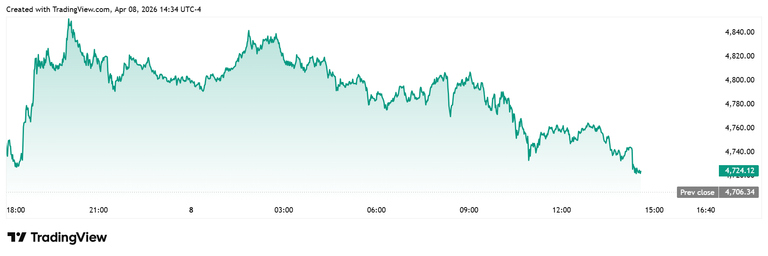
That tension was visible immediately after the release of the minutes at 2 pm Eastern. Gold prices slid closer to session lows following the publication.
Spot gold was last trading at $4,724.13, still up 0.38% on the session. That price action suggests bullion held onto modest gains despite a market reading the minutes as less clearly dovish.
How did broader financial markets react in the minutes?
The minutes said equity indexes declined and volatility increased notably. Federal Reserve staff linked that move to concerns that Middle East developments were weakening investor confidence.
The broad dollar index increased moderately. The staff said weaker market risk sentiment and the United States’ status as a net energy exporter supported the dollar.
For gold, that combination creates a mixed backdrop. Safe-haven demand tends to support bullion, while a stronger dollar can make XAUUSD more expensive for non-U.S. buyers and limit upside.
What happened in global markets outside the United States?
In advanced foreign economies, the surge in energy prices led to notable increases in short-term inflation compensation and sovereign bond yields. Foreign equity prices decreased modestly on net, but they were volatile.
In emerging market economies, sovereign credit spreads widened in many countries, especially in economies most reliant on energy imports. That matters for India because energy-importing economies often face added pressure on inflation, current accounts, and currencies when crude oil rises sharply.
How Could This Federal Reserve Shift Affect Indian Gold Investors?
The answer is that Indian gold prices could stay sensitive to three moving parts: the U.S. dollar, crude oil, and Federal Reserve rate expectations. If the dollar strengthens and oil remains high, imported bullion costs for India can rise, supporting domestic gold prices even when international gold consolidates.
India is a major gold consumer and a major energy importer. That means any Middle East-driven rise in oil prices can feed into inflation expectations and rupee pressure, both of which can influence the local gold price.
Why does a stronger dollar matter for gold in India?
A stronger dollar usually raises the landed cost of gold imports for India when converted into rupees. So even if spot gold in U.S. dollars moves only modestly, INR gold rates can remain firm or rise if the rupee weakens.
That is why Indian investors should track not just XAUUSD, but also USDINR and crude oil. The local bullion market often responds to all three at once.
Could higher oil prices support gold demand in India?
Yes, indirectly they can. Higher oil prices can lift inflation expectations, pressure household budgets, and weaken the rupee, all of which can reinforce gold’s role as a store of value and safe-haven asset.
At the same time, persistently high prices can hurt jewellery demand if consumers become more price-sensitive. For Indian investors, that creates a split between investment demand for bullion and physical retail demand.
What Are the Key Watchpoints After the March 17-18 FOMC Minutes?
The answer is that investors should watch oil prices, inflation data, labour-market conditions, and any escalation in the Middle East. The Federal Reserve made clear that it is still waiting for more evidence before choosing between a hike, a hold, or a cut.
Many participants warned that inflation could remain elevated for longer if oil prices keep rising. In that case, rate increases could be needed to bring inflation back to the Federal Reserve’s 2 percent goal and keep longer-term inflation expectations anchored.
At the same time, the minutes said a prolonged Middle East conflict could soften labour-market conditions. If substantially higher oil prices reduce household purchasing power, tighten financial conditions, and reduce growth abroad, that could warrant additional rate cuts.
For gold, that means volatility may remain high. Indian investors should monitor whether spot gold can hold above $4,724.13 while watching the next signals from the Federal Reserve, crude oil, the broad dollar index, and USDINR for the next move in global and domestic bullion prices.