# Gold Price Outlook: Pomboy Sees $6,000 on Credit Stress
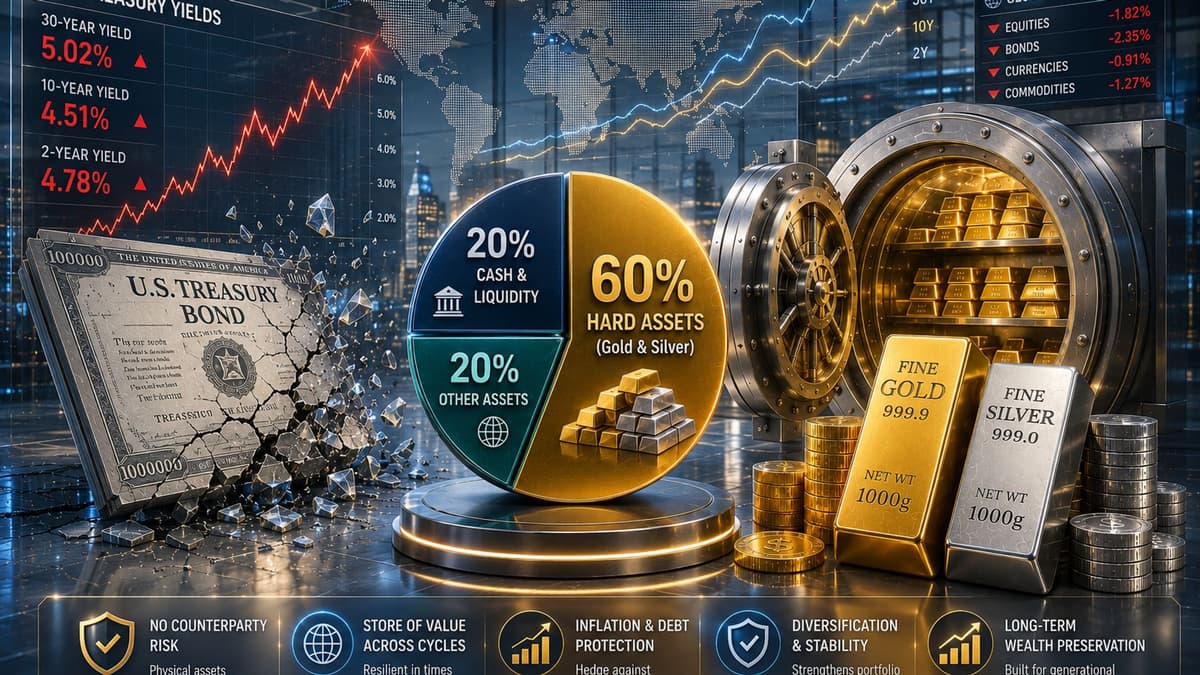
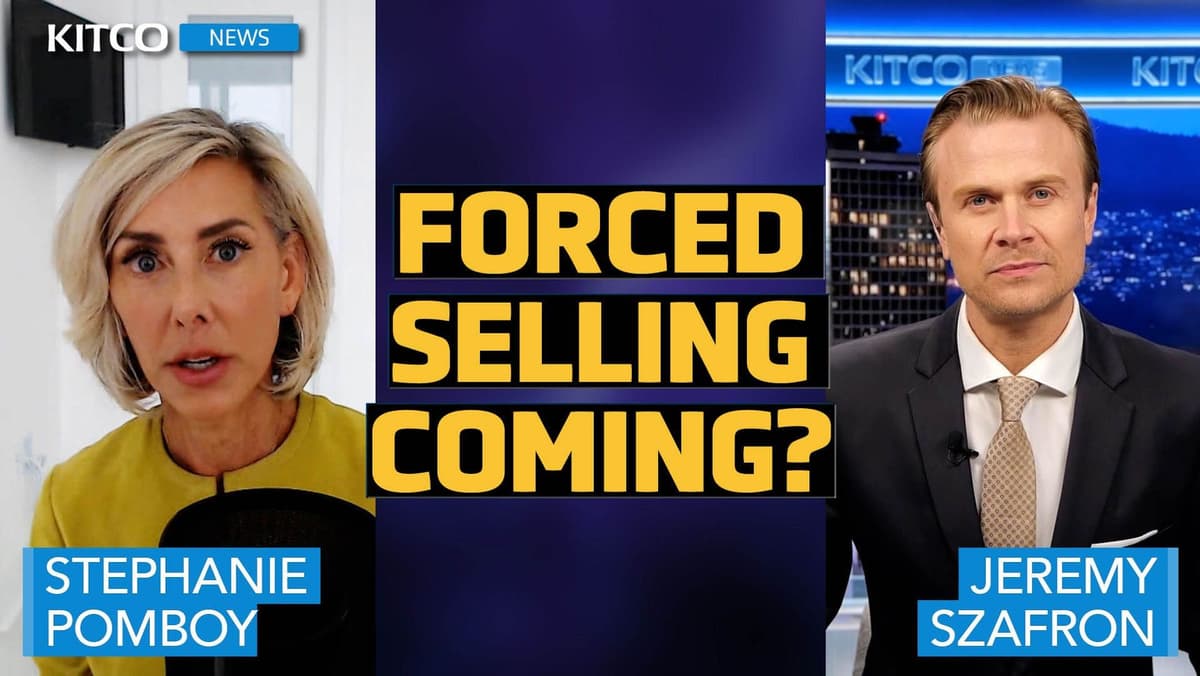
Gold price outlook turned sharply bullish after Macro Mavens founder Stephanie Pomboy warned that stress in U.S. corporate credit and a $4 trillion pension shortfall could force fresh money printing. Speaking to Kitco News anchor Jeremy Szafron, Pomboy said those risks could help push gold to $6,000 per troy ounce by year-end.
Her warning came as global markets tried to stabilize after an unprecedented oil supply disruption and a trading halt on the London Metal Exchange. The S&P 500 rebounded 1% on Monday, and oil retreated from overnight panic highs, but Pomboy said deeper weaknesses in the U.S. credit system still threaten liquidity.
For Indian investors, the message is clear: if U.S. credit markets weaken, safe-haven demand for bullion could rise globally, while any further volatility in the U.S. dollar and crude oil may also affect domestic gold prices in rupees.
Why is Stephanie Pomboy bullish on gold prices?
Stephanie Pomboy is bullish on gold because she believes the U.S. financial system cannot absorb mounting credit and pension stress without large-scale policy support and money creation. In her view, that backdrop is structurally positive for gold and other precious metals.
Pomboy said the U.S. faces a corporate debt problem, a pension funding problem, and the likelihood of aggressive government intervention if markets worsen. She argued that if authorities are forced to backstop losses or stabilize retirement systems, the result will be inflationary over time.
"There's no way they can come up with $4 trillion," Pomboy said about the pension deficit. "That money's going to have to be printed."
She added that recent consolidation in the gold market does not change her long-term bullish stance. "If you want me to give you a forecast, let's say at the year end, I think $6,000 would be a no-brainer for gold," Pomboy said.
Pomboy also dismissed the idea that gold has already peaked. "This idea that it's a bubble that has now burst and nobody needs to own it, is just delightful. I think it's just a great opportunity to step in and buy."
For Indian buyers tracking XAUUSD and local bullion rates, a move toward $6,000 per troy ounce would imply major upside pressure on MCX gold and physical gold prices, especially if the rupee weakens against the U.S. dollar.
What risks in U.S. corporate debt could drive gold higher?
The biggest risk is the sheer size of vulnerable U.S. corporate debt, especially the triple-B segment. Pomboy said U.S. corporations with triple-B ratings account for $5 trillion, making this lowest tier of investment-grade debt a key fault line.
According to Stephanie Pomboy, that $5 trillion market is easily more than double the size of the global private credit market. If higher interest rates and an energy shock push many of these companies into junk status, institutional investors with strict investment mandates may be forced to sell.
Why are triple-B bonds so important?
Triple-B debt matters because it sits on the edge of investment grade. Once downgraded to junk, many funds and institutional managers can no longer hold those bonds.
Pomboy said such downgrades would create ripple effects not only across the investment-grade market but throughout the broader corporate credit segment. Forced liquidation in a stressed market could tighten liquidity quickly and raise funding costs across the economy.
How leveraged are U.S. companies?
Pomboy said the broader U.S. corporate sector is far more leveraged than headline equity benchmarks suggest. She highlighted a sharp divide inside the S&P 500.
"The top 10 companies in the S&P 500 have more cash than the bottom 400 companies combined," Pomboy said. "Everyone else is sifting through the sofa cushions to find some spare change."
That imbalance matters for gold price outlook because credit deterioration outside the mega-cap leaders could increase safe-haven flows into bullion. When investors lose confidence in lower-quality corporate credit, they often rotate toward liquid stores of value such as gold.
How does the $4 trillion pension shortfall affect gold prices?
The pension shortfall matters because it adds another potential source of systemic stress and future government rescue measures. Pomboy said the total U.S. pension system faces an estimated $4 trillion funding gap.
She warned that retail investors and pensioners are increasingly exposed to illiquid private credit and private equity vehicles whose paper values may not hold up in a downturn. If investors cannot exit those assets at expected valuations, retirement systems could come under severe pressure.
How have pensions changed since 2008?
U.S. public pensions have taken on more risk in search of higher returns. Since 2008, they have doubled their allocation to alternative assets to 34%.
A February 2026 report from S&P Global said growing reliance on private market debt and private equity raises portfolio volatility. S&P Global described those investments as "higher risk due in part to their opacity as well as limited and inconsistent disclosure."
What do the latest pension liability numbers show?
Recent market gains reduced some headline pension pressure, but the system remains vulnerable. State and local unfunded public pension liabilities fell to $1.48 trillion.
However, stress tests from the Reason Foundation suggest that a single recession could drive that state and local public pension debt alone up to $2.74 trillion by the end of 2026. That gap shows how quickly funding assumptions can deteriorate when markets weaken.
Pomboy linked that risk directly to ordinary workers. "People who work on the assembly line at GM who think that they can retire with this nice pension are going to discover that their pension isn't there necessarily," she said.
For Indian investors, this matters because a pension-driven liquidity event in the United States could trigger volatility across equities, bonds, crude oil, and currencies. In that kind of environment, gold often regains its appeal as a safe-haven asset.
Why could private credit and forced selling trigger a liquidity crisis?
Private credit could amplify stress because investors cannot exit quickly when markets turn. Pomboy said tightening exits in private credit are already threatening a major part of the U.S. corporate bond market.
Because private equity and private credit investments are highly illiquid and often locked up for years, losses can remain hidden until liquidity is urgently needed. When investors try to raise cash during a downturn, they may be forced to sell what they can rather than what they want.
What kind of policy response does Pomboy expect?
Pomboy expects policymakers to intervene aggressively if systemic stress spreads from Wall Street to Main Street. She argued that political leaders would struggle to support banks while leaving pensioners and workers exposed.
"Policymakers [will be] rushing with some kind of bailout because you can't bail out the banks... and then say to Main Street, 'Well, screw you,'" Pomboy said.
That expectation is central to her bullish gold call. Bailouts, liquidity support, and fiscal backstops often increase expectations of debt monetization, which tends to support bullion prices over time.
What role do oil shocks and the Federal Reserve play in the gold price outlook?
Oil shocks and Federal Reserve policy matter because they can reignite inflation while weakening real confidence in financial assets. Pomboy made her comments after an unprecedented oil supply disruption and a trading halt on the London Metal Exchange shook global markets.
Although oil pulled back from overnight panic highs and the S&P 500 rose 1% on Monday, she said the broader system remains fragile. Rising debt service costs and an energy shock could squeeze already vulnerable borrowers.
What did Pomboy say about government action on energy prices?
Pomboy pointed to Thursday's release of oil from the Strategic Petroleum Reserve as evidence that the administration is focused on protecting economic stability and the "affordability argument" ahead of the midterm elections. She called that move a "high cost gambit that is likely to yield very little reward" in terms of actual price impact.
In her view, the step still shows how far officials may go to cushion consumers from higher prices. That willingness to intervene supports the case for higher inflation tolerance and eventually stronger gold demand.
Will the Federal Reserve tolerate inflation for longer?
Pomboy believes the Federal Reserve may tolerate higher inflation for longer if financial stability becomes the main priority. She said that if inflation heats back up, the Fed is likely to stay looser than markets expect in order to maintain stability.
That combination of sticky inflation, easier policy tolerance, and potential bailout financing is one reason she remains bullish on XAUUSD. Gold tends to perform well when investors expect negative real rates, policy accommodation, or currency debasement.
The broader policy backdrop may also shift as Kevin Warsh assumes leadership of the Federal Reserve in May, a transition Pomboy said investors should watch closely.
What does this gold outlook mean for Indian investors?
For Indian investors, the immediate takeaway is that U.S. credit stress could become a bullish driver for global gold prices even if risk assets stage short-term rebounds. If gold climbs on safe-haven demand and money-printing expectations, domestic prices may rise further in INR terms.
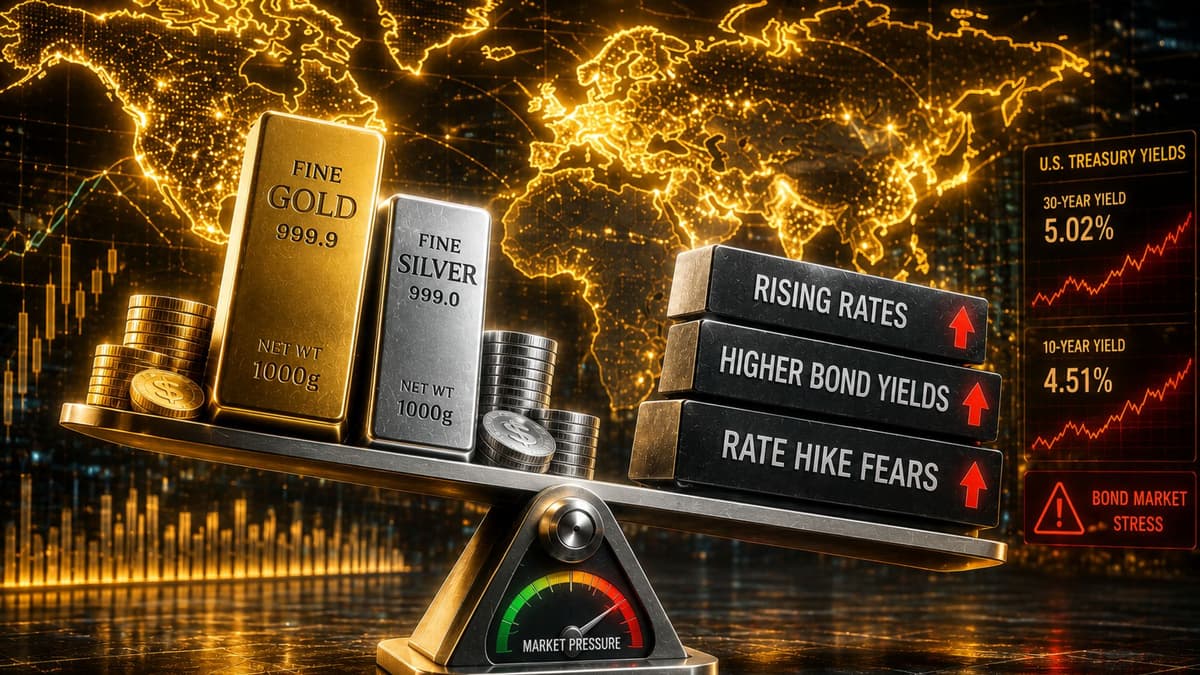
Indian buyers should also track the rupee, crude oil, and U.S. Treasury yields alongside spot gold. A stronger dollar or higher oil prices can pressure the rupee, which often magnifies imported gold costs for India.
In practical terms, any escalation in U.S. corporate downgrades, pension funding concerns, private credit stress, or a renewed inflation surprise could strengthen the case for holding bullion. The next key watchpoint is whether credit conditions deteriorate enough to force the Federal Reserve and the U.S. government into a more explicit rescue response, because that is the scenario Pomboy believes could send gold toward $6,000 per troy ounce by year-end.