# Gold Price Outlook: Morgan Stanley Sees Powerful Rally to $5,200
Gold prices could still climb to $5,200 per troy ounce by the end of the year, according to Morgan Stanley, even as bullion struggles to fully regain momentum near $4,700. For Indian investors, the call matters because any further rise in XAUUSD, combined with rupee moves against the U.S. dollar, can quickly feed into domestic gold rates.
Why does Morgan Stanley still expect gold to reach $5,200?
Morgan Stanley still expects gold to rise because it believes easier U.S. monetary policy will eventually support bullion. In her latest precious metals note, Amy Gower, Morgan Stanley Research’s Metals & Mining Commodity Strategist, reiterated her forecast for gold to end the year around $5,200 an ounce, which is roughly 10% above current prices.
Gold has recently shown renewed momentum, with prices testing fresh resistance at $4,700 an ounce. Even so, Morgan Stanley argues that the broader upside case remains intact if the interest-rate backdrop turns more supportive.
What is supporting the bullish gold price forecast?
The main support is Morgan Stanley’s expectation that the Federal Reserve will still cut rates. Lower rates typically help gold because bullion does not pay interest, and falling real yields often improve demand for safe-haven and investment assets such as gold and ETFs linked to precious metals.
Gower said, “Gold is likely to remain sensitive to real yields, but we see room for further upside.” That view suggests the bank sees monetary policy, rather than geopolitics alone, as the dominant force for the gold price outlook.
Why has gold struggled despite geopolitical volatility and the war in Iran?
Gold has struggled because rising energy prices have changed the market’s focus from safe-haven demand to interest-rate risk. According to Amy Gower, the ongoing war in Iran has triggered an energy supply shock that has reduced hopes for lower U.S. interest rates.
She said, “With the conflict triggering an energy supply shock that has reduced hopes for lower U.S. interest rates, it is not surprising that gold has struggled to work as a safe haven this time.” In other words, the usual geopolitical boost for bullion has been offset by fears that inflation will stay higher for longer.
Why is monetary policy more important than safe-haven demand right now?
Monetary policy matters more right now because gold is reacting more to real yields and the Federal Reserve’s path than to war headlines alone. Gower said, “Gold’s sensitivity to monetary policy has taken over as the key price driver.”
She added that this shift has overshadowed gold’s safe-haven status and reduced its effectiveness as a hedge against both geopolitical and inflation risks. She also said, “Gold prices reflect not just the impact of a particular event but, more importantly, the policy response that follows.”
For investors in India, that means tracking not just Middle East headlines, but also U.S. inflation, Treasury yields, and Federal Reserve guidance, because these factors influence global bullion prices and, by extension, local gold rates.
How are oil prices and Federal Reserve rate expectations affecting gold?
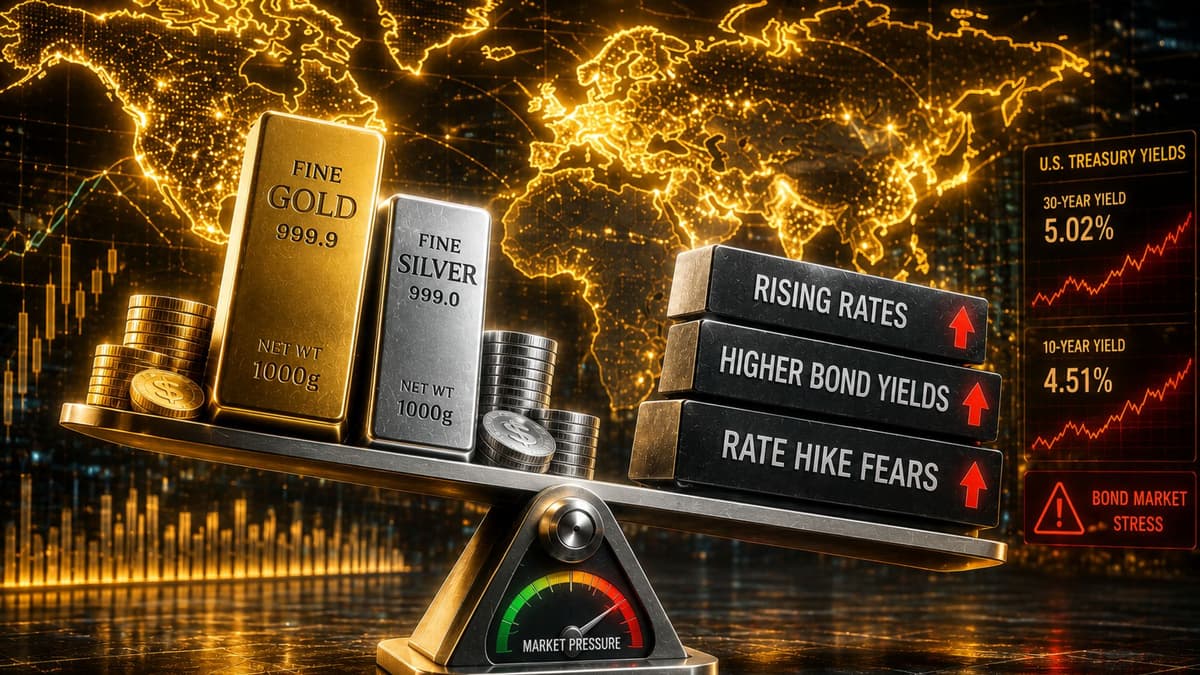
Higher oil prices are pressuring gold indirectly by keeping inflation risks elevated and making the Federal Reserve more cautious about easing. As energy prices rise, markets become less confident that the Federal Reserve will deliver rate cuts soon.
The article notes that high oil prices, driving inflation pressures, are forcing the Federal Reserve to reevaluate its easing policy stance. As a result, markets have started to price out rate cuts this year.
What does Morgan Stanley expect from the Federal Reserve?
Morgan Stanley still expects at least some easing, and that is central to its bullish call on gold. The bank sees one rate cut in January followed by another rate cut in March 2027.
Gower said this policy path “should benefit gold, with ETF purchasing decisions particularly sensitive to policy signals and gold now realigning with real rates.” That is important because ETF demand often amplifies moves in XAUUSD when macro conditions turn supportive.
For Indian bullion buyers, a softer U.S. rate path could lift international gold prices. If the Indian rupee also weakens against the U.S. dollar at the same time, domestic gold prices may rise even faster than global benchmarks.
What role does the Middle East conflict play in the gold price outlook?
The Middle East conflict remains a major swing factor because it affects both energy prices and expectations for global growth, inflation, and rates. The article says gold’s future depends heavily on what happens next in the region.
Overnight, President Donald Trump said that great progress is being made toward a lasting peace agreement. That comment raised the possibility that the current shock to energy supply could eventually ease.
What happens to gold if the conflict is resolved soon?
If the crisis ends soon, gold’s upside may become more limited in the near term. Analysts cited in the article said the global economy should be able to recover from the current energy supply crisis if the conflict is resolved quickly.
Gower also warned that in a resolution scenario, gains could be capped because already elevated prices may constrain demand from ETFs, central banks and consumers. That matters for India, where physical demand is highly price-sensitive, especially during periods of sharp rallies.
What happens to gold if the conflict lasts longer?
If the conflict drags on, gold faces a more complicated setup. While geopolitical stress usually supports safe-haven assets, Morgan Stanley warns that prolonged tension could keep oil prices high and push markets toward expecting longer rate holds or even hikes.
Gower said, “Gold prices may suffer if markets begin to anticipate prolonged rate holds or even hikes.” That means an extended conflict is not automatically bullish for bullion if it also forces a more hawkish Federal Reserve.
What should Indian investors watch next in gold?
Indian investors should watch $4,700 an ounce as an important resistance zone, the Federal Reserve’s rate signals, oil prices, and developments in the Iran conflict. These factors will shape whether gold can rebuild momentum toward Morgan Stanley’s $5,200 year-end target.
For the domestic market, the key additional variable is the USD/INR exchange rate. Even if international gold prices pause, a weaker rupee can keep Indian gold prices elevated; if global bullion rises and the rupee softens together, local prices can move up sharply. The next major watchpoint is whether cooling energy risks revive confidence in rate cuts, or whether inflation and yields continue to hold gold back despite its long-term bullish outlook.