# Gold Price Outlook: Fed Split Signals Recession Risks Ahead
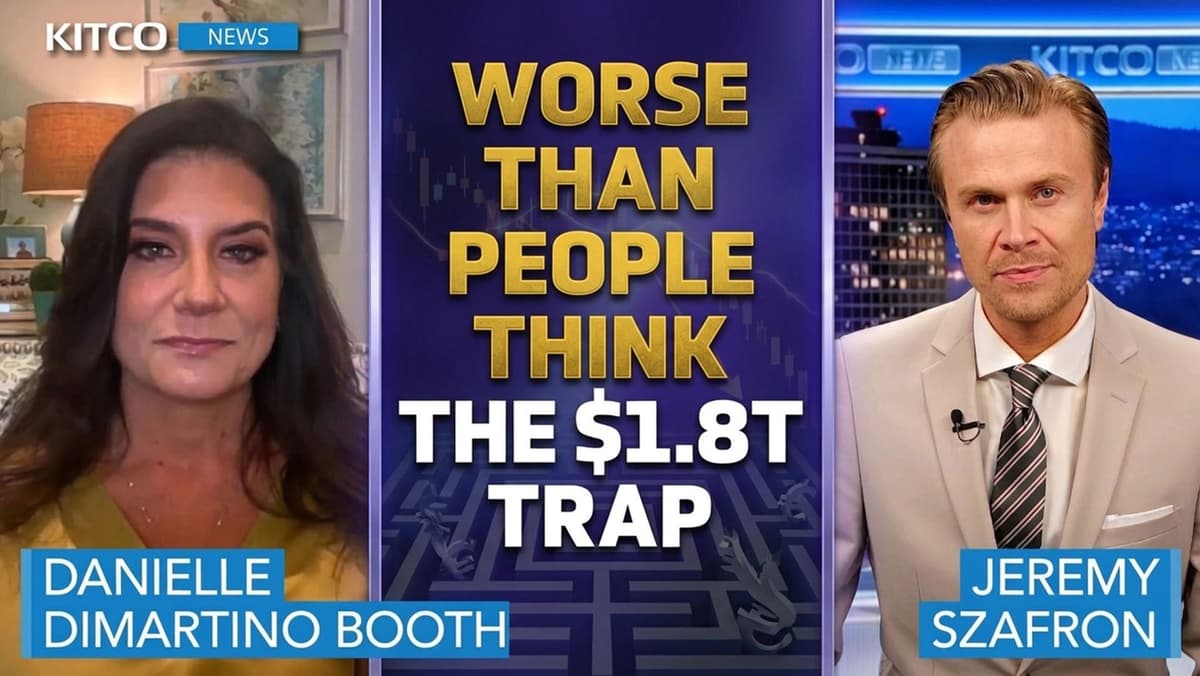
A deep split inside the Federal Reserve is raising recession fears, and that matters for gold price trends globally and in India. Danielle DiMartino Booth, CEO of QI Research, says the U.S. economy is showing signs of hidden weakness even as equities keep climbing, a backdrop that could reshape demand for bullion, safe-haven assets, and XAUUSD in the months ahead.
For Indian investors, the key issue is simple: if U.S. growth weakens sharply while financial stress builds in private credit, commercial real estate, and manufacturing, gold could regain support as a defensive asset. At the same time, any move in the U.S. dollar, Treasury yields, and the rupee will remain critical for domestic gold rates.
Why is the Federal Reserve split important for gold price outlook?
The Federal Reserve split matters because it signals policy confusion at a time when the U.S. labor market and industrial economy are weakening. That kind of uncertainty often supports safe-haven demand for gold, even if high bond yields create short-term pressure on bullion.
The latest Fed policy statement produced an eight-to-four split over forward guidance, which Danielle DiMartino Booth described as the largest committee dissent since 1992. In her interview with Kitco News, she said the divide exposed serious fractures inside the U.S. central bank.
DiMartino Booth said markets may have ignored the disagreement, but the message to incoming Fed Chair Kevin Warsh was clear. Warsh is expected to take over as Fed Chair in mid-May, and she argued he could face immediate difficulty building consensus inside the Federal Reserve.
What did Danielle DiMartino Booth say about Kevin Warsh?
DiMartino Booth said the Fed vote effectively told Kevin Warsh, "Good luck forming a consensus, future chair Kevin Warsh." She added that this would not be "your grandfather's Fed" and warned that dissent could become part of his job from day one.
For gold investors, leadership friction at the Federal Reserve can increase uncertainty around U.S. interest rates, inflation expectations, and financial conditions. Those factors directly shape bullion prices, Treasury yields, and the U.S. dollar.
What labor market signals is the Federal Reserve missing?
DiMartino Booth says the Federal Reserve is ignoring worsening employment data, and that could mean it is already behind the curve on rate cuts. If the Fed stays too tight for too long, recession risks could rise and eventually support gold as a safe-haven asset.
She pointed to payroll revisions released the same morning as the Fed meeting. According to DiMartino Booth, those revisions showed that on average in the third quarter of 2025, 53,000 jobs were lost.
She said those losses came after a net-negative second quarter, which in her view means the Federal Reserve should already be easing policy. Her conclusion was blunt: "they should be easing now, and that they're too late to the easing process."
How weak is the broader U.S. labor market?
DiMartino Booth argued that headline jobless claims are not telling the full story. Initial jobless claims have fallen to 189,000, but she said only one in four Americans who are unemployed — more than seven million people — are actually collecting benefits.
She also noted that the exhaustion rate for unemployment benefits is 40%. In her view, that distorts the apparent strength of the labor market and hides deeper stress beneath the surface.
She offered another example from hiring conditions. According to DiMartino Booth, in 2019 there were 100 applicants for every entry-level job opening, but today there are 300 applicants for every new open job.
How is private credit stress affecting the economy and gold market?
Private credit stress is building because high interest rates are squeezing leveraged sectors, especially commercial real estate. If those strains intensify, they could increase safe-haven demand for gold, although rising yields can still cap gains in the short term.
DiMartino Booth said escalating risks are emerging inside the $1.8 trillion private credit sector. She linked those concerns to broader stress across $5 trillion of commercial real estate loans as the 30-year Treasury yield approaches the 5% mark.
Why are commercial real estate and private credit under pressure?
The answer is higher long-term rates and collapsing property valuations. DiMartino Booth said the prolonged high-interest-rate environment is putting immense pressure on refinancing and valuations across commercial real estate.
She noted that office distress sales are at a decade high, with reports of 90% discounts on properties. She also echoed recent warnings from JPMorgan Chase CEO Jamie Dimon about the serious risks embedded in private credit.
DiMartino Booth highlighted specific distress among investment firms. Referring to a headline about Aries Capital, she said, "When you see a headline that says Aries Capital writes down to zero three big investments, you're like, wait a minute, zero? We've gone from part to zero. The cracks continue to emerge."
Why does high gasoline matter for credit markets?
High gasoline prices matter because they feed inflation pressure, keep interest rates elevated, and worsen the funding stress on leveraged borrowers. DiMartino Booth called current gasoline levels in the United States untenably high.
She warned that this dynamic is a "death knell" for private credit firms still hoping for a return to zero-interest-rate policy. In her view, firms waiting for emergency-era cheap money are running out of time and may face major write-downs.
For Indian investors, this is relevant because a broader U.S. credit event could trigger volatile moves in global risk assets, the dollar, and precious metals. Gold often benefits when confidence in debt markets weakens.
What does the K-shaped economy mean for bullion investors?
A K-shaped economy means headline corporate strength is masking real stress among middle-income and lower-income households. That divergence often signals a fragile expansion, which can eventually lift demand for safe-haven assets such as gold.
DiMartino Booth said top-tier corporate earnings are hiding a middle-class recession. She noted that 81% of the S&P 500 beat first-quarter earnings expectations, but household-level data tells a very different story.
According to TransUnion data cited by DiMartino Booth, debt payments now consume 16% of monthly income for subprime and near-prime borrowers. That leaves less room for discretionary spending and points to rising financial strain.
What consumer data shows economic weakness?
DiMartino Booth said the Conference Board reported the lowest number on record of Americans planning to take a vacation by car. She added that grocery spending is stalling as consumers divert money just to fill their gas tanks.
Those details suggest the economy is weakening from the bottom up. For bullion investors, that matters because consumer strain often shows up before broader growth data deteriorates.
Why is the U.S. housing market freezing again?
The U.S. housing market is freezing because higher mortgage rates are pushing sellers and buyers back into a standoff. That slowdown adds to recession concerns and can reinforce the case for defensive positioning in gold.
DiMartino Booth said housing inventory is rising as U.S. mortgage rates climb back to 6.3%. Homeowners who previously pulled listings in the hope of lower mortgage rates are now realizing, in her words, that "that's not an option right now."
A slower housing market also signals tighter financial conditions. If real estate weakness spreads into spending, lending, and employment, it could deepen risk aversion across markets.
Is the United States heading toward an industrial recession?
DiMartino Booth says yes, and she expects that realization to become clearer by the summer. If manufacturing contracts further, markets could begin pricing a harder U.S. slowdown, a scenario that often supports gold price sentiment.
She said U.S. manufacturers are front-loading inventory to secure materials before input costs rise further. At the same time, they are cutting workers because labor is the main cost they can still control.
What manufacturing signals is DiMartino Booth watching?
Her focus is on employment inside manufacturing. DiMartino Booth said, "Employment is contracting at a recessionary level among US manufacturers."
She added that companies are trying to get ahead of higher input costs caused by the energy crisis, while simultaneously reducing payrolls. In her view, this margin squeeze will soon break through into the broader economic data.
Her warning was direct: "I think we're going to see a cliff dive in manufacturing and a realization this summer that we've gone right back into an industrial recession."
What does this mean for Indian gold investors now?
Indian gold investors should watch U.S. recession signals, Treasury yields, and rupee moves together. A deeper U.S. slowdown could strengthen gold's safe-haven appeal, but domestic gold price moves in India will also depend on INR depreciation or appreciation against the U.S. dollar.
The broader backdrop remains complex. U.S. publicly held debt has crossed $31.265 trillion and now exceeds 100% of GDP, while equities are extending their longest weekly rally since 2024. That disconnect between strong risk appetite and weak structural data is exactly what DiMartino Booth says could end in a severe economic reckoning.
For Indian buyers of physical gold, bullion ETFs, and sovereign gold strategies, the main watchpoint is whether cracks in U.S. labor, private credit, commercial real estate, and manufacturing begin to outweigh the pressure from elevated yields. If they do, global gold price momentum could shift quickly, with direct implications for local gold rates in rupees.