# Gold Price Outlook: David Hunter Sees $6,800 Surge Before Bust
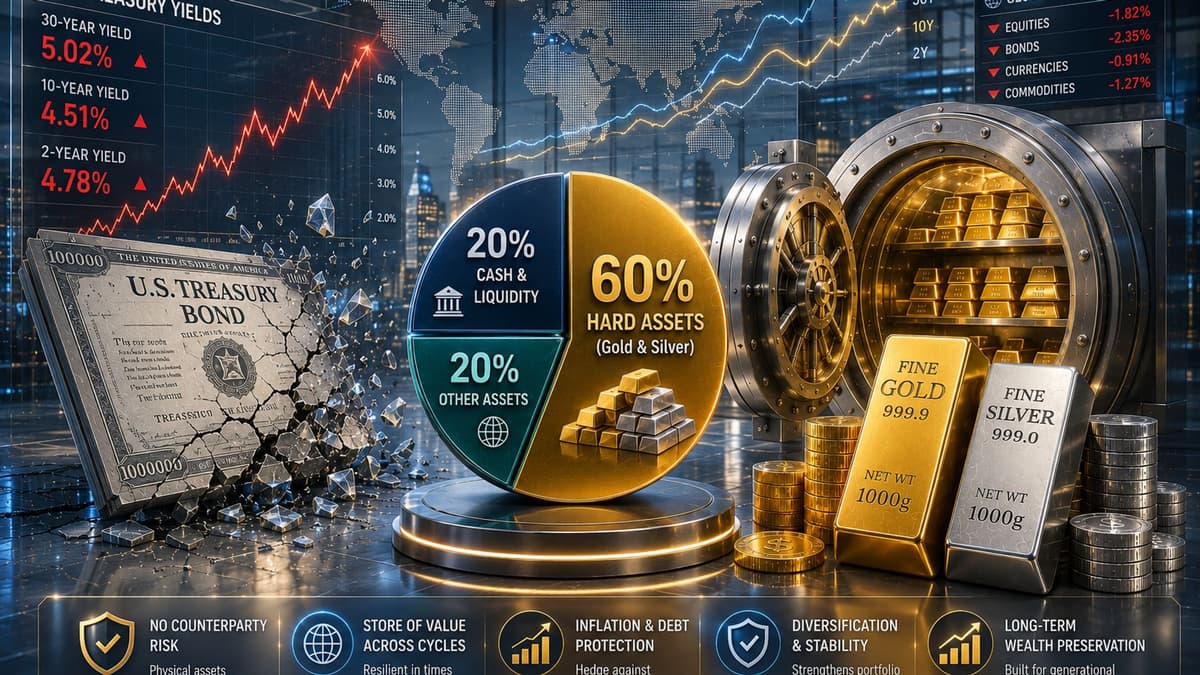
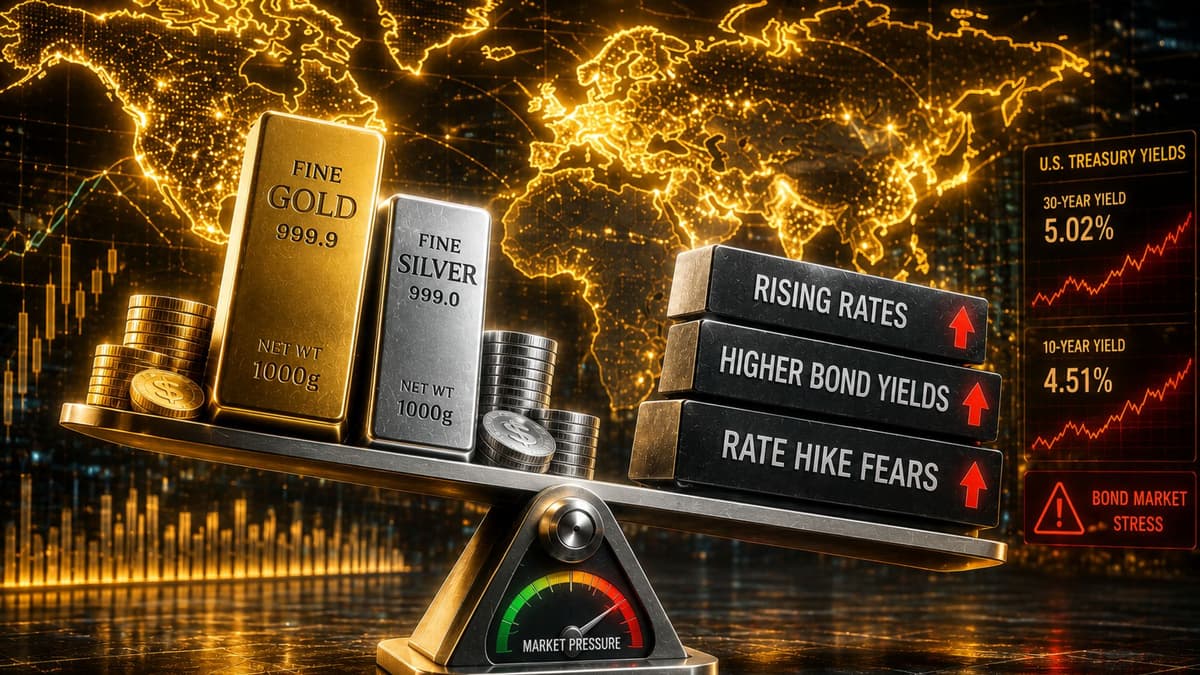
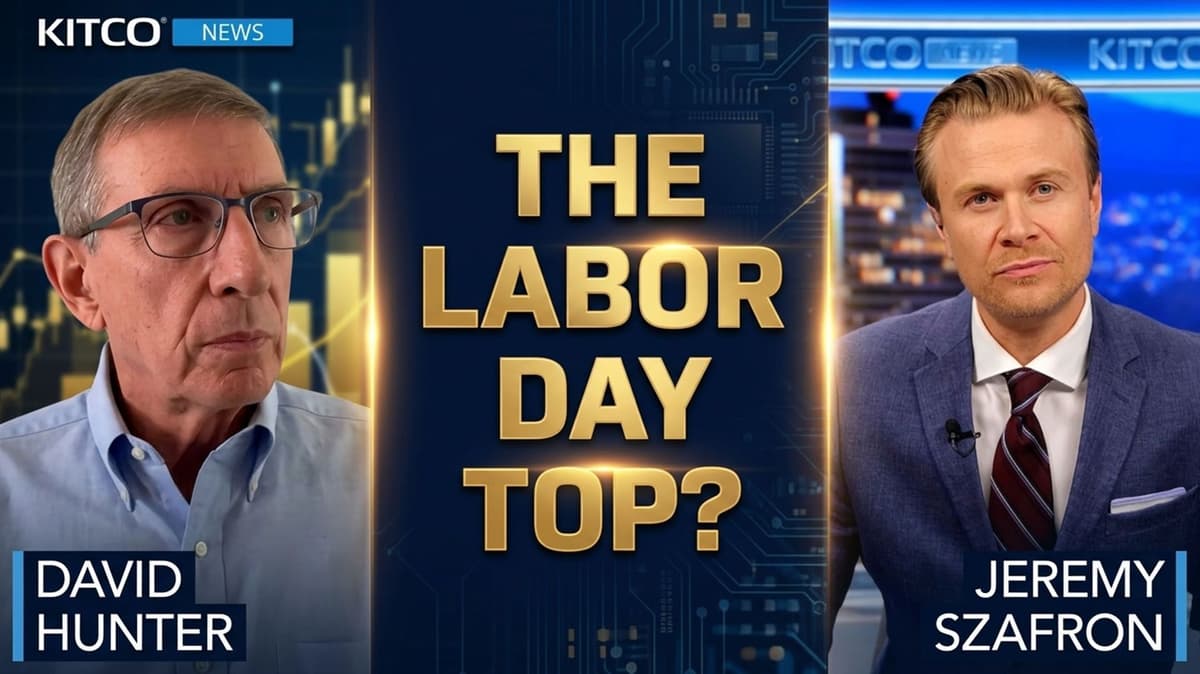
David Hunter says gold could rally sharply before a historic global debt crisis hits risk assets. The Contrarian Macro Advisors chief macro strategist told Kitco News that spot gold, trading near $4,550 per troy ounce in May 2026, could climb to $6,800 by Labor Day before a deflationary crash and then eventually surge toward $20,000 in the inflationary aftermath.
For Indian investors, that forecast matters because any sharp move in XAUUSD can translate into amplified swings in domestic bullion prices when combined with rupee volatility. If the Indian rupee weakens during global stress, local gold prices could remain resilient even if international prices correct.
What Is David Hunter Predicting for Gold Prices?
David Hunter is predicting a powerful final rally in gold before a major financial market bust. He said the current cycle still has room to run, even after gold's sharp two-year rise.
As of May 2026, spot gold was trading around $4,550 an ounce, while the S&P 500 hovered near 7,400. Hunter expects the ongoing 44-year bull market to end in a parabolic melt-up that could peak as early as Labor Day.
Hunter's headline target for gold is $6,800 per troy ounce in that blow-off phase. He also said gold could briefly touch around $7,000 before the next phase of the cycle begins.
How High Could Silver Rise Alongside Gold?
Hunter is also extremely bullish on silver in the same pre-bust window. He said silver could climb to $180, and he suggested even that target may prove conservative.
According to David Hunter, silver could "blow right through" $180 in a speculative surge and reach $250 or higher. That outlook reinforces his view that precious metals could outperform strongly before broader equities roll over.
Why Does David Hunter Expect an 80% Market Bust?
David Hunter expects an 80% market bust after the final melt-up because he believes the global financial system is built on unstable debt and leverage. He argues that the blow-off top will be followed by a steep deflationary wipeout.
He told Kitco News that Wall Street consensus is missing the sequence. In his view, markets first enter a final euphoric upside phase, then suffer a deep collapse that destroys asset prices across the board.
Hunter said this would mark the end of the 44-year bull market. He described the coming downturn as an 80% deflationary wipeout, a scale that would rival the worst historical market collapses.
Could Gold Fall During the Deflationary Shock?
Yes, Hunter says gold could fall hard during the initial crash even though he remains bullish long term. He warned that gold may correct by 50% in the deflationary phase.
His example is a drop from $7,000 to $3,500 per ounce. For Indian bullion buyers, that suggests international gold prices could become highly volatile, although rupee weakness and import dynamics may cushion the fall in domestic terms.
What Could Trigger the Next Global Financial Crisis?
Hunter says the next crisis may start outside the United States, not inside it. He pointed to hidden leverage in Japan, as well as broader risks in Asia and Europe.
He said decades of zero-interest-rate policy have left parts of the global financial system dangerously exposed as borrowing costs rise. If inflation and rates break out in those regions, heavily leveraged markets could "tip over pretty hard," according to David Hunter.
Why Is Japan a Key Risk in Hunter's Outlook?
Japan is central to Hunter's warning because its financial system spent decades adapting to ultra-low rates. As of mid-May 2026, the Bank of Japan's interest rate stood at 0.75%.
At the same time, Japan's 10-year government bond yield pushed to 2.79%, the highest level since 1996. Hunter sees that shift as a stress point for leveraged positions built during the zero-rate era.
How Do Private Equity and Private Credit Add to the Risk?
Hunter says private equity and private credit are another underappreciated danger. He noted that pension funds have been increasing their exposure to these assets because they appear less volatile than public markets.
According to Hunter, the problem is that the market has not yet fully tested these allocations through a true cycle. He said pension portfolios are taking on more and more private exposure, creating another fragile piece of the macro puzzle.
How Large Could Central Bank Money Printing Become?
Hunter says central banks may have no choice but to print on a massive scale once the bust begins. He expects policymakers to abandon current anti-QE rhetoric if the banking system starts free-falling.
He said the Federal Reserve's balance sheet alone could expand to $30 trillion. Globally, he estimates central banks could inject up to $50 trillion combined to prevent a total banking failure.
Why Does Hunter Think QE Will Return?
Hunter believes quantitative easing will return because central banks will prioritize system survival over policy credibility. He said that even if officials insist today that they will not go back to "QE infinity," a collapsing financial system would force their hand.
That liquidity response is central to his long-term bullish case for bullion. In his framework, the deflationary crash destroys assets first, then money printing ignites the next inflation wave that benefits gold.
Why Does David Hunter See 25% Inflation and a Debt Breakdown?
Hunter sees 25% inflation by the early 2030s because he believes unprecedented money creation will collide with an already overleveraged sovereign debt system. He argues that this will push interest rates into the high teens.
That creates what he calls an unsolvable debt equation. According to the Institute of International Finance, total global debt reached $348 trillion at the end of 2025.
Hunter estimates global debt will swell past $450 trillion after the initial bust. He argues governments already struggle to service debt at 5%, making debt sustainability at 15% or 20% effectively impossible.
What Happens If Sovereign Debt Math Breaks?
Hunter says a sovereign debt breakdown would trigger a collapse even worse than the 1930s Great Depression. He believes the world would have to rebuild the financial system from scratch.
He also warned that extreme political and social consequences could follow, including totalitarianism and anarchy. His point is that a full debt-system failure would extend far beyond markets into the structure of society itself.
What Does This Gold Price Outlook Mean for Indian Investors?
For Indian investors, Hunter's outlook implies both opportunity and extreme volatility in bullion. A move from $4,550 to $6,800 in XAUUSD could lift domestic gold rates sharply, especially if the rupee weakens during global stress.
At the same time, his warning of a 50% correction means Indian buyers should be prepared for sharp swings rather than a straight-line rally. Investors tracking gold price trends in India should watch not only spot gold and silver, but also the USD/INR exchange rate, global bond yields, and Bank of Japan policy.
Why Does the Rupee Matter So Much?
The rupee matters because Indian gold prices reflect both global bullion prices and currency movements. Even if international gold falls during a deflationary shock, a weaker rupee can soften the decline in local terms.
That makes global macro stress especially important for Indian households, jewellers, and long-term precious metals investors. Imported gold becomes more expensive when the rupee depreciates, even if dollar-denominated gold prices cool.
What Should Investors Watch Next?
Investors should watch whether the projected melt-up extends into Labor Day, whether Japanese bond yields keep rising, and whether stress begins to appear in private credit and private equity markets. Hunter's framework depends on a final parabolic surge first, followed by a severe deflationary break and then an inflationary decade that could send gold toward $20,000.
He also said that returning to a gold-backed U.S. dollar today would be "suicide" for the financial system, a sign of how deeply he believes current debt dynamics constrain policymakers. For Indian investors, the key watchpoint is whether safe-haven demand, central bank liquidity, and rupee weakness combine to keep the long-term gold price trend intact despite any violent short-term correction.