# Gold Price Outlook: Bulls Reclaim Ground Before Iran Deal, Jobs Data
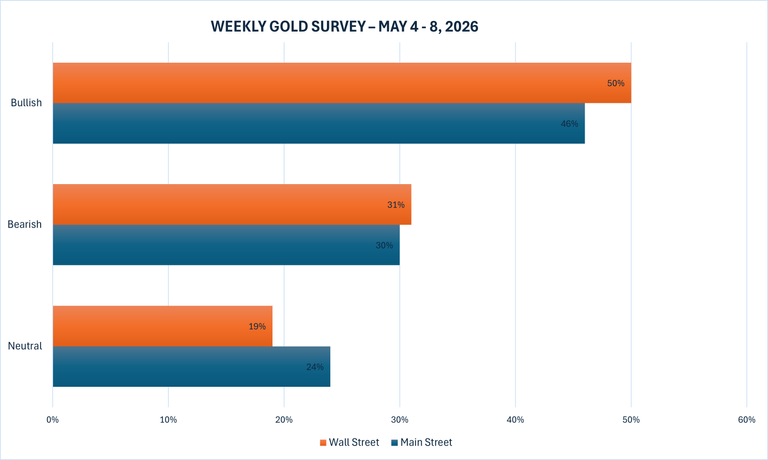
Gold prices ended lower for the week, but market sentiment turned less bearish by the weekend. Half of Wall Street and Main Street traders in the latest Kitco News Weekly Gold Survey expect gold to rise next week, while about one-third still see further downside.
For Indian investors, the move matters because global gold price swings in XAUUSD often feed directly into domestic bullion rates, especially when paired with rupee-dollar moves and imported inflation concerns through crude oil.
Why did gold prices fall this week?
Gold prices fell because rising oil prices, a stronger U.S. dollar, and higher Treasury yields reduced demand for non-yielding bullion. Those factors also reinforced expectations that the Federal Reserve could keep interest rates higher for longer.
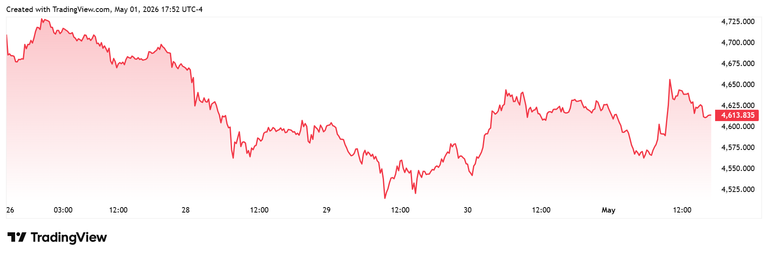
Spot gold began the week at $4,685.50 per ounce. It quickly rallied to the weekly high near $4,730 per ounce, but the advance faded fast.
How did the early-week selloff unfold?
Gold came under heavy pressure on Monday and Tuesday. By Tuesday, the gold price had dropped to a low near $4,560 per ounce.
The selloff accelerated as rising crude oil prices boosted inflation fears. That pushed U.S. Treasury yields higher, strengthened the U.S. dollar, and made bullion less attractive versus yield-bearing assets.
Why did inflation fears hurt bullion?
Inflation fears hurt bullion because higher inflation linked to energy prices can keep interest rates elevated. When markets expect rates to stay high, the opportunity cost of holding gold rises.
The surge in crude triggered steady liquidation in gold through midweek. In practical terms, traders reduced exposure to precious metals as macro conditions turned less supportive.
What did the Federal Reserve do to gold prices?
The Federal Reserve added fresh pressure to gold by signaling policy divisions and cooling hopes for near-term rate cuts. That hawkish message supported the U.S. dollar and kept gold near weekly lows.
Gold hit the weekly low near $4,510 per ounce at the North American open on Wednesday morning. After rebounding to around $4,560, prices resumed falling after the Federal Reserve's latest policy signals later in the day.
Why did Fed signals matter so much?
Fed signals mattered because gold is highly sensitive to interest rate expectations. When policymakers sound cautious on rate cuts, real yields and the dollar often stay firm, which usually pressures XAUUSD.
According to the source article, the Federal Reserve's tone highlighted divisions among policymakers. That dampened expectations for near-term easing and prompted investors to reassess the path of U.S. monetary policy.
What does this mean for Indian gold buyers?
For Indian investors, a stronger U.S. dollar can raise landed gold costs even if international prices soften. If the Indian rupee weakens against the dollar at the same time, domestic gold prices may not fall as much as global bullion quotes suggest.
That is why Indian buyers should track not just spot gold in dollars per troy ounce, but also USD/INR, crude oil, and U.S. rate expectations.
How did gold recover later in the week?
Gold recovered because bargain buying returned after the sharp selloff, while geopolitical uncertainty still offered some safe-haven support. Thin trading conditions also amplified late-week moves.
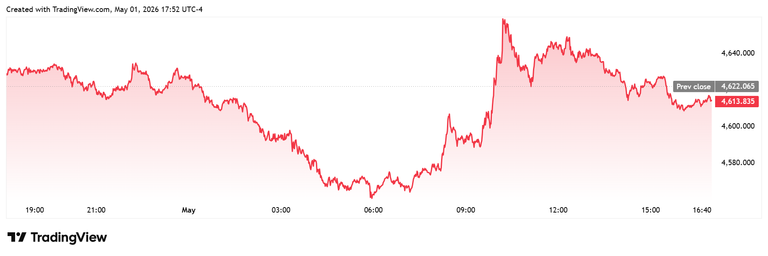
Spot gold spiked near $4,650 early on Thursday morning. After one more slide to test near-term support near $4,560 early on Friday, gold rebounded modestly through the rest of the day.
Did the rebound change the weekly trend?
No, the rebound did not reverse the weekly loss. Gold still posted another weekly decline of nearly 2%.
The main headwinds remained intact: worsening rate expectations and elevated energy prices. Those two forces capped the upside even as safe-haven interest remained in the background.
What are Wall Street and Main Street saying about gold next week?
Market sentiment turned split but improved, with half of both Wall Street and Main Street respondents expecting renewed gains in gold next week. Another one-third still expect prices to fall further.
That balanced outlook reflects two opposing forces. On one side, traders see support from geopolitical uncertainty and long-term macro risks. On the other, they see pressure from U.S. rates, the dollar, and oil-driven inflation concerns.
What is Rich Checkan's gold forecast?
Rich Checkan expects gold to move higher next week. The president and COO of Asset Strategies International said the market is due for "a little surge" after the FOMC-induced selloff.
Checkan said he expects moderate gains in gold and silver as tensions continue in the Middle East. He added that he does not expect a sustained rally until the situation involving the U.S./Israel and Iran is resolved.
What is James Stanley's view on gold?
James Stanley remains constructive on gold. The senior market strategist at Forex.com said April was a month of indecision, but gold bulls have held up well overall.
Stanley said he still favors the broader bullish bias until there is more concrete evidence that the trend is changing.
What is Darin Newsom watching?
Darin Newsom also expects higher prices. The senior market analyst at Barchart.com said he continues to look for the June contract to rally in the coming week based on slightly more bullish momentum indicators.
Newsom added that "nothing has changed fundamentally" because central banks continue to buy gold. That central-bank demand remains one of the most important long-term supports for bullion.
How could oil, equities, and Iran developments shape gold prices?
Gold could trade in response to oil, equity market sentiment, and any change in the Iran conflict outlook. According to Daniel Pavilonis, those cross-market relationships are now central to near-term price action.
What did Daniel Pavilonis say about gold and oil?
Daniel Pavilonis expects gold and silver to continue moving inversely to oil, and in relation to equities. The senior commodities broker at RJO Futures said earnings have been "pretty good" and markets appear to be in a "risk-on" environment.
Pavilonis said gold formed a V-bottom at the tail end of last month, moved higher into this month, then pulled back and is now bouncing again. He said that rebound could be sustainable if crude oil stays near current levels without becoming too extreme or too volatile.
He added that if crude oil trends lower in a clean way, that would be even better for gold. Even in a risk-on environment, he still expects buying interest in gold, though he stressed that markets remain cautious.
Is the market getting more comfortable with the Iran conflict?
Yes, according to Pavilonis, markets appear more comfortable with the current ceasefire conditions and are becoming more optimistic that some kind of resolution may be approaching. That has reduced some of gold's urgency as a pure safe-haven trade.
Pavilonis said prices remain elevated, but the market is starting to accept that current oil levels are manageable. He argued that the data is "fine," there is no major escalation at the moment, and markets may be closer to "the light at the end of the tunnel" in terms of an agreement rather than a broader kinetic escalation.
Still, he warned that investors are staying cautious because the situation could turn either way.
Why do longer-term gold bulls still see upside toward $5,000?
Longer-term gold bulls still see upside because debt risks, currency risks, and global interest-rate risks remain unresolved. Those structural drivers continue to support gold even when short-term headlines shift to equities or geopolitics.
What are the 2025 drivers behind gold?
Pavilonis said gold's 2025 drivers are still present in the background. He argued that gold lacks earnings and dividends, so it does not generate the same positive headline flow as stocks, which has left bullion in a more passive role during the Iran conflict.
But he said the deeper macro story has not changed. He pointed to heavy debt burdens, widespread currency risks, interest-rate risks, and the possibility of currency devaluation as reasons investors may continue to accumulate gold.
Why is $5,000 an important level?
Pavilonis said a move back toward $5,000 would reinforce the broader bullish theme. He added that above $5,000, investors could start allocating more aggressively to the market and push gold higher.
He also said traders will be watching news flow, open interest, and the Commitment of Traders data to judge whether fresh participation is returning.
For Indian investors, a break toward $5,000 in international gold prices could have an outsized impact on domestic rates if the rupee remains under pressure. That would be especially relevant for jewellery buyers, savers using gold as a hedge, and traders in MCX-linked bullion products.
What should gold investors watch next week?
Gold investors should watch Iran-related developments, U.S. labor-market data, oil prices, Treasury yields, and the U.S. dollar. These factors are likely to decide whether gold extends its rebound or resumes its decline.
The original report notes that traders are looking to a potential Iran deal and the April jobs report for direction. Those events could quickly shift rate-cut expectations, safe-haven demand, and overall risk sentiment.
Pavilonis also warned that the weekend could still bring a surprise development in the Iran conflict, underscoring how quickly geopolitical headlines can change the gold price outlook. For Indian investors, the key watchpoint is whether global bullion can hold support near $4,560 and rebuild momentum toward $4,650 and eventually $5,000, especially if USD/INR and crude oil remain volatile.