
# Gold Price Outlook: Bulls Eye $4,850 After Reclaiming $4,700
Gold regained control above $4,700 per ounce this week after an early selloff, and both Wall Street and Main Street turned more bullish for next week, according to the latest Kitco News Weekly Gold Survey. For Indian investors, the rebound matters because global bullion strength, a softer U.S. dollar, and shifting rate expectations can feed directly into domestic gold prices in rupee terms.
What happened to gold prices this week?
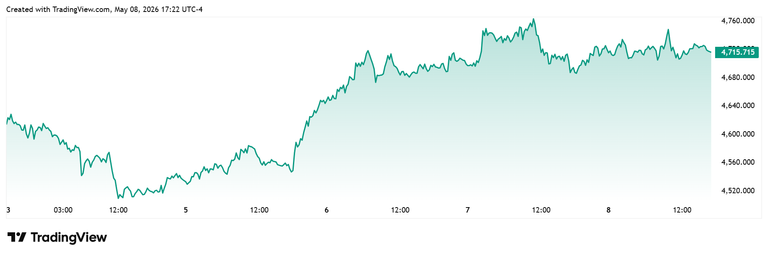
Gold fell early in the week, stabilized by Tuesday, then broke sharply higher on Wednesday before consolidating on Friday. The move came in three distinct phases as traders first focused on inflation and yield risk, then shifted back toward softer yields, a weaker dollar, and lingering safe-haven demand.
Spot gold started the week at $4,623.36 per troy ounce. Despite the Strait of Hormuz risk premium, gold came under pressure at the open and fell into the mid-$4,500s by Monday morning.
That early decline showed that traders initially viewed the U.S.-Iran shock as inflationary first and haven-supportive second. Stronger oil prices, firm bond yields, and a resilient U.S. dollar weighed on bullion and capped upside in XAUUSD.
By Tuesday, gold had stabilized around the mid-$4,500s. Analysts said the fact that gold stopped falling even while geopolitical risk remained elevated helped lay the groundwork for a midweek reversal.
Wednesday brought the decisive move. Spot gold rose as much as 3.6% and traded comfortably above $4,700 per ounce as hopes for a U.S.-Iran deal reduced oil-driven inflation fears, pulled yields lower, and weakened the dollar.
Thursday extended the advance. Spot gold traded from about $4,696.50 to $4,743.81 and closed near $4,740.47, showing that the market was no longer merely rebounding from Monday’s liquidation but actively building above the $4,700 mark.
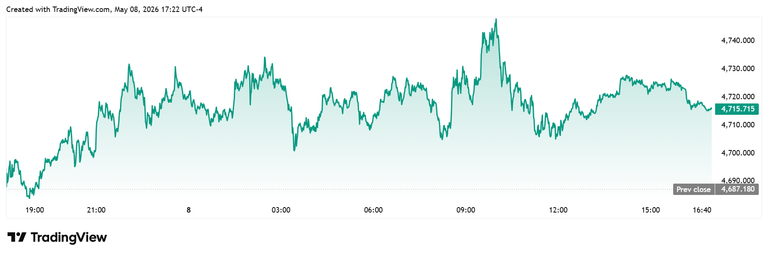
Friday turned into consolidation rather than reversal. Gold traded between $4,677.90 and $4,750.40, then closed near $4,716.20 after U.S. April payrolls rose 115,000, while the unemployment rate held at 4.3%.
The jobs report reduced the immediate case for U.S. rate cuts, but softer consumer sentiment helped support gold into the close. The University of Michigan consumer sentiment index came in at 48.2, adding to the cautious macro backdrop.
Why did gold rebound above $4,700?
Gold rebounded above $4,700 because yields eased, the U.S. dollar softened, and de-escalation hopes around the U.S.-Iran situation reduced oil-inflation pressure. That combination improved the macro backdrop for bullion and restored investor appetite for gold as both a hedge and a store of value.
The strongest alignment for gold came on Wednesday. Lower real-rate pressure, a weaker dollar, and residual geopolitical demand gave XAUUSD the support it needed to stage its clean breakout.
This matters for Indian investors because international gold prices remain the primary driver of domestic bullion pricing, even when the rupee adds or subtracts from the move. When global gold pushes higher while the dollar softens, Indian gold buyers often watch whether INR stability allows the upside to flow into local rates more directly.
What does the latest Kitco gold survey say?
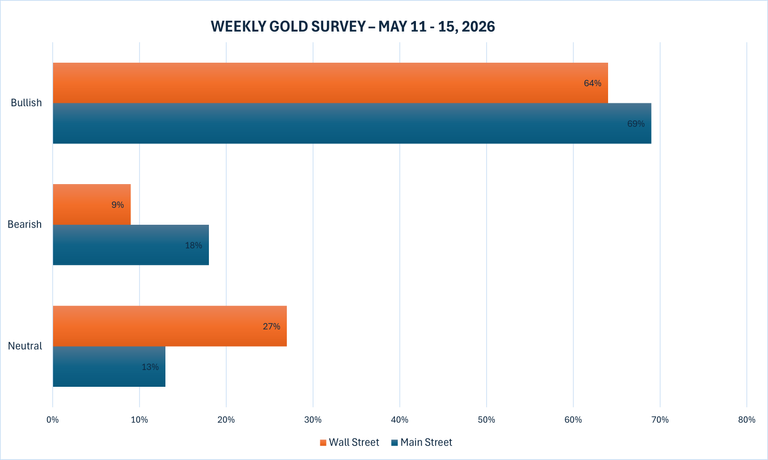
The latest Kitco News Weekly Gold Survey showed that two-thirds of Wall Street and Main Street turned bullish again for next week after gold’s strong recovery. That signals improving short-term sentiment after the market successfully defended the $4,500 area and reclaimed $4,700.
The survey shift is notable because sentiment had been tested by the early-week liquidation. Gold’s ability to recover despite sticky inflation concerns and mixed U.S. data helped rebuild confidence among both professional analysts and retail market participants.
What are analysts saying about gold’s next move?
Analysts are split on the immediate direction, but several still see gold in a broader uptrend as long as key support levels hold. The debate now centers on whether gold can extend toward $4,850 or whether it first pulls back after approaching major technical resistance.
Marc Chandler sees support and a possible $4,850 target
Marc Chandler, managing director at Bannockburn Global Forex, said gold held up well after its early weakness.
“Gold held support near $4,500 early in the week and caught a good bid in the middle of the week as oil prices tumbled, rates eased and the dollar pulled back,” Marc Chandler said. “It retraced (61.8%) of the losses since April 17 high near $4,890.”
Chandler also pointed to official-sector demand.
“The PBOC’s reserve figures showed it was a big buyer of gold on the pullback last month,” Chandler added. “The next immediate target may be $4850.”
That comment matters because central-bank buying, especially from the People’s Bank of China, has been a major structural support for the gold price over the past year.
Darin Newsom warns of a possible short-term dip
Darin Newsom, senior market analyst at Barchart.com, took a more cautious near-term view.
“Down,” said Darin Newsom, senior market analyst at Barchart.com. “Why? Because I’ve said up for the past two weeks with mixed results. Has anything changed globally? No. But it doesn’t have to for the market to flip-flop.”
Newsom said the technical setup bears close watching.
“If I want to make up a technical reason for this week’s guess, I’ll say the June contract has pulled within sight of its 50-day moving average, calculated Friday at $4,812.20. June hasn’t been above its 50-day, based on daily closes only, since March 17. The previous time it drew close was on Friday, April 17, leading to a nearly $350 selloff through May 4.”
Even so, Newsom said a pullback would not necessarily break the broader trend.
“If gold sells off next week, as long as it stays above the May 4 low of $4,533.30, it would still be considered in an uptrend.”
For traders in India following MCX gold and global XAUUSD, that makes $4,533.30 an important reference level in the international market.
Sean Lusk says jobs data capped gold, but the setup remains constructive
Sean Lusk, co-director of commercial hedging at Walsh Trading, said the U.S. employment report was slightly stronger than expected and did not provide an immediate bullish catalyst for gold.
“I think it was a little bit better number than they thought,” he said. “The initial reaction was supportive in the market… I think with energy prices being where they were, and all that’s going on, you're not going to be cutting rates. Or at least you shouldn't be, because you're going to still fuel inflation.”
Lusk said he sees similarities to the macro conditions of 2021 and 2022, particularly around supply chains and inflation risks.
“You have alarm bells that you’ve got to pay attention to as far as the supply chain's concerned, bottlenecks, or this, that, and the other thing, until there's an ending or a little more clarity on what's going on in the Middle East,” he said. “Otherwise, it could rear its ugly head down the road, spike inflation, and now you're talking about tightening, not easing.”
How could Fed policy, Warsh, and U.S. data affect gold next week?
Gold could remain volatile next week because investors will be watching inflation, retail sales, and the policy implications of a possible shift in Federal Reserve leadership dynamics tied to Warsh. If inflation stays elevated and rate-cut expectations fade further, the U.S. dollar could strengthen and pressure bullion in the short term.
Lusk said markets may need more economic clarity before gold secures a stronger safe-haven bid.
“At that time, should that happen, then you may get some safe haven buying into the metals,” he said. “But until then, we’ve got to see a couple more [jobs] reports. And more importantly, we’ve got to see what it means for the indices overall.”
He also highlighted the risk of a policy shift at the Federal Reserve.
“There's going to be a shift change here [at the Fed] with [Warsh] going in, but he doesn't strike me as a complete dove. And more to the point, they talked about raising. Do those voices become louder? Because that should lift the dollar, which should press gold here a little bit in the near term.”
For Indian investors, this is crucial because a stronger dollar can limit gains in global gold or reshape how those gains translate into rupee-denominated prices. U.S. inflation data and retail sales could therefore influence both international bullion sentiment and domestic trading in gold ETFs, physical gold, and MCX futures.
How are equities and energy shaping the gold price outlook?
Gold may struggle to attract a sustained safe-haven surge while equities remain strong, according to Sean Lusk. As long as money keeps flowing into stock markets, bullion faces competition for investor capital even if its long-term backdrop stays constructive.
“But I think gold's getting set up, and silver.”
Lusk said strong equity performance has limited the shift into precious metals.
“We haven't seen an abandonment of equities at all,” he said. “You’ve got more flow coming in there, and that's been the trend the last three years. Gold and silver have run with the equities, and they've gone the inverse of energy.”
He also contrasted current conditions with the inflation surge that followed the start of the war in Ukraine in 2022.
“Oil peaked up to $100 when the war in Ukraine started back in 2022, when everything was inflationary because rates were at zero after the pandemic. Since then, gold and the stock market have skyrocketed, while energies, up until this conflict, it was sell the rallies, and the path of least resistance was lower.”
Lusk said he expected a stronger oil spike given current tensions.
“Now, boy oh boy… I would have thought energy, given what's going on, would be back up at $120, and we really haven't sniffed that.”
That matters because oil is a key inflation input. For India, higher crude prices can pressure the rupee, widen imported inflation risks, and indirectly support local gold demand as households seek a hedge.
What does this mean for Indian gold investors now?
Indian gold investors should watch three things closely: global gold holding above $4,700, the direction of the U.S. dollar and Treasury yields, and whether geopolitical risk lifts oil again. These factors will likely decide whether bullion extends toward $4,850 or retreats toward support.
Gold has already shown that buyers are willing to step in on dips. Lusk said that although metals may stay under near-term pressure, gold has repeatedly found support and still looks attractive at current levels.
Physical buyers, ETF investors, and MCX traders in India should also track the rupee alongside global spot prices. Even if XAUUSD remains firm, INR moves can amplify or soften the local gold price response.
The immediate watchpoint is clear: if incoming U.S. inflation and retail sales data push yields and the dollar lower again, gold could build on this week’s recovery. If not, traders will test whether support around $4,533.30 remains intact while bulls continue to target $4,850.