# Gold Price Outlook: Brutal Weekly Loss Signals More Pain
Gold prices are under heavy pressure after bullion posted its biggest weekly loss in six years, and analysts say the selloff may not be over. The main trigger is not just the war in Iran itself, but the inflation threat from higher energy prices, which could keep central banks from cutting interest rates and weaken near-term support for gold.
Spot gold was last at $4,584.10 per troy ounce, down more than 1.7% on the day and on track for a weekly loss of more than 8%. That would mark gold’s biggest weekly decline in six years, when the global economy shut down during the COVID-19 pandemic.
For Indian investors, the global XAUUSD move matters directly, but rupee pricing will also depend on the USD/INR trend and imported inflation risks tied to crude oil. If oil stays elevated because of Middle East supply disruption, domestic inflation expectations in India could remain firm even if global bullion stabilizes.
Why did gold prices record their biggest weekly loss in six years?
Gold fell sharply because speculative bullish positioning unwound, technical support broke, and markets rapidly repriced expectations for lower interest rates. That combination hit bullion just as investors had expected gold to behave like a safe-haven asset.
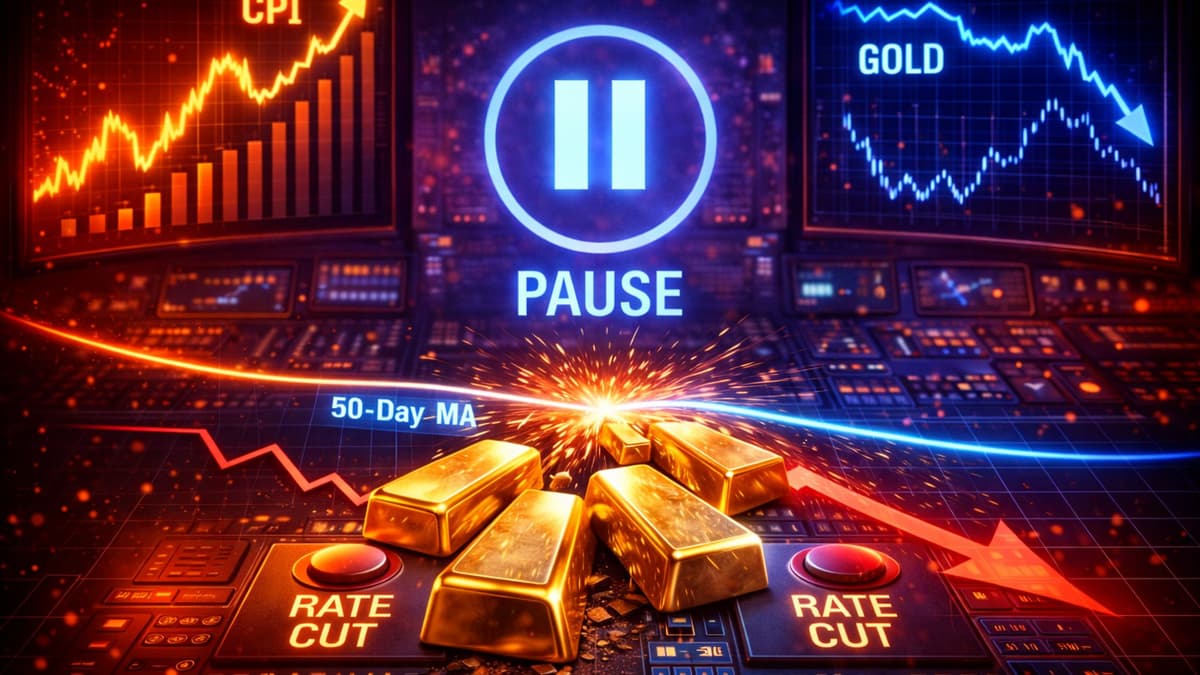
The gold market suffered significant technical damage after prices dropped below the 50-day moving average, which sat just below $5,000 an ounce. That breakdown accelerated selling pressure and changed the short-term market structure.
Kelvin Wong, Senior Market Analyst at OANDA, said in a note to Kitco News that Wednesday’s breakdown and follow-through selling marked a pivotal moment for gold.
What did Kelvin Wong say about gold’s chart structure?
Wong said the latest plunge suggests gold’s earlier rally was not a fresh bullish leg, but a corrective rebound. He argued that the next move now appears skewed toward a bearish phase.
According to Kelvin Wong, the 23% rally from the February 2, 2026 low of $4,402 to the March 2, 2026 high of $5,420 now looks like a corrective rebound, or a “dead cat bounce.” He said the next movement is now tilted toward a potential multi-week bearish impulsive down-move sequence.
That interpretation matters because it signals that traders may treat rebounds as selling opportunities until gold rebuilds support. In practical terms, it means XAUUSD may remain vulnerable to deeper pullbacks even after such a steep weekly drop.
How is the Iran war affecting gold prices right now?
The war in Iran is hurting gold in the short term because it is lifting energy prices and creating a renewed inflation threat. That inflation risk is making central banks more cautious about easing, which reduces one of gold’s strongest macro tailwinds.
Analysts said everything now hinges on developments in the Middle East and whether supply chain issues ease if the Strait of Hormuz reopens. As long as the conflict continues with no clear end in sight, traders are likely to stay focused on oil, inflation expectations, and central-bank policy.
What does Natixis expect for gold if the war continues?
Bernard Dahdah, Precious Metals Analyst at Natixis, said he expects gold to trade between $4,600 and $4,700 an ounce while markets wait to see how the war with Iran unfolds. But he also warned that downside risks are increasing.
Dahdah said that if energy assets suffer further destruction and the war is prolonged, the endgame could push gold toward the lower end of $4,000/oz. He said that in such a scenario, even the Federal Reserve might have to raise rates because of sticky energy prices.
At the same time, Dahdah does not see that lower-end $4,000/oz scenario as gold’s long-term trend. He said that if damage to energy infrastructure remains limited and oil prices quickly fall back to pre-war levels, central banks could regain a stronger appetite for gold purchases, helping bullion return to a path of enduring levels above $5,000/oz.
For Indian gold buyers, this matters because crude oil and bullion often move through the same inflation channel. If oil stays high, it can pressure the rupee, raise imported costs, and complicate the outlook for domestic interest rates and jewellery demand.
What role are central banks playing in the gold selloff?
Central banks are weighing on gold because they are no longer clearly moving toward rate cuts. Instead, major central banks held rates steady this past week and shifted into a more neutral, wait-and-see stance as they assess how the Iran war affects inflation.
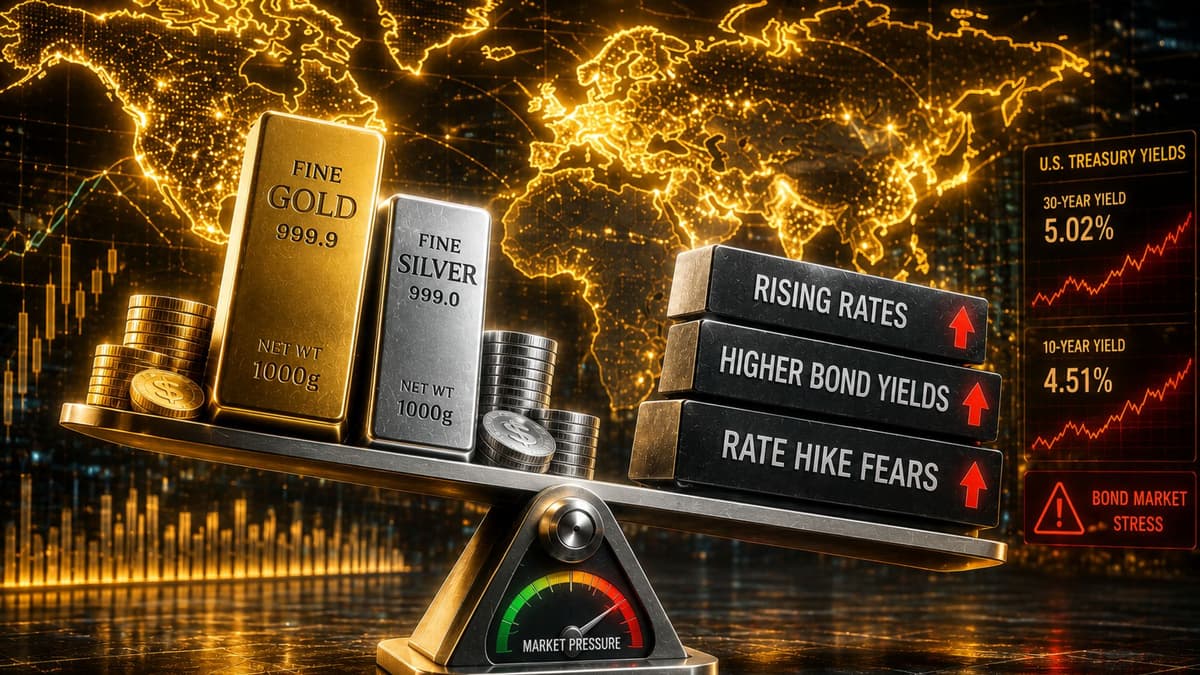
That shift matters because gold performs best when investors expect lower real yields, easier monetary policy, and a softer U.S. dollar. When markets price out rate cuts, bond yields and the dollar tend to strengthen, which usually pressures non-yielding assets like bullion.
Why are markets pricing out Federal Reserve rate cuts?
Markets are pricing out Federal Reserve rate cuts because policymakers are more worried that higher energy prices will keep inflation elevated. That concern grew after Fed Chair Jerome Powell stressed inflation risks.
Thu Lan Nguyen, Head of FX and Commodity Research at Commerzbank, said that in the United States, not even a full rate cut is priced in by the end of the year. She noted that at the end of February, the market had still expected 2 1/2 rate cuts.
Nguyen said those expectations were further reduced primarily because of the latest Fed meeting. She said Powell emphasized inflation risks and indicated that further monetary easing would be off the table if signs intensified that inflation would not return to target in the medium term.
According to Nguyen, the gold price is therefore likely to continue declining if energy prices rise further and push longer-term inflation expectations higher. That view directly links geopolitics, oil, inflation, and gold’s near-term weakness.
Why are the next four to six weeks important?
The next four to six weeks are critical because central banks and companies will get a clearer read on whether the energy shock is temporary or persistent. That window could shape how policy expectations evolve into the summer.
Rob Haworth, Senior Investment Strategist at U.S. Bank Wealth Management, said companies will begin adjusting budget forecasts ahead of the summer. He added that mid-April, around tax time, is when business decisions start to change.
If those budget revisions show sustained pressure from energy costs, markets may further reduce expectations for easing. That would remain a headwind for gold and other precious metals.
Why is gold not acting like a safe-haven asset during the conflict?
Gold is not acting like a classic safe-haven because inflation fears are overpowering geopolitical fear. Investors are focusing on the risk that higher oil and energy prices will keep interest rates high for longer.
Analysts said that the biggest reason gold is struggling during a war is the growing inflation threat driven by rising energy prices. Instead of rushing into bullion, traders are reassessing whether central banks can still ease policy in 2026.
What are investors and speculators doing now?
Many investors who bought gold above $5,000 an ounce are now under pressure and may be forced to cut positions. That selling is adding to the downside momentum.
Rob Haworth said the gold selloff is not surprising given the speculative drive seen at the start of the year. He added that gold could see further losses as investors who entered above $5,000 exit losing positions.
Haworth said speculators now face a difficult decision. He noted that many tried to wait out the volatility in February, but much of that money is now underwater, and he warned that it “might only get worse.”
This type of liquidation can turn an orderly correction into a sharper drop. It also explains why safe-haven demand has not fully offset the selling pressure.
How bad is the selloff in silver and what does it signal for precious metals?
The selloff is broad across precious metals, not limited to gold. Silver has fallen even harder, which signals stress in speculative positioning and risk appetite across the bullion complex.
Spot silver was last at $68.96 an ounce, down more than 5% on the day. Silver is on track for a nearly 14% weekly loss, its biggest decline since the blowoff top in January.
When silver underperforms this sharply, it often shows that traders are reducing exposure across the sector rather than rotating within precious metals. For Indian investors, that can translate into higher short-term volatility in both bullion and silver retail prices, especially when combined with INR moves.
What is the longer-term gold price outlook from here?
Analysts remain constructive on gold over the longer term even as they warn of more near-term weakness. Their core argument is that the big reasons investors bought gold earlier in the year have not disappeared.
Ole Hansen, Head of Commodity Strategy at Saxo Bank, said the drivers behind gold buying remain intact because the global economy still faces unprecedented uncertainty, including geopolitical turmoil and rising government debt.
Hansen said investors need to fall out of love with gold before they can become passionate about it again. He argued that many investors still like the metal, but they now need proof that the worst is over.
Could a central bank policy mistake eventually help gold?
Yes, some analysts believe a policy mistake could support gold later even if it hurts in the short term. If central banks stay too hawkish while growth slows, gold could regain its role as a hedge against recession risk.
Michael Brown, Senior Market Analyst at Pepperstone, said a strong focus on inflation could push the Federal Reserve into tightening policy into a recession. He pointed out that monetary policy is not effective at dealing with supply-driven inflation, because policymakers can only slow economic growth to cool demand.
Brown said that, for now, central banks are right to adopt a “wait-and-see” stance because of the huge uncertainty around the duration of the Iran conflict and its economic fallout. But he also said that if markets are on the verge of a central-bank mistake, gold could perform relatively well over the longer term as investors hedge downside growth risks.
For Indian investors, that means the near-term gold price outlook remains tied to oil, the U.S. dollar, Treasury yields, and headlines from the Middle East. The key watchpoint now is whether energy prices keep rising and force the Federal Reserve and other central banks to stay hawkish for longer, or whether oil falls back and allows gold to rebuild support above the recent breakdown zone near $5,000 an ounce.