Gold prices may stay under pressure in the near term, but Bank of Montreal says the longer-term bull market in bullion is still intact. In updated forecasts published on Tuesday, BMO raised its gold and silver price estimates even as the U.S. and Israel’s war with Iran continues to unsettle market sentiment.
For Indian investors, that matters because any renewed rise in international gold prices, combined with rupee weakness against the U.S. dollar, can lift domestic gold rates further. The latest BMO view suggests the current pause in XAUUSD is not the end of the rally, but a temporary interruption.
Why does BMO still expect higher gold prices despite the Iran war?
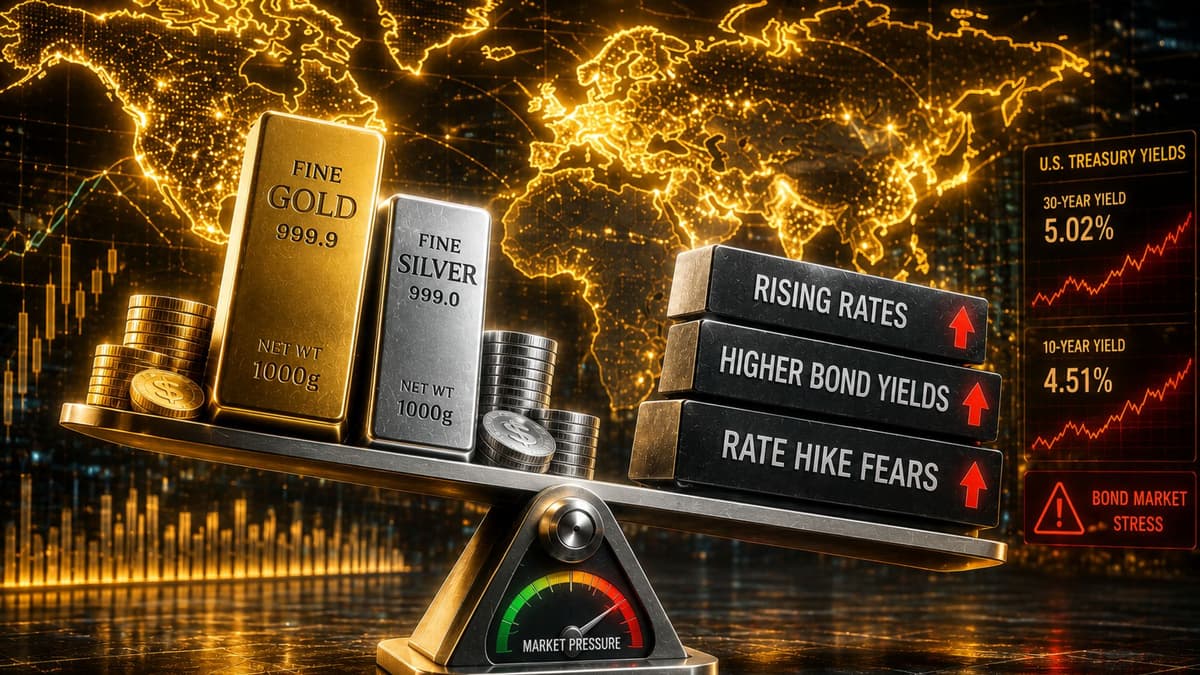
BMO says the Iran conflict has paused gold’s bullish momentum, not reversed it. The bank argues that the structural case for gold remains strong even though investors have been disappointed by gold’s inability to rally more strongly during the Middle East crisis.
According to BMO’s commodity analysts, shifting economic conditions caused by the war involving the U.S., Israel, and Iran could keep gold and silver prices under pressure in the short term. Still, the bank does not see the conflict as undermining the broader investment case for precious metals and mining.
What did BMO analysts say about the long-term bull thesis?
BMO’s analysts said: “The Iran conflict does not take away from the structural thesis for metals and mining, but adds weight to it. It's just a question of when the market gains enough confidence that the conflict has reached a resolution before adding risk back on.”
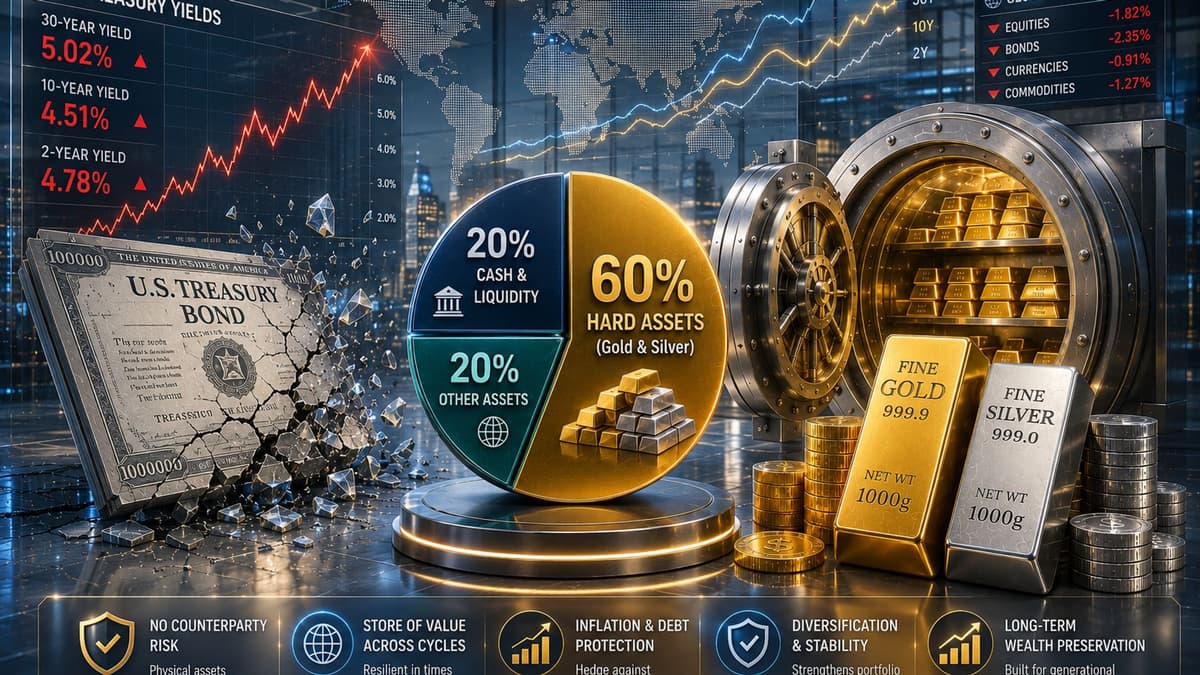
They added that the long-term bull case for gold remains tied to diversification, debasement, and de-dollarisation. In other words, investors still want exposure to safe-haven assets and bullion as protection against currency risk, policy uncertainty, and a shifting global reserve system.
What are BMO’s updated gold price forecasts for 2025 through 2027?
BMO raised its gold price forecasts across the board. The bank now expects gold to average around $4,800 per troy ounce in the third quarter, which is 7% above its previous forecast.
For the fourth quarter, BMO sees gold averaging $4,900 an ounce, up 9% from its prior estimate. For the full year, the bank expects gold prices to average $4,846 an ounce, compared with its previous forecast of $4,550 an ounce.
How bullish is BMO on gold through 2027?
BMO is especially bullish beyond this year. The bank expects gold prices to remain consistently above $5,000 an ounce through 2027 and average $5,125 annually.
That 2027 annual average is 26% above BMO’s previous estimate. This is one of the strongest long-term forecasts in the market and signals that BMO still sees substantial upside in XAUUSD after the current period of weakness.
What could this mean for Indian gold investors?
Higher global gold prices usually feed directly into Indian bullion prices, although the final move in rupees also depends on the USD/INR exchange rate, import duties, and local premiums. If gold approaches the $4,800 to $5,125 range projected by BMO, Indian investors could see domestic prices remain elevated even without a sharp spike in local demand.
That matters for buyers of physical gold, gold ETFs, sovereign gold bonds in the secondary market, and jewellery-linked investment demand. A stronger dollar or weaker rupee could amplify any international gold rally in India.
Why does BMO think gold could stay weak in the near term?
BMO says speculative momentum and retail investor psychology could keep gold vulnerable over the coming months. The bank believes short-term price action in gold and silver will depend heavily on how retail investors respond after the outbreak of the Iran conflict.
The analysts said retail investors account for at least 60% of ETF inflows. That makes momentum-driven positioning a major force in the gold price, especially when markets are reassessing safe-haven demand during geopolitical stress.
Why has gold not rallied more strongly during the Iran conflict?
BMO says gold has historically performed better in the first few weeks of a major conflict than it has so far during the Iran conflict. The bank argues this cycle looks different because gold had already appreciated significantly over the last two years.
According to the analysts, that earlier rally was driven by huge inflows of new investment, both speculative and strategic. Because bullion had already moved sharply higher before the latest geopolitical shock, some of the safe-haven buying may have been priced in.
What needs to happen for gold buyers to return?
BMO says the market likely needs more confidence that the conflict is moving toward resolution before investors add risk again. The analysts wrote: “The long-term bull thesis for gold remains intact in our view – diversification, debasement, de-dollarisation – but we may have to wait for the conflict to resolve for sellers to turn into buyers again.”
That suggests near-term volatility could continue even if the long-term outlook stays constructive. For Indian investors, this could mean sharp swings in gold price trends rather than a straight-line rally.
What is BMO’s silver price outlook, and why is it more cautious?
BMO remains bullish on silver, but the bank expects much more volatility than in gold. It forecasts silver prices will average $70.60 an ounce in the third quarter, which is 28% above the previous estimate.
For the fourth quarter, BMO expects silver to average about $68.10 an ounce, up 31% from the prior forecast. For this year, the bank sees silver prices averaging $74.50 an ounce, a 32% increase from the earlier estimate.
What does BMO expect for silver next year?
BMO expects this year to mark the high-water mark for silver. The bank forecasts silver prices will average around $64.20 an ounce next year, which is still 42% above its prior projection.
So while BMO lifted its estimates sharply, it also signalled that silver may struggle to sustain this year’s pace of gains. That is an important distinction for investors comparing silver with gold among precious metals.
How does the Middle East war affect silver differently from gold?
BMO says the Middle East war is hurting the global economic backdrop, and that weakens industrial demand for silver. Unlike gold, silver is both a precious metal and an industrial metal, so slower growth can weigh on its demand outlook.
The bank said it expects the physical silver market to return to a surplus. That shift could reduce the pressure created by recent liquidity-driven price gains.
Why does BMO prefer gold over silver?
BMO says the case for hard assets remains strong in 2026, but lesser precious metals are not as attractive as gold. The analysts expect silver’s discount to gold to widen this year.
They said: “While the argument for hard assets remains strong in 2026, we see the lesser precious metals as a poor substitute for gold and expect the discount to gold to continue to widen this year.”
For Indian investors, that means gold may remain the preferred safe-haven allocation if geopolitical risks persist and growth concerns deepen. Silver could still rise, but BMO’s latest note suggests gold offers the cleaner macro hedge.
As markets watch developments in the Iran conflict, the key trigger for bullion may be a shift in confidence rather than headlines alone. If geopolitical tensions ease without damaging the structural drivers of diversification, debasement, and de-dollarisation, BMO’s forecasts suggest gold could regain momentum and move back toward the bank’s $4,800 to $5,125 per ounce path.