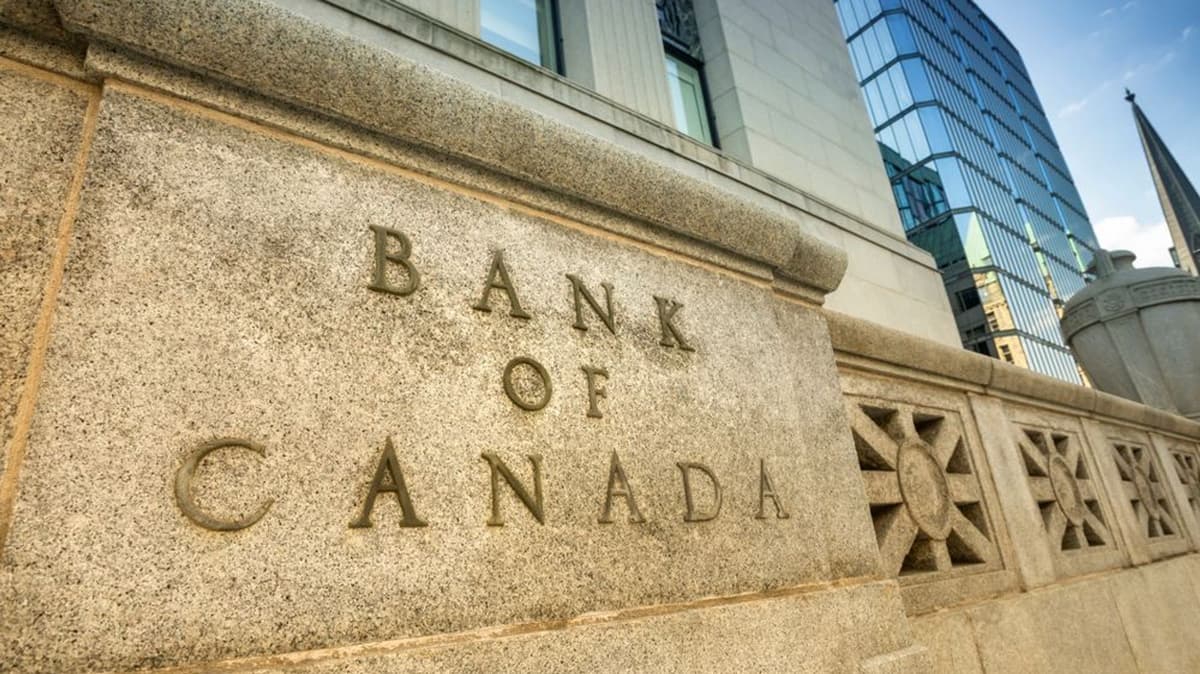
The Bank of Canada kept its key overnight rate at 2.25% on Wednesday, but its warning on the Iran conflict and U.S. trade policy added another layer of uncertainty for the gold price outlook, global currencies, and inflation-sensitive assets. For Indian investors tracking bullion, XAUUSD, and currency-driven price moves, the message is clear: central banks remain cautious as geopolitics and tariffs keep safe-haven demand and inflation expectations in focus.
Why did the Bank of Canada keep interest rates unchanged at 2.25%?
The Bank of Canada (BoC) held its key overnight rate at 2.25% because policymakers see the economic outlook as highly uncertain and want more clarity before changing policy. The decision matched market expectations.The BoC also left the bank rate at 2.50% and the deposit rate at 2.20%. In its policy statement, the central bank said the outlook remains clouded by the Middle East conflict and U.S. trade tariffs, calling both "ongoing sources of uncertainty."
The bank said its April outlook assumes tariffs remain unchanged and that the global benchmark oil price declines to US$75 per barrel by mid-2027. That assumption matters because oil prices feed directly into inflation expectations, bond yields, and currency moves that often influence gold and precious metals.
How did the Bank of Canada decision affect gold prices and the Canadian dollar?
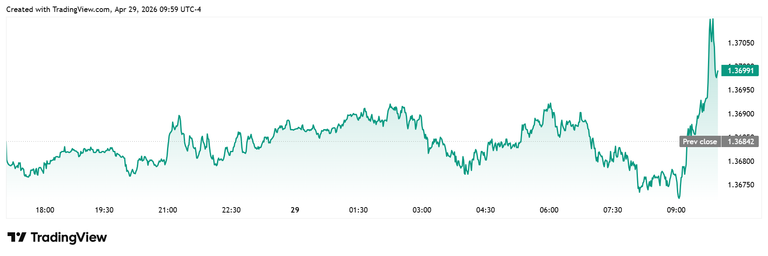
The BoC decision pressured gold in Canadian dollar terms and initially weakened the Canadian dollar, although the currency later recovered some ground. The reaction showed that traders remain highly sensitive to central bank signals and geopolitical risk.Right after the announcement, the Canadian dollar fell to session lows before rising slightly in the following minutes. USD/CAD was last trading at 1.3699 per U.S. dollar, up 0.11% on the session.
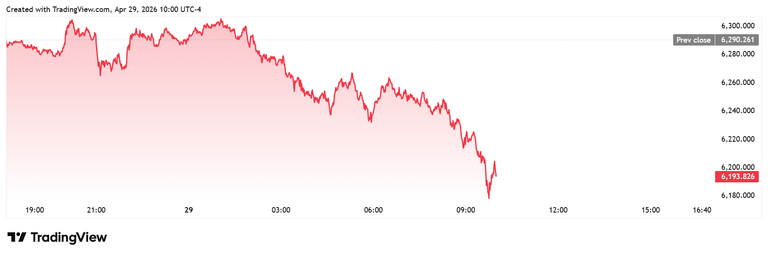
At the same time, gold fell to a session low of $6,176.89 per ounce in Canadian dollar terms. XAU/CAD then continued trading near its lows and was last quoted at $6,193.63 per ounce, down 1.55% on the daily chart.
For Indian investors, this is a useful reminder that gold price moves are not driven only by XAUUSD. Local gold rates also react to currency swings, including the U.S. dollar, the Canadian dollar, and, crucially, the Indian rupee (INR). If the dollar stays firm, imported bullion can remain expensive in India even when international gold softens.
What did the Bank of Canada say about the Iran conflict and U.S. trade policy?
The BoC said the ongoing conflict in the Middle East and U.S. trade policy are key risks because they are increasing volatility and reshaping global trade flows. Those forces can alter inflation, growth, and safe-haven demand across asset classes.According to the BoC, the Iran war has led to sharply higher energy prices and transportation disruptions. The bank said these pressures are diminishing growth prospects in oil-importing countries while boosting inflation worldwide.
The central bank also said U.S. growth is still expected to be solid, supported by AI-related investment and consumption growth. It added that China’s economy is benefiting from strong exports.
In contrast, the BoC said higher prices for oil and natural gas will weigh on economic activity in the euro area. That divergence matters for gold because uneven global growth often changes the path of interest rates, real yields, and investor demand for safe-haven assets like bullion.
What is the global economic outlook according to the Bank of Canada?
The BoC expects the global economy to keep expanding, but at a moderate pace and under higher inflation pressure from energy. That mix is important for gold because slower growth with sticky inflation can support defensive positioning.The bank said financial conditions remain volatile, reflecting daily developments in the Middle East and shifting market expectations for inflation and interest rates. It added that bond yields are modestly higher since January, while equity markets, which weakened sharply at the outset of the war, have since recovered.
The BoC also noted that since the start of the war, the U.S. dollar has appreciated against most major currencies, while the Canada-U.S. exchange rate has been relatively stable. A stronger U.S. dollar often acts as a headwind for gold priced in dollars, but geopolitical uncertainty can still keep safe-haven interest alive.
Overall, the bank said the global economy is expected to grow by about 3% in 2026, 2027 and 2028. It also said its projections for inflation over the next year are revised up because of the jump in energy prices.
How is Canada’s economy expected to perform after the rate hold?
The BoC said Canada’s growth outlook is broadly unchanged from its January Monetary Policy Report, with economic activity expected to recover after a late-2025 contraction. Domestic spending is helping, but tariffs and trade uncertainty remain a drag.The central bank said that after a contraction in the fourth quarter of 2025, growth is forecast to have resumed in early 2026. It said consumer spending and government spending are supporting economic activity, while tariffs and trade uncertainty are weighing on exports and business investment.
The BoC’s April forecast projects GDP growth of 1.2% in 2026, rising to 1.6% in 2027 and 1.7% in 2028. It expects growth in exports and business investment to resume, though along a lower trajectory.
The bank also highlighted Canada’s energy exposure. Because Canada is a large net exporter of oil, higher oil prices increase national income, even though consumers face pressure from higher gasoline prices.
For Indian readers, this matters because oil and gold often move together through the inflation channel. If geopolitical risks keep crude elevated, India could face pressure through a wider import bill, potential rupee sensitivity, and firmer domestic bullion prices.
What did the Bank of Canada signal on inflation, and why does it matter for gold?
The BoC said inflation risks have increased because of energy, but it does not yet see broad pass-through into all prices. That stance matters for gold because it shapes expectations for future interest rates and real yields.On CPI inflation, the bank said there is little evidence that oil prices have fed through more broadly to goods and services prices, but added that this warrants close attention in the months ahead. In other words, the BoC is watching for second-round inflation effects.
The central bank said it is closely monitoring the impact of the conflict in the Middle East and how the economy is responding to U.S. tariffs and trade policy uncertainty. It added that Governing Council is looking through the war’s immediate impact on inflation but will not let higher energy prices become persistent inflation.
For the gold price outlook, that is the key policy signal. If energy-driven inflation proves temporary, central banks may avoid an aggressive response. But if higher oil prices become embedded in broader inflation, rate expectations and bond yields could shift quickly, creating fresh volatility for gold, bullion, and precious metals.
Indian investors should now watch three linked variables: oil prices, the U.S. dollar, and global bond yields. If those stay elevated while the INR weakens, domestic gold prices in India could remain supported even if international spot gold consolidates.